


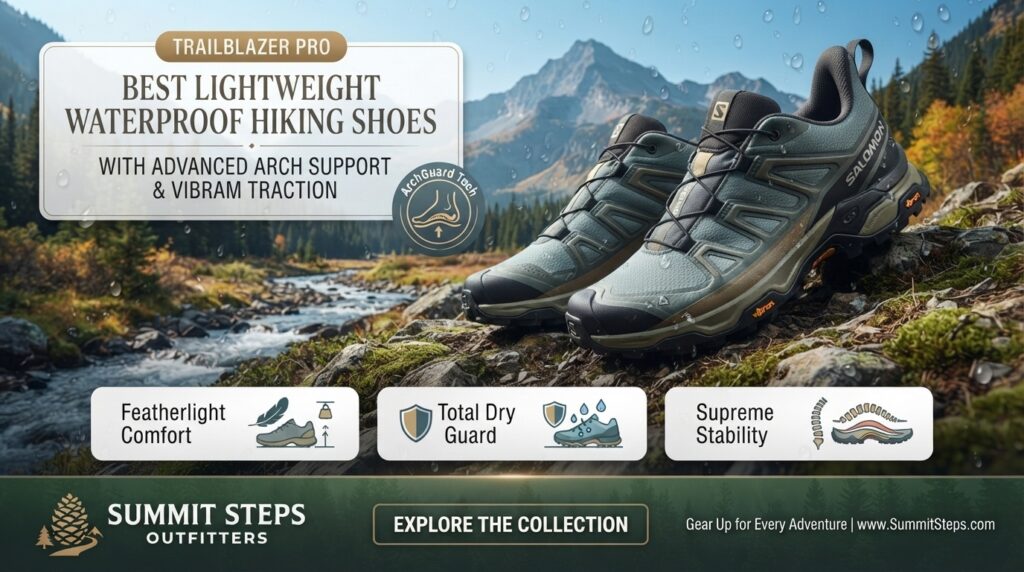
Whether you are navigating the damp, mossy trails of the Pacific Northwest in Washington, tackling granite inclines in California’s Sierra Nevada, logging miles through the Catskills in New York, or trekking the rocky limestone paths of the Texas Hill Country, poor foot support will ruin a trip fast.
Plantar fasciitis, overpronation, collapsed arches, and soaked socks are the most common reasons hikers abandon their trails early. For years, finding strong arch support meant settling for heavy, rigid leather logging boots. Modern footwear engineering has changed that entirely. Today’s top technical trail shoes combine lightweight agility (under 15 oz per shoe), 100% waterproof membranes (like GORE-TEX and B-DRY), and molded biomechanical arch support.
This definitive guide reviews the top-rated lightweight waterproof hiking shoes with arch support, details the biomechanics of foot health on the trail, and provides localized advice for hikers across key terrain hubs.
Quick Comparison: Top Lightweight Waterproof Hiking Shoes
| Model | Weight (Per Shoe) | Waterproof Tech | Arch Support Profile | Best For |
| Salomon X Ultra 5 GTX | 13.3 oz (378g) | GORE-TEX | Rigid / Anatomical (ADV-C Chassis) | Technical Terrain & High Arches |
| Oboz Katabatic Low B-DRY | 12.8 oz (362g) | B-DRY Membrane | High Molded Arch (O FIT Insole) | Maximum Out-of-the-Box Arch Support |
| HOKA Anacapa 2 Low GTX | 14.1 oz (400g) | GORE-TEX Invisible Fit | Plush / Rockered (Meta-Rocker) | Impact Relief & Plantar Fasciitis |
| Merrell Moab Speed 2 GTX | 12.0 oz (340g) | GORE-TEX | Medium-High (FloatPro Foam) | Fast Day Hikes & Moderate Trails |
| La Sportiva Spire GTX | 15.2 oz (430g) | GORE-TEX Surround | Firm / Torsional Control | Wet Scrambles & Heavy Pack Support |
| Danner Trail 2650 GTX | 12.4 oz (352g) | GORE-TEX | Neutral-Medium (EXO Heel Basket) | Thru-Hiking & Lightweight Agility |
Top 6 Lightweight Waterproof Hiking Shoes Reviewed
1. Salomon X Ultra 5 GTX — Best Overall for Technical Trails & Stability
                 SALOMON X ULTRA 5 GTX
 ┌───────────────────────────────────────────────────┐
 │ [X] ADV-C Chassis for lateral arch stabilization  │
 │ [X] Full GORE-TEX waterproof bootie               │
 │ [X] Contagrip MA outsole with 4.5mm deep lugs     │
 └───────────────────────────────────────────────────┘


The Salomon X Ultra series has long set the benchmark for low-top technical hiking shoes, and the X Ultra 5 GTX continues that reign. Designed specifically to protect the outer ankle and support the medial arch without adding bulk, this shoe bridges the gap between a flexible trail runner and a supportive mountain boot.
- Arch Support Mechanics: Salomon uses its proprietary ADV-C Chassis, a molded TPU insert embedded in the outsole that wraps the lateral arch and heel. This limits unwanted twisting on uneven rocks while holding the medial arch in proper alignment, making it ideal for hikers prone to overpronation or plantar fasciitis.
- Waterproofing: A full GORE-TEX membrane with a gusseted tongue keeps water out during shallow stream crossings, mud crawls, and rainstorms.
- Trail Performance: The Contagrip outsole features aggressive reverse-chevron lugs that bite into wet soil and loose scree.
- Pros: Exceptional lateral stability, zero break-in period, durable rubber toe cap.
- Cons: Quicklace system can feel narrow across wide, high-instep forefeets.
2. Oboz Katabatic Low B-DRY — Best Out-of-the-Box Arch Support

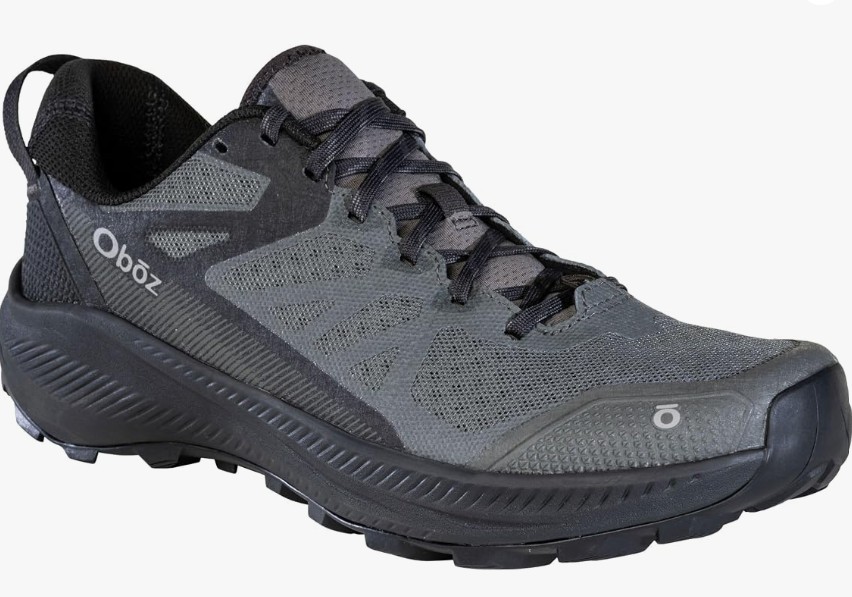
Oboz (short for “Outside Bozeman”) is famous among outdoor enthusiasts for one major feature: their insoles. While almost every other footwear brand includes cheap, flat foam liners, Oboz equips every shoe with their sculpted O FIT Insole®.
- Arch Support Mechanics: The dual-density EVA O FIT Insole features a high, sculpted arch pod that cradles medium-to-high arches directly out of the box. Combined with a rigid TPU shank in the midsole, the Katabatic prevents arch sag even when carrying a 25 lb daypack.
- Waterproofing: Oboz’s proprietary B-DRY membrane keeps external moisture out while letting sweat vapor escape through a breathable mesh upper.
- Trail Performance: Weighing under 13 ounces, it is built on a fast, athletic last with directional lugs that excel on wet mud and slick granite.
- Pros: Industry-leading factory arch support (no aftermarket insoles needed), reinforced heel cup, highly breathable.
- Cons: Runs slightly snug; hikers with wide feet should select the Wide (EE) sizing option.
3. HOKA Anacapa 2 Low GTX — Best Max-Cushioning for Plantar Fasciitis


If sharp trail impacts send shooting pain through your heel and arch, maximum cushioning combined with a rockered sole offers rapid relief. The HOKA Anacapa 2 Low GTX delivers signature HOKA plushness in a rugged, trail-ready package.
- Arch Support Mechanics: Rather than relying on a rigid plastic shank, the Anacapa uses a wide, broad-based EVA midsole with a Late-Stage Meta-Rocker. This smooth geometry reduces the flex load on your plantar fascia by rolling your foot naturally from heel-strike to toe-off.
- Waterproofing: Features a GORE-TEX Invisible Fit liner made with recycled textiles, bonded directly to the upper to eliminate pressure points.
- Trail Performance: The extended Hubble® heel absorbs impact on steep downhill descents, while the Vibram® Megagrip outsole provides reliable traction on wet, mossy surfaces.
- Pros: Unmatched joint and arch cushioning, broad stable footprint, eco-conscious recycled materials.
- Cons: Wide heel flare can feel slightly clumsy on narrow, technical rock ledges.
4. Merrell Moab Speed 2 GTX — Best Lightweight Option for Moderate Trails


Merrell’s classic “Mother of All Boots” (Moab) is famous for comfort, but traditional leather Moabs can feel heavy on long miles. The Moab Speed 2 GTX strips away unnecessary weight while preserving Merrell’s anatomical arch shape.
- Arch Support Mechanics: Built on a contoured FloatPro™ Foam midsole with a full-length rock plate. The arch curve is moderately pronounced, providing balanced support that suits neutral-to-flat foot profiles without causing pressure points.
- Waterproofing: GORE-TEX waterproof liner keeps water out while maintaining airflow through lightweight synthetic uppers.
- Trail Performance: Vibram® TC5+ rubber outsole with traction lugs specifically engineered to shed mud and debris with every step.
- Pros: Exceptionally lightweight (12.0 oz), soft collar padding, broad toe box.
- Cons: Softer midsole compresses faster under heavy backpacking loads over 30 lbs.
5. La Sportiva Spire GTX — Best for Technical Scrambles & Heavy Loads


When your day hike involves steep alpine scrambles, wet riverbeds, or variable mountain weather, the La Sportiva Spire GTX offers the rigidity and protection of a mountain boot in a low-cut design.
- Arch Support Mechanics: Features a compression-molded EVA midsole integrated with TPU inserts along the arch line. The shoe provides high torsional rigidity, preventing the arch from collapsing when edging on sharp granite footholds.
- Waterproofing: Uses GORE-TEX Surround® technology, which allows moisture vapor to vent out through breathing outlets under the foot bed, offering 360-degree climate control.
- Trail Performance: The Vibram® XS Trek outsole with Impact Brake System delivers unmatched traction when descending steep, wet inclines.
- Pros: Supreme waterproofing and breathability, incredible structural stability, highly durable upper.
- Cons: Slightly heavier (15.2 oz) and commands a premium price tag.
6. Danner Trail 2650 GTX — Best Ultralight Option for Thru-Hiking
Named after the 2,650-mile Pacific Crest Trail, the Danner Trail 2650 GTX is engineered for hikers who prioritize fast-and-light mileage across variable climate zones.
- Arch Support Mechanics: Danner combines an ultra-lightweight EVA midsole with an external EXO Heel System. The heel counter locks your rearfoot in place, preventing your arch from flattening inward during high-mileage days.
- Waterproofing: 100% waterproof GORE-TEX lining paired with durable suede and textile uppers.
- Trail Performance: Features a Vibram® 460 outsole with Megagrip rubber that sticks to wet timber, dry desert sand, and slick river stones alike.
- Pros: Sleek design, excellent heel lock, lightweight at 12.4 oz.
- Cons: Shallow arch profile out of the box (pairs best with custom orthotics for high arches).
Understanding Arch Biomechanics: High, Medium, & Flat Arches
Choosing the right shoe requires matching the footwear’s interior geometry to your specific foot profile.
┌────────────────────────────────────────────────────────────────────────────────────────┐
│                               FOOT ARCH ARCHITECTURES                                  │
├───────────────────────────────┬───────────────────────────────┬────────────────────────┤
│ HIGH ARCH (Cavus Foot)        │ MEDIUM ARCH (Neutral)         │ FLAT ARCH (Pes Planus) │
│ • Poor natural shock absorb   │ • Even weight distribution    │ • Overpronation risk   │
│ • Needs: Max Cushioning       │ • Needs: Balanced Support     │ • Needs: Rigid Motion  │
│   & Flexible Arch Support     │   & Flexible Midsole          │   Control & Structure  │
└───────────────────────────────┴───────────────────────────────┴────────────────────────┘
- High Arches (Pes Cavus): High arches absorb impact poorly because less surface area touches the ground. Hikers with high arches need cushioned, contoured arch pillars (like the Oboz Katabatic or HOKA Anacapa 2) to distribute impact evenly across the foot.
- Medium/Neutral Arches: Neutral arches flex naturally to absorb shock. Look for moderate anatomical support (like the Salomon X Ultra 5 or Merrell Moab Speed 2) that preserves natural biomechanics without forcing the foot outward.
- Flat Arches / Overpronation (Pes Planus): When flat arches collapse under load, the ankle rolls inward (overpronation), leading to knee strain and plantar fasciitis. Hikers with flat arches require firm medial posts and torsional shanks (like the La Sportiva Spire or Salomon ADV-C Chassis).
Regional Trail Considerations across Key US Hiking Hubs
Trail conditions vary wildly depending on where you hike. Here is how geographic factors dictate your choice of footwear:
┌─────────────────────────────────────────────────────────────────────────────────────────┐
│                               REGIONAL TRAIL MAP & NEEDS                                │
├──────────────────────────┬───────────────────────────────────┬──────────────────────────┤
│ Region / State           │ Key Trail Terrain                 │ Footwear Priorities      │
├──────────────────────────┼───────────────────────────────────┼──────────────────────────┤
│ Pacific Northwest (WA)   │ Mud, wet roots, mossy creek beds  │ High-grade GORE-TEX,     │
│                          │                                   │ deep 4.5mm+ Vibram lugs  │
├──────────────────────────┼───────────────────────────────────┼──────────────────────────┤
│ California & Sierra (CA) │ Granite slabs, scree, elevation   │ Torsional stability,     │
│                          │                                   │ sticky rubber outsoles   │
├──────────────────────────┼───────────────────────────────────┼──────────────────────────┤
│ Texas Hill Country (TX)  │ Limestone, loose gravel, heat     │ Breathable membrane,     │
│                          │                                   │ firm rock protection     │
├──────────────────────────┼───────────────────────────────────┼──────────────────────────┤
│ New York & Catskills(NY) │ Wet clay, slate, slick rock gaps  │ Waterproofing & firm     │
│                          │                                   │ arch shank support       │
└──────────────────────────┴───────────────────────────────────┴──────────────────────────┘
- Pacific Northwest (Washington – Cascades & Olympic National Park): Constant rainfall, rainforest mud, and slick logs demand uncompromising GORE-TEX or B-DRY waterproofing paired with sticky Vibram Megagrip soles.
- California (Sierra Nevada, Yosemite, Bay Area Coast): High elevation gain over hard granite requires torsional rigidity and rock plates to prevent arch fatigue when climbing steep stone steps.
- Texas (Hill Country, Big Bend, Palo Duro Canyon): Rocky limestone, loose gravel, and sudden flash-flood creek crossings call for lightweight agility, durable toe caps, and firm arch shanks.
- New York (Adirondacks, Catskills, Hudson Valley): Wet clay trails, slippery slate, and root-filled paths demand a balance of waterproof protection and reliable lateral heel stabilization.
5 Essential Tips for Hiking with Arch Issues
Pro Tip: Never rely solely on a shoe’s factory insert if you suffer from severe plantar fasciitis or high arch collapse. Pair your footwear with medical-grade orthotic insoles (like Superfeet, Tread Labs, or Powerstep) designed specifically for hiking.
- Size Up by Half a Size: Feet expand up to a half-size during long, strenuous day hikes due to heat and blood flow. Ensure a thumb-width of space between your longest toe and the end of the shoe to prevent bruised toenails on steep descents.
- Master Heel-Lock Lacing: Use the top eyelets (the “lace lock” technique) to prevent your heel from lifting out of the shoe. A secure heel pocket holds your arch directly over the shoe’s built-in support structure.
- Wear Merino Wool Socks: Pair your waterproof shoes with high-density merino wool socks (e.g., Darn Tough or Smartwool). Merino wool wicks moisture, buffers arch friction, and prevents blisters even when humidity builds inside a waterproof liner.
- Pre-Condition Your Feet: Stretch your calves, Achilles tendons, and plantar fascia before heading up the trail. Rolling a tennis or lacrosse ball under your foot arch for five minutes every morning improves soft tissue elasticity.
- Dry Your Shoes Properly After wet Trips: Never place waterproof membrane shoes near direct heat sources like fires or radiator heaters, as extreme heat shrinks membranes and degrades glued arch shanks. Remove insoles and air-dry at room temperature.
Top 10 Frequently Asked Questions (FAQ)
1. Can a lightweight hiking shoe provide as much arch support as a heavy leather boot?
Yes. Modern hiking shoes achieve high structural support through composite materials like TPU (thermoplastic polyurethane) shanks, molded heel baskets, and dual-density EVA midsoles. These technologies deliver rigid arch control without the heavy weight of traditional full-grain leather boots.
2. Is GORE-TEX better than brand-proprietary waterproof membranes?
GORE-TEX remains the gold standard for long-lasting waterproof protection and breathability. However, proprietary membranes like Oboz B-DRY or Columbia OutDry offer comparable waterproofing performance, often at a slightly lower price point.
3. Will waterproof hiking shoes make my feet hot and sweaty?
Waterproof membranes do reduce overall ventilation compared to non-waterproof mesh shoes. However, modern designs like GORE-TEX Surround® or lightweight synthetic liners vent heat effectively. For wet, muddy, or cold conditions, the waterproof barrier outweighs the slight increase in internal temperature.
4. How do I know if I need a shoe with high arch support versus neutral arch support?
Check your footprint: wet the bottom of your foot and step onto a piece of cardboard. If you see only your heel and forefoot with a very thin line along the outside edge, you have high arches. If you see almost your full footprint with no distinct inner curve, you have flat arches.
5. What is the average lifespan of a lightweight waterproof hiking shoe?
Most high-quality lightweight hiking shoes last between 400 to 700 trail miles. While the outsole and upper may look intact, the EVA foam midsole and internal arch shank gradually compress over time, losing their cushioning and support capabilities.
6. Can I put custom orthotics inside lightweight waterproof hiking shoes?
Yes. Almost all technical hiking shoes feature removable factory footbeds. Remove the stock insole and insert your custom orthotic or aftermarket high-arch support insole (such as Superfeet Green or Tread Labs) for personalized comfort.
7. What is the difference between a trail runner and a lightweight hiking shoe?
Trail runners prioritize maximum speed, flexibility, and minimal weight (often non-waterproof). Lightweight hiking shoes feature stiffer midsoles, integrated rock plates, protective rubber toe bumpers, durable waterproof bootie liners, and structured arch shanks designed to carry pack weight safely.
8. How do I clean and maintain my waterproof hiking shoes?
Rinse off mud with lukewarm water and a soft brush after every trip. Never use harsh detergent soaps, which degrade waterproof coatings. Periodically re-treat the outer fabric with a Durable Water Repellent (DWR) spray (such as Nikwax Fabric & Leather Proof) to keep water beading off the upper.
9. Why do my arches hurt even when wearing supportive hiking shoes?
Arch pain can occur if the shoe’s built-in arch support is positioned too far forward or backward relative to your foot’s flex point. Pain can also stem from unconditioned foot muscles or unaddressed plantar fasciitis. If pain persists, consult a podiatrist for a dynamic gait analysis.
10. Are low-cut hiking shoes safe for backpacking with a loaded pack?
Low-cut hiking shoes are safe for trail loads up to 25–30 lbs, provided the shoe features strong torsional rigidity, an internal shank, and a secure heel counter. For pack weights exceeding 35 lbs or rugged off-trail routes, mid-cut boots offer additional protection against lateral ankle rolls.
Conclusion
Finding the best lightweight waterproof hiking shoe with arch support comes down to matching your foot structure with the right internal architecture.
If you require rigid lateral stability on rocky trails, the Salomon X Ultra 5 GTX delivers top performance. If you need maximum out-of-the-box arch contouring, the Oboz Katabatic Low B-DRY leads the category. Hikers recovering from plantar fasciitis or joint fatigue will benefit from the plush rockered design of the HOKA Anacapa 2 Low GTX.
Investing in proper footwear ensures dry feet, stable strides, and pain-free miles whether you are exploring local state parks or embarking on multi-day mountain wilderness adventures.


