


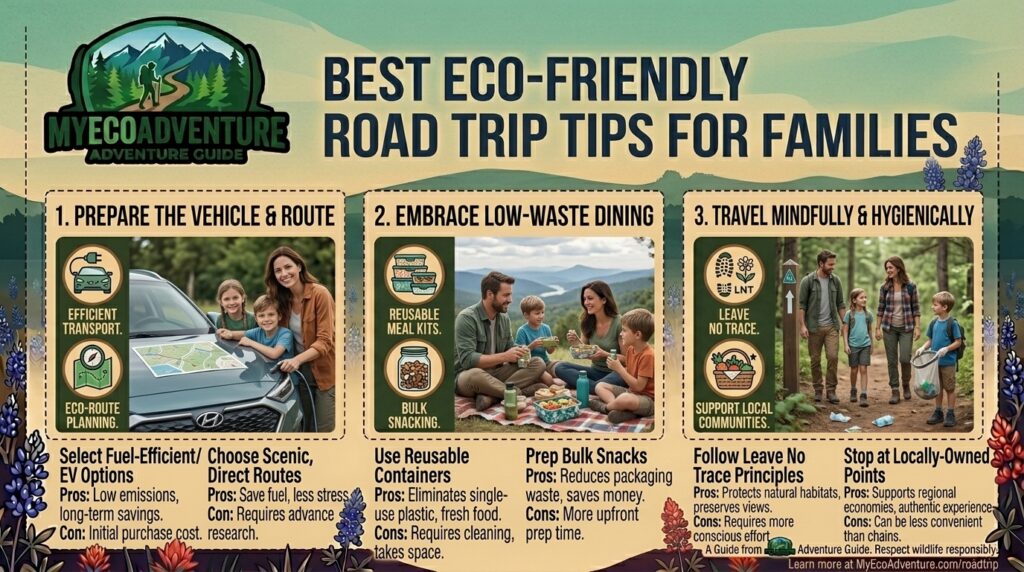
The Ultimate Guide to Sustainable Adventure: Eco-Friendly Road Trip Tips for Families
There is a timeless magic to the classic family road trip. Eco-Friendly Road Trip Tips for Families. Watching the landscape change through the window, queuing up a collaborative family playlist, and discovering hidden roadside overlooks create memories that screen time simply cannot match.
However, as outdoor enthusiasts, it’s hard to ignore the environmental footprint left in our exhaust wake. Between greenhouse gas emissions, single-use plastic waste from highway gas stations, and the ecological disruption of fragile natural spaces, a standard road trip can heavily contrast with a leave-no-trace lifestyle.
But you don’t have to choose between family adventure and environmental stewardship. With intentional planning, smart vehicle preparation, and zero-waste systems, you can transform your next highway journey into a low-impact, sustainable expedition.
How do you plan an eco-friendly family road trip for families?
The short answer is the “Green Corridor” framework. A truly sustainable road trip balances vehicle efficiency optimization (minimizing aerodynamic drag and maintaining precise tire inflation) with localized, eco-conscious route planning, plastic-free meal prep systems, and strict adherence to Leave No Trace principles at every stop.
In this ultimate, comprehensive guide, we will break down the science of road trip emissions, provide actionable packing systems, and give you a complete roadmap to eco-friendly family travel.
1. Pre-Trip Optimization: Maximizing Your Vehicle’s Biomechanics
Before your family loads up the trunk, the very first step to an eco-friendly road trip happens in your driveway or local garage. How your vehicle cuts through the air and grips the pavement directly dictates your carbon output.
The Aerodynamic Drag Penalty
Many families rely on rooftop cargo boxes or gear racks to hold luggage, camping equipment, or bicycles. While convenient, roof racks disrupt the vehicle’s aerodynamic profile, causing massive aerodynamic drag.
- The Impact: According to fuel economy data, a roof-mounted cargo box can reduce fuel efficiency by 10% to 25% at highway speeds (over 65 mph).
- The Eco-Solution: If you must use extra storage, opt for a hitch-mounted rear cargo box instead of a rooftop carrier. Rear boxes sit in the aerodynamic slipstream behind the vehicle, minimizing wind resistance and saving substantial amounts of fuel. If you have space inside, pack tightly and keep the roof entirely bare.
The Tire Inflation Math
Under-inflated tires create excessive rolling resistance against the asphalt. This forces your engine to burn more fuel simply to maintain highway speeds.
- The Fix: Check your vehicle’s optimal tire pressure (found on the sticker inside the driver’s door frame, not the max pressure stamped on the tire itself) before departing. Properly inflated tires can improve gas mileage by up to 3%, while simultaneously extending the life of your tire tread and keeping rubber particles out of local waterways. Best Eco-Friendly Camping Gear for Families.
2. Zero-Waste Fueling and Plastic-Free Provisions
The trash can at a highway rest stop is a microcosm of single-use plastic dependency. Between individually wrapped snacks, plastic water bottles, and fast-food packaging, a family of four can easily generate a mountain of landfill-bound waste in just a single weekend.
       HIGHWAY TRASH TRAP                       ZERO-WASTE SYSTEM
   (Single-Use Rest Stop Waste)             (Eco Adventure Base Approved)

     [ Plastic Water Bottles ]  =======>    [ Double-Walled Stainless Flasks ]
     [ Individually Wrapped Snacks ] ===>   [ Bulk Silicone Stasher Bags ]
     [ Single-Use Fast Food Bags ] =====>   [ Stainless Steel Tiffin Boxes ]
     [ Plastic Utensils & Straws ] =====>   [ Bamboo Travel Utensil Pouches ]
The Mobile Hydration Station
Plastic water bottles are one of the most common pollutants found along national park trails and highway shoulders.
- The System: Designate a dedicated “Hydration Bin” in the vehicle. Equip every family member with a heavy-duty, double-walled stainless steel water flask. Inside the bin, pack a large 5-gallon refillable water jug with a integrated spigot. Instead of buying plastic cases at gas stations, your family can refill their personal flasks directly from your bulk onboard supply.
Master the “Tiffin Box” Snack Prep
Pre-packaged convenience snacks (chips, crackers, fruit snacks) generate non-recyclable plastic film packaging that litters ecosystems.
- The System: Switch your family snack game to bulk-purchased goods divided into reusable containers. Use stainless steel tiffin boxes, silicone snack bags, or wide-mouth mason jars. Fill them with homemade trail mixes, dried organic fruits, fresh cut vegetables, and locally sourced cheeses.
3. Green Driving Mechanics: Tuning the Driver, Not Just the Car
Your physical habits behind the wheel play an enormous role in your trip’s total emissions. Aggressive driving is a major contributor to high fuel consumption.
The 60 MPH Sweet Spot
Vehicles are engineered to achieve maximum fuel economy at specific speeds. For the vast majority of cars, SUVs, and crossovers, fuel efficiency peaks between 50 mph and 60 mph. Once you accelerate past 60 mph, fuel economy drops significantly due to exponential increases in wind resistance. Driving at 75 mph instead of 65 mph burns roughly 15% more fuel just to arrive a few minutes earlier. Relax, enjoy the slower pace, and save money at the pump while sparing the atmosphere.
Smart Use of Cruise Control
Maintaining a perfectly steady speed is highly eco-friendly. Foot driving naturally results in minor, repetitive micro-accelerations that burn extra fuel. Use your vehicle’s cruise control function on flat, sweeping stretches of interstate highway. However, turn cruise control off in steep, mountainous terrain; automated systems will often force the transmission to downshift aggressively to maintain speed uphill, which drastically spikes fuel consumption. Instead, allow your vehicle to naturally slow down slightly on steep climbs, then regain momentum on the descent.
4. Selecting Eco-Conscious Destinations and Accommodations
An eco-friendly road trip isn’t just about how you travel; it’s about where you stay and support local economies.
Prioritize Green Closures and State Parks
Instead of mapping your route through heavily commercialized tourist traps that put immense strain on local infrastructure, seek out lesser-known state parks, national forests, and conservation areas. Spreading out tourism footprint—a concept known as de-tourism—helps prevent the degradation of ultra-popular natural landmarks.
Look for Certified Green Lodging
If you aren’t pitching a tent or utilizing a sustainable camper setup, audit your hotels or cabins. Look for properties boasting third-party eco-certifications such as LEED Certification, Green Globe, or Green Key. These properties utilize low-flow water fixtures, solar arrays, energy-efficient lighting, and strict composting and recycling protocols.
5. Road Trip Leave No Trace (LNT) Checklist for Families
When your family steps out of the vehicle at a scenic overlook or trail head, execute these core tenets of the Leave No Trace ethos:
- Pack It In, Pack It Out: Ensure absolutely no trash—including organic matter like apple cores or banana peels—is left behind. While biodegradable, tossed food scraps attract wildlife to dangerous highway shoulders and alter natural diets.
- Stick to the Durable Surface: At rest stops and scenic viewpoints, keep children and pets firmly on paved paths, boardwalks, or established dirt trails. Trampling local flora destroys micro-ecosystems and accelerates soil erosion.
- Ditch the Chemical Sunscreens: If your road trip includes stops at alpine lakes, rivers, or ocean beaches, protect aquatic life by equipping your family with mineral-based, reef-safe sunscreens utilizing zinc oxide or titanium dioxide rather than chemical alternatives like oxybenzone.
6. Frequently Asked Questions (FAQ)
Are electric vehicles (EVs) practical for a long family road trip?
Yes, absolutely. Modern EV infrastructure has expanded massively along major highway corridors. Most contemporary electric vehicles offer ranges between 250 and 350 miles on a single charge, easily matching a typical morning or afternoon driving stint. Utilizing apps like PlugShare or ABRP (A Better Route Planner) allows you to map out fast-charging stations paired with family lunch breaks or playground stops, making the charging experience a seamless part of the adventure.
How can I calculate and offset my road trip’s carbon footprint?
You can use reputable online carbon calculators (such as Terrapass or MyClimate) by entering your vehicle type and total trip mileage. The calculator will output your trip’s total metric tons of $CO_2$. You can then purchase verified carbon offsets that fund methane capture, reforestation, or renewable energy projects. While offsetting shouldn’t replace clean driving habits, it is an excellent way to neutralize your unavoidable highway emissions.
How do I handle trash inside the vehicle without using single-use plastic bags?
Instead of hanging a plastic grocery bag from the back of the car seat, invest in a dedicated, washable car trash can lined with a durable, leak-proof silicone or nylon liner. At the end of each travel day, empty the contents into proper recycling or waste receptacles at your campsite or lodging, rinse the liner, and reuse it for the duration of the journey.
Summary: Leaving a Legacy of Conservation
Planning an eco-friendly family road trip doesn’t require sacrificing the classic comforts or spontaneous joys of the open highway. By optimizing your vehicle’s aerodynamic profile, building a robust zero-waste hydration and snack infrastructure, and slowing down to the 60 mph efficiency sweet spot, you turn your travel miles into an educational, living example of conservation for your children.
Through mindful preparation and deep respect for the landscapes you cross, your family can explore the natural world responsibly—preserving its pristine beauty for the generations of adventurers yet to come.
Keywords: eco friendly road trip tips for families, sustainable travel habits, zero waste road trip packing list, maximize fuel efficiency road trip, green travel destinations with kids, reduce carbon footprint driving, leave no trace family camping.


