


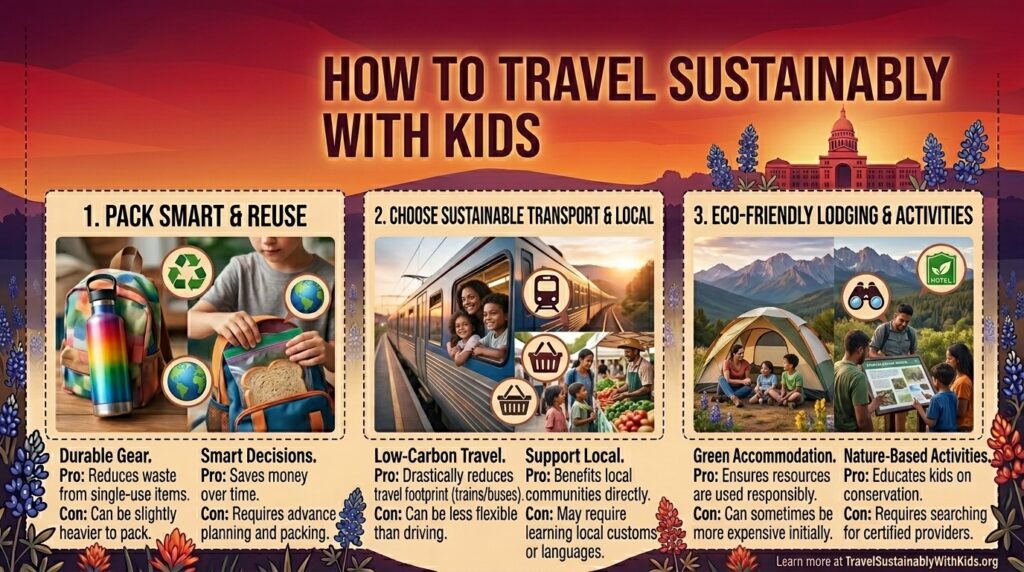
The Ultimate Eco-Adventure Family Guide: How to Travel Sustainably With Kids
For passion-driven travelers, having children doesn’t mean your adventuring days are over—it simply means your adventures are about to change shape. But as eco-conscious parents quickly realize, traveling with a family introduces an entirely new logistical footprint. From the mountain of single-use convenience items packaged for toddlers to the high carbon output of long-distance transport, family vacations can easily conflict with a sustainable lifestyle.
However, teaching the next generation to love, respect, and protect our planet is the ultimate gift.
So, how do you travel sustainably with kids without losing your mind? How to keep kids busy during summer vacation?
The short answer is micro-choices and slow-travel logistics. Sustainable family travel relies on swapping fast-paced itineraries for deeper regional exploration, eliminating single-use plastic waste via a dedicated “kid-friendly reusables kit,” choosing eco-certified lodging, and turning environmental stewardship into a fun, gamified part of the adventure itself.
In this ultimate comprehensive guide, we will break down the exact logistics of low-impact family travel, how to travel sustainably with kids, how to minimize your carbon and plastic footprints on the road, and how to raise conscious global citizens while exploring the great outdoors.
1. Shift the Mindset: Slow Travel vs. Tick-Box Tourism
The foundation of eco-adventure with kids starts long before you pack a bag; it begins with how you plan your itinerary. The traditional vacation model involving three flights, four hotel changes, and five major tourist cities in a single week is highly carbon-intensive and incredibly stressful for young children.
Why “Slow Travel” is Better for the Planet and Your Sanity
Slow travel means choosing one destination and staying there longer. Instead of rushing through three countries, you spend a week or two deeply exploring a single valley, national park, or eco-village.
FAST TOURISM (High Impact, High Stress)     SLOW TRAVEL (Low Impact, Low Stress)
  [City A] --(Flight 1)--> [City B]              [ single Regional Basecamp ]
     |                        |                           /     |     \
 (Flight 2)               (Flight 3)                     v      v      v
     v                        v                     [Local   [Nature  [Cultural
  [City C]                 [City D]                  Hike]   Reserve]   Site]
- Environmental Benefit: You drastically cut down on internal flights, train rides, and rental car emissions, which are the leading drivers of tourism’s carbon footprint.
- Child Development Benefit: Kids thrive on routine and familiarity. Staying in one place allows them to acclimate to the local environment, form bonds with local families, and experience nature at a restorative, unstructured pace.
2. Low-Carbon Logistics: Choosing Your Family Transportation
Transport is the heaviest piece of the sustainability puzzle. When traveling with kids, look for transportation models that turn the journey itself into part of the eco-adventure.
A. The Train Over the Plane
Whenever geographically possible, replace short-haul domestic flights with train travel.
- The Eco-Math: Trains produce up to 80% less greenhouse gas emissions per passenger kilometer compared to airplanes.
- The Family Hack: Unlike airplanes—where kids are strapped into tight seats with strict seatbelt signs—trains allow children to walk around, visit the dining car, and watch changing landscapes through massive windows. It turns transit into an active, low-stress exploration.
B. The Electric Vehicle (EV) Road Trip
If a road trip is your best option, look into renting an electric vehicle. Modern charging networks make EV road trips entirely feasible, and planning charging stops perfectly aligns with the frequent bathroom, snack, and stretch breaks that young kids inherently require.
3. The “Zero-Waste Kid” Packing Blueprint
The global baby and child industry is flooded with single-use plastics designed for “convenience.” To travel sustainably, you must actively build a reusable toolkit that shields your family from transient waste.
The Essential Eco-Family Gear Checklist – How to Travel Sustainably With Kids
| Traditional Waste Item | Sustainable Alternative | Why It Matters for Travel |
| Single-Use Wet Wipes | Washable Bamboo Cloths + Water | Prevents microplastic pollution in local water systems. |
| Plastic Snack Baggies | Silicone Stasher Bags / Stainless Tins | Keeps snacks fresh on hikes without creating trash. |
| Bottled Water | Insulated Stainless Bottles + Filter Pen | Saves money and keeps water cold during outdoor treks. |
| Disposable Diapers | Biodegradable Eco-Diapers or Hybrid Cloth | Traditional diapers take 500 years to decompose in local landfills. |
Managing Snacks on the Go
Hungry kids are the primary cause of emergency plastic purchases. Before leaving your eco-lodge or rental home for a day of exploring, visit a local farmers market or bulk grocery store. Fill your silicone bags with local fruits, nuts, and crackers. Not only does this eliminate single-use packaging, but it also supports the local agricultural economy directly. How do you get your kids outside?
4. How to Choose Truly Sustainable Family Lodging
“Greenwashing” is rampant in the travel industry. A hotel hanging a sign that asks you to reuse your bath towel does not make it an eco-resort. When booking family accommodations, look for deep sustainability features.
Look for GSTC Accreditation
Search for properties certified by the Global Sustainable Tourism Council (GSTC). These accommodations are strictly audited across waste management, energy consumption, conservation efforts, and fair labor practices.
Prioritize Kitchen Facilities
Whenever possible, book cabins, eco-lodges, or apartments that include a full kitchen. Being able to cook your own meals using local, organic ingredients drastically cuts down on the immense food waste and plastic packaging generated by continuous restaurant dining.
5. Gamifying Environmental Stewardship for Kids
Sustainability shouldn’t feel like a lecture or a set of strict rules to a child; it should feel like an engaging, rewarding game. Use these field-tested eco-adventure prompts to keep your kids engaged:
The “Leave No Trace” Treasure Hunt
Turn trail cleaning into a game. Give your children a small canvas bag and a pair of lightweight utility tongs. Challenge them to spot and collect any litter left behind by other hikers on the trail. The child who safely collects the most pieces of trash wins the right to pick the evening’s campfire story or dessert.
The Daily Eco-Footprint Audit
At dinner, have a family roundtable discussion. Ask your kids to identify three sustainable choices the family made that day (e.g., “We walked to the park instead of driving,” “We bought unpackaged apples,” or “We turned off all the lodge lights before leaving”). This simple reflection builds lifelong conscious habits.
6. Frequently Asked Questions (FAQ)
Is it realistic to use cloth diapers while traveling?
It depends entirely on your access to laundry facilities. If you are staying at an eco-lodge or apartment with a washing machine, traveling with cloth diapers is highly achievable. If you are backcountry camping or moving locations frequently, look into certified compostable or biodegradable disposable diapers to balance convenience with environmental ethics.
How do we offset our carbon footprint if we must fly?
If international air travel is unavoidable, choose direct flights (takeoffs and landings emit the highest amount of carbon). Avoid the airline’s generic “click here to offset for $5” box at checkout, as these are often unregulated. Instead, calculate your family’s flight emissions using a trusted tool like MyClimate or Gold Standard and invest directly in verified carbon-reduction or reforestation projects.
How do we respect wildlife responsibly with young children?
Children naturally want to touch or feed wild animals, which can disrupt natural feeding behaviors and create dangerous dependencies. Teach your kids the “Rule of Thumb”: have them hold their thumb out at arm’s length, close one eye, and try to cover the animal. If they can’t completely hide the animal behind their thumb, they are standing too close. Always view wildlife through binoculars or a zoom lens.
Summary: The Eco-Adventure Family Oath
Traveling sustainably with kids isn’t about achieving a flawless, zero-carbon vacation; it is about making conscious, intentional choices that minimize harm and maximize global awareness. By practicing slow travel, curating a zero-waste packing kit, and actively engaging your kids in local conservation, you transform family vacations into profound educational experiences.
The earth is our shared playground. By treading lightly upon it today, we ensure our children have a vibrant, healthy planet to explore when they grow up to become independent adventurers.
Keywords: how to travel sustainably with kids, eco friendly family travel, slow travel with children, zero waste family packing list, green camping with kids, sustainable family vacation tips, eco adventure parenting.


