


For campers exploring the vast wilderness regions of Texas, New York, California, Washington, and the surrounding areas of San Francisco, the cooling seasons bring a welcome relief from the summer heat. As the temperature drops, a common question arises: “Are snakes still a concern, or can I stop worrying about them in my tent?”
The short answer is that snake activity decreases significantly as temperatures drop, but it does not stop entirely. Understanding the biology of snakes and how they react to “cold weather” is key to staying safe and informed on your next outdoor adventure.
The Biology of Cold-Blooded Survival
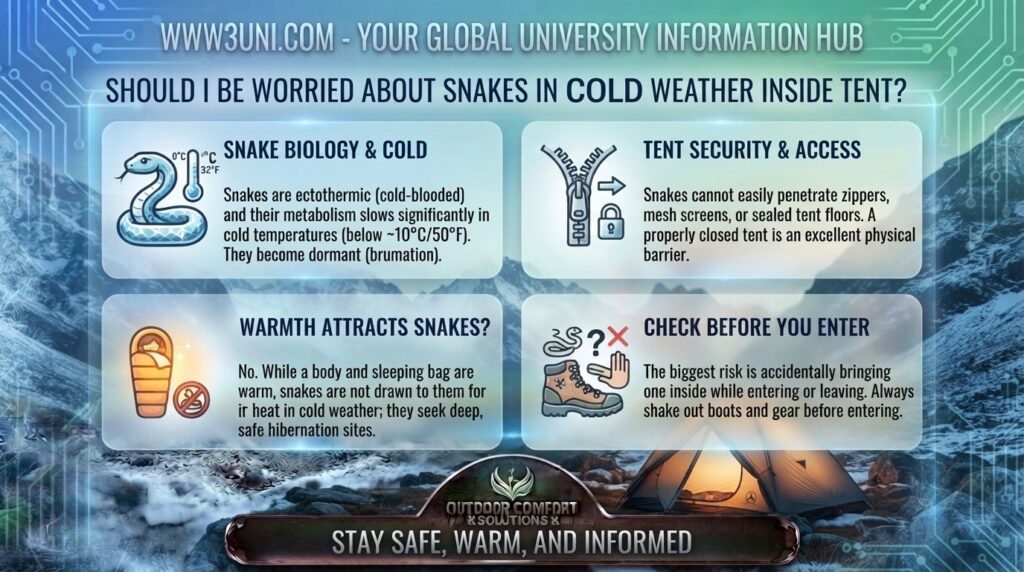
Snakes are ectothermic (cold-blooded). They cannot generate their own body heat; they rely on the external environment to regulate their internal temperature.
- Optimal Temperature: Most snakes are most active when the ambient temperature is between 70°F and 90°F (21°C–32°C).
- The “Slow Down” Phase: As temperatures fall below 60°F (15°C), a snake’s metabolism begins to slow down. They become less agile, their reaction times decrease, and they become significantly less interested in hunting or moving.
- Brumation: This is the reptile version of hibernation. When temperatures drop consistently, snakes seek out deep, insulated shelters—like rock crevices, animal burrows, or deep underground—to enter a state of dormancy. They do not typically seek out tents during this period.
Are You Actually in Danger?
In regions like Washington or New York, where winters are harsh, snakes are tucked away in deep, protected dens for months. In warmer states like Texas or coastal California, snakes may remain active on sunny, mild winter days.
When You Should Still Be Cautious:
- “Snake-Friendly” Days: If you are camping in a region with a mild winter and the temperature spikes into the high 60s or 70s during the day, snakes may emerge from their dens to bask in the sun.
- Proximity to Dens: If your campsite is near a known denning area (hibernaculum), you are more likely to see a sluggish snake moving between its den and a sunning spot.
- Insulated Shelters: While a tent is not a natural place for a snake to spend the winter, they occasionally crawl into warm, enclosed spaces if they are caught out during a sudden cold snap.
Why Your Tent Is Unlikely to Be a Target in Winter
In the heat of summer, a tent might offer a “cool” spot in the shade. In the winter, however, snakes are looking for thermal stability—deep, underground insulation that protects them from freezing temperatures. A nylon tent is thin, offers no insulation, and is essentially a “cold box.” A snake seeking shelter for the winter will ignore your tent in favor of deep, earthen protection.
10 Frequently Asked Questions (FAQ)
1. At what temperature do snakes stop being active?
While it varies by species, most snakes become noticeably sluggish below 60°F and seek shelter below 50°F.
2. Can I get bit by a cold snake?
Yes. A cold snake is still a snake. While they are much slower, they can still strike if threatened. Never handle a sluggish snake.
3. Do snakes crawl into tents for warmth in winter?
It is extremely rare. Snakes prefer deep, subterranean locations for winter survival. Your tent does not provide the consistent temperature they need to survive the cold.
4. Are snakes more aggressive in the fall?
Some species may be more active in the fall as they migrate toward their denning sites, but they are generally not “aggressive”—they are just moving.
5. Does the type of camping location matter?
Yes. Camping near deep rock fissures or rocky cliffs in late autumn can bring you closer to snake denning sites.
6. Do I still need to keep my tent zipped in winter?
Yes, but for different reasons. Zipping your tent keeps out mice, spiders, and other small creatures that are active in cold weather.
7. Should I check my boots more carefully in summer than winter?
In summer, you should always check your boots. In winter, the necessity is much lower, but it is still a great habit to maintain.
8. Is it “snake season” anywhere in the U.S. in winter?
In the extreme southern parts of Texas or California, winter can be mild enough that some species remain active year-round. Always check local regional reports.
9. Should I be afraid to hike in the winter?
Absolutely not. Winter is one of the safest times to hike regarding snake encounters.
10. If I see a snake in cold weather, what should I do?
The rules stay the same: Leave it alone. It is likely just trying to find a warm place to bask. Give it space and go about your day.
Conclusion
The fear of snakes in cold weather is largely misplaced. As the temperatures drop, these animals are focused on survival and finding deep, insulated dens—not on exploring your campsite. While you should never be completely oblivious to your surroundings, winter camping provides a unique opportunity to enjoy the outdoors with virtually zero risk of snake encounters.
Focus on staying warm, packing the right gear, and enjoying the quiet of the off-season. The snakes are safely tucked away, leaving the trails and the woods to you.
Disclaimer: This information is for educational purposes. Nature is unpredictable, and regional variations in climate can affect animal behavior. Always defer to the safety advice of park rangers in the specific area you are visiting.


