


Camping is an immersive way to experience the untamed beauty of places like the rugged terrains of Texas, the lush forests of Washington, the coastal paths of California, and the hidden gems near New York and San Francisco. However, encounters with wildlife—specifically snakes—can turn a peaceful trip into a moment of high tension.
A common question arises in moments of fear: “Should I kill the snake to keep my campsite safe?”
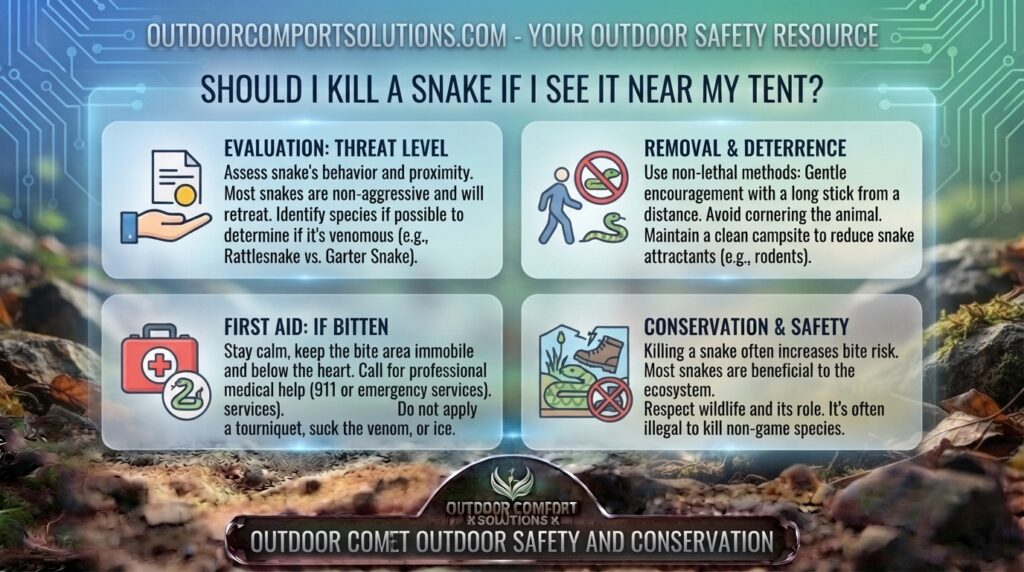
The definitive answer from wildlife experts, park rangers, and conservationists across the United States is no. Killing a snake is not only unnecessary but also the most common cause of snakebites.
Why You Should Never Kill a Snake Near Your Tent
It is a natural human instinct to eliminate a perceived threat, but when it comes to snakes, that instinct is often counterproductive. Here is why you should holster the shovel or rock and choose a different path.
1. The High Risk of Being Bitten
The vast majority of snakebites in North America occur when a person attempts to kill, harass, or capture a snake. When you approach a snake with a weapon, you are forcing it into a defensive position. A snake that was otherwise content to slither away will now strike to protect its life.
2. Snakes Are Essential for Your Campsite’s Hygiene
Snakes are the “custodians” of the ecosystem. They are primarily rodent eaters. By keeping the local mouse, rat, and chipmunk population in check, they prevent those rodents from invading your gear, chewing through your food supplies, and bringing ticks or fleas into your camp. A campsite with a resident snake is often a campsite with fewer disease-carrying pests.
3. Most Snakes Are Harmless
The fear of snakes often blinds us to reality. The majority of snake species in the U.S. are non-venomous and generally shy away from human activity. Even venomous species, such as rattlesnakes or copperheads, prefer to flee rather than fight. They only strike when they feel trapped or threatened.
What to Do Instead: The “Non-Lethal” Protocol
If you encounter a snake near your tent, follow these steps to ensure your safety and the animal’s safety.
Step 1: Stop and Assess
Freeze. If you see the snake, it already knows you are there. Do not make sudden movements. Back away slowly until you are at least 6–10 feet from the snake.
Step 2: Give It Time and Space
Most snakes are just passing through. If you give the snake an “exit route,” it will almost always take it. Do not crowd the animal or block its path.
Step 3: Use Passive Deterrents
If the snake is lingering and you need it to move, you do not need to get close. Use a long-handled tool (like a trekking pole or a long stick) to gently tap the ground near the snake (not the snake itself). The vibrations are usually enough to encourage it to move along. Do not poke the snake.
Step 4: Secure Your Site
If you are worried about the snake coming back, look for why it might be there. Is there a pile of wood nearby? Is there food out? Remove the “attractions” so the snake has no reason to revisit your area.
Understanding Venomous vs. Non-Venomous
Misidentification is a major factor in these encounters. Many people kill harmless snakes (like Gopher snakes or King snakes) because they mistake them for Rattlesnakes.
- In Texas & California: Rattlesnakes are common. They are generally identifiable by their rattle and a heavy, triangular head.
- In New York & Washington: While venomous species exist, they are much rarer and less aggressive than those in the Southwest.
The Golden Rule: If you are not 100% sure what kind of snake it is, assume it is better left alone.
10 Frequently Asked Questions (FAQ)
1. What if it’s a rattlesnake? Does that change things?
Even with a rattlesnake, the protocol is the same: walk away. They are not out to “hunt” humans; they only bite in self-defense.
2. Can I use a shovel to move it?
If you must move it, use a very long-handled tool to nudge it, but it is much safer to simply wait for it to leave on its own.
3. Should I call the park rangers?
If you are at a developed campground and the snake is directly under your picnic table or inside your tent, yes, notify the camp host or rangers. They have the training and equipment to relocate the animal safely.
4. Will the snake follow me?
No. Snakes do not have the cognitive capacity to “track” or “hunt” humans.
5. What if my dog is with me?
If you have a pet, leash them immediately and move them away from the area. Dogs are curious and are the most common victims of snakebites.
6. Are there “snake repellent” sprays that work?
Most commercial snake repellents are ineffective and can be harmful to the environment. Prevention via a clean, organized campsite is far superior.
7. What do I do if I or my pet gets bitten?
Do not try to suck out the venom or use a tourniquet. These methods are outdated and harmful. Seek immediate medical attention. In the case of a pet, get them to the nearest emergency veterinarian as fast as possible.
8. Are snakes more active at night?
Many snakes are nocturnal or crepuscular (active at dawn and dusk), especially in hot climates like Texas. Use a flashlight when walking to the bathroom at night.
9. Should I wear boots?
Yes. High-quality hiking boots and long pants provide excellent protection against accidental bites while hiking or setting up camp.
10. Does a dead snake still pose a danger?
Yes! A reflex can cause a freshly killed snake to bite, and a severed head can still deliver a potent dose of venom. This is another reason why killing them is dangerous.
Conclusion
The wilderness is home to many creatures, and we are merely guests. By choosing to observe and give space rather than engage in violence, you ensure a much higher level of personal safety. A “kill-on-sight” mentality is a relic of the past; modern camping is about coexistence and respect for the natural world.
Keep your distance, store your food, and enjoy the beauty of the outdoors knowing that you are capable of sharing the trail with its rightful inhabitants.
Disclaimer: This information is for educational purposes. If you encounter a snake and are unsure of its species or potential danger, always prioritize your safety by maintaining distance and contacting local wildlife authorities.


