


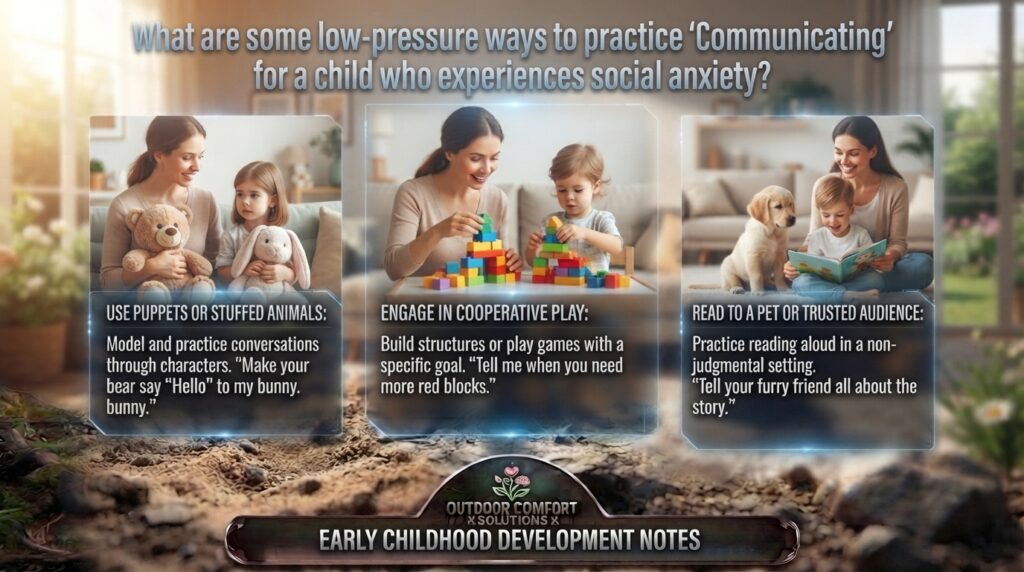
Social anxiety in children is not a behavioral flaw; it is a sensitive nervous system trying to protect itself. When a child experiences social anxiety, the prospect of “communicating” can feel like standing on a stage under a spotlight. For parents in high-paced environments—from the bustling streets of New York City and the tech-driven hubs of San Francisco to the diverse communities of Texas, Washington, and California—the pressure for children to be “outgoing” can feel immense.
At My Eco Adventure, we believe that social confidence, much like a hiking trail, is best navigated one small step at a time. True communication isn’t about being the loudest person in the room; it’s about feeling safe enough to express oneself. Here is your comprehensive guide to nurturing communication skills in your socially anxious child through low-pressure, high-impact strategies.
Understanding the Anxiety Loop
Before we look at the “how,” we must understand the “why.” Socially anxious children often fear negative evaluation. They overthink their words, worry about making mistakes, and feel physically overwhelmed by social interaction.
To help them, we must shift the goal. We aren’t aiming for “social butterfly” status; we are aiming for “social comfort.” When the pressure is removed, the child’s natural curiosity—the core of My Eco Adventure—can take the lead.
10 Low-Pressure Strategies for Communication
1. The “Side-by-Side” Technique
Direct eye contact and face-to-face conversation can be intimidating for an anxious child.
- The Approach: Engage in conversation while doing a task side-by-side—walking in a park, drawing, or assembling a model kit.
- Why it works: The lack of intense eye contact lowers the “social spotlight,” making it easier for the child to share their thoughts.
2. Practice “The Reporter” Game
Turn communication into a curiosity-driven game rather than an interrogation.
- The Approach: Give your child a “reporter’s notebook.” Their job is to find three facts about a familiar relative or a pet (e.g., “What is their favorite snack?” “Where do they like to nap?”).
- The Benefit: It gives the child a specific, controlled task, which reduces the ambiguity that often fuels social anxiety.
3. Start with “Low-Stakes” Transactions
Use the local resources in your city (whether it’s a bodega in NYC or a coffee shop in San Francisco) to practice small, predictable interactions.
- The Approach: Have your child hand the payment to the cashier or ask for a napkin.
- The Goal: These interactions have a clear beginning, middle, and end, making them safe territory for a child to build confidence.
4. Utilize “Character Role-Play”
Children often feel safer speaking through a persona.
- The Approach: Use puppets, stuffed animals, or even superheroes. If your child is struggling to talk about their day, ask, “What would your favorite hero say happened at school today?”
- The Result: It provides a healthy emotional distance that allows the child to express feelings they might otherwise keep bottled up.
5. Leverage Digital Connection (With Boundaries)
For tech-forward families in areas like Seattle or California, digital communication can be a gateway.
- The Approach: Encourage your child to send a voice note or a quick video to a grandparent or close friend about an interest (like a new rock collection or a cool insect they found).
- Why it works: They can control the environment and “re-do” the message if they feel it wasn’t right, reducing the fear of a “social mistake.”
6. The “Interest Bridge”
Social anxiety often vanishes when a child is talking about a passion.
- The Approach: Identify what your child loves—be it dinosaurs, space, or local wildlife. Find a local club or peer group dedicated strictly to that topic.
- The Logic: It is easier to talk about something than it is to talk about yourself. The subject provides the context.
7. Teach “Active Listening” as a Superpower
Sometimes, children don’t talk because they don’t know what to say next.
- The Approach: Teach them that they don’t always have to speak to be a good communicator. Practice “nodding,” “smiling,” or “asking a follow-up question.”
- The Gain: This makes them feel like a participant even when they aren’t the one doing the heavy lifting in a conversation.
8. Use “The Three-Second Pause”
Anxiety makes kids feel like they need to respond instantly.
- The Approach: Model taking a slow breath before answering a question. Show them that it is okay to say, “Hmm, let me think about that.”
- The Benefit: This empowers the child to own their time and pace, reducing the “rushed” feeling that spikes anxiety.
9. Create “Social Scripts”
Anxious children often fear the unknown.
- The Approach: Practice “scripts” for common situations. “What can you say if you want to join a game?” or “How can you say no if someone asks for your toy?”
- The Result: Having a pre-planned response acts as a safety net, allowing them to participate with less mental fatigue.
10. Focus on “Micro-Wins”
Celebrate the attempts, not just the successes.
- The Approach: If your child said “hello” to a neighbor for the first time, acknowledge it privately. “I noticed you said hi today. That was really brave.”
- The Impact: This reinforces the behavior as something they can do, rather than something they have to do perfectly.
Frequently Asked Questions (FAQ)
1. Is social anxiety just “shyness”? No. While they share traits, social anxiety involves a significant level of distress or fear that interferes with daily life, whereas shyness is a personality trait.
2. Should I push my child into social situations to “get them over it”? Avoid “flooding” or pushing too hard. Gradual exposure (starting small and slowly increasing difficulty) is much more effective than forced participation.
3. What if my child refuses to talk to anyone outside the family? This may be a sign of Selective Mutism. It is best to consult with a school counselor or a professional child psychologist who specializes in anxiety.
4. How do I help my child handle “social rejection”? Reframe it. Remind them that not everyone clicks with everyone else. Focus on the value of their own interests and the friends they do have.
5. How much preparation is “too much” for a playdate? Keep it brief. A quick overview of what to expect is helpful, but over-preparing can sometimes heighten the child’s anticipation and anxiety.
6. Is it okay for my child to be an introvert? Absolutely. The goal is comfort, not conversion. Introversion is a temperament; social anxiety is a struggle. We want to remove the struggle, not change the personality.
7. How can schools in places like NYC or California help? Communicate with teachers. Ask if they can create “low-pressure” roles for your child, like being a “classroom helper” or working in a small, structured group.
8. Can diet or physical activity help? Yes. Regular outdoor adventure (the core of our mission) reduces cortisol levels. A calm body is a better vessel for communication than an overstimulated one.
9. How long will it take to see progress? It is non-linear. You may see a week of progress followed by a day of withdrawal. Consistency in your supportive tone is the key.
10. What is the biggest mistake parents make? Doing the talking for them. While it’s tempting, let them struggle through the first few words. Your silent presence is more powerful than your intervention.
Conclusion
Helping a child navigate social anxiety is an adventure in itself. By focusing on low-pressure environments and valuing small steps, you are teaching your child that their voice has value—even if it starts as a whisper.
Remember, the children who grow up to be the most thoughtful communicators are often the ones who learned to navigate their internal world first. Stay patient, stay curious, and keep exploring the world around you together. For more tips on building confident, outdoor-loving, and socially resilient children, keep following My Eco Adventure.


