


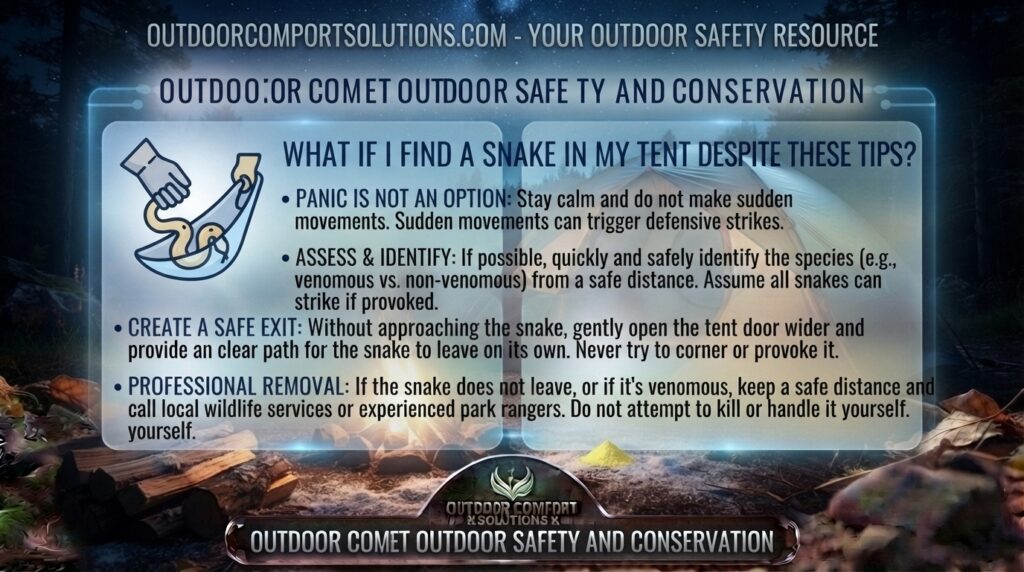
You are deep in the wilderness—perhaps in the arid landscapes of Texas, the dense forests of Washington, or the scenic trails of California or New York. You return to your tent after a long day of hiking, unzip the door, and there it is: a snake curled in the corner or resting on your sleeping bag.
It is a moment that triggers a primal fear response. However, panicking is the most dangerous thing you can do. Finding a snake in your tent is a manageable situation if you remain calm. Here is your expert guide on how to safely navigate this encounter, remove the intruder, and stay safe.
1. The Golden Rule: Do Not Panic
The moment you realize there is a snake in your tent, stop moving. Take a deep breath.
- Do not lash out: Most snakebites occur when a human tries to strike, stomp, or grab a snake.
- Keep your distance: Move backward immediately. If the snake is in a position where it can reach you, back out of the tent entirely.
2. Assess the Situation
Once you are at a safe distance, take a moment to look without getting closer.
- Identify: Is it a venomous species (like a rattlesnake, copperhead, or water moccasin) or a non-venomous one (like a garter snake, king snake, or gopher snake)?
- Observe: Is the snake agitated, or is it trying to hide? A snake that is “hooding up,” rattling, or striking is feeling trapped and threatened. A snake that is calmly trying to find an exit is simply looking for a way out.
3. The Evacuation Strategy
If the snake is venomous, or if you are uncomfortable identifying the species, do not attempt to remove it yourself.
- Back out slowly: Exit the tent fully.
- Zip it shut: If you can do so without getting within striking range, zip the door closed to keep the snake contained.
- Alert others: If you are at a campsite with a camp host or park ranger, go get them immediately. They have the equipment to relocate the animal safely.
- Wait: Snakes are not aggressive hunters of humans; they want to be left alone. If you give it space, it may find its own way out through a corner or seam.
4. How to Safely Remove a Non-Venomous Snake
If you are certain the snake is non-venomous and you are comfortable with the idea of moving it (and only if you are in a remote area where professional help is not available), follow this “passive removal” technique:
- Use a long tool: Do not use your hands. Use a long trekking pole, a sturdy stick, or a broom.
- Create a path: Open the tent door fully. Create a clear, unobstructed path for the snake to exit.
- Gently nudge: Stand as far away as the length of your tool allows. Use the end of the tool to gently tap the floor near the snake, not the snake itself. The vibration will often encourage the snake to move toward the light of the open door.
- Be patient: Do not rush the snake. If it moves an inch toward the exit, that is progress.
5. After the Snake Leaves
Once the snake has exited, do not immediately hop back into your sleeping bag.
- Inspect your gear: Carefully lift and shake out your sleeping bag, clothes, and backpack. Snakes are attracted to the warmth and dark crevices of these items.
- Check the tent floor: Look for holes, tears, or gaps in the zippers that allowed the snake to enter in the first place. Use duct tape to patch any small holes temporarily.
- Scout the area: Look around the outside of your tent. Are there bushes or rocks right up against the fabric? If so, consider moving your tent to a more open location.
10 Frequently Asked Questions (FAQ)
1. Will the snake attack me?
No. Snakes do not “attack.” They only bite in self-defense when they feel they have no other way to escape.
2. Can I use a flashlight to guide it out?
Yes. Snakes are sensitive to light. Shining a flashlight near the exit can sometimes encourage them to move toward the darker outside area (or away from you), but be careful not to corner them.
3. What if I am allergic to snake venom?
If you suspect you have been bitten by a venomous snake, regardless of allergies, this is a medical emergency. Move away, stay calm to slow your heart rate, and seek medical help immediately.
4. Why did it get into my tent in the first place?
Usually, it is looking for a cool, safe place to rest or, less commonly, chasing a rodent.
5. Should I pour water on it?
No. This will only agitate the snake and make the inside of your tent wet and uncomfortable for you.
6. Will the snake come back tonight?
If you have sealed the entry point and removed the reason it entered (like food crumbs), it is highly unlikely to return.
7. How do I know if it’s a venomous species?
Look for a triangular-shaped head and vertical pupils (in many venomous species). However, many harmless snakes mimic these features. If in doubt, always treat it as dangerous.
8. Should I leave my tent and sleep in my car?
If you are in a car-camping site and feel truly unsafe, there is no shame in sleeping in your vehicle. Your peace of mind is worth more than a night in a tent.
9. Are snakes active in my tent during the day or night?
They can be active at any time, but are most common during early morning or evening hours when they are moving to find food or warmth.
10. Is it legal to kill the snake if it’s in my tent?
Most states have laws protecting native snake species. Killing a snake, even in a tent, is often unnecessary and illegal in many protected areas.
Conclusion
Finding a snake in your tent is a startling experience, but it rarely ends in an injury if you keep your composure. By backing away, giving the animal an exit, and seeking help when necessary, you can resolve the situation safely. Remember, the snake is just as afraid of you as you are of it—give it the chance to leave, and it will almost always take it.
Disclaimer: This information is for educational purposes. If you encounter a snake and are unsure of its species or potential danger, always prioritize your safety by maintaining distance and contacting local wildlife authorities.


