


Winter play is a cornerstone of a healthy, adventurous childhood. Whether your children are sledding in the hills of New York, exploring the quiet trails of Washington, or playing in a rare dusting of snow in the higher elevations of California, the inevitable “I’m freezing!” moment will eventually arrive.
As a parent, knowing how to safely and effectively transition your child from the biting cold to a warm, cozy environment is a vital skill. At myecoadventure.com, we prioritize both the excitement of the outdoors and the safety of the return. Here is your comprehensive guide to the safest, most effective ways to warm up your child after snowy play.
The Immediate Transition: The “Golden Rule” of Warming Up
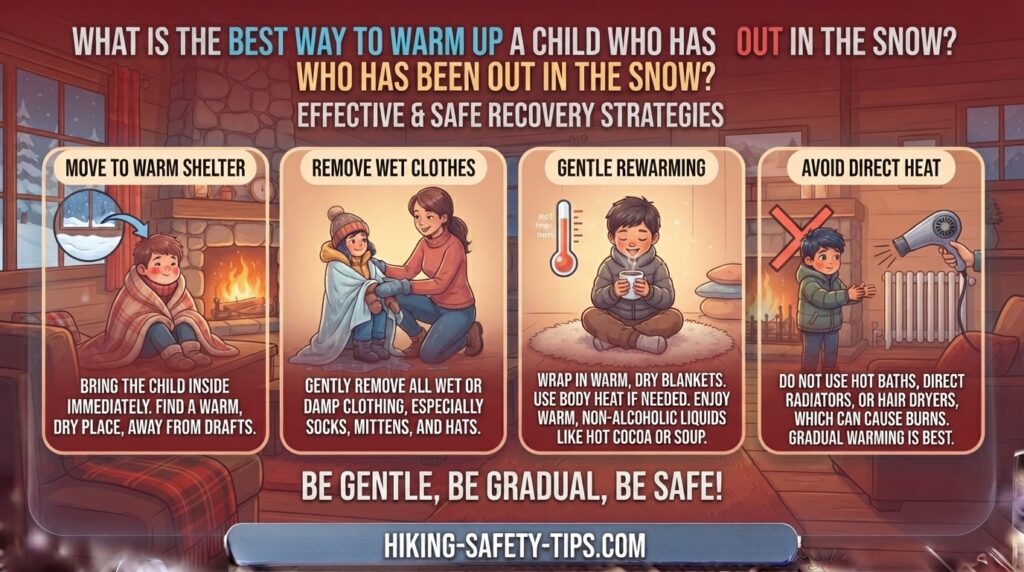
When your child comes inside shivering, your natural instinct might be to bundle them under a massive pile of heavy blankets or place them right next to a space heater. Avoid both. Warming a child up too quickly or using direct, high heat can lead to discomfort, skin irritation, and, in rare cases, even thermal burns.
The Gradual Approach: Why it Matters
The body needs time to adjust to the temperature shift. If a child’s skin is very cold, moving to a room that is overly hot or applying intense heat can cause a “pins and needles” sensation (or worse). The goal is gradual, consistent warming.
Step-by-Step Recovery Plan
1. The “De-Layering” Ritual
The moment you walk through the door, address the “wet” factor.
- Remove wet items immediately: Snow melts into moisture. Wet socks, mittens, and snow pants draw heat away from the body far faster than cold air does.
- Check the extremities: Inspect fingers, toes, and ears. If they are bright red or pale, keep a close watch to ensure they return to a natural color as the body warms.
2. The Power of “Passive” Warmth
Rather than a space heater, use the body’s own heat or ambient room temperature.
- Dry, Loose Clothing: Dress your child in soft, dry, loose-fitting clothes. Loose clothing allows for better blood circulation, which helps the body naturally distribute heat from the core to the limbs.
- Blanket Snuggles: Instead of forcing them under heavy blankets immediately, let them sit in a comfortable, room-temperature environment for a few minutes while you gently wrap a soft, light blanket around them.
3. Hydration and Internal Fuel
Warming up happens from the inside out.
- Warm Drinks: A mug of warm—not scalding—hot cocoa, herbal tea, or warm apple cider is the best way to raise core temperature. The act of holding a warm mug also helps thaw cold fingers.
- High-Energy Snacks: If the child has been outside for a long time, their energy stores may be depleted. A quick, healthy snack (like crackers with peanut butter or a piece of fruit) helps the body generate its own internal heat.
Critical Safety Warning: Preventing Frostbite
While most cold-weather play is harmless, always be alert for the signs of frostbite or hypothermia:
- Frostbite: Look for skin that feels “hard,” waxy, or doesn’t return to its normal color after a few minutes in a warm room. If the skin stays white or gray, or if you see blisters, seek medical attention immediately.
- Hypothermia: If your child is shivering uncontrollably, acting confused, or speaking slurred words, ignore the standard “warm-up” and get them medical help. These are signs of a dangerous drop in core body temperature.
10 Frequently Asked Questions (FAQ)
- Can I put my child in a hot bath immediately? No. A very hot bath can be a shock to a body that has been in freezing temperatures. Use lukewarm water and gradually let it warm up.
- Is it okay to use a hair dryer to warm up cold hands? Avoid it. Hair dryers can easily burn sensitive skin, especially if the child is already numb and can’t feel if it’s too hot.
- Should I give them a heavy meal right away? A snack is better. Their body is busy regulating temperature; a light, warm meal is better than a heavy, dense one.
- How long does it usually take for them to feel “normal”? Generally, 15–20 minutes in a stable, warm room is enough to stop the shivering and restore comfort.
- Why do their cheeks stay red for so long? Blood vessels in the face constrict in the cold and dilate in the heat. It is normal for them to stay rosy for a while after coming inside.
- Does “cold” make them sick? Being cold doesn’t give you a virus, but it can stress the immune system. Keeping them warm and hydrated helps the body recover.
- What if they refuse to drink anything? Don’t force it, but offer options they enjoy. Sometimes, just having them sit in a room with a warm mug is enough.
- Should I rub their hands to warm them up? Be very gentle. If there is any risk of frostnip, rubbing the skin can actually cause damage. Gently holding their hands or placing them under your arms is safer.
- Are space heaters safe for kids? Use them with extreme caution. Keep them at least three feet away from children and never leave them unattended.
- When should I call a doctor? If the shivering doesn’t stop after 30 minutes, if the skin remains pale or numb, or if the child seems unusually lethargic or confused.
Conclusion
The secret to a great winter day is knowing how to return home safely. By removing wet gear, providing warm fluids, and allowing for a gradual temperature transition, you can ensure that the “cold” part of the day remains just a small part of an otherwise fun, adventurous experience.
Remember, at myecoadventure.com, our goal is to help you and your family enjoy the outdoors in any season. Take care of those little ones, get them cozy, and start planning your next snowy expedition!


