


Camping is one of the oldest and most rewarding outdoor activities in the world. For some people, camping is an exciting adventure filled with hiking, campfires, fishing, and exploring nature. For others, it is a peaceful escape from busy cities, noisy traffic, and stressful daily routines. Whether someone camps in deep forests, mountains, beaches, deserts, or local campgrounds, camping creates a unique connection between humans and nature.
But with this freedom comes responsibility.
Every camper, whether beginner or experienced, eventually learns that camping is not only about enjoying nature but also about respecting it. This is where the famous “golden rule of camping” becomes extremely important.
So, what is the golden rule of camping?
The golden rule of camping is simple:
“Leave the campsite better than you found it.”
Some people also express it in different ways, such as:
- Leave no trace
- Respect nature
- Take only memories, leave only footprints
- Protect the outdoors for future generations
Although the wording may vary, the meaning stays the same. The golden rule teaches campers to enjoy nature responsibly while protecting the environment, wildlife, campsites, and the experiences of other campers.
This principle is the foundation of good camping ethics and outdoor responsibility.
In this detailed guide, we will explore the true meaning of the golden rule of camping, why it matters, how it applies to modern camping, common mistakes campers make, and how following this rule creates safer, cleaner, and more enjoyable outdoor experiences for everyone.
Why the Golden Rule of Camping Matters
Nature is beautiful, but it is also fragile.
Forests, lakes, mountains, beaches, and national parks can easily be damaged by careless behavior. Millions of people camp outdoors every year, and even small actions can create large environmental problems over time.
Without proper camping ethics, outdoor areas may suffer from:
- Pollution
- Wildfire damage
- Water contamination
- Wildlife disturbance
- Soil erosion
- Destroyed vegetation
- Noise pollution
- Trash accumulation
The golden rule exists to reduce these problems.
Camping is not just about personal enjoyment. It is also about preserving outdoor spaces so others can enjoy them in the future.
When campers follow responsible practices, natural areas remain:
- Cleaner
- Safer
- Healthier
- More beautiful
- More sustainable
The golden rule protects both nature and the camping experience itself.
The Meaning of “Leave No Trace”
One of the most well-known interpretations of the golden rule is “Leave No Trace.”
Leave No Trace means minimizing human impact on the environment during outdoor activities.
This philosophy encourages campers to:
- Clean up after themselves
- Respect wildlife
- Avoid damaging nature
- Camp responsibly
- Reduce pollution
- Preserve natural beauty
The idea is simple: when you leave a campsite, it should look as natural as possible.
Ideally, future visitors should not even notice that someone camped there.
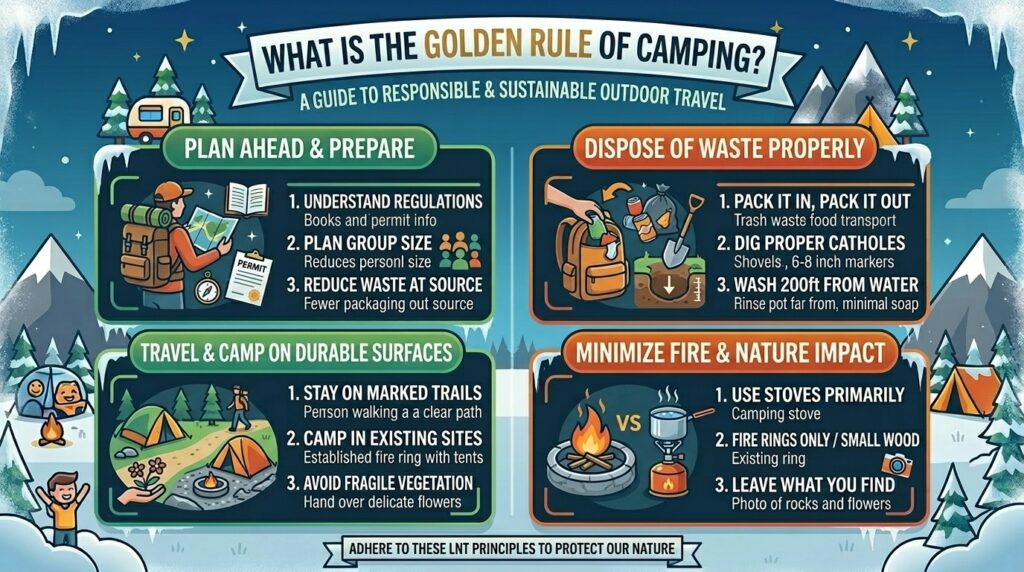
The Seven Principles of Leave No Trace
Modern camping ethics are often based on the Seven Principles of Leave No Trace.
These principles provide practical guidelines for outdoor behavior.
1. Plan Ahead and Prepare
Good camping starts before leaving home.
Proper planning helps prevent accidents, environmental damage, and unnecessary stress.
Campers should:
- Research weather conditions
- Pack proper equipment
- Learn campsite regulations
- Prepare enough food and water
- Understand local wildlife risks
Poor preparation often leads to poor decisions outdoors.
2. Travel and Camp on Durable Surfaces
Campers should avoid damaging fragile environments.
Good camping surfaces include:
- Established campsites
- Gravel
- Dirt trails
- Rock surfaces
- Dry grass
Avoid camping on:
- Wet vegetation
- Fragile plants
- Sensitive ecosystems
Repeated damage can permanently harm natural areas.
3. Dispose of Waste Properly
Trash is one of the biggest camping problems worldwide.
Campers should always:
- Pack out garbage
- Clean food waste
- Dispose of toilet waste correctly
- Avoid littering
Even small items like bottle caps or food wrappers damage the environment.
Human waste must also be handled carefully to protect water sources and wildlife.
4. Leave What You Find
Nature should remain natural.
Campers should avoid:
- Picking plants
- Damaging trees
- Removing rocks
- Taking historical artifacts
- Carving into wood
Natural environments lose their beauty when visitors remove or damage features.
Photographs and memories are better souvenirs than natural objects.
5. Minimize Campfire Impact
Campfires are one of camping’s greatest traditions, but they also create risks.
Wildfires can destroy entire forests.
Responsible campers should:
- Use established fire rings
- Keep fires small
- Fully extinguish fires
- Avoid fires during dry conditions
- Never leave fires unattended
In some situations, camping stoves are safer than campfires.
6. Respect Wildlife
Wild animals should remain wild.
Campers should never:
- Feed wildlife
- Chase animals
- Disturb nests
- Leave food unsecured
Feeding animals changes their behavior and may create dangerous situations.
Respecting wildlife protects both animals and humans.
7. Be Considerate of Other Visitors
Camping is a shared experience.
Good campers respect:
- Quiet hours
- Personal space
- Shared facilities
- Trail etiquette
Loud music, excessive noise, and careless behavior reduce enjoyment for others.
Camping Is About Respect
At its core, the golden rule of camping is about respect.
Respect for:
- Nature
- Wildlife
- Other campers
- Campsites
- Park staff
- Future generations
Camping responsibly creates harmony between humans and the environment.
Without respect, outdoor areas quickly become damaged and unpleasant.
How Trash Destroys Camping Areas
One of the most visible camping problems is littering.
Trash left behind may include:
- Plastic bottles
- Food wrappers
- Fishing line
- Cigarette butts
- Aluminum cans
- Glass bottles
Litter harms ecosystems in many ways.
Animals may eat trash accidentally, leading to injury or death.
Plastic pollution can remain in nature for decades or even centuries.
Dirty campsites also ruin the experience for other visitors.
A responsible camper always cleans up completely before leaving.
Some experienced campers even collect trash left by others.
Why Campfire Responsibility Matters
Campfires are enjoyable, but they can also become extremely dangerous.
Wildfires caused by careless campers have destroyed millions of acres worldwide.
Common fire mistakes include:
- Leaving fires unattended
- Failing to extinguish embers
- Building fires in dry grass
- Burning during fire bans
- Using excessive firewood
A single careless moment can cause catastrophic damage.
Responsible campers always treat fire with caution.
Before sleeping or leaving camp, fires should be completely extinguished using water and dirt until the ashes are cold to the touch.
Protecting Wildlife While Camping
Wildlife encounters are exciting, but they require responsibility.
Animals often suffer when humans behave carelessly.
Feeding wildlife creates major problems.
Animals that become dependent on human food may:
- Lose natural hunting skills
- Become aggressive
- Approach campsites dangerously
- Spread disease
Food should always be stored securely.
Bear-proof containers are essential in bear country.
Campers should also avoid disturbing animals for photographs or entertainment.
Nature should be observed respectfully from a distance.
Noise Pollution and Camping Etiquette
Camping is often associated with peace and relaxation.
Excessive noise can destroy that atmosphere.
Common noise problems include:
- Loud music
- Shouting
- Generator noise
- Late-night partying
- Vehicle noise
Not everyone camps for the same reasons.
Some people seek adventure while others seek silence and solitude.
Good camping etiquette involves respecting shared outdoor spaces.
Quiet behavior improves everyone’s experience.
Why Campsite Cleanliness Is Important
Clean campsites are safer and more enjoyable.
Food waste attracts animals and insects.
Dirty campsites may create:
- Bad smells
- Rodent infestations
- Bear encounters
- Disease risks
Campers should clean:
- Cooking equipment
- Food spills
- Trash areas
- Fire pits
Leaving campsites clean helps protect both wildlife and future campers.
The Golden Rule for Beginner Campers
Beginner campers sometimes focus too much on equipment and forget about outdoor ethics.
The most important lesson for beginners is not buying expensive gear.
It is learning responsibility.
A camper with basic gear and good ethics is far more valuable than a careless camper with expensive equipment.
Beginners should focus on:
- Learning outdoor safety
- Respecting nature
- Practicing cleanliness
- Reducing environmental impact
Camping skills improve over time, but respect should exist from the very beginning.
Camping and Environmental Sustainability
Modern camping culture increasingly focuses on sustainability.
Outdoor recreation is growing rapidly worldwide.
More visitors mean more pressure on natural areas.
Sustainable camping helps reduce environmental damage.
Examples include:
- Reusable water bottles
- Eco-friendly soaps
- Solar-powered gear
- Reduced plastic waste
- Responsible firewood use
Small sustainable actions make a big difference over time.
Why Water Protection Matters
Water sources are extremely sensitive during camping.
Lakes, rivers, and streams may become contaminated by:
- Soap
- Food waste
- Human waste
- Chemicals
- Trash
Clean water is essential for both wildlife and people.
Campers should avoid washing directly in natural water sources.
Human waste should also be disposed of properly and far from water.
Protecting water is one of the most important outdoor responsibilities.
Respecting Campsite Boundaries
In busy campgrounds, respecting personal space matters greatly.
Good campers avoid:
- Walking through occupied campsites
- Blocking roads
- Invading privacy
- Taking excessive space
Simple courtesy improves the camping environment for everyone.
The Role of Preparation in Responsible Camping
Poor preparation often leads to environmental damage.
For example:
- Inadequate food storage attracts wildlife
- Lack of warm clothing may encourage illegal fire use
- Poor navigation may lead to off-trail damage
- Insufficient water may create emergency situations
Prepared campers make safer and smarter decisions.
Responsible camping begins before arriving at the campsite.
The Difference Between Responsible and Irresponsible Campers
Responsible campers:
- Clean up trash
- Respect wildlife
- Follow regulations
- Stay on trails
- Control campfires
- Respect others
Irresponsible campers:
- Litter
- Damage trees
- Ignore rules
- Leave fires burning
- Disturb wildlife
- Create noise pollution
The difference between these two types of campers greatly affects the future of outdoor recreation.
Why National Parks Emphasize the Golden Rule
National parks and protected lands often receive millions of visitors annually.
Without responsible behavior, these areas would quickly become damaged.
Park regulations exist to:
- Protect ecosystems
- Prevent overcrowding damage
- Reduce wildfire risk
- Preserve wildlife habitats
- Improve visitor safety
The golden rule supports these goals.
Following outdoor ethics helps national parks remain beautiful for future generations.
Camping with Children and Teaching Responsibility
Camping is an excellent way to teach children important values.
Kids can learn:
- Respect for nature
- Environmental awareness
- Responsibility
- Teamwork
- Outdoor safety
Parents should encourage children to:
- Pick up trash
- Respect wildlife
- Stay on trails
- Protect plants
Children who learn responsible camping early often develop lifelong respect for nature.
The Connection Between Camping and Mental Health
Camping often improves mental well-being.
Nature can reduce:
- Stress
- Anxiety
- Mental fatigue
- Digital overload
However, damaged or overcrowded environments reduce these benefits.
Clean, peaceful outdoor spaces improve emotional health.
The golden rule helps preserve these positive experiences.
Why Overcrowding Is Becoming a Problem
Camping has become increasingly popular.
Many outdoor destinations now experience overcrowding.
Overcrowding can lead to:
- Trash buildup
- Trail erosion
- Wildlife stress
- Noise problems
- Campsite shortages
Responsible behavior becomes even more important when outdoor spaces are heavily used.
Every camper has a role in protecting shared environments.
Campfire Stories and Outdoor Traditions
Camping traditions are an important part of outdoor culture.
Campfires, storytelling, cooking outdoors, and stargazing create lasting memories.
The golden rule does not eliminate fun.
Instead, it ensures that traditions remain safe and sustainable.
Responsible campers can still enjoy:
- Campfires
- Music
- Games
- Cooking
- Adventure
The key is balance and respect.
Why Social Media Has Changed Camping
Social media has dramatically increased interest in camping and outdoor travel.
Beautiful photos encourage more people to explore nature.
This has positive and negative effects.
Positive effects include:
- Greater appreciation for nature
- Outdoor education
- Tourism support
Negative effects include:
- Overcrowding
- Environmental damage
- Unsafe behavior for photos
- Hidden location exposure
Responsible outdoor influencers now encourage Leave No Trace practices.
Social media users should promote ethical camping behavior.
Respecting Local Rules and Regulations
Different camping areas have different rules.
Campers should always follow local regulations regarding:
- Fires
- Wildlife
- Noise
- Camping zones
- Waste disposal
- Fishing
- Water use
Rules exist to protect both people and nature.
Ignoring regulations can lead to fines, accidents, or environmental harm.
The Golden Rule During Emergency Situations
Outdoor emergencies may involve:
- Storms
- Injuries
- Wildfires
- Animal encounters
- Floods
Responsible behavior becomes even more important during emergencies.
Campers should:
- Help others when possible
- Follow evacuation orders
- Avoid panic
- Respect rescue teams
Outdoor communities often rely on cooperation and mutual support.
Why Experienced Campers Value Simplicity
Many experienced campers eventually realize that camping is not about luxury.
It is about connection.
Connection with:
- Nature
- Friends
- Family
- Simplicity
- Peace
The golden rule encourages mindfulness and appreciation rather than wastefulness and selfishness.
Simple camping often creates the most meaningful memories.
Common Mistakes Campers Make
Even good campers sometimes make mistakes.
Common camping mistakes include:
- Leaving micro-trash
- Using too much firewood
- Playing loud music
- Feeding animals
- Ignoring weather forecasts
- Washing dishes in streams
- Leaving food exposed
Learning from mistakes is part of becoming a better camper.
How Technology Can Support Responsible Camping
Technology can help campers reduce environmental impact.
Examples include:
- Solar chargers
- GPS navigation
- Weather apps
- Water filters
- Portable power stations
However, technology should not replace outdoor awareness and responsibility.
Balance is important.
Camping Is a Shared Responsibility
Protecting outdoor spaces is not only the responsibility of park rangers or governments.
Every camper contributes to the condition of nature.
One careless person can damage an area.
One responsible person can inspire others.
The future of camping depends on collective responsibility.
The Emotional Side of the Golden Rule
The golden rule is not only practical.
It is emotional and philosophical.
Many campers feel deep gratitude toward nature.
Protecting outdoor spaces becomes a way of showing appreciation.
Camping teaches humility because nature is far bigger and more powerful than humans.
Respecting nature creates deeper outdoor experiences.
Why the Golden Rule Applies Beyond Camping
The lessons learned through camping apply to everyday life.
The golden rule teaches:
- Responsibility
- Respect
- Patience
- Awareness
- Community thinking
People who learn to care for nature often become more mindful in other areas of life as well.
Camping can shape personal values.
Minimal Impact Camping
Some campers practice “minimal impact camping.”
This means reducing environmental impact as much as possible.
Examples include:
- Packing reusable gear
- Avoiding disposable plastics
- Using portable stoves
- Staying on established trails
- Carrying out all waste
Minimal impact camping helps preserve fragile ecosystems.
Winter Camping and the Golden Rule
Winter camping also requires responsibility.
Snow environments may seem durable, but they are still sensitive.
Campers should avoid:
- Damaging trees for firewood
- Leaving trash buried in snow
- Ignoring avalanche safety
- Polluting frozen water sources
Winter camping ethics remain extremely important.
Beach Camping and Environmental Protection
Beach camping introduces additional responsibilities.
Ocean ecosystems are highly sensitive.
Campers should avoid:
- Leaving plastic waste
- Disturbing nesting wildlife
- Damaging dunes
- Polluting water
Coastal areas suffer heavily from litter pollution.
Responsible beach camping helps protect marine life.
Mountain Camping Ethics
Mountain environments recover slowly from damage.
Alpine plants may take years to regrow.
Mountain campers should:
- Stay on trails
- Avoid damaging vegetation
- Use established campsites
- Respect weather warnings
Mountain ecosystems are especially fragile.
Respecting Indigenous Lands
Many camping areas exist on Indigenous or ancestral lands.
Campers should respect:
- Local communities
- Cultural sites
- Historical areas
- Sacred locations
Responsible camping includes cultural respect as well as environmental respect.
The Future of Camping
Camping continues to grow globally.
Future generations will only enjoy beautiful outdoor spaces if people protect them today.
Climate change, pollution, overcrowding, and environmental damage threaten many natural areas.
The golden rule of camping is more important now than ever before.
Responsible outdoor behavior helps preserve the future of camping itself.
How Good Campers Inspire Others
Responsible campers often influence others positively.
When people see:
- Clean campsites
- Respectful behavior
- Proper fire safety
- Wildlife protection
They are more likely to follow similar habits.
Good camping ethics spread through example.
Why Small Actions Matter
Some people believe individual actions do not matter.
But small actions create large long-term effects.
Picking up one piece of trash matters.
Extinguishing one fire properly matters.
Respecting one wildlife encounter matters.
Millions of small responsible decisions protect nature worldwide.
Camping Is About More Than Recreation
Camping is not only entertainment.
It is also about:
- Learning
- Responsibility
- Appreciation
- Conservation
- Simplicity
- Connection
The golden rule reflects these deeper values.
Camping becomes more meaningful when people care for the places they visit.
Final Thoughts
So, what is the golden rule of camping?
The golden rule of camping is to leave nature better than you found it.
This simple idea includes many responsibilities:
- Respect nature
- Protect wildlife
- Clean up trash
- Minimize environmental impact
- Respect other campers
- Follow safety rules
- Preserve outdoor spaces for future generations
Camping is one of the best ways to experience the beauty of the natural world. But with that privilege comes responsibility.
Every campsite, forest, lake, mountain, and trail depends on human care and respect.
The best campers are not necessarily the ones with the most expensive gear or the biggest tents. The best campers are the ones who protect nature, respect others, and leave behind positive impacts instead of damage.
When campers follow the golden rule, outdoor spaces remain beautiful, peaceful, safe, and enjoyable for everyone.
Nature gives people unforgettable memories, adventure, relaxation, and inspiration. The least campers can do in return is treat nature with care and respect.
In the end, the golden rule of camping is not just about protecting the outdoors. It is about becoming a better, more responsible human being while enjoying the beauty of the natural world.


