


When most travelers picture the Grand Canyon, they imagine scorching summer sunbeats, sun-baked red rock, and sprawling vistas shimmering in midday heat. But for eco-travelers and nature photographers who know how to time it right, autumn transforms this desert chasm into an entirely different world. As the intense summer monsoons fade, crisp mountain air sweeps across the high plateaus, and pockets of quaking aspens, maples, and oaks ignite into brilliant shades of amber, bronze, and shimmering gold.
If you are planning an eco-adventure trip—whether you are flying in from the tech hubs of San Francisco, escaping the fast-paced streets of New York, road-tripping from Texas, or journeying down from Washington State—timing your visit right is everything. Because the transition window is notoriously short on the Colorado Plateau, hitting the exact peak requires precision.
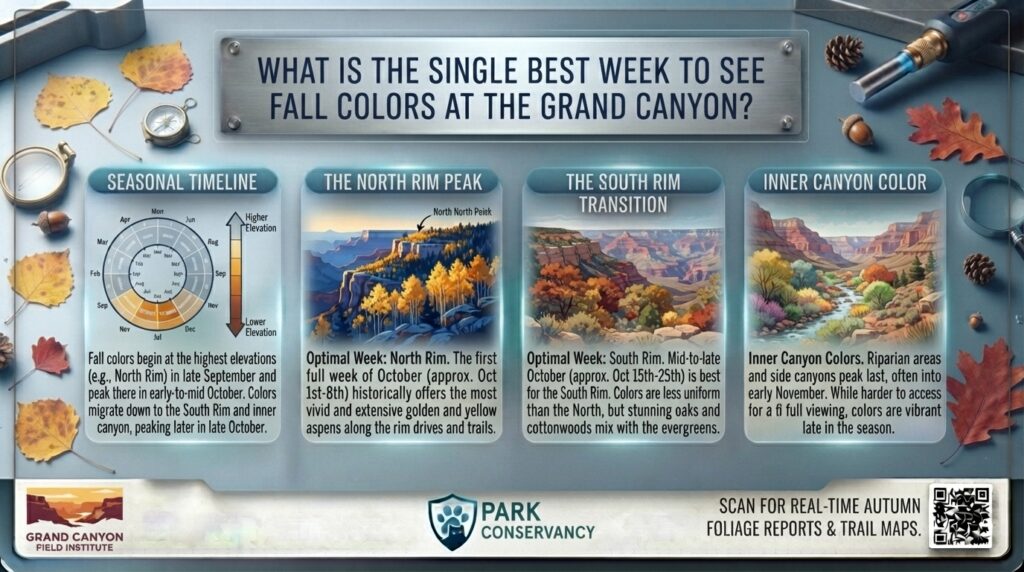
The single best week to experience peak fall foliage at the Grand Canyon is the final week of September through the first week of October (specifically September 28 to October 7).
During this narrow window, high-elevation groves reach their absolute color zenith just before autumn winds begin stripping the branches and seasonal closures take effect.
The Science of Elevation: Why Grand Canyon Fall Foliage is Unique
Unlike New England, where entire hillsides of mixed hardwoods turn simultaneously, autumn at the Grand Canyon is dictated by dramatic shifts in elevation. The park spans from river level up to over 8,000 feet on the North Rim, creating vertical layers of seasonal change.
1. The High-Elevation Pockets (North Rim & Kaibab Plateau)
Sitting at roughly 8,200 feet, the North Rim and the surrounding Kaibab National Forest are the crown jewels of Grand Canyon leaf-peeping. Here, dense stands of quaking aspens (Populus tremuloides) dominate the landscape. As daylight shortens, chlorophyll breaks down, turning the forest canopy into neon-gold ribbons that contrast sharply against dark green ponderosa pines and deep red sandstone canyons. This transformation peaks earliest—usually arriving in late September.
2. The Mid-Elevation Slopes (South Rim)
The South Rim sits slightly lower at roughly 7,000 feet. While dominated primarily by evergreens, you will find scattered groves of Gambel oak and localized stands of aspen along Desert View Drive and Grandview Point. The color shift here lags slightly behind the North Rim, reaching its most vibrant expression during the first and second weeks of October.
3. The Inner Canyon Desert Floor
Down at the Colorado River (around 2,400 feet), deciduous cottonwoods line the riparian zones. Because temperatures remain much warmer deep inside the canyon, these trees hold onto their green longer, shifting into brilliant yellows much later in the season—stretching from late October through mid-November.
Regional Travel Planning: Getting There from Major US Hubs
Timing your trip from major US regions requires looking at logistics, as fall weather shifts rapidly across the American West:
- From California & San Francisco: A road trip through Nevada and Utah down to the North or South Rim allows you to catch changing foliage along high-altitude mountain passes. Flights into Las Vegas or Phoenix followed by a scenic drive offer the fastest access.
- From Washington State: Travelers flying out of Seattle or Portland will find October weather at the canyon crisp, clear, and far less rainy than the Pacific Northwest’s autumn drizzle, making it an ideal outdoor escape.
- From Texas: Escaping the lingering humidity of Austin, Dallas, or Houston for the dry, cool air of northern Arizona in early October provides an immediate breath of fresh mountain relief.
- From New York: East Coast leaf-peepers accustomed to Appalachian foliage will find the stark contrast of golden aspens against massive crimson canyon walls to be a uniquely breathtaking western spectacle.
Eco-Adventure Gear Reviews for Your Fall Canyon Trip
Exploring the Grand Canyon during the crisp autumn shoulder season requires gear that keeps you warm during freezing morning starts and comfortable during sun-drenched afternoon hikes. Here are top-rated, eco-friendly gear choices for sustainable travelers.
1. Cotopaxi Allpa 35L Travel Pack
- Best For: Carry-on flight organization and multi-day weekend trips.
- Why We Love It: Built with repurposed and durable shell fabrics, this pack minimizes environmental waste while offering rugged, comfortable organization for travelers flying in from coast to coast. Its clamshell opening makes packing layers for shifting canyon temperatures seamless.
2. Hydro Flask Wide Mouth Insulated Bottle (With Flex Cap)
- Best For: Maintaining hydration during dry desert hikes.
- Why We Love It: Staying hydrated is critical in Arizona’s dry autumn air. This BPA-free, stainless steel bottle keeps water ice-cold all day long, helping you ditch single-use plastics entirely while exploring park trails.
3. Patagonia Nano Puff Jacket
- Best For: Lightweight insulation during chilly Grand Canyon mornings and evenings.
- Why We Love It: Packing down to the size of a travel book, this jacket uses 100% recycled polyester insulation and a shell made from recycled ocean-bound plastics. It provides essential warmth when rim temperatures plummet near freezing after sunset.
Grand Canyon Foliage Zones at a Glance
| Zone / Location | Elevation | Peak Color Window | Primary Tree Species | Best Viewing Method |
| North Rim (Kaibab Plateau) | 8,200 ft | Late September – Oct 5 | Quaking Aspen | Hiking (Widforss Trail) |
| South Rim (Grandview Point) | 7,000 ft | Oct 1 – Oct 15 | Gambel Oak, Pockets of Aspen | Scenic Drive (Desert View Drive) |
| Inner Canyon Corridor | 2,400 ft | Late Oct – Mid Nov | Cottonwood, Willow | Backpacking / River Rafting |
| Route from Page / Marble Canyon | 4,000–6,000 ft | Mid-to-Late October | High-desert scrub, Cottonwood | Road Tripping / Highway Overlooks |
Pro Tips for Sustainable Leaf-Peeping at the Grand Canyon
- Anticipate North Rim Closures: The North Rim facilities (including the lodge and campground) traditionally close for the winter season on October 15 (or earlier if a major snowstorm hits). If you want to see the premier aspen groves on the North Rim, plan your trip for late September.
- Practice Leave No Trace: Fall brings dry conditions and high wildfire risks. Always adhere strictly to campfire restrictions and pack out all trash, protecting fragile high-desert ecosystems.
- Beat the Midday Lighting: For photography, the low angle of the autumn sun creates stunning, dramatic shadows across the canyon walls all day long, but early morning and golden hour offer the most magical illumination on golden leaves.
- Book Eco-Lodging Early: Even though fall is a shoulder season compared to summer, October is immensely popular for travelers seeking comfortable hiking temperatures. Secure campsites or eco-lodges months in advance.
10 Comprehensive FAQs
1. What is the absolute peak week for fall colors at the Grand Canyon?
The final week of September through the first week of October (roughly September 28 to October 7) represents the prime window when high-elevation aspens on the North Rim and upper plateaus reach full, brilliant golden color.
2. Does the South Rim have good fall foliage?
While the South Rim is dominated by evergreen ponderosa pines, it features scattered stands of golden Gambel oak and vibrant yellow aspens, particularly along Desert View Drive and near Grandview Point.
3. When does the North Rim close for the season?
The North Rim facilities officially close on October 15 each year, or earlier if significant snowfall blankets the Kaibab Plateau. This makes early October your absolute final chance to visit that side of the park.
4. What weather should I expect during fall at the Grand Canyon?
Autumn brings some of the most stable and comfortable weather of the year. South Rim daytime highs hover around 65°F, but overnight lows frequently drop below freezing, requiring proper layering gear.
5. Can I see fall colors inside the canyon while hiking?
Yes. Riparian zones along creeks and the Colorado River feature cottonwoods that turn golden later in the season, typically peaking from late October through mid-November.
6. Are crowds smaller during the autumn leaf-peeping season?
Yes. While October remains a favorite month for travelers seeking pleasant weather, visitor numbers drop significantly compared to the intense peak summer months, offering a much more peaceful eco-adventure experience.
7. What tree species create the bright yellow colors at the Grand Canyon?
Quaking aspens are primarily responsible for the brilliant gold and yellow displays found at higher elevations like the North Rim and surrounding national forests.
8. Is it safe to drive to the North Rim in October?
Generally yes, but weather is unpredictable on the high plateau. Early winter storms can bring sudden snow flurries and temporary road closures, so always check daily National Park Service updates before heading north.
9. What is the best trail for viewing autumn leaves?
The Widforss Trail on the North Rim is widely considered the premier hike for leaf-peepers, winding through deep pine forests interspersed with glowing golden aspen groves and dramatic canyon drop-offs.
10. How far in advance should I book an autumn trip to the Grand Canyon?
Because autumn weather is ideal for hiking, accommodations inside the park and popular nearby eco-lodges book out 4 to 6 months in advance, especially for weekend dates in early October.
Conclusion
Timing a trip to catch the brilliant autumn transformation at the Grand Canyon rewards travelers with crisp air, dramatic golden canopies, and peaceful trails far removed from the summer rush. By targeting late September through the first week of October, you position yourself perfectly to witness the high-elevation aspens at their absolute peak. Pack your sustainable layers, plan your route around elevation zones, and experience one of America’s greatest natural wonders dressed in its seasonal golden best.


