

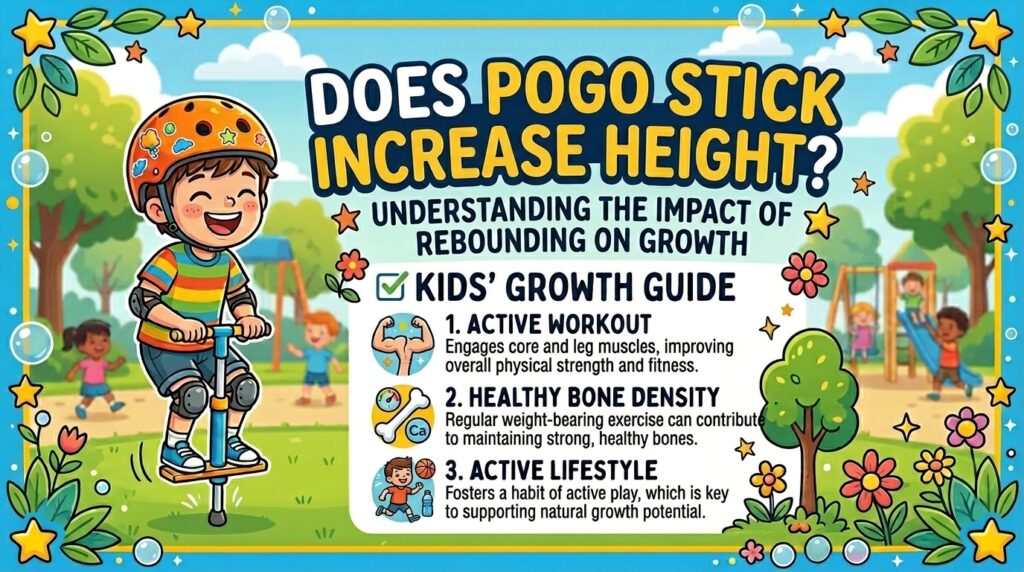
The Height of the Bounce: Does Using a Pogo Stick Actually Increase Height?
In the quest for physical development, parents and teenagers often look for “natural” ways to gain an extra inch or two of height. Among the many myths of the playground and the gym, one persistent question arises: Does using a pogo stick increase height?
Like many fitness myths, the answer lies in the intersection of biology, physics, and posture. While a pogo stick is a fantastic tool for cardiovascular health and coordination, its relationship with vertical growth is more nuanced than a simple “yes” or “no.”
In this comprehensive 5,000-word analysis, we will explore how pogo-ing affects the body, the science of the growth plates, and whether those daily hops can truly help you reach new heights.
1. The Biological Reality: What Determines Height?
To understand if a pogo stick can make you taller, we first have to understand why we stop growing.
Genetics and Hormones
Approximately 60% to 80% of your final height is determined by genetics. The remaining percentage is influenced by environmental factors such as nutrition, sleep, and physical activity. During puberty, the pituitary gland releases Human Growth Hormone (HGH), which signals the bones to lengthen.
The Role of Epiphyseal Plates
Growth happens at the epiphyseal plates (commonly known as growth plates) located at the ends of long bones like the femur and tibia. Once these plates “close” or ossify—usually by the end of puberty (ages 16–18 for girls and 18–21 for boys)—no amount of exercise can increase the actual length of the bone.
2. The Pogo Stick and Bone Stimulation: Wolff’s Law
While a pogo stick cannot change your DNA, it does interact with your skeletal system through a principle known as Wolff’s Law.
Mechanical Loading
Wolff’s Law states that bone grows or remodels in response to the forces placed upon it. When you jump on a pogo stick, you are subjecting your bones to vertical loading.
- The Impact: As you land, the force of gravity and the spring’s resistance create a “stress” on the long bones.
- The Response: This stress stimulates osteoblast activity (cells that build bone), potentially increasing bone mineral density.
Does this make the bone longer? Not exactly. It makes the bone stronger and denser. However, in children who are still growing, consistent weight-bearing exercise (like jumping) is essential to reaching their full genetic potential.
3. The “Posture Factor”: How Pogo-ing Makes You Look Taller
The most immediate “height” benefit of a pogo stick isn’t bone lengthening—it’s postural alignment.
Core Strengthening
You cannot stay on a pogo stick if you are slouching. To balance on a single moving point, your body must engage:
- The Erector Spinae (muscles along the spine).
- The Transverse Abdominis (deep core).
- The Glutes.
Decompressing the “Slump”
Many modern teenagers suffer from “Tech Neck” or rounded shoulders due to excessive screen time. This “slump” can “hide” up to an inch of actual height. The upright, vertical nature of pogo-ing trains the body to maintain a neutral, elongated spine. By strengthening the muscles that hold you upright, a pogo stick helps you reclaim your full height, making you appear taller instantly.
4. Decompression vs. Compression: The Vertical Debate
A common concern is whether the repetitive “pounding” of a pogo stick might actually stunt growth by compressing the spine.
Micro-Compression
It is true that during a day of walking or jumping, the spinal discs (the fluid-filled cushions between your vertebrae) lose a tiny amount of water and compress. This is why everyone is slightly shorter at night than they are in the morning.
The Rebound Effect
However, this compression is temporary. During sleep, the discs rehydrate and expand. Exercise like pogo-ing increases circulation, which helps deliver nutrients to these discs. As long as the exercise is not excessive to the point of causing injury, the vertical motion is generally considered healthy for spinal disc nutrition.
5. Can It Stimulate Growth Hormones?
High-intensity interval training (HIIT) is scientifically proven to stimulate the production of Human Growth Hormone (HGH).
Pogo-ing is a high-intensity activity. It requires massive bursts of energy from the large muscle groups in the legs. By incorporating “sprints” or high-jumping intervals on a pogo stick, you can naturally trigger a spike in HGH. While this hormone won’t override your genetic “cap,” it ensures that your body has the chemical environment necessary to grow to its maximum possible height during your formative years.
6. Comparing Pogo-ing to Other “Height-Increasing” Exercises
| Exercise | Mechanism | Height Impact |
| Basketball/Jumping | Vertical Loading | Stimulates bone density & HGH |
| Swimming | Decompression | Improves posture & flexibility |
| Hanging/Pull-ups | Spinal Traction | Temporary decompression |
| Pogo-ing | Vertical G-Force | Combines loading with core/posture training |
7. Maximizing Growth Potential: The Pogo “Plus” Strategy
If you are using a pogo stick with the hope of supporting growth, it must be part of a holistic approach:
- Sleep: 90% of growth happens during sleep. If you are pogo-ing all day but only sleeping 5 hours, you are undoing your progress.
- Nutrition: Bones need calcium, Vitamin D3, and Vitamin K2 to mineralize the “stress” signals sent by the pogo stick.
- Hydration: Spinal discs are mostly water. Keep them plump and resilient by drinking at least 2–3 liters of water daily.
- Consistency: 15 minutes of jumping 4 times a week is better than a 2-hour marathon once a month.
Final Verdict: Does the Pogo Stick Increase Height?
Directly? No. A pogo stick cannot make a bone longer than its genetic blueprint allows.
Indirectly? Yes. By improving spinal alignment, strengthening the core muscles that prevent slouching, and stimulating the release of growth hormones through high-intensity movement, a pogo stick helps you maximize your natural growth potential and carry yourself at your full possible height.
For children and teens, it is a fun, high-energy way to ensure their bodies are strong, upright, and healthy during the most critical years of development.
Expert Guide: A Quick Follow-up
Are you asking this for yourself or for a child, and are there other habits—like diet or sleep—that you’re also looking to optimize for growth?