


As the heavy summer monsoons dissipate and crisp, cool mountain air sweeps across the high plateaus of northern Arizona, the Grand Canyon undergoes a breathtaking seasonal metamorphosis. Pockets of quaking aspens, Gambel oaks, and riparian cottonwoods ignite into brilliant shades of amber, bronze, and shimmering gold.
If you are planning an eco-adventure trip to witness this golden spectacle—whether you are flying in from tech hubs in San Francisco, escaping the fast-paced streets of New York, road-tripping out of Texas, or journeying down from Washington State—one vital logistical question stands above the rest: Do I need special reservations to see fall colors at the Grand Canyon?
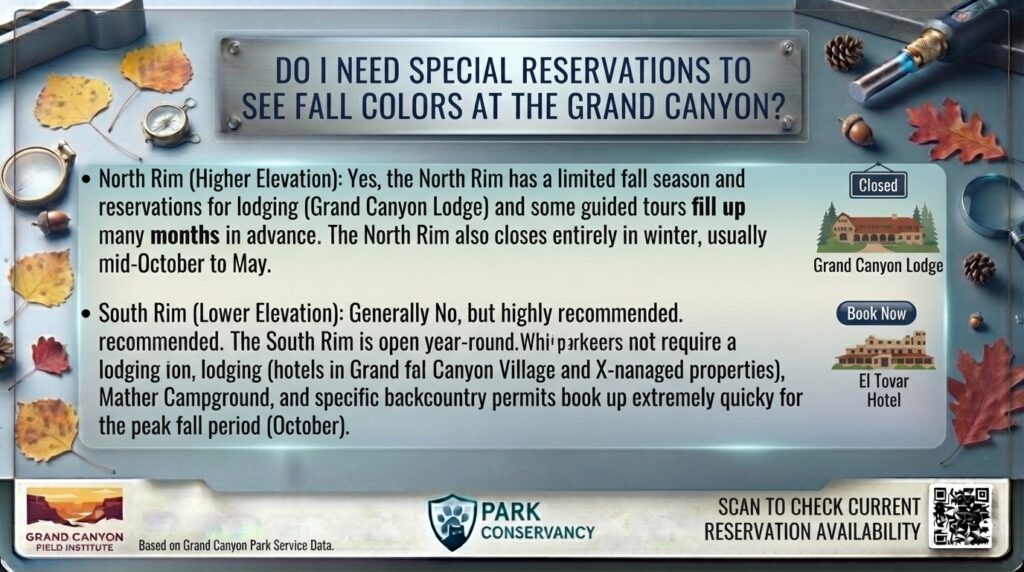
The short answer is no, you do not need special entry permits, lottery passes, or timed-entry reservations just to drive into the park and look at the fall foliage. However, if you plan to stay overnight, camp, or visit the North Rim before it closes for the winter, advanced reservations for lodging and permits are not just recommended—they are mandatory.
Park Access vs. Overnight Stays: What Requires Booking?
Understanding how Grand Canyon National Park manages autumn visitors requires separating general park access from overnight logistics.
1. Entering the Park (No Reservations Needed)
Unlike some hyper-congested national parks that utilize mandatory shuttle reservation systems or digital timed-entry permits during peak seasons, Grand Canyon National Park keeps its gates open to drive-in and walk-in visitors.
- You pay standard vehicle entrance fees at the gate (or use your America the Beautiful annual interagency pass).
- There are no lottery systems or special permits required simply to drive along Desert View Drive, access South Rim viewpoints, or hike day trails like the Rim Trail.
2. Overnight Lodging and Camping (Reservations Essential)
While entering the park is straightforward, finding a place to sleep during the peak autumn leaf-peeping window (late September through mid-October) is an entirely different story.
- In-Park Lodges: Iconic historic properties like the El Tovar Hotel or Bright Angel Lodge on the South Rim book out 4 to 6 months in advance for autumn weekends.
- Campgrounds: Popular spots like Mather Campground on the South Rim or the North Rim Campground require advance bookings via Recreation.gov. Turning up without a reservation in autumn usually results in a full parking lot and zero available sites.
The North Rim Factor: A Race Against the Calendar
If your primary goal as a leaf-peeper is to see the dense, neon-gold aspen groves of the North Rim, you face an entirely different kind of reservation constraint: seasonal shutdowns.
- The October 15 Hard Closure: National Park Service facilities on the North Rim (including the Grand Canyon Lodge, cabins, and campground services) traditionally close for the winter season on October 15, or earlier if a severe high-altitude snowstorm hits the Kaibab Plateau.
- Limited Capacity: Because the North Rim receives a fraction of the visitors that the South Rim gets, its limited lodge rooms and cabins book out almost a year ahead of time. If you want to stay rim-side during peak autumn color in late September, you must lock down your reservations early.
Regional Travel Planning: Getting Your Logistics in Order
Traveling from major US regions requires aligning your booking timeline with your transportation strategy:
- From California & San Francisco: Road-tripping across Nevada and Utah means you can map out spontaneous stops, but securing your accommodation near the canyon weeks ahead is non-negotiable during October.
- From Washington State: Travelers flying out of Seattle or Portland will need to coordinate flights into Phoenix or Las Vegas, rental cars, and park lodging well in advance to avoid steep last-minute travel spikes.
- From Texas: Escaping the Texas heat for the crisp Arizona autumn requires booking early flights and lodging, particularly for long holiday weekends in October.
- From New York: Cross-country leaf-peepers should bundle their park lodging reservations with rental car bookings months ahead, as autumn is a favored shoulder season for cross-country travelers.
Eco-Adventure Gear Reviews for Your Canyon Trip
Autumn weather at the Grand Canyon brings warm afternoon sun and freezing morning temperatures. Here is sustainable gear to keep you comfortable:
1. Cotopaxi Allpa 35L Travel Pack
- Best For: Carry-on flight organization and weekend eco-trips.
- Why We Love It: Crafted with durable repurposed and remnant fabrics, this pack minimizes environmental waste while offering rugged, comfortable organization for cross-country flights.
2. Hydro Flask Wide Mouth Insulated Bottle
- Best For: Staying hydrated on dry high-desert trails.
- Why We Love It: BPA-free and built from pro-grade stainless steel, this bottle eliminates single-use plastic waste while keeping your water ice-cold through long autumn hikes.
3. Patagonia Nano Puff Jacket
- Best For: Insulation during chilly canyon mornings and evenings.
- Why We Love It: Featuring 100% recycled polyester insulation and a shell made from recycled ocean plastics, it compresses tightly into a travel pack while delivering vital wind-blocking warmth.
Grand Canyon Reservation Requirement Matrix
| Type of Activity / Facility | Are Reservations Required? | When to Book / Details |
| Day Park Entry | No | Pay at gate or use annual pass; no timed entry. |
| South Rim Hotels (In-Park) | Highly Recommended | 4–6 months in advance via Xanterra or Delaware North. |
| North Rim Lodge & Cabins | Mandatory (Books out fast) | Up to a year in advance; note the hard close on October 15. |
| Campgrounds (Mather / North Rim) | Mandatory | Book months ahead via Recreation.gov. |
| Backcountry Overnight Hiking | Mandatory Permit | Secure via Recreation.gov lottery system. |
| Shuttle Buses (Inside Park) | No | Free, first-come, first-served transit within the South Rim. |
Pro Tips for Seamless Fall Travel
- Consider Gateway Towns: If in-park lodges are fully booked, look at gateway communities like Tusayan (just 7 miles south of the South Rim entrance) or Williams and Flagstaff, which offer extensive hotel options within a 1-to-2-hour drive.
- Leverage Last-Minute Cancellations: If you missed the booking window, keep checking the official park lodging websites daily. Travelers frequently cancel reservations a few weeks prior, opening up prime autumn weekend slots.
- Practice Leave No Trace: Fall brings dry conditions and high wildfire risks. Respect all campfire bans, pack out trash meticulously, and protect delicate high-desert ecology.
- Beat the Morning Rush: While no entry reservation is needed, arriving at the entrance gates before 9:00 AM helps you breeze past lines and secure parking spots at popular viewpoints.
10 Comprehensive FAQs
1. Do I need a timed-entry reservation to visit the Grand Canyon in the fall?
No. Grand Canyon National Park does not use timed-entry permits or digital vehicle reservation systems for general park entry. You can drive up, pay the entrance fee (or show your annual pass), and enter.
2. Can I camp anywhere in the park to see fall colors?
No. Dispersed camping is strictly prohibited inside Grand Canyon National Park. You must stay in designated campgrounds (like Mather or North Rim Campground) or secure a backcountry permit for overnight trail stays.
3. How far in advance should I book lodging for October?
Because October offers ideal hiking weather and brilliant fall foliage, in-park lodges and campgrounds typically book out 4 to 6 months in advance.
4. Are reservations needed for the park shuttle buses?
No. Shuttle buses on the South Rim are entirely free, do not require reservations, and operate on a regular loop system connecting visitor centers, lodges, and trailheads.
5. What happens if I visit the North Rim after October 15?
All park-operated lodging, campgrounds, and visitor services on the North Rim close for the winter season, and the access highway (State Route 67) closes upon the first major snowfall.
6. Do I need a permit to hike down into the canyon to see fall cottonwoods?
Day hiking below the rim does not require a permit. However, if you plan to camp overnight below the rim (at Bright Angel Campground or Cottonwood Campground), an advanced backcountry permit is mandatory.
7. Are there alternative places to stay near the South Rim if the park is full?
Yes. The town of Tusayan is located just outside the South Rim entrance and features multiple hotels. Additionally, larger towns like Williams and Flagstaff are within a 1-to-2-hour drive.
8. Is autumn a crowded time at the Grand Canyon?
While autumn is less congested than the peak summer months, October remains a popular shoulder season. Popular viewpoints and lodges experience steady crowds, making advance planning essential.
9. Can I buy my park entrance pass online before arriving?
Yes. You can purchase a private vehicle digital entrance pass online via Recreation.gov ahead of time to streamline your arrival at the gate.
10. Does the National Park charge extra to see fall foliage?
No. Viewing fall foliage is entirely free with your standard park admission fee or valid interagency annual pass. There are no special surcharges for autumn viewing.
Conclusion
Planning an eco-adventure to witness the stunning autumn transition at the Grand Canyon comes with plenty of flexibility since no special entry reservations or permits are required just to drive in and view the foliage. However, because comfortable weather and golden aspen canopies draw steady crowds in September and October, securing your overnight lodging, campsites, or backcountry permits well in advance is essential. Pack your sustainable gear, respect seasonal closures on the North Rim, and prepare for an unforgettable autumn journey across the canyon rim.


