


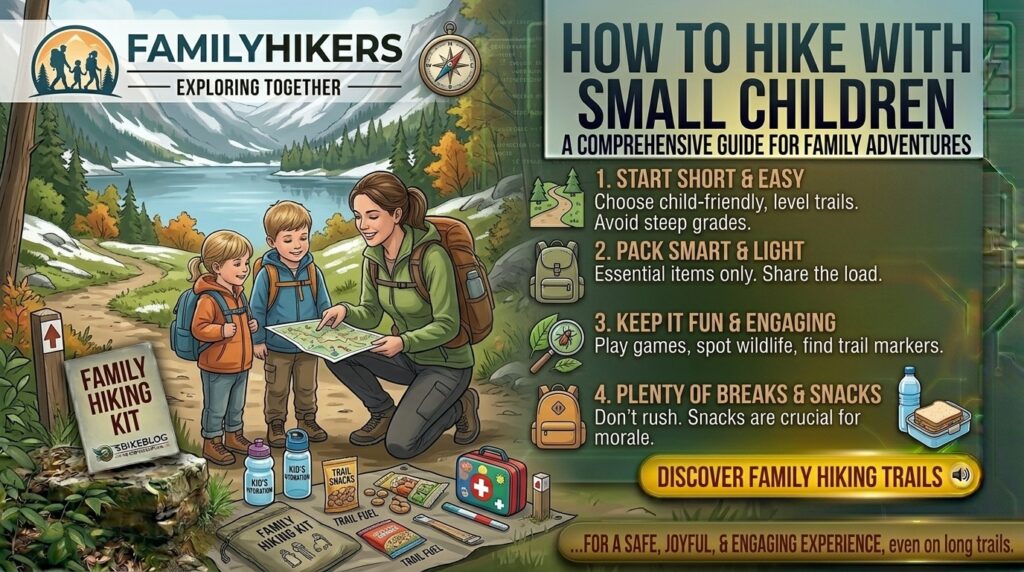
The Ultimate Guide to Hiking with Small Children: Tips, Gear, and Sanity-Saving Strategies | How to hike with small children
For avid outdoor enthusiasts, having children doesn’t mean your trail days are over. How to hike with small children? However, if you hit a technical mountain pass with a toddler expecting a fast-paced, serene wilderness trek, you are setting yourself up for a classic backcountry meltdown.
Hiking with small children isn’t about crushing miles or bagging peaks—it’s about exploring the trail at a completely different scale. When you shift your mindset from the destination to the journey, hiking becomes an incredible tool for family bonding, sensory education, and building lifelong resilience.
Why Hiking with Small Kids Is Worth It
Regular family hikes build physical fitness, curiosity about nature, resilience, and family bonds. Kids who hike young often develop confidence, better attention spans, and a lifelong appreciation for conservation. The key is starting small and making it fun rather than a forced march to the summit.
This definitive guide breaks down everything you need to know about hiking with infants, toddlers, and preschoolers in the US. From selecting the perfect kid-friendly trail to packing the ultimate “no-whining” gear kit, here is your playbook for successful family trail days.
1. The Golden Rule: Reset Your Expectations
Before you even lace up your hiking boots, you must accept one universal truth: A child’s hiking pace is roughly 1 mile per hour (or slower if there are cool sticks involved).
Children do not care about panoramic summit views; they care about the mossy rock, the crawling caterpillar, and the muddy puddle.
- Ditch the itinerary: Be perfectly content with turning around half a mile from the trailhead if your child discovers a fascinating stream.
- Incorporate “dirt time”: Allow ample time for your kids to get out of the carrier, touch the earth, and explore safely.
- Embrace the mess: Dirt, mud, and scraped knees are part of the learning process. Pack extra clothes and keep moving.
2. Choosing a Kid-Friendly Trail (What to Look For)
Not all “Easy” trails on apps like AllTrails or the Hiking Project are created equal for small feet. A flat, straight, paved path might seem ideal, but it can actually bore small children incredibly quickly.
       [ BORING TRAIL ]                       [ ENGAGING TRAIL ]
   Flat, straight pavement                Boulders, streams, bridges
           ⬇                                      ⬇
     "Are we there yet?"                    "Look at this frog!"
When scouting trails across US State and National Parks, look for routes that feature high visual variety and unique intermediate landmarks:
- Natural Obstacles: Look for trails with small boulders to clamber over, fallen logs to balance on, or wooden footbridges.
- Interactive Destinations: Aim for short trails that lead to a waterfall, a lake shoreline, a historic cabin, or an overlook where they can skip rocks or look through binoculars.
- Shade and Cover: Dense forest canopies protect sensitive skin from the intense US summer sun, while open alpine routes can quickly overheat a small child.
- Proximity to Home: For your first few outings, choose a trail within a 30-to-45-minute drive. A long, restless car ride right before a hike is a recipe for an immediate pre-hike tantrum.
3. Age-by-Age Breakdown: From Infants to Preschoolers
Every developmental stage requires a completely different approach to trail management.
Infants (0 to 12 Months)
- The Vibe: The “sleepy weight” phase. Infants are highly portable, and the rhythmic motion of hiking often puts them straight to sleep.
- The Strategy: Plan your hike around their standard naptime. Keep hikes limited to 2–3 hours. Because infants cannot efficiently regulate their own body temperature, monitor them closely in cold, windy, or excessively hot conditions.
- Sun & Shade: Keep infants under 6 months entirely out of direct sunlight. Use sun hats with a broad, 3-inch all-around brim and a protective neck flap.
Toddlers (1 to 3 Years)
- The Vibe: The independent, unpredictable “half-carry, half-hike” years.
- The Strategy: Toddlers want autonomy but tire out instantly. You will need a reliable child carrier backpack for when they crash. Look for flat, hazard-free clearings where you can let them loose to toddle safely.
- Footwear: Avoid heavy, stiff hiking boots for toddlers. A flexible, high-traction sneaker is perfectly fine, provided you pack extra dry socks for the inevitable puddle jumps.
Preschoolers & Grade-Schoolers (4 to 6 Years)
- The Vibe: The high-energy explorer phase.
- The Strategy: This is where you can start covering actual distance (1 to 3 miles). Give them a sense of ownership by letting them pack their own ultra-lightweight backpack containing a jacket, a water bottle, and a safety whistle.
4. The Essential Family Packing List (Beyond the “Ten Essentials”)
You already know to bring a map, first aid kit, and navigation. But when small kids are in the mix, your pack needs a few specific, sanity-saving additions:
| Category | Essential Item | Why It Matters |
| Nutrition | Double the Snacks | Hangry kids are miserable hikers. Pack high-protein, high-carb treats they only get on special trail days (e.g., gummy bears, squeeze pouches, dynamic trail mix). |
| Hydration | Bright, Kid-Sized Bottles | Children easily forget to drink. A colorful, creature-covered water bottle makes hydration interactive and fun. |
| Hygiene | Double-Sealed Waste Bags | Always follow Leave No Trace principles. Pack out all dirty diapers, wipes, and organic trash (like apple cores or banana peels) in heavy-duty, odor-blocking bags. |
| Climate Control | A Small Spray Bottle | On hot summer trail days, a light mist from a spray bottle provides instant cooling relief and works as a fun distraction. |
5. Trail Games: How to Keep Complaining at Bay
When motivation dips and small legs start to tire, your primary job shifts from guide to entertainer. Turn the hike into an active game to keep their minds off the physical exertion.
1.Assign meaningful jobs:Kick off the trail run.
Give your child an important role. Dub them the “Trail Leader” to spot the colored trail blazes on the trees, make them the “Chief Navigator” with a printed paper map, or appoint them the “Group Medic” in charge of carrying the band-aids.
2.Launch sensory scavenger hunts:Maintain mental focus.
Play games like “I Spy” or use the alphabet game (“Find something in nature that starts with the letter A, then B…”). You can also bring an empty egg carton with painted cups and have them find natural items (fallen leaves, pebbles, pinecones) that match each color.
3.Dangle the end-of-hike reward:The final push home.
When spirits drop in the final mile, start talking up the post-hike reward. Whether it is a trip to a local ice cream shop, frozen yogurt, or a favorite lunch spot, verbalizing the reward helps build anticipation and drives momentum back to the car.
6. Crucial Trail Safety Protocol
Safety in the backcountry changes drastically when minors are involved. Ensure your family follows these strict guidelines on every single trek:
🛑 The “Hug-a-Tree” Rule & Safety Whistles
Teach your children this rule before every single hike: If they ever realize they are separated from you, they must STOP immediately and hug a tree. Running around trying to find parents often drives children deeper into the wilderness.
Equip every child with a safety whistle attached to their collar or pack zipper. Teach them to blow the whistle in three sharp bursts (the international distress signal) and wait quietly for a response.
- Dressing in Layers: Kids run hot when climbing hills but cool down rapidly during rest breaks. Dress them in synthetic or wool layers (avoid cotton, which holds moisture and causes chills).
- Bright Colors Only: Dress your kids in high-visibility neon colors (orange, pink, bright green) so you can easily spot them through dense foliage.
- Don’t Rely on Cell Service: Many US trails lose cellular coverage immediately. Download offline maps via GPS apps and always pack a backup physical topographic map.
Choosing the Right Trails for Small Children
Start with easy, well-maintained paths:
- Flat or gentle elevation gain
- Shaded sections
- Interesting features (waterfalls, streams, bridges, wildlife)
- Clear signage and not too remote
Top Kid-Friendly Hikes in the USA:
- Bryce Canyon — Navajo Loop & Queens Garden Trail (hoodoos captivate kids)
- Zion National Park — Pa’rus Trail or Riverside Walk (paved and scenic)
- Great Smoky Mountains — Easy loops with streams
- Pictured Rocks National Lakeshore — Short lakeside trails
- Local options like boardwalk trails in many state parks
Check AllTrails filters for “kid-friendly” or “easy” and read recent reviews mentioning children.
Essential Gear for Hiking with Small Children
Carriers:
- Soft carriers (Beco, Kinderpack) for smaller kids
- Structured backpack carriers (Osprey Poco series) for toddlers/preschoolers
Clothing & Footwear:
- Layers (merino wool base layers are excellent)
- Sturdy trail shoes or sneakers with good traction
- Brightly colored clothing for visibility
- Rain jackets, hats, gloves, extra socks
Safety & Comfort Items:
- Kid-sized backpack for snacks and a small toy
- Trekking poles (adjustable or kid versions)
- First aid kit (band-aids, tweezers, antiseptic, blister care)
- Whistle on each child
- Headlamp or flashlight
- Sunscreen, bug spray, and sun hats
Hydration & Nutrition:
- Plenty of water (more than you think)
- High-energy snacks (fruit pouches, granola bars, cheese sticks, trail mix)
- Insulated bottles or hydration bladders
Other Must-Haves:
- Baby wipes, diapers/changing supplies, trash bags
- Small toys, magnifying glass, or nature scavenger hunt list
- Emergency blanket and multi-tool
Planning & Preparation Tips
- Check weather, trail conditions, and park alerts
- Start hikes early in the day to avoid afternoon fatigue/heat
- Share your itinerary with someone
- Pack a printed map or download offline GPS (AllTrails, Gaia GPS)
- Visit visitor centers for junior ranger programs and ranger advice
Final Thoughts: Adventure Awaits Your Family
Hiking with small children isn’t about miles or summits — it’s about wonder, discovery, and time together in nature. With proper preparation, the right mindset, and flexibility, your family can create beautiful outdoor memories that last a lifetime.
The trails of America’s national parks, forests, and preserves are waiting. Start small, stay safe, and most importantly — have fun!
What are your favorite tips or trails for hiking with small kids? Share your experiences, wins, and funny stories in the comments below!
At myecoadventure.com, we help USA families explore the outdoors with confidence. Check out our other guides:
- Best Kid-Friendly Hikes in [Your State/Region] 2026
- Essential Family Camping Gear Checklist
- How to Choose the Right Child Carrier for Hiking
- National Park Junior Ranger Programs Guide
- Winter Hiking with Kids: Tips & Safety
This article is for informational purposes. Always check current trail conditions, follow Leave No Trace principles, and prioritize safety. Consult rangers or local experts for specific areas.


