


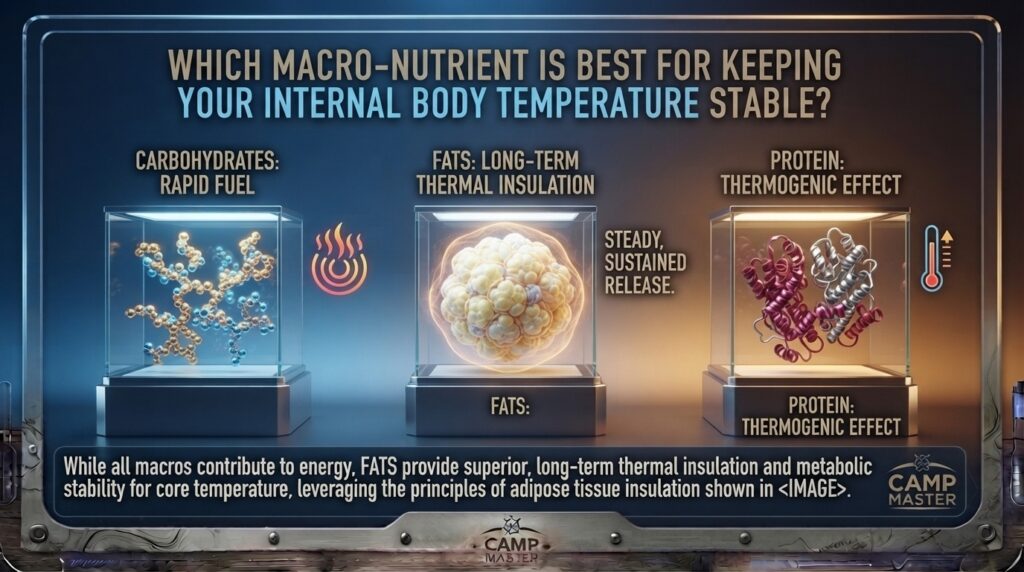
Which macro-nutrient is best for keeping your internal body temperature stable? Imagine waking up before dawn to catch the sunrise at a high-elevation campsite in Washington’s Cascade Range. The temperature has plummeted overnight into the low 30s. Or picture yourself navigating a biting winter wind off the Atlantic while running along New York’s Hudson River, bracing against a dense, damp fog rolling past San Francisco’s Golden Gate, or setting out across a vast, exposed plateau in West Texas during a sudden autumn cold snap.
In every single one of these scenarios, your body enters an immediate, high-stakes battle against the elements to protect your core temperature.
To keep your brain, heart, and internal organs operating at their baseline target of 98.6°F (37°C), your brain’s internal thermostat—the hypothalamus—must continuously fire up its metabolic furnace. But a furnace cannot burn without fuel. Every bit of the thermal energy your body creates is derived directly from the foods you eat: the three foundational macronutrients—Carbohydrates, Fats, and Proteins.
This raises a crucial survival and performance question for outdoor enthusiasts: Which specific macronutrient is truly the best for keeping your internal body temperature stable in extreme conditions?
The answer isn’t a simple one-word fix; rather, it lies in understanding how different foods spark unique thermodynamic reactions within your cells. This comprehensive, optimized guide will break down the science of Diet-Induced Thermogenesis (DIT), compare the thermal properties of each macronutrient, provide a quantitative look at metabolic efficiency, map out regional dietary survival strategies, and give you actionable nutritional fueling tips for the trail.
1. The Thermodynamics of Food: Understanding Diet-Induced Thermogenesis (DIT)
To understand how food keeps you warm, we must look at the human body through the lens of metabolic bioenergetics. When you eat, your body doesn’t instantly absorb the energy contained within that food. Instead, it must expend a significant amount of its own energy just to chew, digest, transport, break down, and store those nutrients.
This energy expenditure is known scientifically as Diet-Induced Thermogenesis (DIT), historically referred to as the Specific Dynamic Action (SDA) of food.
  [ Raw Food Consumed ]
           │
           ▼
  ┌─────────────────────────┐
  │ Gastrointestinal Labor  │ ──► Energy Expended to Digest
  └────┬───────────────┬────┘
       │               │
       ▼               ▼
  [ Stored Calories ] [ Diet-Induced Thermogenesis ] ──► Radiates as Pure Metabolic Heat
The energy required for DIT is essentially “lost” as thermal waste heat. In the context of cold-weather survival or long-term thermoregulatory stability, this “waste heat” is an incredibly valuable asset. It acts like an internal space heater, warming the blood in your gastrointestinal tract, which is then pumped continuously throughout your cardiovascular loop to keep your extremities and core warm.
However, the thermal cost of processing food varies dramatically depending on the molecular complexity of the macronutrient you ingest.
2. The Macronutrient Showdown: How Carbohydrates, Fats, and Proteins Compare
Each of the three macronutrients plays a distinctly different role in how your body generates heat, how long that heat lasts, and how easily your cells can access that energy during intense physical outdoor activity.
Protein: The High-Ignition Flash Furnace
If your sole goal is to generate the highest immediate spike in internal body heat through eating, protein is the undisputed champion.
Protein has a massive thermic effect, ranging between 20% and 30%. This means that if you consume 100 calories of pure protein (such as lean meat, fish, or dense plant-based isolates), your body will immediately burn 20 to 30 of those calories simply to break down the complex peptide bonds into individual amino acids and process the nitrogen byproducts.
- The Thermodynamic Behavior: Protein creates a powerful, hot-burning thermal spike that peaks roughly 2 to 3 hours after consumption. However, protein is a highly inefficient fuel source for actual muscular movement (like hiking uphill or jogging). Your body prefers to save protein for tissue repair rather than burning it for raw physical kinetic work.
Carbohydrates: The High-Velocity Fuel
Carbohydrates are the body’s preferred, most accessible source of immediate energy. When you consume carbs (grains, fruits, sugars, oats), your body rapidly breaks them down into glucose, which is either used immediately by your cells or stored in your muscles and liver as glycogen.
- The Thermodynamic Behavior: Carbohydrates possess a modest thermic effect of 5% to 15%. They don’t generate the massive, roaring digestive heat spike that protein does. However, carbohydrates are absolutely essential for preventing hypothermia because they fuel shivering—your body’s emergency involuntary defense mechanism that boosts muscular heat production by up to 400% when you stop moving in the cold. If your glycogen stores are depleted, your body’s ability to shiver collapses, leaving you completely vulnerable to a core temperature crash.
Fats: The Long-Burning Coal Matrix
Dietary fats (nuts, oils, cheeses, butter, avocados) are the most calorically dense macronutrient on earth, packing a massive 9 calories per gram—more than double the energy density of carbohydrates and proteins (which offer 4 calories per gram).
- The Thermodynamic Behavior: Fats have the lowest immediate thermic effect, typically between 0% and 5%. Digesting fat doesn’t cause a massive, sudden surge in body heat. Instead, fat operates exactly like a premium, slow-burning charcoal briquette. Because lipids take a long time to pass through the stomach and process in the small intestine, they provide a remarkably steady, hours-long release of metabolic energy. This continuous energy flow keeps your baseline metabolism firing at a stable, elevated rate across extended, freezing, multi-hour outdoor adventures.
3. Quantitative Matrix: The Thermic and Energy Profiles of Macronutrients
The table below provides a detailed comparison of how each macronutrient performs across energy density, digestive cost, thermal spikes, and its specific value for outdoor thermoregulation.
| Macronutrient | Energy Density (kcal/gram) | Thermic Effect (DIT) Range | Digestive Heat Spike Velocity | Primary Thermoregulatory Role | Optimal Outdoor Use Case |
| Protein | 4 kcal/g | 20% – 30% | Rapid (Peaks in 2-3 hours) | Generates maximum immediate internal digestive heat. | Pre-bedtime meals to ward off midnight tent shivers. |
| Carbohydrates | 4 kcal/g | 5% – 15% | Instantaneous | Fuels mechanical movement and the emergency shivering response. | Mid-hike/mid-run fuel to maintain high-output muscle heat. |
| Fats | 9 kcal/g | 0% – 5% | Slow / Sustained (4-8 hours) | Provides the long-term caloric foundation for baseline metabolic heat. | Breakfast and sustained trail snacks for long-duration cold exposure. |
4. Regional Climate Strategies: Matching Fuel to Your Environment
An outdoor enthusiast’s nutritional requirements change radically depending on the weather conditions of the specific region they are exploring. Let’s look at how to tailor your macronutrient intake across different climate profiles in the United States.
Washington & The Pacific Northwest (Damp, Cool, High-Altitude Treks)
- The Environment: High relative humidity, persistent damp rain, and rapidly dropping alpine temperatures in the Cascade and Olympic ranges.
- Thermodynamic Impact: Damp air has a high thermal conductivity, pulling heat away from your skin rapidly.
- The Fueling Strategy: Because the damp environment drains your heat continuously, you need a mix of fats and carbohydrates. Consume slow-burning fats (like macadamia nuts or coconut oil mixed into oatmeal) before heading out to maintain a steady baseline metabolic output. Pair this with quick-digesting carbohydrates every 45 minutes to ensure your muscles can keep up a high physical pace, generating continuous mechanical warmth to counter the wet chill.
California & San Francisco (High Wind Speed & Coastal Microclimates)
- The Environment: Biting, damp coastal winds and rapid temperature swings between sunny valleys and exposed fog zones.
- Thermodynamic Impact: Wind causes intense convective heat loss, stripping away the thin insulating layer of warm air right next to your skin.
- The Fueling Strategy: Running or hiking against heavy coastal winds dramatically increases your physical workload. Prioritize accessible carbohydrates to keep your muscle glycogen levels completely topped off, ensuring your body can maintain the high physical output required to push through heavy headwinds without hitting a wall.
New York & The Northeast (Deep Winter Freezes)
- The Environment: Sub-freezing temperatures, sub-zero wind chills, and deep snowpack in the Adirondacks or Catskills.
- Thermodynamic Impact: The immense temperature difference between your body and the sub-freezing air causes rapid heat loss through radiation.
- The Fueling Strategy: This environment demands the “Protein Pillow” strategy. When camping or resting in deep freeze conditions, consuming a high-protein, high-fat meal right before going to sleep triggers a sustained digestive heat spike (DIT) that peaks during the coldest hours of the night, helping keep your sleeping bag warm without requiring physical movement.
Texas (Arid Deserts to Scorching Heat Waves)
- The Environment: Ambient temperatures regularly exceeding 100°F in Big Bend or the Texas Hill Country.
- Thermodynamic Impact: The environment actively pushes heat into your body, making sweat evaporation your only way to stay cool.
- The Fueling Strategy: In extreme heat, you want to avoid heavy protein meals during peak daylight hours. The high thermic effect of protein adds unnecessary internal heat to an already overloaded system. Instead, choose light, easily digestible carbohydrates paired with high fluid and electrolyte intake to support sweat production and keep your core from overheating.
5. Field Tips for Optimizing Your Internal Thermostat Through Nutrition
To master your internal temperature during your next eco-adventure, follow these five practical, field-tested nutritional strategies:
- The “Midnight Fuel” Camp Trick: If you find yourself shivering in your sleeping bag during a cold wilderness night, do not just lie there. Eat a high-fat, high-protein snack, such as a large spoonful of peanut butter or a handful of jerky, right in your tent. The high digestive cost of the protein will trigger a noticeable spike in body heat within an hour, while the dense fats will keep your metabolic furnace stoked until morning.
- Avoid the “Sugar Crash Cold”: Relying solely on simple sugars (like candy bars or cheap energy gels) while hiking in cold weather creates a dangerous cycle. Simple sugars cause a rapid spike in blood glucose, giving you a quick burst of energy and heat, but this is followed by a sharp insulin crash. When your blood sugar crashes, you will suddenly feel significantly colder. Always balance simple sugars with complex carbs and healthy fats.
- Hydrate to Process the Heat: Your metabolic furnace cannot convert macronutrients into heat without water. The chemical breakdown of glycogen (glycogenolysis) and the metabolic processing of proteins both require substantial fluid volumes. If you are dehydrated, your blood thickens, reducing circulation to your cold fingers and toes and slowing down your overall heat production. Drink warm water or herbal teas continuously.
- Stoke the Burn with Thermogenic Spices: Boost your food’s natural heat-generating abilities by adding thermogenic spices like cayenne pepper, ginger, black pepper, and mustard to your trail meals. Cayenne contains an active compound called capsaicin, which directly stimulates the sympathetic nervous system, temporarily widening blood vessels and increasing metabolic heat production.
- Eat Small, Frequent Meals: Instead of eating one massive, heavy lunch that forces your body to divert massive blood flow away from your working limbs to your stomach, graze on small snacks every 60 to 90 minutes. This continuous supply keeps your metabolic heat output steady and reliable without causing digestive sluggishness or energy drops.
6. 10 Deep-Dive Frequently Asked Questions (FAQs)
1. Which macronutrient is absolutely the best overall for cold-weather survival?
For immediate, raw heat production while stationary, protein is the best due to its 20% to 30% thermic effect. However, for long-term survival and endurance in the cold, fats are the true winner because their high caloric density (9 kcal/g) provides a steady, long-lasting energy reserve that keeps your baseline metabolism firing for hours.
2. Why does eating a heavy meal make me feel temporarily chilled sometimes?
When you eat a very large, heavy meal, your body must direct a massive volume of blood flow away from your skin and skeletal muscles toward your stomach and intestines to assist with digestion. This process, known as postprandial hyperemia, can leave your limbs and skin surface temporarily short on warm blood circulation, making you feel a sudden chill right after eating.
3. Does drinking alcohol actually warm up your body in the cold?
No, this is a dangerous and potentially life-threatening myth. Alcohol is a powerful vasodilator, meaning it forces the tiny blood vessels near your skin to open up widely. While this rushes warm blood to the surface—giving you a quick, deceptive feeling of warmth—it actively drains heat away from your vital core organs. This significantly accelerates your true risk of hypothermia.
4. What is Brown Fat, and how does food affect it?
Brown Adipose Tissue (BAT) is a specialized type of fat packed with iron-rich mitochondria. Unlike standard white fat, which stores energy, brown fat burns calories exclusively to generate heat through a process called non-shivering thermogenesis. Consuming healthy fats and regular exposure to cold environments can help stimulate and maintain active brown fat reserves.
5. Can a low-carb diet make you feel colder during outdoor exercise?
Yes. If you are on a strict low-carbohydrate or ketogenic diet, your muscle and liver glycogen stores are naturally much lower. While your body becomes highly efficient at burning fat for fuel, the lack of ready glycogen means that if you hit a sudden wall or get caught in a freezing situation, your body will struggle to sustain the intense, rapid shivering response required for emergency heat generation.
6. How long does the heat-generating effect of a high-protein meal last?
The thermic effect of protein typically kicks in within 30 to 60 minutes after eating, peaks around the 2 to 3-hour mark, and can continue to provide elevated baseline metabolic heat for up to 5 or 6 hours, depending on the size and complexity of the meal.
7. Why do I crave high-fat foods like cheese and nuts when hiking in winter?
Your body possesses highly intuitive evolutionary survival mechanisms. When you are exposed to cold environments, your baseline caloric expenditure increases as your body works to maintain its core temperature. Your brain automatically triggers cravings for fat because it is the most calorically dense fuel available, offering the maximum amount of energy for the least physical volume.
8. Does hot food provide more metabolic heat than cold food?
The physical temperature of hot food or warm liquids adds only a tiny fraction of literal thermal mass to your body. However, eating hot food provides a massive psychological comfort boost and immediately warms the blood vessels surrounding your esophagus and stomach. This warming effect signals your hypothalamus to relax its defensive hold on your blood vessels, allowing warm blood to flow back out to your cold hands and feet.
9. Does skipping breakfast affect your ability to stay warm on a morning run?
Yes, dramatically. When you exercise in a fasted state, your body lacks the immediate thermal boost provided by Diet-Induced Thermogenesis. Furthermore, if your blood sugar is low, your body has to work harder to mobilize energy reserves, which can result in lower overall heat production during the initial miles of your run.
10. Can certain vitamin deficiencies make it harder to regulate body temperature?
Yes. A deficiency in Vitamin B12 or Iron can cause anemia, reducing your blood’s ability to transport oxygen efficiently to your working muscles and core. Additionally, low Vitamin D or Iodine levels can negatively impact your thyroid gland, which acts as the master control switch for your baseline metabolic rate and overall heat production.
Conclusion
When it comes to keeping your internal body temperature stable during outdoor adventures, there is no single “magic” macronutrient. Instead, the secret lies in knowing how to layer your nutrition exactly like you layer your technical outdoor gear.
- Protein acts as your instant spark, creating a powerful but short-term digestive heat wave that is ideal for warming up during camp rests or right before bed.
- Carbohydrates serve as your high-octane fuel, essential for powering your active muscles and keeping your emergency shivering defense primed and ready.
- Fats provide the slow-burning, high-density foundation that keeps your internal furnace stoked across long, demanding days in the wilderness.
By understanding these nutritional dynamics, you can make smart, calculated choices for your trail meals. Whether you are navigating the damp coastal paths of San Francisco, the deep winter freezes of New York, the alpine heights of Washington, or the sweeping expanses of Texas, packing the right balance of macronutrients ensures your body has all the fuel it needs to stay warm, safe, and ready for the next adventure.


