

The Ultimate Parent’s Guide to Safe, Fun Outdoor Adventures: 20 Tips for Hiking with toddlers. The Complete Parent’s Guide to Fun, Safe, and Memorable Adventures.
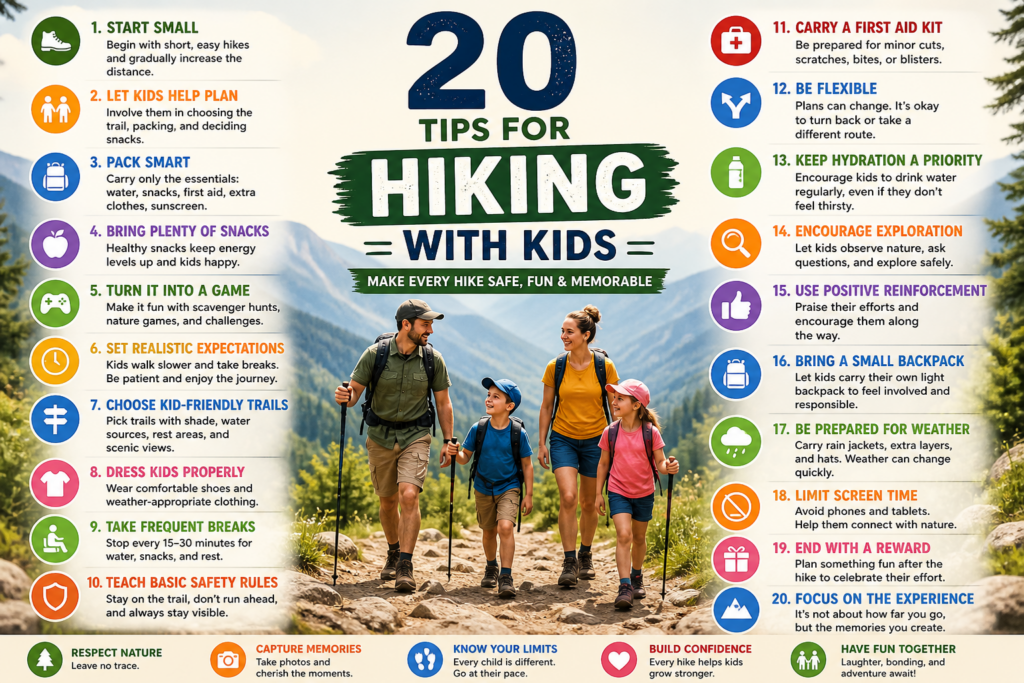
Hiking with kids can be one of the most rewarding experiences for a family. It’s not just about walking through nature — it’s about building memories, teaching resilience, and helping children connect with the world beyond screens. However, taking kids on a hike is very different from hiking solo or with other adults. It require planning, patience, and a bit of creativity.
In this comprehensive guide, you’ll discover 20 practical, real-world tips to make hiking with kids enjoyable, safe, and stress-free. Whether you’re a beginner parent or someone looking to improve your outdoor trips, this article will help you prepare like a pro.
Hiking with kids sounds like a beautiful idea — fresh air, scenic views, and happy family bonding time. But in reality, it can quickly turn into a mix of excitement, complaints, snack breaks, and unexpected challenges. One moment your child is excited about butterflies, and the next moment they’re asking, “Are we there yet?” every five minutes.
Still, despite all the challenges, hiking with kids is one of the most valuable outdoor experiences you can offer them. It helps them grow physically, mentally, and emotionally. It builds curiosity, patience, and confidence in ways that screens and indoor activities simply cannot.
The truth is, hiking with kids doesn’t have to be stressful. With the right preparation and mindset, it can become something your children actually look forward to.
In this in-depth guide, you’ll discover 20 practical and proven tips to make hiking with kids easier, safer, and more enjoyable — even if you’re a complete beginner.
Why Hiking with Kids Is Important
Before diving into the tips, it’s important to understand why hiking is so beneficial for children.
In today’s digital world, kids spend more time indoors than ever before. Phones, tablets, and video games have replaced outdoor play. This shift has led to reduced physical activity and less exposure to nature.
Hiking helps reverse that.
It allows kids to:
- Develop physical strength and endurance
- Improve mental focus and creativity
- Learn about nature and the environment
- Build confidence by overcoming small challenges
- Strengthen emotional connection with parents
Also, children who grow up exploring nature are more likely to respect and protect it later in life.
1. Start Small and Build Confidence
One of the biggest mistakes parents make is starting with a hike that’s too difficult.
Kids are not mini adults — their stamina, patience, and walking speed are completely different. If their first hiking experience is exhausting or boring, they might refuse to go again.
Start with:
- Short distances (1–2 km)
- Flat or slightly uneven trails
- Places with interesting surroundings
The goal of the first few hikes is not distance, but enjoyment. If they enjoy it, they will naturally want to go further next time.
2. Let Kids Be Part of the Planning
Kids love feeling important. When they are involved in planning, they feel more connected to the trip.
You can involve them by:
- Letting them choose between two hiking spots
- Asking what snacks they want
- Allowing them to pack their own small bag
This simple involvement can reduce complaints during the hike because they feel like it was their decision too.
3. Choose the Right Trail Carefully
Not all hiking trails are suitable for kids. Some may be too steep, too long, or even dangerous.
When choosing a trail, look for:
- Well-marked paths
- Shaded areas
- Access to water or rest spots
- Safe terrain without cliffs
A beautiful but difficult trail is not worth it if your child is struggling the whole time.
4. Pack Smart (But Don’t Overpack)
Packing is important, but overpacking can make the hike harder.
Essentials include:
- Water bottles
- Snacks
- First aid kit
- Extra clothing
- Sunscreen
Avoid bringing unnecessary items. A heavy bag will slow you down and make the experience uncomfortable.
5. Snacks Are Your Secret Weapon
If there’s one thing that can save a hike, it’s snacks.
Kids burn energy quickly and get hungry often. Hunger leads to mood swings, complaints, and loss of motivation.
Bring a variety of snacks like:
- Fruits
- Biscuits
- Nuts
- Sandwiches
You can even use snacks as rewards: “Let’s reach that tree, then snack break!”
6. Turn the Hike into an Adventure Game
Walking alone can be boring for kids, but games make everything exciting.
Try activities like:
- Nature scavenger hunt
- Counting birds or flowers
- Spotting different colors
- Creating stories about the surroundings
These small games distract them from tiredness and keep their mind engaged.
7. Set Realistic Expectations
Kids will walk slower. They will stop frequently. They will ask questions. And sometimes they will complain.
That is completely normal.
Dont expect them to behave like adults. Hiking with kids is not about speed — it’s about experience.
8. Dress Kids for Comfort and Safety
Clothing plays a big role in hiking comfort.
Make sure they wear:
- Comfortable shoes with good grip
- Breathable clothes
- Weather-appropriate layers
Improper clothing can cause discomfort, blisters, or even health issues.
9. Take Frequent Breaks
Unlike adults, kids need more breaks to recharge.
Plan to stop every 15–30 minutes for:
- Water
- Snacks
- Rest
Regular breaks prevent exhaustion and keep the mood positive.
10. Teach Basic Hiking Rules
Before starting the hike, explain a few simple rules:
- Stay on the trail
- Don’t wander off
- Always stay where parents can see you
Kids forget things easily, so gentle reminders are needed during the hike.
11. Always Carry a First Aid Kit
Even on easy trails, small accidents can happen.
A basic first aid kit should include:
- Bandages
- Antiseptic wipes
- Pain relief medicine
- Insect bite cream
Being prepared can save you from panic situations.
12. Be Flexible with Your Plan
Sometimes things don’t go as expected.
Your child might get tired early. Weather might change. The trail could be harder than expected.
Its okay to turn back.
Flexibility is key when hiking with kids.
13. Keep Hydration a Priority
Kids often forget to drink water while playing or exploring.
Encourage them to drink regularly, even if they say they’re not thirsty.
Dehydration can cause fatigue and irritability.
14. Encourage Curiosity and Exploration
Kids are naturally curious.
Let them:
- Observe insects
- Touch leaves
- Ask questions
This makes the hike educational and exciting.
15. Use Positive Encouragement
Instead of pressuring them, motivate them with positivity.
Say things like:
- “You’re doing amazing!”
- “Just a little more!”
Encouragement builds confidence and keeps them moving.
16. Give Them Responsibility
If your child is old enough, let them carry a small backpack.
It gives them a sense of responsibility and independence.
Just make sure the bag is light.
17. Prepare for Weather Changes
Weather can change quickly, especially in outdoor environments.
Carry:
- Light rain jacket
- Extra clothes
- Hat or cap
Even if the forecast looks clear, always be prepared.
18. Limit Screen Time During the Hike
The purpose of hiking is to connect with nature.
Avoid giving phones or tablets to kids.
Encourage them to enjoy the environment instead.
19. End the Hike with Something Fun
Plan a small reward after the hike.
It could be:
- Ice cream
- Favorite food
- A fun activity
This creates positive memories and makes them excited for future hikes.
20. Focus on Fun, Not Distance
The most important tip of all.
It doesn’t matter how far you walk.
What matters is:
- Did your child enjoy it?
- Did you spend quality time together?
A short happy hike is better than a long stressful one.
Common Challenges When Hiking with Kids
Even with preparation, you may face challenges like:
- Kids getting tired quickly
- Complaining or refusing to walk
- Unexpected weather
- Minor injuries
These challenges are part of the experience. Over time, both you and your kids will adapt.
Best Age to Start Hiking
You can start hiking at almost any age, but the approach changes.
- Toddlers: Short walks or carrier-based hiking
- Ages 4–7: Easy trails with lots of breaks
- Ages 8+: Longer hikes with more independence
Every child is different, so adjust based on their ability.
Long-Term Benefits of Hiking with Kids
Hiking regularly can have lasting benefits:
- Better physical health
- Stronger immune system
- Improved mental well-being
- Increased confidence
- Stronger family relationships
These benefits go far beyond the trail.
Final Thoughts
Hiking with kids is not always easy, but it is always worth it.
There will be moments of frustration, but there will also be laughter, discovery, and unforgettable memories.
The key is to keep things simple, stay patient, and focus on enjoying the journey rather than reaching a destination.
Over time, those small hikes will turn into big adventures — and your kids will grow up loving the outdoors.
So pack your bags, step outside, and start exploring.
Because the best childhood memories are often made on trails, not screens.