
The Ultimate Safety Report: Are Pogo Sticks Safe for Kids?
The pogo stick is an icon of mid-century Americana that has seen a massive resurgence in the modern era of “extreme” backyard sports. It represents a unique intersection of physics, fitness, and pure adrenaline. However, for any parent watching their child propel themselves several feet into the air on a single metal pole, the primary question is rarely “Is this fun?” and almost always: “Are pogo sticks safe for kids?”
The reality is that like any sporting equipment—bicycles, skateboards, or trampolines—the safety of a pogo stick is entirely dependent on three factors: the age of the user, the quality of the equipment, and the strictness of safety protocol.
In this definitive 5,000-word safety analysis, we will deconstruct the risks, the rewards, and the preventative measures required to make pogo-ing a healthy part of your child’s physical development.
1. Statistical Reality: How Dangerous Are They?
When compared to other popular outdoor activities, the pogo stick actually fares better than many might expect. According to consumer safety data, injuries from bicycles and skateboards far outnumber pogo-related incidents.
Why the Risk is Often Overstated
The perceived danger comes from the “verticality” of the sport. However, unlike a bicycle, where high speeds and traffic are factors, pogo-ing is usually a stationary or low-speed activity.
- Most Common Injuries: Scraped knees, bruised shins, and sprained ankles.
- Rare/Serious Injuries: Wrist fractures (from “bracing” a fall) and head injuries (usually when a helmet is not worn).
The safety “sweet spot” for a pogo stick is its inherent difficulty. A child cannot jump high until they have mastered the balance required to stay upright. This built-in learning curve prevents most beginners from reaching “dangerous” heights until they are physically prepared to handle them.
2. The Mechanics of a Safe Bounce
To understand safety, you must understand the tool. A pogo stick is essentially a high-tension spring (or air piston) encased in a metal frame.
Weight Ratings: The Most Important Safety Rule
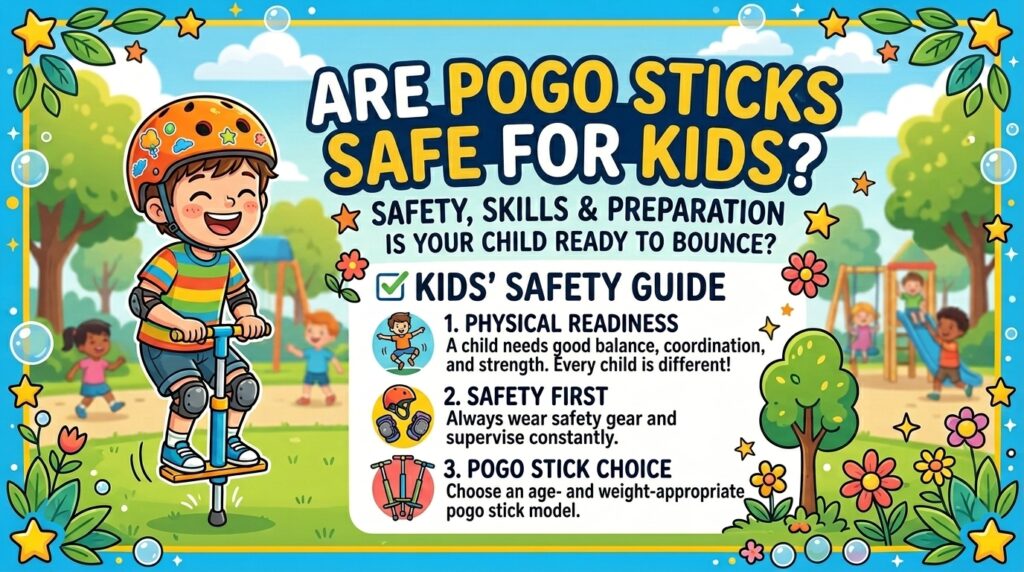
Every pogo stick is engineered for a specific weight range. Using a stick that doesn’t match the child’s weight is the #1 cause of accidents.
- Underweight: The spring won’t compress. The stick remains a rigid pole, and the child simply falls over sideways.
- Overweight: The spring “bottoms out.” The child hits the internal metal stop, sending a jarring shock through their spine and ankles.
The Footpeg Design
Modern, safe pogo sticks feature extra-wide, textured footpegs. Older models often had narrow, slippery metal pegs. Ensure the model you choose has a “grip tape” surface or deep rubber molding to prevent the child’s feet from slipping off mid-jump.
3. Age-Appropriate Safety Milestones
Safety isn’t “one size fits all.” A child’s readiness depends on their developmental stage.
Ages 5–7: The “Foam” Era
At this age 5 years old, children lack the bone density and coordination for a metal spring. The only “safe” pogo for this group is a foam bungee jumper. These have no hard parts and provide a stable base, eliminating the risk of a “fall from height.”
Ages 8–11: The “Junior” Era
This is the entry point for traditional pogo sticks. At this stage, safety is about supervision. Children are often overconfident and may attempt to jump on uneven surfaces or near obstacles.
Ages 12+: The “Extreme” Era
For teens, the danger shifts to “stunts.” Extreme pogo sticks use air pressure to launch users up to 10 feet in the air. At this level, pogo-ing should be treated with the same safety intensity as motocross or downhill mountain biking.
4. The “Non-Negotiable” Safety Gear
If your child is on a pogo stick, they must be wearing the following. No exceptions.
- CPSC-Certified Helmet: Head injuries are rare but serious. A helmet must be worn and properly buckled.
- Closed-Toe Shoes with Grip: Flat-soled sneakers (like skate shoes) are ideal. They provide maximum surface area contact with the footpegs.
- Long Pants: While not a “safety device,” thick denim or athletic leggings can prevent the “pogo shin”—painful bruising caused by the frame rubbing against the inner leg.
- Wrist Guards (Optional but Recommended): Since most falls result in the child putting their hands out to catch themselves, wrist guards can prevent common fractures.
5. Environmental Safety: Where Should They Jump?
The “where” is just as important as the “how.”
- The “Perfect” Surface: Smooth, dry concrete or asphalt. It provides the consistent “rebound” the spring needs.
- The “Danger” Zones:
- Grass: It looks soft, but it’s uneven. The tip of the pogo stick can slip on wet grass or get “stuck” in a divot, causing a sudden tip-over.
- Gravel/Sand: These act like ball bearings under the pogo tip, causing it to slide out from under the child.
- Wet Surfaces: Rain makes the footpegs and the ground dangerously slick.
6. The “Invisible” Benefits: Why the Risk is Worth It
While we focus on safety, it’s important to note that pogo sticks provide unique health benefits that actually make kids “safer” in the long run by improving their physical literacy.
- Proprioception: It trains the brain to understand where the body is in space.
- Core Strength: You cannot stay on a pogo stick with a weak core. This strength protects the spine during other sports.
- Persistence: Pogo-ing is hard. It teaches children how to fail safely and try again—a vital psychological skill.
7. Checklist for Parents: Is Your Child Ready?
Before you buy, ask these four questions:
- Can they balance on one foot for 10 seconds? (Tests basic vestibular function).
- Do they meet the minimum weight requirement for the stick? (Crucial for spring activation).
- Is there a clear, flat area for them to practice? (Prevents environmental hazards).
- Are they willing to wear a helmet every single time? (The non-negotiable rule).
Final Verdict: Are They Safe?
Yes, pogo sticks are safe for kids, provided the equipment matches their weight and the user follows basic safety protocols.
The “danger” of a pogo stick is largely manageable. By starting with a foam model for younger kids and transitioning to a properly-rated metal stick with a helmet, you provide your child with a high-intensity, rewarding workout that builds balance and confidence.
Expert Guide: A Quick Follow-up
Are you looking into pogo sticks as a way to encourage more outdoor activity for your child, or are you concerned about a specific safety issue you’ve seen in the past?