

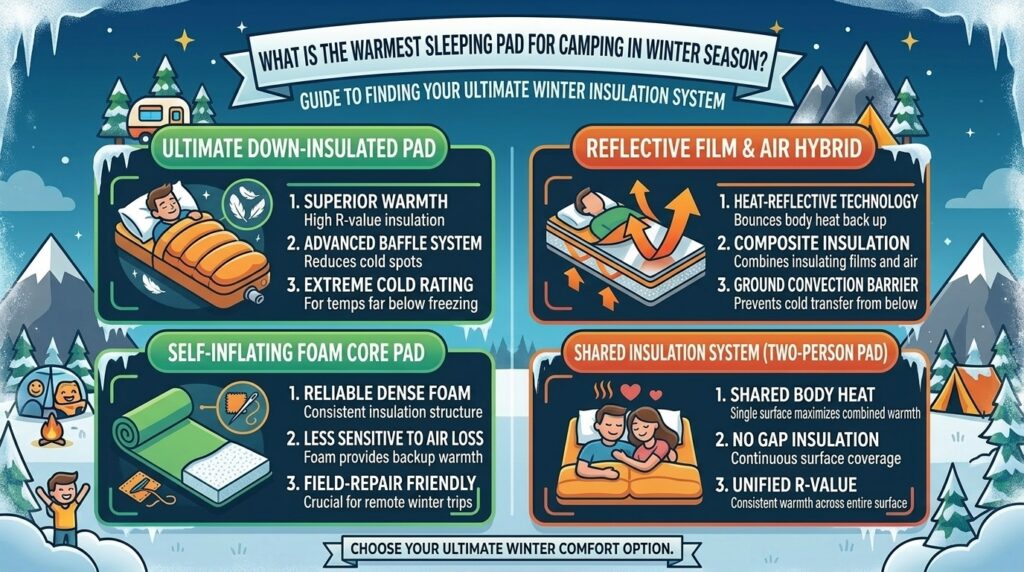
Winter camping can be one of the most beautiful outdoor experiences in the world. Snow-covered mountains, silent forests, frozen lakes, and crisp cold air create an atmosphere that many outdoor enthusiasts absolutely love. However, winter camping also comes with serious challenges, and one of the biggest challenges is staying warm while sleeping.
Many beginner campers focus heavily on buying a thick sleeping bag, but experienced winter campers know something very important: your sleeping pad is often more important than your sleeping bag during cold-weather camping.
Even the warmest sleeping bag cannot fully protect you from freezing ground temperatures if your sleeping pad lacks proper insulation. Cold ground pulls heat away from your body through conduction, and without enough protection underneath you, sleep can quickly become uncomfortable or even dangerous.
So what is the warmest sleeping pad for camping in winter season?
The answer depends on several factors including insulation technology, R-value, sleeping style, weather conditions, portability, and budget. Some sleeping pads are designed specifically for extreme winter camping and can handle subzero temperatures, deep snow, and harsh mountain environments.
This detailed guide explains everything you need to know about warm winter sleeping pads, including how they work, what features matter most, different types of winter pads, and which sleeping pads are considered the warmest for serious cold-weather camping.
Why Sleeping Pads Matter More in Winter
Many campers underestimate the importance of ground insulation.
When sleeping outdoors during winter, your body loses heat in several ways:
- Conduction
- Convection
- Radiation
- Evaporation
Ground conduction is one of the biggest causes of nighttime heat loss.
Snow, frozen soil, ice, and cold ground absorb body heat rapidly. Even if you have an expensive sleeping bag rated for extreme temperatures, the insulation underneath your body compresses when you lie down. Once compressed, the sleeping bag loses much of its insulating ability.
This is where a sleeping pad becomes essential.
A winter sleeping pad acts as a thermal barrier between your body and the frozen ground.
Without proper insulation underneath you, cold temperatures can make sleeping nearly impossible.
Experts consistently emphasize that winter camping requires a sleeping pad with a high R-value.
What Is R-Value?
R-value is the most important measurement for winter sleeping pads.
R-value measures thermal resistance, meaning how effectively a sleeping pad prevents heat transfer between your body and the cold ground.
Higher R-values provide better insulation.
Basic R-Value Guide
| R-Value | Suitable Conditions |
|---|---|
| 1–2 | Summer camping |
| 2–4 | Spring and fall camping |
| 4–5 | Mild winter camping |
| 5–7 | Serious winter camping |
| 7+ | Extreme cold and snow camping |
Many winter camping experts recommend an R-value of at least 5 for winter use, while extreme conditions often require 7 or higher.
What Makes a Sleeping Pad Warm?
Several factors affect warmth performance.
1. Insulation Materials
Winter sleeping pads use different insulation technologies including:
- Synthetic insulation
- Reflective thermal layers
- Down insulation
- Foam cores
- Air-trapping chambers
These materials reduce heat transfer.
2. Thickness
Thicker sleeping pads usually provide:
- Better cushioning
- Improved air separation from cold ground
- Enhanced comfort
However, thickness alone does not guarantee warmth.
Some thick air mattresses without insulation can actually feel cold.
Outdoor experts note that insulation quality matters more than thickness alone.
3. Air Chamber Design
Modern winter pads use advanced chamber systems to trap heat.
Examples include:
- Horizontal baffles
- Vertical chambers
- Triangular core structures
- Reflective heat barriers
These designs improve insulation efficiency.
4. Foam Layers
Foam is naturally insulating.
Self-inflating sleeping pads often combine foam with air chambers to create stronger winter insulation.
Types of Winter Sleeping Pads
There are several categories of sleeping pads suitable for winter camping.
Inflatable Winter Sleeping Pads
These pads use insulated air chambers.
Advantages include:
- Lightweight designs
- Compact packed size
- Excellent comfort
- High insulation potential
Premium inflatable winter pads now offer extremely high R-values.
Self-Inflating Sleeping Pads
These combine foam insulation with air chambers.
Advantages include:
- Reliable insulation
- Better durability
- Strong comfort levels
- Easier setup
They are often heavier than ultralight inflatable pads.
Closed-Cell Foam Pads
Foam pads are simple but highly reliable.
Advantages include:
- No puncture risk
- Excellent durability
- Reliable insulation
- Affordable price
Disadvantages include:
- Bulky storage
- Less comfort
- Minimal cushioning
Many winter backpackers combine foam pads with inflatable pads for extra warmth.
The Warmest Sleeping Pads for Winter Camping
Several sleeping pads are widely considered among the warmest available today.
Therm-a-Rest NeoAir XTherm NXT
One of the most respected winter sleeping pads is the Therm-a-Rest NeoAir XTherm NXT.
Experts frequently describe it as one of the best warmth-to-weight options available.
Why It Is Popular
- Extremely high R-value
- Lightweight design
- Excellent packability
- Strong winter insulation
- Trusted by mountaineers and winter backpackers
The pad uses reflective ThermaCapture technology to trap radiant body heat.
Many serious winter campers choose this pad because it balances warmth and portability extremely well.
NEMO Tensor Extreme Conditions
Another leading winter sleeping pad is the NEMO Tensor Extreme Conditions.
Some recent reviews describe it as one of the warmest pads currently available with an R-value around 8.5.
Why Campers Love It
- Extremely high insulation
- Thick cushioning
- Quiet material
- Comfortable support
- Excellent cold-weather performance
Winter testers have praised its performance during subzero camping conditions.
This pad is especially attractive for campers who prioritize warmth and comfort over budget.
Exped Dura 8R
The Exped Dura 8R is another highly respected winter camping pad.
Outdoor communities often mention Exped pads when discussing extreme cold performance.
Key Features
- Very high R-value
- Durable fabric
- Excellent insulation
- Suitable for snow camping
- Reliable winter performance
Some experienced campers report using Exped pads successfully in below-freezing environments and on snow-covered terrain.
Rab Hypersphere Ultra 7.5
The Rab Hypersphere Ultra 7.5 is another advanced winter pad designed for cold-weather adventures.
Important Features
- Down insulation
- Lightweight construction
- High R-value
- Comfortable thickness
- Mountaineering-focused design
Its combination of warmth and low weight makes it attractive for winter backpackers.
Why R-Value Is Not the Only Factor
Although R-value is extremely important, real-world warmth depends on additional factors.
Some outdoor communities argue that real-world performance can vary between brands despite similar R-values.
Several things affect actual warmth:
- Sleeping bag quality
- Tent ventilation
- Wind exposure
- Moisture
- Sleeping clothing
- Metabolism
- Snow conditions
- Humidity
- Sleeping position
This is why experienced campers test gear carefully before relying on it during extreme trips.
Can a Sleeping Pad Be Too Warm?
Some campers wonder whether high R-value pads become uncomfortable during warmer weather.
Most experienced campers say warmth is rarely a problem during winter conditions.
In fact, many winter campers prefer using higher R-value pads year-round because:
- They improve comfort
- They protect against unexpected cold
- Weight differences are sometimes small
However, very warm pads may feel excessive during hot summer camping.
Warmest Sleeping Pad for Different Camping Styles
Different campers need different sleeping systems.
Best Warmest Pad for Backpacking
Backpackers need warmth and portability.
Top choices include:
- Therm-a-Rest NeoAir XTherm NXT
- NEMO Tensor Extreme Conditions
- Rab Hypersphere Ultra 7.5
These pads offer high insulation while remaining relatively lightweight.
Best Warmest Pad for Car Camping
Car campers can prioritize comfort over weight.
Good options include:
- Thick self-inflating mats
- Double sleeping pads
- Large insulated camping mattresses
Car camping allows heavier and thicker sleep systems.
Best Warmest Pad for Mountaineering
Mountaineering requires:
- High insulation
- Lightweight construction
- Reliability
- Compact storage
Extreme winter pads with R-values above 7 are common choices.
Why Many Winter Campers Use Two Sleeping Pads
Some experienced winter campers combine two sleeping pads.
Common combinations include:
- Foam pad + inflatable pad
- Self-inflating pad + foam pad
- Two insulated pads layered together
This improves insulation dramatically.
Layering pads can increase total R-value significantly.
This method is especially popular during:
- Arctic camping
- Snow expeditions
- High-altitude mountaineering
- Extreme cold adventures
Foam Pads Still Matter in Winter
Modern inflatable pads are extremely advanced, but foam pads remain important.
Closed-cell foam pads provide:
- Backup insulation
- Emergency reliability
- Extra protection from snow
- Puncture protection
Many winter backpackers carry foam pads even when using premium inflatable pads.
Winter Sleeping Pad Comfort Matters Too
Warmth is critical, but comfort also matters.
Poor sleep during winter camping can lead to:
- Fatigue
- Reduced energy
- Poor recovery
- Low morale
Comfort factors include:
- Thickness
- Width
- Noise level
- Stability
- Side-sleeper support
Premium winter sleeping pads often combine warmth with excellent cushioning.
Why Cheap Air Mattresses Fail in Winter
Many people attempt winter camping with regular household air mattresses.
This often causes problems.
Basic air mattresses usually lack proper insulation.
Cold air inside the mattress absorbs body heat rapidly.
As a result:
- Sleep becomes cold
- Heat loss increases
- Condensation may develop
Winter camping requires insulated sleeping systems specifically designed for cold environments.
Moisture and Condensation Problems
Winter camping often creates moisture issues.
Breath, snow, humidity, and temperature changes can create condensation.
Moisture reduces insulation efficiency.
To reduce condensation:
- Ventilate the tent
- Use pump sacks instead of mouth inflation
- Dry gear regularly
- Avoid trapping moisture inside pads
Some outdoor guides recommend avoiding mouth inflation because moisture can damage insulation over time.
Noise Levels in Winter Sleeping Pads
Some insulated sleeping pads make crinkling sounds due to reflective insulation layers.
Older winter pads were often noisy.
Modern designs have improved significantly.
Some recent pads are praised for quieter materials and reduced noise during movement.
Quiet sleep systems are especially important for light sleepers.
Winter Sleeping Pad Durability
Cold weather can stress camping equipment.
Winter sleeping pads must handle:
- Snow
- Ice
- Sharp terrain
- Freezing temperatures
- Repeated inflation
Durability matters greatly in remote environments.
Higher-denier fabrics often improve puncture resistance.
Best Sleeping Pad Thickness for Winter
Winter sleeping pads are commonly thicker than summer pads.
Many premium winter pads range from:
- 2.5 inches
- 3 inches
- 3.5 inches
Thicker pads improve:
- Cushioning
- Ground separation
- Side-sleeeper comfort
However, thick pads can sometimes feel unstable if overinflated.
How to Sleep Warmer on a Winter Sleeping Pad
Even the warmest sleeping pad works better with proper camping habits.
Use a Proper Sleeping Bag
Sleeping bags and sleeping pads work together.
A winter sleeping bag is essential.
Wear Dry Clothing
Wet clothing reduces warmth.
Always sleep in dry layers.
Eat Before Bed
Food helps the body generate heat.
Warm meals improve nighttime warmth.
Stay Hydrated
Dehydration affects circulation and body temperature.
Choose Campsites Carefully
Avoid:
- Wind tunnels
- Wet ground
- Frozen depressions
Protected campsites improve warmth.
Use a Tent Footprint
Footprints reduce ground moisture and protect sleeping pads.
Add Foam Underneath
Layering foam underneath an inflatable pad increases insulation.
The Role of Sleeping Bags with Winter Pads
The warmest sleeping pad alone cannot fully protect against extreme cold.
A proper winter sleep system includes:
- Insulated sleeping pad
- Winter sleeping bag
- Tent
- Proper clothing
- Ground protection
All components work together.
Are Self-Inflating Pads Warmer Than Air Pads?
Self-inflating pads often provide:
- Better durability
- Foam insulation
- Reliable warmth
However, modern insulated inflatable pads can achieve much higher R-values while remaining lighter.
For backpackers, insulated inflatable pads are usually preferred.
For car camping, thick self-inflating mats may provide superior comfort.
What Do Experienced Campers Recommend?
Outdoor communities often recommend prioritizing sleeping pad warmth during winter camping.
Many experienced campers say a high-quality sleeping pad can improve warmth more effectively than upgrading sleeping bags alone.
Some winter campers even report sleeping comfortably in subfreezing temperatures using high R-value pads combined with proper layering systems.
Budget Winter Sleeping Pads
Premium winter sleeping pads can be expensive.
However, budget-friendly options exist.
Budget winter systems may involve:
- Foam pad layering
- Mid-range insulated pads
- Used gear
- Simpler self-inflating mats
Even affordable systems can perform well with proper setup.
Luxury Winter Camping Sleep Systems
Luxury winter campers often combine:
- Thick insulated pads
- Cots
- Foam toppers
- Heated blankets
- Double sleeping systems
Comfort-focused winter camping has become increasingly popular.
Future of Winter Sleeping Pad Technology
Camping gear technology continues improving rapidly.
Future developments may include:
- Smarter insulation materials
- Better warmth-to-weight ratios
- Self-heating systems
- Eco-friendly insulation
- Improved durability
- Faster inflation systems
Modern winter sleeping pads are already far superior to older designs.
Final Thoughts
So, what is the warmest sleeping pad for camping in winter season?
Several modern sleeping pads stand out as top choices for extreme winter warmth, especially the NEMO Tensor Extreme Conditions, Therm-a-Rest NeoAir XTherm NXT, and Exped Dura 8R. These pads offer extremely high R-values and are trusted by winter backpackers, mountaineers, and cold-weather campers worldwide.
The warmest sleeping pad is not always the thickest one. True winter performance depends on insulation technology, air chamber design, foam structure, and overall thermal efficiency.
For serious winter camping, experts generally recommend sleeping pads with R-values above 5, while extreme cold conditions often require 7 or higher.
Ultimately, the best winter sleeping pad depends on your camping style, weather conditions, portability needs, and comfort preferences.
Backpackers usually prioritize lightweight insulated inflatable pads. Car campers may prefer thick self-inflating mats or layered sleeping systems. Extreme mountaineers often combine multiple pads for maximum protection.
No matter which sleeping pad you choose, investing in proper winter insulation is one of the smartest decisions you can make for cold-weather camping. Warm sleep improves safety, energy, recovery, and overall enjoyment of outdoor adventures.
A great winter sleeping pad can turn freezing nights into comfortable and memorable experiences under the stars.