
Best Eco-Friendly Camping Gear for Families

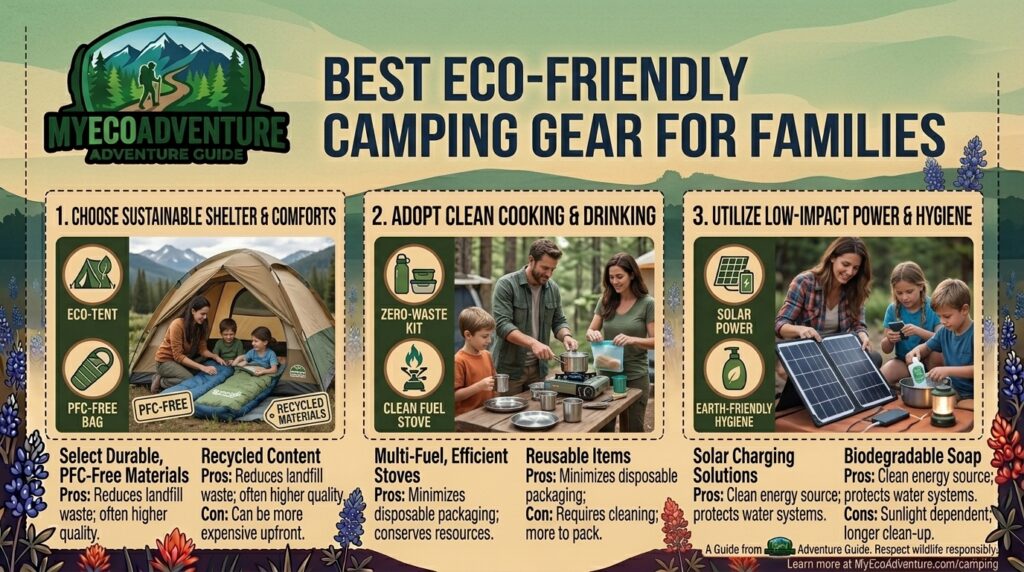
Planning a family camping trip is the ultimate way to disconnect from screens and reconnect with nature. Best Eco-Friendly Camping Gear for Families, however, as eco-conscious parents quickly discover, the traditional outdoor gear market is incredibly plastic-intensive. From petroleum-derived synthetic tents to a mountain of single-use convenience items marketed for toddlers, a family vacation can easily conflict with a low-impact lifestyle.
Fortunately, sustainable manufacturing has evolved. A new generation of outdoor gear is engineered from post-consumer recycled materials, utilizes clean chemistry alternatives, and is built around a “Buy It For Life” (BIFL) ethos—eliminating the destructive “buy, break, and discard” cycle.
But what is the best eco-friendly camping gear for families?
The definitive answer is: The best eco-friendly camping gear prioritizes high-durability circular materials over disposable synthetics. Families should look for tents made from recycled polyester (rPET) or natural cotton canvas with PFC-free water repellents, sleeping systems insulated with Responsibly Sourced Down (RDS) or Bluesign-approved recycled fill, and a completely zero-waste camp kitchen utilizing non-toxic stainless steel and cast iron.
In this comprehensive, long-form guide, we will break down the exact technical specifications you need to search for, evaluate the environmental metrics of top-tier gear, and help you construct a pristine, low-impact family campsite.
1. Quick-Reference Matrix: What Makes Camping Gear “Eco-Friendly”?
When auditing gear for an eco-adventure blog or shopping for your family, do not rely on vague marketing terms like “green” or “eco-conscious.” Look for verified, third-party structural certifications:
| Gear Category | Traditional Impact Point | The Sustainable Alternative | Required Eco-Certification |
| Family Tents | Virgin nylon; toxic fluorocarbon water-repellent coatings (PFCs). | Recycled Polyester (rPET) or organic cotton canvas. | Oeko-Tex Standard 100 / PFC-Free DWR |
| Sleeping Bags | Unregulated animal down; virgin petroleum-based synthetic fills. | Certified ethical down or 100% post-consumer recycled fill. | Responsible Down Standard (RDS) / Bluesign |
| Camp Kitchen | Disposable plastic utensils, single-use green propane canisters. | Food-grade stainless steel, cast iron, and refillable propane tanks. | GRAS (Generally Recognized as Safe) Steel |
| Campsite Power | Discharging disposable batteries; noisy fossil-fuel gas generators. | Lithium-iron-phosphate (LiFePO4) solar generators. | UN38.3 / RoHS Compliant |
2. The Sustainable Family Shelter: Tents Engineered for Longevity
When outfitting a family, tent weight is a secondary concern compared to UV durability and spatial footprint. Ultra-thin, lightweight backpacking tents degrade rapidly under intense solar radiation, leading to structural micro-fractures and peeling plastic coatings. For families, the ultimate eco-choice is material longevity.
TRADITIONAL SYNTHETIC TENT             SUSTAINABLE CANVAS OR rPET SHELTER

     [ Virgin Petroleum Nylon ]             [ Post-Consumer Recycled / Cotton ]
                 |                                           |
    (Coated with Toxic PFC DWR)                 (Coated with PFC-Free/C0 DWR)
                 |                                           |
    (Degrades in 3-5 years under UV)            (Lasts 20-50 years; Fully Repairable)
                 |                                           |
       [ Destined for Landfill ]                   [ Circular / Lifetime Gear ]
Option A: Recycled Polyester (rPET) Tents
Modern technical brands are successfully turning plastic pollution into high-performance shelters. By spinning post-consumer plastic bottles into durable yarns, brands like Big Agnes and NEMO offer spacious 4-person and 6-person family tents that perform identically to virgin nylon without consuming raw petroleum assets.
- The Technical Check: Ensure the tent specifications explicitly list C0 DWR or PFC-Free DWR. Traditional waterproof barriers use perfluorinated chemicals—known as “forever chemicals”—which wash off into wilderness water tables and permanently bioaccumulate in local ecosystems.
Option B: The Legacy Choice—Cotton Canvas
If you are strictly car camping and don’t have to carry your gear across miles of wilderness trail, heavy-duty cotton canvas tents (such as Kodiak Canvas or Outhaus) are the most sustainable options on earth.
- Why it matters: Canvas is highly breathable, naturally insulating, and completely repairable. A properly dried and stored canvas tent can easily survive 30 to 50 years of active family use, completely bypassing the manufacturing footprint of replacing synthetic tents every few seasons.
3. Eco-Friendly Sleep Systems: Non-Toxic Insulation for Kids
A cold child is a miserable camper. How do you get your kids outside? When selecting sleeping bags and pads for your family, you face a critical material science choice: Down vs. Synthetic Fill.
The Case for Responsible Down (RDS)
Natural down offers the highest warmth-to-weight ratio of any insulation on earth. From an environmental standpoint, pure down is entirely organic and biodegradable at the end of its life cycle.
- The Eco-Caveat: You must ensure the product carries the Responsible Down Standard (RDS) certification. This guarantee ensures that the down is harvested purely as a byproduct of the food industry and that the waterfowl are protected from live-plucking and force-feeding practices.
The Case for Recycled Synthetic Fill
For younger children prone to middle-of-the-night spills or bedwetting, synthetic fill is often a necessity because down loses 100% of its insulating properties when wet, whereas synthetic fibers keep trapping heat.
- The Eco-Alternative: Look for bags utilizing proprietary fills derived from 100% recycled insulation (like the Patagonia or Therm-a-Rest eco-series). These bags are typically bound with a Bluesign-certified liner fabric, guaranteeing that no hazardous chemicals were released during the textile dyeing and manufacturing processes.
4. The Zero-Waste Camp Kitchen: Eliminating Single-Use Plastics
The camp kitchen is where a family’s physical waste footprint can spiral completely out of control. To run a clean campsite, your gear selection must eliminate transient packaging and toxic materials.
A. The End of the “Green Propane Tank”
Every camper is familiar with the classic 1-pound green propane cylinders. What most don’t know is that over 40 million of these single-use bottles end up in landfills every single year because they are highly hazardous and notoriously difficult for municipal systems to recycle.
- The Upgrade: Switch your family to a refillable, heavy-duty mini-propane tank (such as an Ignik Gas Growler). These hold the equivalent of 5 single-use cylinders, can be refilled at any local gas station for a fraction of the cost, and are built to serve a lifetime of off-grid use.
B. Indestructible Cookware Metallurgy
Ditch delicate, plastic-coated non-stick aluminum pans that scratch easily and leach chemicals when overheated over a campfire.
- Stainless Steel: Food-grade 304 or 316 Stainless Steel is entirely inert, non-reactive, and structurally indestructible. A set of nested steel pots can be slammed directly onto glowing wood coals, scoured clean with basic sand and water, and will never crack or warp.
- Cast Iron: A classic Lodge cast iron skillet is the epitome of sustainable cooking. It relies on a natural layer of baked-on cooking oil (“seasoning”) rather than synthetic chemical non-stick coatings, improves in performance the older it gets, and can be handed down through generations.
5. Frequently Asked Questions (FAQ)
Is eco-friendly camping gear always more expensive?
Not necessarily. While high-tech recycled polyester tents or premium canvas can carry a higher upfront cost, true sustainability often means buying less gear over time. Furthermore, many eco-friendly choices—such as replacing disposable plastic plates with durable stainless steel, or using a refillable propane tank instead of single-use cylinders—will actively save your family significant money after just a few trips.
How do we handle baby diapering sustainably while camping?
If you are car camping with access to laundry facilities nearby, traveling with standard cloth diapers is highly achievable. However, if you are deep in the backcountry or lack laundry options, look for certified compostable or biodegradable disposable diapers. Always practice Leave No Trace principles: regardless of whether a diaper is labeled “biodegradable,” it must never be buried in the wilderness. It must be packed out in a sealed dry bag and disposed of in an authorized waste facility.
What is the cleanest way to power electronics at a family campsite?
Ditch the old-school gas generators, which emit heavy carbon fumes and create intense acoustic pollution that disrupts local bird and animal nesting patterns. Upgrade your family to a portable Lithium-Iron-Phosphate (LiFePO4) Power Station paired with a foldable solar panel. These batteries run completely silent, produce zero emissions, and can safely charge your lanterns, phones, and portable camping fridges using pure solar energy.
Summary: The Sustainable Camping Blueprint
Building an eco-friendly camping kit for your family comes down to a simple, intentional core philosophy: Invest in predictability and materials circularity. * Skip the cheap, fast-fashion style gear boxes at big-box stores that are engineered to break within two seasons.
- Prioritize post-consumer recycled synthetics, non-toxic PFC-free coatings, and indestructible metals.
By teaching your children how to pick durable, earth-conscious gear today, you don’t just protect the wilderness areas you visit—you actively shape the environmental value system of the next generation of outdoor explorers.
Keywords: best eco friendly camping gear families, sustainable family camping equipment, non toxic outdoor gear, pfc free tents, certified rds sleeping bags, zero waste camp kitchen, ignik gas growler review, buy it for life camping.