


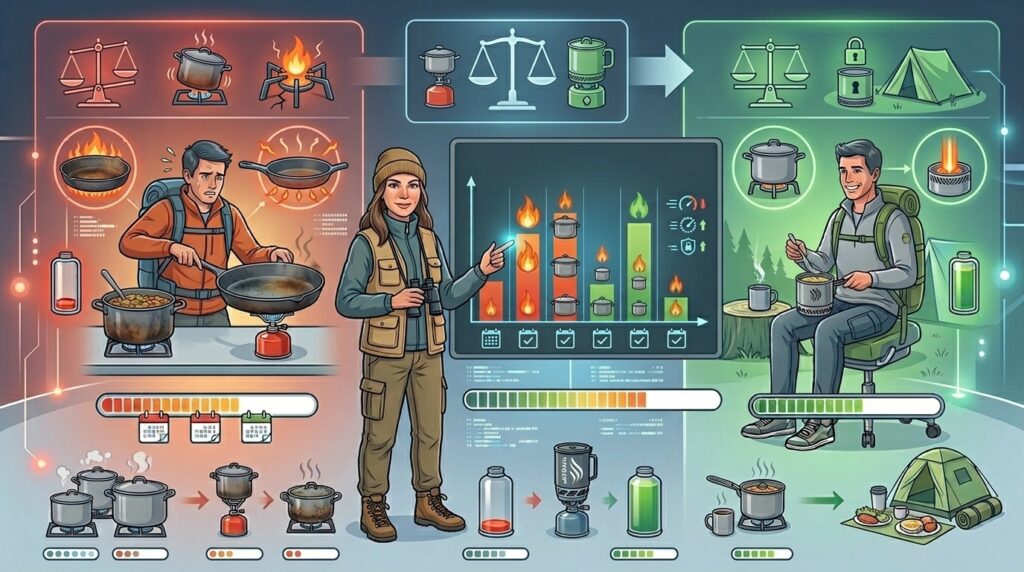
Are integrated stove systems better than standalone stoves for backpacking? When organizing an immersive backcountry backpacking expedition, weekend camping trip, or long-distance trek across the rugged mountain ranges and varied terrain of California, Washington, Texas, or New York, choosing your cooking setup is one of the most vital gear decisions you will make. After a grueling 12-mile hike scaling alpine ridges or navigating dense forest trails, nothing boosts morale quite like a steaming cup of coffee at sunrise or a hot, comforting dehydrated meal under the stars.
For decades, the standard gear setup consisted of a standalone canister stove (such as the classic MSR PocketRocket) paired with a lightweight titanium or aluminum pot. However, the rise of integrated stove systems (pioneered by industry leaders like Jetboil) completely revolutionized backcountry cooking by fusing burner, windscreen, and pot into a single, highly efficient thermodynamic unit.
Are integrated stove systems actually better than standalone stoves for backpacking?
In this comprehensive, data-driven, extra-large optimized guide tailored for myecoadventure.com, we will dissect the engineering, fuel efficiency, weight trade-offs, wind performance, and real-world costs of both stove styles. We will review top market models, compare features side-by-side, and provide expert guidance to help you choose the right system for your adventures.
1. The Core Competitors: Understanding the Two Stove Styles
Before diving into performance metrics, it is essential to understand the structural and mechanical differences between integrated and standalone backpacking stoves.
A. Integrated Stove Systems (All-in-One Units)
An integrated stove system (often called a canister-top cooking system) physically locks the cooking pot directly onto the burner base.
- The Design: The defining characteristic is the flux-ring (a corrugated heat-exchanger skirt welded to the bottom of the pot). This ring captures exhaust gases that would normally escape up the sides of a standard pot, channeling heat directly into the vessel.
- The Workflow: The burner, stabilizer legs, and a 100g fuel canister all pack neatly inside the pot itself, creating a self-contained, rattle-free capsule that saves immense space in your backpack.
B. Standalone Canister Stoves (Upright Micro-Stoves)
A standalone stove is a micro-burner that screws directly onto the top of a standard threaded fuel canister.
- The Design: These stoves are standalone units; you purchase your pots, pans, or titanium mugs separately. The burner head is completely exposed to the ambient environment unless you bring a separate folding windscreen.
- The Workflow: Highly modular and versatile. You can pair a standalone stove with a tiny 500ml titanium mug for solo coffee runs or a wide 2-liter hard-anodized pan for group cooking.
2. Head-to-Head Performance Comparison: Are integrated stove systems better than standalone stoves for backpacking?
To determine which stove system reigns supreme, let’s evaluate them across the five most critical performance metrics for backpackers exploring regions from the damp coastal trails of Washington and Northern California to the hot, windy back-country of Texas.
1. Fuel Efficiency and Boil Times
- Integrated Systems: Winner. Thanks to the sealed connection and flux-ring technology, integrated systems boast thermal efficiencies upwards of 80% to 90%. They can bring 500ml of water to a rolling boil in just 100 to 140 seconds, consuming a fraction of your fuel supply.
- Standalone Stoves: Moderate. Standard upright stoves lose a significant amount of heat to the surrounding air. While high-end standalone stoves feature broad burner heads to maximize surface contact, they generally take 3 to 4 minutes to boil the same amount of water and burn more fuel per boil.
2. Wind Resistance
- Integrated Systems: Superior. Because the pot locks securely over the burner head and wraps around the flame, wind has virtually no path to disrupt combustion. You can cook efficiently on exposed, breezy ridges in the Sierra Nevadas or Cascades without a separate shield.
- Standalone Stoves: Poor to Moderate. A stiff gust of wind can easily blow out an exposed standalone burner or push the flame sideways, doubling your boil time and wasting precious isobutane fuel unless you use an auxiliary windscreen (though care must be taken not to trap heat against the canister).
3. Culinary Versatility (What Can You Cook?)
- Integrated Systems: Limited (Boil-Centric). Integrated pots are deep, narrow vertical cylinders designed for one primary purpose: rapid water boiling. Trying to simmer chili, sauté vegetables, or fry eggs in a tall, narrow Jetboil cup almost always results in scorched, burnt food stuck to the bottom.
- Standalone Stoves: Versatile. Because standalone stoves use independent pots and pans, you can swap out vessels. Pair it with a wide, flat-bottomed hard-anodized skillet, and you can easily fry fish, scramble eggs, or simmer complex gourmet backcountry meals.
4. Weight and Packability
- Integrated Systems: Bulkier, but Nests Well. While integrated systems are heavier than bare-minimum ultralight stoves (averaging 12 to 16 ounces total), their ability to pack the burner, fuel canister, and accessories inside a single compact pot makes organization in your backpack effortless.
- Standalone Stoves: Ultra-Lightweight. Micro-standalone stoves weigh a minuscule 2 to 4 ounces and take up virtually zero space. When paired with a titanium mug, the total system weight drops well below any integrated setup.
3. Product Reviews: Top Integrated vs. Standalone Stoves
Let’s examine industry-leading options from both categories to see how they perform in the field.
Category A: The Best Integrated Stove Systems
1. Jetboil Flash / MicroMo
- Type: Integrated Thermodynamic System
- Price Range: $120 – $150
- Review: The gold standard of speed and efficiency. The Jetboil Flash boils 500ml of water in a blazing 100 seconds. Its push-button igniter, insulated cozy, and secure locking pot make it the ultimate tool for backpackers who live on freeze-dried meals, instant oatmeal, and hot coffee. The MicroMo variant adds precise adjustable simmer control for those who want a bit more versatility.
2. MSR WindBurner Duo System
- Type: Radiant Burner Integrated System
- Price Range: $160 – $190
- Review: The absolute king of wind resistance. Unlike conventional open-flame systems, the WindBurner uses a radiant burner head combined with an enclosed primary air-combustion system. It laughs in the face of gale-force winds in high-alpine environments, making it a favorite for mountaineers in Washington and Northern California.
Category B: The Best Standalone Canister Stoves
1. MSR PocketRocket Deluxe
- Type: Premium Upright Canister Stove
- Price Range: $55 – $70
- Review: A masterpiece of minimalist engineering. Featuring a broad burner head, Piezo igniter, and an internal pressure regulator that maintains consistent flame output even as fuel levels drop or temperatures plummet, it delivers exceptional performance without locking you into a proprietary pot.
2. Soto Amicus with Start Ignition
- Type: Lightweight Micro-Stove
- Price Range: $45 – $55
- Review: Known for its stealthy, wind-resistant recessed burner head and spring-loaded support legs, the Soto Amicus is ultra-reliable, budget-friendly, and pairs seamlessly with any standard camping pot or titanium mug.
4. Comprehensive Comparison Table: Integrated vs. Standalone Stoves
| Feature / Metric | Integrated Stove System (e.g., Jetboil Flash) | Standalone Stove + Pot (e.g., MSR PocketRocket) |
| Boil Time (500ml water) | 1.5 to 2.5 minutes (Extremely fast) | 3 to 4.5 minutes (Moderate speed) |
| Fuel Efficiency | High (Flux-ring captures 80%+ of heat) | Moderate (Higher heat loss to ambient air) |
| Wind Performance | Excellent (Enclosed flame and locked pot) | Poor to Moderate (Exposed flame requires shielding) |
| Cooking Versatility | Low (Optimized strictly for boiling water) | High (Compatible with wide pots, pans, and skillets) |
| Total System Weight | 12 oz – 16 oz (Includes pot, lid, and burner) | 6 oz – 10 oz (Ultralight stove + standalone pot) |
| Packability | High (All components nest inside the cooking cup) | High (Stove packs into a tiny pouch; pot carried separately) |
| Average Price Range | $120 – $190 (Complete system) | $45 – $80 (Stove + separate pot) |
5. Pros and Cons of Each System Type
Integrated Stove Systems
- Pros:
- Unmatched boiling speed saves precious time when breaking camp at dawn.
- Exceptional fuel efficiency means you can pack smaller 100g gas canisters for longer trips.
- Windproof design prevents frustrating cooking delays on exposed mountain passes.
- Self-contained nesting design keeps your backpack organized.
- Cons:
- Heavier baseline weight than minimalist ultralight setups.
- Proprietary pot coupling means you cannot easily swap vessels or use standard frying pans.
- Poor performance for simmering or cooking complex, scratch-made backcountry meals.
Standalone Canister Stoves
- Pros:
- Ultra-lightweight and compact, perfect for minimalist thru-hikers.
- Maximum versatility; pair it with a titanium mug for boiling water or a wide pan for gourmet camp cooking.
- Lower overall financial investment if you already own camp pots.
- Easily replaceable individual components if a single part fails.
- Cons:
- Highly vulnerable to wind, requiring careful positioning or auxiliary windscreens.
- Lower fuel efficiency results in burning through gas canisters faster.
- Slower boil times compared to flux-ring systems.
6. Expert Tips: Choosing the Right Stove for Your Backcountry Style
To make the best gear choice for myecoadventure.com, align your stove selection with your specific menu and trip style:
- Match Your Menu: If your backcountry diet consists entirely of freeze-dried meals, instant ramen, oatmeal, and coffee, buy an integrated stove system. You will save time and fuel on every boil. If you love cooking fresh trout, flipping pancakes, or simmering complex sauces, buy a standalone stove.
- Consider Your Trip Locations: If your adventures take you above the tree line in windy, exposed alpine regions (like the Cascades in Washington or the Sierra Nevadas in California), an integrated system or radiant wind-resistant stove is non-negotiable.
- Weigh Your Pack Goals: If you are an ultralight backpacker counting every single gram, a standalone micro-stove paired with a 750ml titanium pot offers the lightest possible kitchen kit.
- Practice Cold-Weather Canister Management: Regardless of which stove you choose, remember that isobutane gas loses pressure in sub-freezing temperatures. Keep your fuel canisters warm inside your sleeping bag or jacket before cooking on frosty mornings.
- Always Inspect Igniters Before Departure: Built-in Piezo igniters are convenient, but they can fail due to moisture or impact. Always pack a mini BIC lighter or waterproof matches as a failsafe backup.
Frequently Asked Questions (FAQs)
1. Are integrated stove systems better than standalone stoves for backpacking?
It depends entirely on your cooking style. Integrated systems are better if your priority is speed, fuel efficiency, wind resistance, and boiling water for freeze-dried meals. Standalone stoves are better if you want lower weight, versatility, and the ability to cook real food in pans.
2. Can I use a regular pot on an integrated stove system?
Usually no. Integrated systems rely on a proprietary locking mechanism and a flux-ring skirt welded to the bottom of the matching pot. Placing a standard pot on a Jetboil burner lacks secure locking stability and blocks the thermodynamic efficiency ring.
3. Do integrated stoves use less fuel than standalone stoves?
Yes. Because integrated systems utilize flux-rings to capture escaping heat, they boil water significantly faster and use up to 30–40% less fuel per boil compared to standard upright standalone stoves.
4. Are integrated stoves too heavy for ultralight backpacking?
While integrated systems weigh slightly more than a micro-standalone stove (roughly 12 to 16 oz total), many ultralight backpackers consider the weight penalty worth it because they can pack smaller, lighter 100g fuel canisters due to superior fuel efficiency.
5. Can I cook real food (like eggs or pancakes) in an integrated stove?
It is not recommended. Integrated pots are tall, narrow cylinders with intense center heating designed for boiling water. Cooking solid food in them usually results in scorched meals and a nightmare to clean in the backcountry.
6. Do integrated stoves work well in cold weather?
Integrated systems perform better in cold and windy conditions than basic standalone stoves because the burner is shielded and the heat-exchanger ring concentrates thermal energy. However, extremely sub-freezing temperatures will still affect the isobutane fuel pressure.
7. What is a flux-ring on a backpacking stove?
A flux-ring is a series of corrugated aluminum fins welded to the bottom of an integrated stove’s pot. It acts like a radiator, absorbing maximum thermal energy from the burner flame to accelerate boiling times.
8. Can I use a standalone stove with an integrated pot?
No. Standalone stoves have narrow burner heads that do not align with or lock into the specialized flux-ring bottom of an integrated cooking cup.
9. Which stove system is better for beginners?
Integrated systems are generally easier and more foolproof for beginners because they assemble intuitively, boil water rapidly without wind interference, and pack together as a single unit.
10. How do I maintain and clean my backpacking stove?
Keep your burner ports free of soot and debris using a soft brush, check your O-rings periodically for cracks or wear, and always ensure your fuel canister is completely empty before recycling or puncturing it.
Conclusion
Choosing between an integrated stove system and a standalone backpacking stove ultimately comes down to a trade-off between efficiency and speed versus versatility and weight. If your backcountry philosophy revolves around fast, hassle-free dehydrated meals, rapid coffee boils, and effortless packing in windy weather across California, Washington, or New York, an integrated system is the ultimate trail companion. Conversely, if you crave culinary flexibility and minimalist weight for remote trails, a reliable standalone stove is your best bet.
Equip your pack intelligently, test your gear before hitting the trail, and elevate your outdoor cooking experience with expert insights from myecoadventure.com.


