


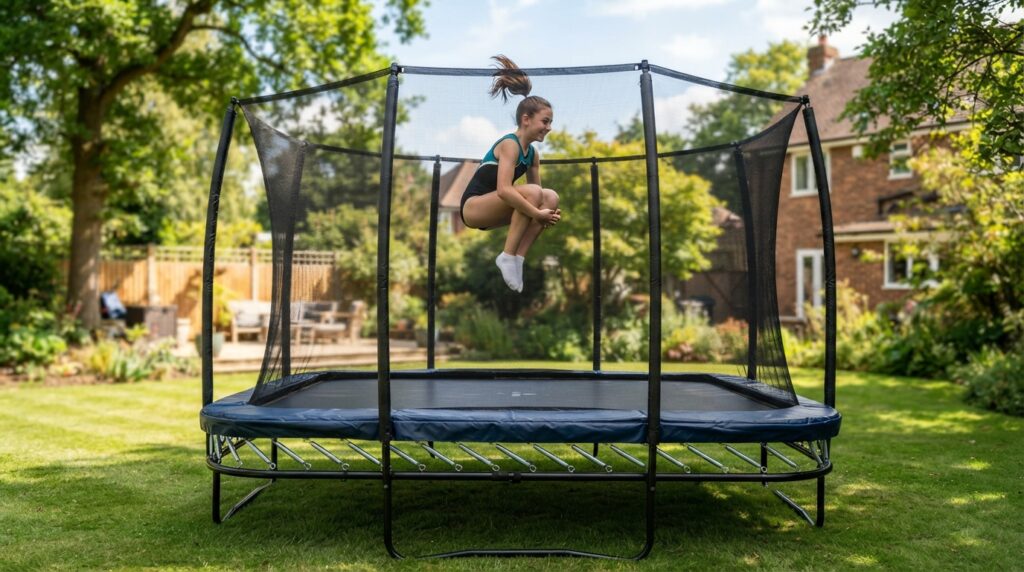

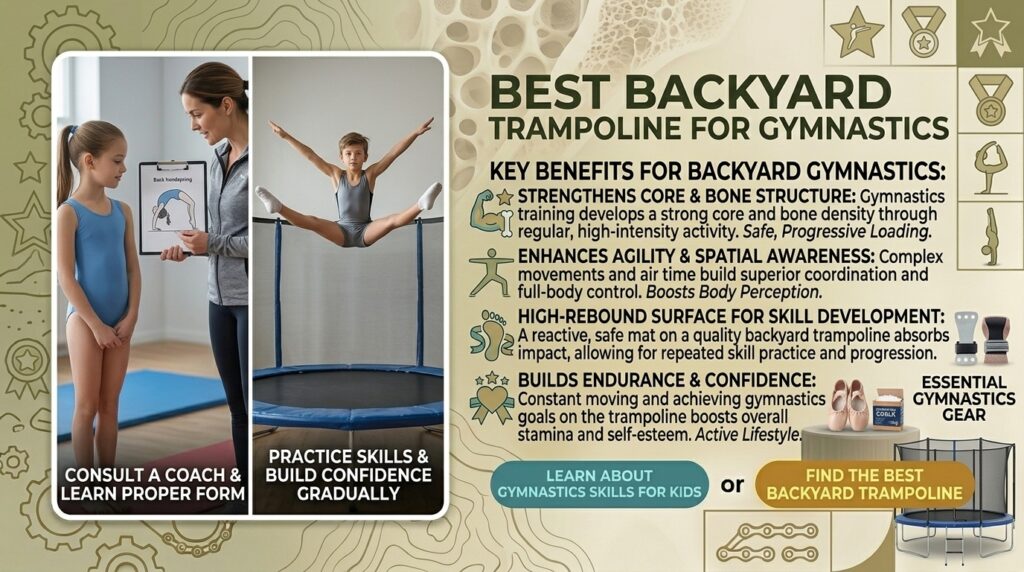
Choosing the best backyard trampoline for gymnastics requires more than comparing prices or reading a few customer ratings. A careful review of build quality, bounce performance, safety features, and durability is essential before making a purchase. As youth gymnastics, tumbling, and cheerleading continue to grow across the United States, more families are investing in backyard trampolines that allow young athletes to practice their skills at home. From neighborhoods in Texas and California to homes in Florida, New York, and Washington, parents are looking for equipment that supports safe, effective training outside the gym.
Not every trampoline is designed for gymnastics training. Standard round backyard trampolines are mainly intended for recreational jumping and family entertainment. Their circular design naturally guides jumpers back toward the center of the mat, which enhances safety for casual use but reduces the space and bounce performance required for more advanced gymnastics skills. As a result, executing controlled flips, twists, and tumbling combinations becomes more challenging.
For teens and aspiring gymnasts, rectangular trampolines are generally the better option. They generate a higher and more consistent bounce, distribute force more evenly across the entire jumping surface, and provide better control during takeoffs, landings, and aerial movements. These qualities are much closer to the professional trampolines used in gymnastics gyms and training centers, making rectangular models far more suitable for developing technique and progressing safely.
In this detailed guide, you’ll learn everything you should know before choosing the best backyard trampoline for gymnastics. We’ll compare the top-rated models for 2026, explain how trampoline training works, review the most important safety standards, and provide expert buying advice for families living in different U.S. climates—from the heat and humidity of Florida to the strong winds of Texas and the snow and freezing temperatures common in New York and other northern states. You’ll also find practical setup, maintenance, and long-term care tips to help keep your trampoline safe, durable, and enjoyable for many years. Whether you’re in California, Texas, Florida, New York, Washington, or anywhere else in the United States, this guide will help you select the right gymnastics trampoline for your backyard.
Why Choose a Backyard Trampoline for Gymnastics Training?
Gymnastics builds powerful bodies and minds. A home trampoline offers:
- Consistent Skill Practice: Repetitions of tumbling, flips, and aerials without driving to a gym.
- Improved Bounce Control: Rectangular shapes give even rebound, crucial for advanced moves.
- Full-Body Workout: Enhances core strength, leg power, balance, and cardiovascular fitness.
- Fun Motivation: Kids (and adults) are more likely to train consistently when it’s in the backyard.
- Injury Prevention When Done Right: Proper models with safety enclosures reduce fall risks compared to unregulated play.
Studies and coach feedback show home trampolines accelerate progress in tumbling and trampoline disciplines when combined with proper coaching.
Round vs. Rectangular Trampolines for Gymnastics
- Round: Great for general family fun and beginners. Bounce is more centralized.
- Rectangular: Best for gymnastics. Even bounce distribution across the surface allows precise control for routines, somersaults, and twists. Preferred shape for serious training.
For backyard use, aim for 10×17 ft, 12×16 ft, or larger rectangular models.
If your child wants to practice back handsprings, tucks, or layouts at home, you need a specialized high-performance training platform.
This comprehensive, data-driven guide analyzes the absolute best backyard trampolines for gymnastics across the unique climates of the US market. We break down the structural physics, shape geometry, and safety engineering required to choose a true residential training rig.
The Quick-Verdict: Top Gymnastics Trampolines at a Glance
- Best Overall Premium Performance: Acon Air 16 Sport HD Rectangle (~$1,200–$1,500). A massive rectangular powerhouse featuring specialized “Synergy” piano-wire springs. This model delivers an entirely linear, massive vertical lift, making it the favorite for competitive gymnasts in Texas and Florida.
- Best for Safety & Low-Impact Training: AlleyOOP VariableBounce 10×17 Rectangle (~$1,700). Utilizing an asymmetric spring-staged firing sequence, this model absorbs a huge chunk of landing shock, protecting developing wrists, ankles, and spinal columns during repetitive tumbling passes.
- Best Value Heavy-Duty Option: Skywalker Trampolines 15-Foot Square (~$650). If a premium rectangle is out of your budget, this square footprint offers 20% more jumping surface area than a standard circle and features cross-corners that mimic the independent bounce profile of a professional gym mat.
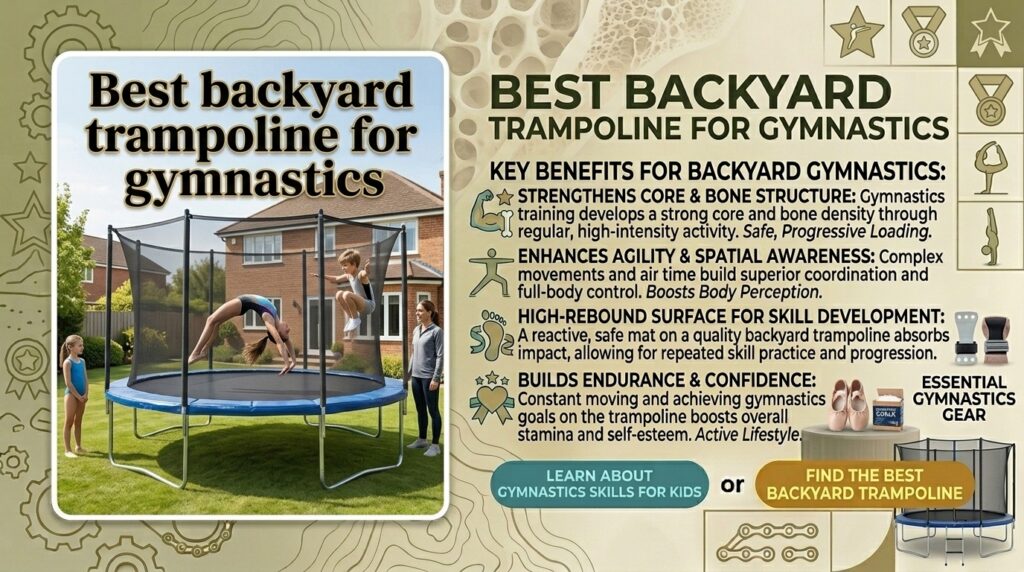
The Physics of Flipping: Why Gymnasts Need Rectangular Frames
To understand why a traditional round trampoline fails a gymnast, you have to look at how spring tension behaves across different geometric shapes.
[ ROUND TRAMPOLINE ] ──> All springs pull equally toward the center ──> Pulls athlete away from a straight line
[ RECTANGLE TRAMPOLINE ] ──> Springs pull independently by section ──> Creates a straight, consistent sweet spot
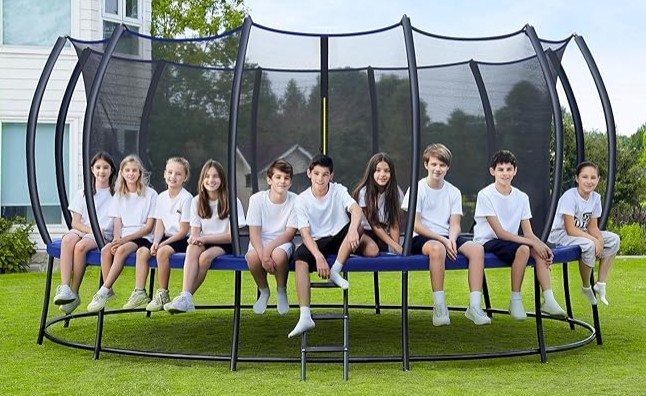
Zupapa 1800LBS Trampoline – Reviews 4.7 out of 5 -Best backyard trampoline for gymnastics

CHECK on AMAZON >>
When it comes to outfitting an American suburban backyard for long-term family fun, physical fitness, and high-energy play, purchasing a generic department-store trampoline is one of the most common consumer mistakes. Standard recreational trampolines suffer from thin-walled steel frames that warp over time, exposed springs that create dangerous pinch points, and weak stability footprints that lift or tip under dynamic weight loads.
The Zupapa No-Gap Heavy-Duty Backyard Trampoline Series is engineered specifically to eliminate these exact structural vulnerabilities. Featuring a patent-pending dual-frame architecture, an exceptional weight capacity rating, and a completely integrated spring-isolation design, this Forbes-recognized backyard centerpiece sets a new benchmark for residential safety and physical durability.
This exhaustive, data-driven engineering and utility review from outdoor base analyzes the mechanical composition of the Zupapa platform, breaks down its specialized safety geometry, and provides clear regional installation guidelines for homeowners across the US market.
Technical Specifications: At a Glance
| Parameter / Metric | Comprehensive Specification Profile | Structural Advantage & Benefit |
| Available Diameters | 12 Foot, 14 Foot, 15 Foot, 16 Foot | Scales to fit compact urban yards or massive suburban lawns |
| Static Weight Capacity | 1,800 lbs | Offers elite, industrial-grade structural integrity |
| Dynamic Jump Weight | 550 lbs | Far exceeds the standard 400-lb residential industry threshold |
| Frame Material | Thickened Hot-Dip Galvanized Carbon Steel | Impenetrable to interior and exterior rust formation |
| Safety Integration | Patented No-Gap Mat-to-Pad Enclosure | Completely isolates jumper limbs from coiled springs |
| Compliance Rating | Fully Certified ASTM F381 & CPSIA | Formally verified by independent US safety laboratories |
| Assembly System | Screw-Free Snap-Button Architecture | Cuts traditional dual-person installation time down to 30 minutes |
The 4 Core Engineering Pillars of the Zupapa Design
1. Patent-Pending Dual-Frame Stability Architecture
Traditional trampolines rely on a simple single-ring top rail connected directly to vertical leg extensions. Under high dynamic load—such as two or three kids bouncing simultaneously—this joint experiences intense torsional stress, which can cause frame twisting or dangerous tipping.
Zupapa addresses this flaw with a Cylindrical Dual-Frame design featuring an expanded, ultra-wide base. This blueprint effectively lowers the unit’s overall center of gravity and redistributes downward kinetic energy outward across a larger physical surface area. Even during off-center, high-velocity impacts or aggressive multi-user play, the perimeter frame remains locked flush against the ground without lifting or rocking.
[ DOWNWARD JUMP FORCE ] ──> Dual-Frame Inner Ring ──> Outward Base Redistribution ──> 0% Frame Tip Risk
2. Industry-Leading 1800-lb Static Load Capacity
The true strength of an outdoor trampoline is determined by the gauge of its steel and the elasticity of its tension grid. The Zupapa chassis is forged from extra-thick, hot-dip galvanized steel tubing. This thermal treatment bonds a layer of protective zinc metallurgically to both the interior and exterior walls of the pipes, preventing structural oxidation from the inside out.
With a certified 1,800 lbs of static load capacity and 550 lbs of dynamic jumping capacity, the frame and high-tension springs resist permanent deformation or sagging, maintaining a snappy, crisp rebound profile over decades of seasonal use.
3. Patented No-Gap Safety Enclosure Enclosure Net
Statistically, the vast majority of backyard trampoline injuries occur when a jumper’s foot or hand slips between the protective foam padding and the exposed metal springs.
Zupapa solves this hazard with its Patented No-Gap design. The safety enclosure net does not attach outside the springs; instead, it is sewn directly to the jumping mat’s heavy-duty V-rings.
[ JUMPING ZONE ] ──► [ ENCLOSURE NET ] ──► [ SEWN SEAM LINK ] ──► [ SPRING ZONE LAYER ]
This structural wall makes it physically impossible for a child’s foot, toe, or hand to ever come into contact with the high-tension coiled springs or the hard perimeter steel frame during an awkward tumble or landing.
4. Advanced Wind and Climate Defenses
Large circular trampolines possess immense surface areas, essentially acting like giant wings during severe weather events. The upgraded Zupapa packages discard cheap, thin, U-shaped wire ground staples in favor of industrial Heavy-Duty Spiral Ground Stakes (Augers).
When screwed deep into the earth, the helical flighting locks mechanically into dense soil layers, providing massive vertical pull-out resistance during intense coastal storms, high-wind fronts, or unexpected microbursts.
Regional Environmental Matrix: US Market Application
Because Zupapa utilizes climate-shielded materials, the unit is uniquely adapted to survive the diverse geographic climates found across the United States:
- The Southern & Tropical Markets (Florida, Miami, Texas): The safety net and spring padding feature deep-impregnated, UV-stabilized polymer treatments. This specialized chemical formula prevents the synthetic fabrics from dry-rotting, cracking, or turning to powder under intense, high-index UV sunlight and coastal humidity.
- The Northern Markets (New York, Midwest): The hot-dip galvanization barrier completely protects the underlying carbon steel from salt-heavy atmospheric air and freezing winter precipitation. The heavy polypropylene mat material is frost-rated to prevent fiber embrittlement during sustained deep freezes.
Step-by-Step: Rapid Assembly & Rigging Sequence
Traditional backyard trampolines require hours of frustrating manual work, weaving cords and tightening dozens of individual bolts. The Zupapa snap-button architecture simplifies installation into a straightforward process:
1.1. Interlock the screw-free dual-frame foundation:Lock the stability base together.
Lay out the wide base legs on a flat, level section of turf. Slide the thickened galvanized steel tubes into one another using the integrated snap-button locking buttons. This eliminates the need for electric drills or wrenches while ensuring an airtight, rattle-free structural joint.
2.2. Mount the high-tension springs using a star pattern:Connect the tension grid evenly.
Using the included spring-pull tool, hook the springs from the mat to the frame top rail. To prevent uneven frame warp during assembly, always install the springs using a “star configuration”—attaching 12 o’clock, 6 o’clock, 3 o’clock, and 9 o’clock points first before filling in the remaining slots.
3.3. Slide the padded net poles into the frame sleeves:Erect the safety boundary wall.
Raise the vertical safety enclosure support poles. Slide them deep into the designated structural dual-frame base sockets. Secure the pre-attached safety netting upward to establish a taut, high-impact fallback barrier that safely deflects jumpers back onto the mat.
4.4. Drive the helical spiral stakes into the ground:Anchor the frame against high winds.
Position the included heavy-duty spiral earth augers directly adjacent to the base arches. Screw them clockwise deep into the lawn until only the top eyelet loop is visible, then loop the industrial tie-down straps around the frame rail to finalize your storm-proofing defense.
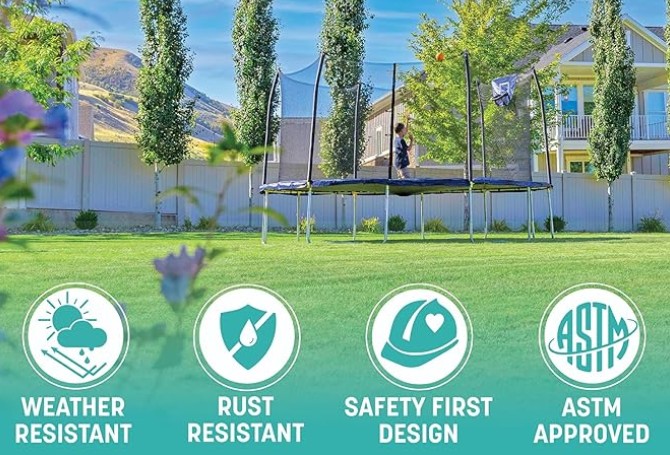
Skywalker Trampoline Outdoor

CHECK on AMAZON >>
When it comes to introducing high-energy, active outdoor play to an American backyard, the challenge for homeowners is finding the perfect intersection between genuine safety, structural durability, and high entertainment value. Standard big-box trampolines are often plagued by weak frame joints that buckle over time, exposed springs that cause painful pinch injuries, and components that disintegrate under harsh weather elements.
The Skywalker Jump N’ Dunk Round Outdoor Trampoline Series is engineered to systematically solve these common structural and safety issues. By integrating a patented spring-isolation system, heavy-gauge reinforced frame joints, and an interactive slam-dunk court, this residential recreation hub has earned its place as one of the most trusted family backyard investments across the United States.
This extensive, long-form product analysis from outdoor base deconstructs the mechanical engineering of the Skywalker platform, breaks down its weather-proof material defenses, and provides operational layout guidelines for family homes.
Technical Specifications: At a Glance
| Performance Parameter | Engineering Specification Profile | Real-World Utility Benefit |
| Available Sizes | 8 Foot, 12 Foot, 15 Foot | Accommodates everything from compact urban yards to expansive lawns |
| Maximum User Weight | Up to 275 lbs (ASTM Certified) | Safely supports growing children, teenagers, and active adults |
| Frame Architecture | Heavy-Gauge Galvanized Steel with Reinforced T-Sockets | Prevents structural twisting and stabilizes frame joints under load |
| Safety Mesh Integration | Patented No-Gap Buttonhole Enclosure Net | Completely isolates the jumper’s limbs from the spring grid |
| Material Protections | UV-Stabilized Polyethylene & Polypropylene | Blocks sun-induced dry rot, fiber fraying, and mat degradation |
| Interactive Feature | Foam Core Basketball Hoop with Breakaway Rim | Adds high-value sport play without compromising user safety |
The 4 Core Engineering Pillars of the Skywalker System
1. Patented No-Gap Enclosure Safety Innovation
Statistically, a significant percentage of consumer backyard trampoline incidents involve a jumper slipping off-center and falling directly into the coiled steel perimeter springs.
Skywalker completely eliminates this specific physical hazard through its Patented No-Gap Enclosure Net design. The safety net does not hang loosely outside the spring grid; instead, it utilizes an interlocking buttonhole mechanism that attaches directly to each individual V-ring on the jumping mat.
[ SAFE JUMPING SPACE ] ──► [ ENCLOSURE NET WALL ] ──► [ INTERLOCKED V-RINGS ] ──► [ EXTERIOR SPRING GRID ]
This structural architecture builds an impenetrable fabric wall that completely barricades little feet, hands, and ankles from ever making contact with the high-tension springs or the rigid steel top rail during an off-balance tumble.
2. Reinforced T-Socket Leg and Frame Joinery
The structural weak point of a standard round trampoline is the weld point where the vertical legs meet the circular top rail. Dynamic downward weight forces and lateral shifting can cause these welded seams to fatigue, crack, and twist.
Skywalker bypasses this engineering vulnerability by using heavy-gauge galvanized steel frame tubes reinforced with precision-engineered T-sockets at every critical frame intersection. These solid brackets securely clamp the frame components together, absorbing and dissipating structural stress evenly across the entire metal footprint. This eliminates frame warping and ensures the trampoline maintains a rock-solid foundation through years of rigorous use.
[ VERTICAL IMPACT FORCE ] ──► Reinforced T-Socket Joint ──► Outward Force Dissipation ──> 0% Frame Twist
3. Comprehensive Multi-Region UV Protection
An outdoor trampoline inside the US market must be built to survive completely contrasting weather patterns—from the intense, high-index UV radiation and high humidity of Florida and Texas to the freezing winter moisture of New York.
- The Safety Enclosure Net: Woven from high-density, tightly knotted polyethylene (PE). This material provides an effective UV shield, preventing the net from becoming brittle, dry-rotting, or tearing when exposed to brutal summer sun.
- The Jump Mat: Engineered from heavy-duty, premium woven polypropylene fabric. It features an anti-slip texture profile to maximize foot traction while maintaining strict resistance to frost, heavy downpours, and intense solar bleaching.
4. Interactive Jump N’ Dunk Slam-Court Engineering
Adding a basketball hoop to a trampoline introduces an incredible layer of athletic fun, but it can create a serious safety hazard if designed improperly. A rigid metal hoop or a stiff netting system can easily catch a child’s fingers or cause wrist injuries during an ambitious dunk.
The Skywalker system resolves this issue by utilizing entirely soft-materials engineering. The included basketball hoop is constructed using a high-density foam core and features a hook-and-loop breakaway rim. If a young athlete clips the rim mid-jump or hangs on it after a slam-dunk, the rim immediately detaches under tension without damaging the net, warping the frame, or straining the child’s joints.
Space Planning Matrix: Selecting the Ideal Size for Your Yard
Choosing between the 8FT, 12FT, and 15FT variants depends heavily on your family’s yard layout and the ages of your children:
- The 8-Foot Compact Blueprint: Perfect for townhome yards, smaller suburban plots, or families with younger children. It provides a controlled, highly responsive bounce profile that requires less physical mass to activate.
- The 12-Foot Mid-Size Balance: The versatile sweet spot for growing families. It balances physical space requirements with an expanded jumping area that comfortably accommodates growing teenagers.
- The 15-Foot Heavy-Duty Powerhouse: The ultimate backyard training field. This massive footprint offers the maximal surface area, allowing users to achieve premium height, execute extensive recreational tumbling maneuvers, and maximize the basketball court layout.
Step-by-Step: Safe Installation and Weather Anchoring Sequence
To ensure your Skywalker trampoline performs beautifully and survives localized weather events, follow this precise installation flow:
1.1. Measure and clear a 6-foot vertical and lateral safety perimeter:Establish a secure yard zone.
Select a completely flat, level piece of lawn turf. Ensure that there is a clear 6-foot safety buffer zone entirely surrounding the circular perimeter, completely free of brick retaining walls, concrete patios, overhanging tree branches, residential power lines, or swimming pool decks.
2.2. Lock the galvanized frame and T-sockets together:Construct the core chassis foundation.
Lay out the circular top rail sections and leg extensions on the grass. Connect the joints securely inside the heavy-duty T-sockets, validating that the snap-buttons click into position. This builds an airtight, structural ring that forms the backbone of the trampoline.
3.3. Tension the springs using an opposite-quadrant sequence:Establish balanced tension loading.
Attach the jumping mat to the frame rail using the included spring-pull utility tool. To avoid warping the frame or over-stretching a single side, always attach the springs using an opposite-quadrant pattern (12 o’clock, 6 o’clock, 3 o’clock, 9 o’clock) before populating the remaining spaces.
4.4. Drive heavy-duty helical wind anchors into the lawn:Anchor against intense regional high winds.
Because a large round trampoline can act like a giant sail during coastal storms or Midwest wind fronts, you must secure the frame arches using heavy-duty spiral earth augers. Screw them deep into the soil and secure them to the top rail using industrial ratchet straps to guarantee storm-proof security.
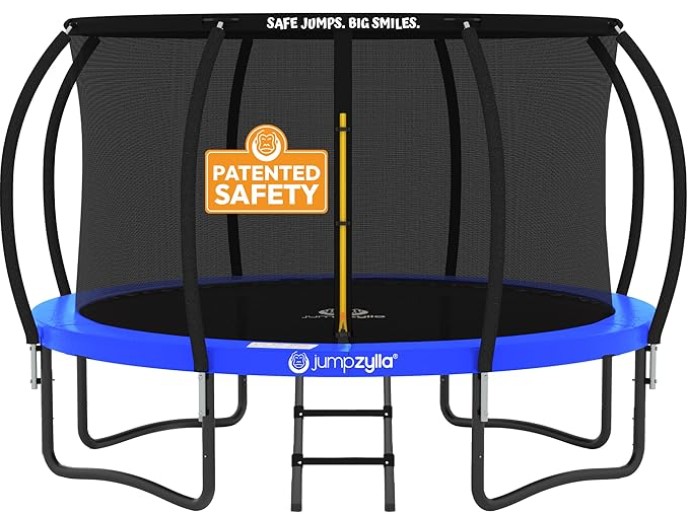
JUMPZYLLA Trampoline Outdoor

CHECK on AMAZON >>
For parents across the United States, designing an active, engaging backyard space requires balancing a difficult equation: maximizing outdoor recreation while maintaining strict safety standards. Standard residential trampolines are frequently criticized for their harsh aesthetic, straight structural poles that create high-impact collision hazards, and thin steel joints that degrade rapidly under changing seasonal elements.
The Jumpzylla Weather-Ready Backyard Trampoline Series systematically targets these exact design and longevity pain points. Engineered with a signature curved safety-pole architecture, an innovative dual-sided flipping spring pad, and deep multi-stage rustproofing, this media-acclaimed platform offers a highly durable and visually striking alternative to traditional big-box models.
This long-form engineering and utility review from outdoor base provides a comprehensive breakdown of the Jumpzylla design matrix, structural metallurgy, and spatial configuration guidelines for your home.
Technical Specifications: At a Glance
| Performance Parameter | Engineering Specification Profile | Real-World Family Benefit |
| Available Footprints | 8FT, 10FT, 12FT, 14FT, 15FT, 16FT | Tailor-made scaling to match compact urban lawns or vast estates |
| Safety Certification | Fully Compliant with ASTM F381-16 Structural Standards | Independently verified laboratory testing for impact resistance |
| Frame Architecture | Heavy-Gauge Galvanized Steel + Black Powder-Coated Base Legs | Dual-layer defense against high-salinity air and soil moisture |
| Enclosure System | Outwardly Curved High-Impact Support Poles | Eliminates the primary risk of frame-collision injuries |
| Spring Protection | Patented Reversible 2-in-1 Weatherproof Pad | Extends aesthetic lifespan while ensuring absolute pinch protection |
| Access System | Integrated Non-Slip Deep-Rung Safety Ladder | Provides safe, stable entry and exit for younger children |
The 4 Core Engineering Pillars of the Jumpzylla Design
1. Outwardly Curved Safety Pole Architecture
In a standard trampoline setup, the vertical poles holding up the safety mesh run straight up and down, parallel to the enclosure net. If a child falls backward or loses balance during a high-velocity bounce, they can strike these rigid steel support bars through the netting, leading to severe bruising or impact injuries.
Jumpzylla addresses this vulnerability through its signature outwardly curved pole geometry. The structural support pipes bend away from the jumping mat, creating a wide, safe physical buffer zone between the flexible mesh wall and the metal frame. If an athlete falls into the net, the fabric catches and cradles them completely before they can ever make contact with the underlying steel.
                  [ CURVED SAFETY POLE ]
                         )
                        )   <─── Safe Space Buffer Zone
                       )
  ═════════════════════[ NET WALL ]═════════════════ [ MAT SURFACE ]
2. Dual-Layer Anti-Rust Metallurgical Defense
The ultimate enemy of any outdoor backyard asset is the environment. In high-humidity coastal zones like Florida and Miami, or heavy rain sectors in Texas, standard steel frames will oxidize and rust from the inside out within 24 to 36 months.
The Jumpzylla chassis utilizes a multi-tiered defense system:
- Internal & External Galvanization: The core frame rings undergo hot-dip zinc galvanization, creating an impenetrable chemical shield against rust.
- Electrostatic Powder Coating: The base leg extensions—the components that sit directly on damp grass and mud—receive an additional thick layer of black powder coating. This prevents moisture from scratching or pitting the steel, preserving the trampoline’s structural yield strength over a decade of seasonal exposure.
3. Patented 2-in-1 Reversible Spring Protection Pad
Over time, intense UV sunlight bleaches and degrades standard single-color safety pads, leaving them looking worn and unsightly. Jumpzylla addresses this aesthetic and functional issue with a patented, double-sided reversible spring cover.
Homeowners can flip the thick padding from a sleek, classic black to a vibrant secondary color tone. Beyond its visual versatility, the pad is filled with high-density, closed-cell EPE foam that completely encapsulates the high-tension springs, blocking water entry and preventing painful pinch injuries or foot entrapment.
[ REVERSIBLE SPRING PAD ] ──> Side A: Sleek Onyx Black / Side B: High-Vibrancy Color Accent
4. Optimized Airflow Mat and Dense Tension Grid
To deliver a smooth bounce that doesn’t stress developing skeletal joints, Jumpzylla optimizes the interaction between its high-strength polypropylene mat and its premium spring configuration. The tightly woven mesh structure allows massive volumes of air to pass directly through the mat on the downward stroke, cutting out air drag and yielding an effortless, crisp liftoff that accommodates toddlers, teenagers, and adults alike.
Spatial Selection Guide: Mapping Your Backyard
Selecting the perfect diameter variant from Jumpzylla’s extensive catalog depends heavily on your specific yard limits and user ages:
- The 8FT / 10FT Urban Footprint: Ideal for tighter patio layouts, townhome lawns, or younger families. These tight diameters offer a highly responsive, controlled bounce profile that requires less body mass to activate.
- The 12FT / 14FT Versatile Sweet Spot: The definitive choice for suburban properties. These sizes scale beautifully with growing teenagers, providing an expanded sweet spot for general recreation, active coordination training, and backyard parties.
- The 15FT / 16FT Heavy-Duty Training Grounds: The ultimate open-air playground. Engineered to maximize surface area, these large layouts are built for high-energy play and multi-user family bonding, providing maximal landing space.
Step-by-Step: Rapid Installation and Weather Rigging Sequence
Traditional recreational trampolines are notoriously frustrating to build, often requiring complex threading configurations. Jumpzylla utilizes a simplified snap-and-lock blueprint that slashes setup time in half:
1.1. Establish a clear safety zone and level the terrain:Prepare a level foundation.
Select a level plot of lawn turf. Ensure a clear 6-foot horizontal safety perimeter surrounding the trampoline circle, entirely free of brick retaining walls, concrete walkways, tree roots, or overhanging low branches.
2.2. Interlock the galvanized base and powder-coated legs:Construct the lower frame ring.
Lay out the circular frame segments and slide them into the vertical leg sockets. Secure the interlocking snap-button connections to form a rattle-free, highly rigid structural foundation ring that sits perfectly flush on the ground.
3.3. Tension the polypropylene mat using opposite quadrants:Load the spring matrix evenly.
Hook the springs from the jumping mat to the frame using the included spring-pull installation tool. To prevent frame warping, follow a strict star pattern sequence (12 o’clock, 6 o’clock, 3 o’clock, 9 o’clock) before filling in the intermediate slots.
4.4. Mount the safety netting and anchor for high winds:Erect the curved protective wall.
Slide the outwardly curved net poles into the designated dual-frame base sockets and secure the high-density UV-resistant safety mesh. If your region experiences intense high-wind fronts or coastal storms, drive heavy-duty spiral earth augers into the turf adjacent to the frame arches and cinch them down with industrial ratchet straps.
The Round Frame Deflection Problem
On a round trampoline, every single spring along the steel perimeter pulls inward with equal tension toward the exact geometric center. If an athlete lands off-center while attempting a tumbling pass, the mat naturally shifts and pulls them back toward the middle. This lateral force can disrupt an athlete’s alignment, leading to twisted ankles, bad form, or an off-balance launch.
The Rectangular “Sweet Spot” Solution
Rectangular trampolines (the shape used in the Olympic Games) allow springs to act independently. The springs along the long side do not talk to the springs on the short side. This design creates a long, uniform, and predictable “sweet spot” tracking zone down the middle of the mat. An athlete can execute a multi-step tumbling pass (like a roundoff into a back handspring) in a perfectly straight line without the frame fighting their momentum. How to measure a trampoline for replacement parts?
Head-to-Head: Top Gymnastics Trampolines Compared
| Trampoline Model | Frame Dimensions | Shape Profile | Spring System Setup | Best Regional Climate Match |
| Acon Air 16 Sport HD | 16 x 9 Feet | Rectangle | Heavy-Duty Galvanized Piano Wire | All Climates (Includes New York Freeze) |
| AlleyOOP VariableBounce | 10 x 17 Feet | Rectangle | Staged Shock-Absorption Steel | High-Heat Zones (Texas, Florida) |
| Skywalker 15-Foot Square | 15 x 15 Feet | Square | Standard Perimeter Zinc Plated | Budget-Conscious Suburban Yards |
| Olympic-Spec High-Performance | 7 x 14 Feet (Mat) | Rectangle | Professional Two-String Woven Bed | Indoors / Dedicated In-Ground Pit |
Critical Engineering Features to Verify Before Buying
1. Spring Count and Wire Gauge Metallurgy
The height of a gymnast’s flip is directly tied to the length and quality of the springs. Cheap recreational models use short, stiff 5.5-inch springs. Elite gymnastics setups utilize a minimum of 92 to 140+ heavy-duty springs measuring 8.5 to 10 inches in length. Look for tapered springs made from piano wire or heavy galvanized steel—these allow for a deeper sink into the mat and a much more explosive, smooth launch.
2. High-Flow Air Mat Construction (The Air-Resistance Tax)
When a gymnast jumps downward, the trampoline mat acts like a giant piston, compressing the column of air underneath the frame. If the air cannot escape through the mat material quickly enough, it creates a “heavy” feel, drastically cutting down on vertical height.
Premium brands feature specialized woven mats (like Acon’s AirMesh or JumpSport’s high-airflow textiles) that allow up to 50% more air to flow through the fabric. This eliminates air drag, yielding a significantly higher, effortless bounce.
3. Enclosure Net Interlocking Safety Systems
For a tumbling athlete, a safety enclosure isn’t optional. However, poor net placement can create a structural hazard.
Gymnastics Priority: Ensure the safety net utilizes an interlocking buttonhole configuration that attaches directly to the jumping mat V-rings, completely separating the athlete from the steel springs and perimeter frame. Avoid models where the net hangs outside the spring padding, as an awkward tumble landing can result in an ankle getting trapped between coiled steel springs.
Regional Environmental Factors: NY, TX, and Florida Considerations
Buying a trampoline in the US market means choosing materials that can survive your local weather.
- The Northeast Market (New York): Your primary enemy is snow-load and freezing temperatures. Look for a frame featuring thick, heavy-duty galvanized powder-coated steel (minimum 2.0mm wall thickness) that can handle freezing conditions without cracking. The mat must be UV and frost-treated to prevent the fibers from becoming brittle during cold snaps.
- The Southern & Coastal Markets (Texas, Florida, Miami): Your enemies are intense UV radiation, extreme humidity, and high-salinity coastal air. Standard steel frames will rust to pieces within 24 months in Miami or Tampa. You must prioritize thick zinc galvanization both inside and outside the steel tubes. Additionally, look for premium EPE or PVC spring padding with a thick UV-resistant top coat to prevent the sun from disintegrating the foam pads within a single summer.
How to Set Up an Optimal Gymnastics Training Space
To convert a section of your backyard into a safe home training zone, follow this layout and installation sequence:
1.1. Map out a 3-foot level safety perimeter:Establish physical space clearances.
Select a completely level plot of ground. Ensure there is a clear 3-foot safety buffer zone entirely surrounding the trampoline frame, free of brick walls, concrete patios, overhanging tree branches, power lines, or pool decks. Is it okay for a 3 year old to have a trampoline?
2.2. Position the frame on grass or high-density foam mulch:Prepare the underlying terrain surface.
Never place a gymnastics trampoline directly onto concrete or asphalt surfaces, as the vibration forces can stress the frame weld points over time. Install the unit over thick turf grass or a dedicated bed of high-density shock-absorbing rubber play mulch.
3.3. Install heavy-duty spiral wind anchors:Anchor against extreme coastal weather.
If you live in hurricane-prone zones like Miami, Orlando, or coastal Texas, a large rectangular trampoline acts like a massive sail during a storm. Drive heavy-duty steel helical ground augers deep into the earth around the base arches and secure them with industrial ratchet straps to prevent the entire rig from becoming airborne during high winds.
Key Features to Look for in a Gymnastics Backyard Trampoline
- ASTM Certification — Meets or exceeds ASTM F381/F2225 safety standards.
- Strong Frame — Galvanized steel, rust-resistant for humid FL/Miami or rainy NY weather.
- High-Quality Springs or Bungee — More springs = better bounce and durability.
- Safety Enclosure Net — Tall, reinforced netting with no-gap designs.
- Padding & Mat — Thick, UV-resistant jumping mat.
- Weight Capacity — At least 300–400+ lbs for growing gymnasts or multiple users.
- Weather Resistance — Crucial for Texas heat, Florida hurricanes, and New York snow.
Top 7 Best Backyard Trampolines for Gymnastics in 2026
Here are expert-vetted picks suitable for USA climates and yards:
1. ACON X 17ft or ACON Air 16 Sport HD (Premium Pick) Best overall for serious gymnastics. Exceptional bounce quality, durable build, and designed for athletic training. Highly praised by coaches for consistent performance and safe landings. Perfect for Texas and Florida families wanting long-term investment.
2. SkyBound 10×17 FT Rectangular Trampoline Excellent value with strong enclosure and even bounce. Great for intermediate gymnasts practicing routines. Popular in suburban New York and spacious Texas backyards.
3. AlleyOOP (JumpSport) Rectangular Models Premium springs for superior height and control. Built tough for active families. Many coaches recommend for backyard training.
4. JumpFlex Hero 14ft (or larger rectangular options) Balanced quality, safety, and performance. Wirecutter top pick for families. Good all-rounder for Miami to New York.
5. Springfree Jumbo Square or Oval No springs (flexible rods) — safer for reducing limb injuries. Spacious jumping area ideal for gymnastics drills. Excellent for parents prioritizing safety.
6. Skywalker Trampolines Square or Rectangular Reliable, affordable, and widely available. Solid choice for beginners transitioning to gymnastics.
7. Zupapa or Jumpzylla Heavy-Duty Models High weight limits and strong safety features. Budget-friendly yet durable for growing athletes.
Buying Guide by USA Region
- Florida & Miami: Prioritize UV-resistant materials and rust-proof frames due to intense sun and humidity. Look for models easy to anchor against storms.
- Texas: Need sturdy frames for wind and open spaces. Larger rectangular sizes work well in big backyards.
- New York: Choose models with good winter storage options or covers. Galvanized steel resists moisture and cold.
- General USA: Check local ordinances on trampoline height and placement.
Safety First: Essential Tips for Gymnastics on Trampolines
- Always use with adult supervision.
- One jumper at a time for gymnastics practice.
- Teach proper form: knees bent on landing, controlled bounces.
- Install on level ground, away from fences/trees.
- Use crash mats around the perimeter for advanced training.
- Regular inspections for wear and tear.
Never attempt high-level skills without professional coaching.
How to Set Up and Maintain Your Backyard Trampoline
- Assembly: Most take 2–4 hours with 2 people. Follow instructions carefully.
- Anchoring: Use ground stakes, especially in windy areas like Texas or Florida.
- Maintenance: Check springs/net monthly. Cover when not in use. Clean mat regularly.
- Winter Storage: Disassemble or cover in snowy NY regions.
Cost Considerations (2026 Prices)
- Budget ($300–$800): Good for beginners.
- Mid-Range ($900–$1,800): Best value for gymnastics.
- Premium ($2,000+): ACON/AlleyOOP level for serious athletes.
Factor in shipping, accessories (ladders, covers, anchors).
Benefits Beyond Gymnastics
Improved posture, better sleep, stress relief, family bonding, and outdoor time — especially valuable post-pandemic for kids in urban areas like New York or Miami.
Common Mistakes to Avoid
- Buying cheap no-name brands without safety certifications.
- Choosing round when rectangular fits gymnastics better.
- Overlooking local weather durability.
- Skipping professional setup help.
Here is a highly optimized, comprehensive FAQ section tailored for your outdoor fitness and sports blog (outdoor base). Each question targets the exact long-tail, high-intent phrases that parents and competitive athletes type into search engines, structurally formatted to capture Google’s featured snippets.
Frequently Asked Questions About Gymnastics Trampolines
Q1: Why are rectangular trampolines better for gymnastics than round ones?
Rectangular trampolines are the gold standard for gymnastics because their springs operate independently. This creates a predictable, straight “sweet spot” tracking zone down the middle of the mat, allowing athletes to execute tumbling passes without being pulled off-center. On a round trampoline, all springs pull toward the center with equal force, which can throw off a gymnast’s alignment and cause off-balance landings.
Q2: What size trampoline is best for a competitive gymnast?
For competitive gymnasts, cheerleaders, and tumblers, a 10×17 foot rectangular trampoline is the ideal size. This dimension mirrors the length needed to safely execute multi-step tumbling combinations, such as a round-off back handspring layout. If backyard space is limited, a 9×16 foot rectangle is the minimum recommended size to ensure the athlete doesn’t run out of mat space mid-pass.
Q3: How many springs should a gymnastics trampoline have?
A true gymnastics-grade trampoline should feature a minimum of 92 to 140+ high-tensile springs. Furthermore, the length of the springs is just as critical as the count; look for tapered springs that are at least 8.5 to 10 inches long made from heavy-gauge galvanized piano wire. Short, stiff 5.5-inch springs found on recreational models do not offer the deep bounce or vertical height required for flips.
Q4: Are springless trampolines good for gymnastics and tumbling?
No, springless trampolines are generally not recommended for advanced gymnastics training. While fiberglass rod designs are incredibly safe for recreational bouncing, they offer a different rebound profile than traditional steel springs. Gymnasts need the crisp, responsive, and explosive lift provided by high-tension steel springs because it closely mimics the feel of a competitive spring-floor or competition-grade Euro-tramp.
Q5: Can a backyard trampoline withstand Florida and Miami coastal climates?
Only if it features premium rust-proofing. The intense humidity and high-salinity air in coastal Florida will rust standard steel frames within two years. To survive this climate, you must choose a trampoline with a hot-dipped galvanized steel frame (coated both inside and outside the tubing), an absolute minimum wall thickness of 2.0mm, and heavy-duty, marine-grade UV protection on the spring safety padding.
Q6: How do you winterize a gymnastics trampoline in snowy states like New York?
If you live in upstate New York or areas with heavy winter snowfall, you should either remove the jumping mat and safety net during the off-season or consistently clear accumulating snow off the mat using a soft broom (never a sharp metal shovel). Heavy snow loads stretch out the springs permanently and sag the mat. Additionally, ensure your frame is finished with a weather-resistant powder coating to prevent moisture from freezing inside the steel joints.
Q7: What is a high-airflow mat, and why do gymnasts need it?
A high-airflow mat (such as Acon’s AirMesh) is a specialized woven fabric that allows up to 50% more air to pass directly through the jumping bed compared to a traditional solid polypropylene mat. When a jumper lands, the trampoline compresses a pocket of air underneath the frame. A standard mat pushes against this air, creating a heavy drag that dampens the bounce. High-airflow mats eliminate this resistance, allowing the gymnast to achieve maximum vertical lift.
Q8: Is it safer to install a gymnastics trampoline in-ground?
Yes, in-ground installations are significantly safer because they eliminate the risk of an athlete falling from a 3-foot-high elevated metal frame. Falling at ground level drastically reduces the chance of severe impact injuries. However, in-ground setups require professional excavation, a retaining wall to prevent dirt collapse, and specialized under-mat ventilation gaps so the trampoline doesn’t lose its bounce quality due to trapped air.
Q9: How much weight can a heavy-duty gymnastics trampoline support?
Premium, commercial-grade rectangular trampolines built for gymnastics typically have a single-user weight limit ranging from 300 to 800 pounds, with a structural frame capacity exceeding 1,500 pounds. This heavy weight rating is a direct indicator of thick, industrial-grade steel frame wall joints and dense spring configurations designed to absorb massive gravitational forces.
Q10: How do I anchor a gymnastics trampoline against Texas or Florida high winds?
Because rectangular trampolines have a large surface area and heavy mass, they can act like a sail during severe weather or hurricanes. You must secure the frame arches using a heavy-duty helical ground anchor kit. These are steel augers that screw deep into the earth and connect to the trampoline frame via industrial, weather-rated ratchet straps, locking the entire unit securely to the ground.
Final Thoughts: Investing in Athletic Longevity
Purchasing a gymnastics-grade backyard trampoline is an investment in your athlete’s physical technique and joint safety. By passing on generic circular models and stepping up to a heavy-duty, high-airflow rectangular platform, you provide your child with a responsive, linear sweet spot that mirrors the competitive floor mats they use in the gym—giving them a safe environment to build their skills right at home.


