

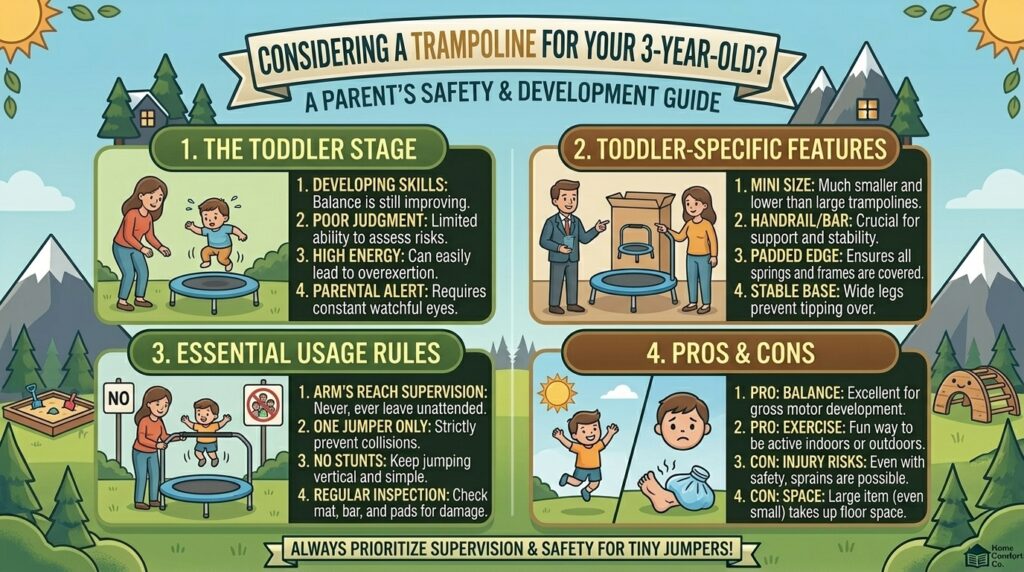
Trampolines are one of the most exciting outdoor toys for children. The moment kids see a trampoline, they usually want to jump, bounce, laugh, and play for hours. Many parents love trampolines because they encourage physical activity, outdoor play, exercise, and endless entertainment. For toddlers and preschoolers, bouncing feels fun, energetic, and adventurous.
However, many parents also wonder:
“Is it okay for a 3 year old to have a trampoline?”
This is a very important question because trampolines can provide both benefits and risks, especially for very young children. A 3-year-old child is still developing physically, mentally, and emotionally. Their bones, balance, coordination, and judgment skills are not fully mature yet. Because of this, trampoline safety becomes a serious concern for parents.
Some families believe trampolines are wonderful for toddlers when used carefully and under supervision. Others worry about injuries, falls, and long-term safety risks.
The truth is that trampolines can be enjoyable for 3-year-olds under the right conditions, but parents must understand the risks, safety guidelines, developmental considerations, and proper trampoline choices before allowing young children to jump.
In this detailed guide, we will explore everything parents should know about trampolines for 3-year-olds, including safety concerns, developmental benefits, injury risks, expert recommendations, supervision rules, trampoline types, indoor vs outdoor options, and how to make trampoline play safer for toddlers.
Why Kids Love Trampolines
Children naturally enjoy movement.
Jumping, bouncing, climbing, and running help young children explore their physical abilities and develop confidence. Trampolines create a feeling of excitement because bouncing feels different from ordinary movement.
For toddlers, trampolines can feel magical because they allow:
- Higher movement
- Fast motion
- Balance challenges
- Sensory stimulation
- Physical play
Many children become instantly fascinated by bouncing activities.
Understanding a 3-Year-Old’s Physical Development
To understand whether trampolines are suitable for toddlers, parents need to understand how 3-year-olds develop physically.
At age three, children are still improving:
- Balance
- Coordination
- Muscle strength
- Spatial awareness
- Body control
Their bones and joints are softer and more vulnerable than older children’s bodies.
Toddlers also tend to:
- Lose balance easily
- Misjudge distances
- Take unexpected risks
- Become overly excited during play
Because of these developmental factors, trampoline use requires extra caution.
What Pediatric Experts Say About Trampolines
Many pediatric organizations express caution regarding trampoline use for young children.
Some medical experts discourage recreational trampoline use for children under six years old because injury risk is significantly higher in younger kids.
Common concerns include:
- Weak bone structure
- Limited coordination
- Poor balance control
- High fall risk
Younger children are more vulnerable to fractures and head injuries than older children.
However, many parents still choose to use toddler trampolines carefully at home under close supervision.
Are All Trampolines the Same?
Not all trampolines are designed for the same age group.
There is a major difference between:
- Large outdoor trampolines
- Small toddler trampolines
- Indoor mini trampolines
- Fitness rebounders
A trampoline designed for teenagers is not appropriate for a 3-year-old.
Choosing the correct type matters greatly.
Toddler Trampolines vs Large Backyard Trampolines
Large Backyard Trampolines
Large trampolines are designed for older children and families.
They often involve:
- Higher bouncing
- Greater jump force
- Larger jumping surfaces
These can become dangerous for toddlers because small children may bounce unpredictably or lose control easily.
Toddler Trampolines
Toddler trampolines are specifically designed for younger children.
Features often include:
- Lower height
- Smaller jumping area
- Stability handles
- Softer surfaces
- Lower bounce force
These are generally safer than full-size trampolines for preschool-aged children.
Benefits of Trampoline Play for 3-Year-Olds
Although safety concerns exist, trampolines may also provide several developmental benefits when used properly.
Physical Exercise
Modern children often spend too much time indoors.
Trampolines encourage active play and movement.
Jumping helps improve:
- Cardiovascular activity
- Muscle engagement
- Physical energy release
Toddlers naturally need physical movement throughout the day.
Balance and Coordination Development
Bouncing challenges the body’s balance systems.
Trampoline play may help children develop:
- Stability
- Body awareness
- Coordination
- Movement control
Young children constantly practice adjusting their balance while jumping.
Sensory Stimulation
Toddlers learn through sensory experiences.
Trampoline bouncing provides:
- Movement sensation
- Body feedback
- Vestibular stimulation
Many children find repetitive bouncing calming and enjoyable.
Confidence Building
Learning to jump and control movement can improve confidence.
Toddlers often feel proud when they master new physical skills.
Small achievements during play support emotional growth.
Energy Release
Three-year-olds usually have very high energy levels.
Trampoline play helps children release physical energy in healthy ways.
Active children often sleep better and feel calmer afterward.
Outdoor Time
Outdoor trampoline play encourages children to spend less time on screens and more time moving outdoors.
Fresh air and outdoor activity support overall health.
The Biggest Risks of Trampolines for Toddlers
Despite potential benefits, trampolines also carry serious risks for young children.
Parents must understand these clearly.
Falls Off the Trampoline
One of the biggest risks is falling off the trampoline surface.
Falls may lead to:
- Head injuries
- Broken bones
- Cuts
- Neck injuries
Toddlers often lose balance unexpectedly.
Collision Injuries
When multiple children jump together, bounce forces become unpredictable.
Smaller children can easily be thrown off balance by heavier jumpers.
Collisions may cause:
- Facial injuries
- Broken bones
- Concussions
This is one reason experts recommend “one child at a time.”
Sprains and Fractures
Young children’s bones are still developing.
Improper landings may lead to:
- Ankle sprains
- Wrist fractures
- Arm injuries
- Leg injuries
Even low-height falls may injure toddlers.
Neck and Spine Injuries
Dangerous trampoline tricks such as flips should never be allowed for toddlers.
Improper landings can potentially injure:
- Neck
- Spine
- Head
These injuries can become serious.
Overconfidence During Play
Toddlers often become excited and impulsive during active play.
They may attempt unsafe behaviors like:
- Jumping too high
- Climbing frames
- Rough play
- Standing near edges
Young children do not fully understand danger yet.
Indoor vs Outdoor Trampolines for 3-Year-Olds
Parents often wonder whether indoor or outdoor trampolines are safer.
Indoor Toddler Trampolines
Indoor mini trampolines are usually:
- Smaller
- Lower to the ground
- Softer
- Designed for toddlers
These are often safer when used correctly.
Advantages include:
- Controlled environment
- Weather protection
- Easier supervision
Outdoor Trampolines
Outdoor trampolines provide more space but also greater risks.
Outdoor conditions introduce:
- Wind
- Wet surfaces
- Hard landing areas
- Larger bounce forces
Large backyard trampolines require extra safety precautions.
Important Safety Rules for Toddler Trampolines
If parents choose to allow trampoline use, strict safety rules are essential.
Constant Adult Supervision
A 3-year-old should never use a trampoline unsupervised.
Adults must actively watch at all times.
Supervision should include:
- Staying nearby
- Monitoring behavior
- Preventing unsafe actions
One Child at a Time
Multiple jumpers increase injury risk dramatically.
Even siblings should avoid jumping together when toddlers are involved.
One child at a time is one of the most important safety rules.
Use Safety Nets
Safety nets help reduce falls from trampolines.
Nets should fully surround the jumping area.
However, nets do not eliminate all injury risks.
Choose Age-Appropriate Equipment
Never place a toddler on a trampoline intended for older children.
Toddler trampolines should have:
- Small size
- Low bounce
- Soft materials
- Stability handles
Avoid Flips and Tricks
Toddlers should never attempt:
- Somersaults
- Backflips
- Stunts
Simple gentle bouncing is safest.
Inspect Equipment Regularly
Parents should regularly check for:
- Torn mats
- Loose springs
- Broken parts
- Rust
- Instability
Damaged trampolines increase injury risk.
Place Trampoline on Soft Ground
Outdoor trampolines should sit on:
- Grass
- Soft ground
- Shock-absorbing surfaces
Avoid placing trampolines on concrete.
Keep Surrounding Area Clear
Remove nearby hazards such as:
- Furniture
- Toys
- Rocks
- Sharp objects
Clear surroundings reduce injury risk during falls.
Weather Safety Matters
Wet trampolines become slippery and dangerous.
Avoid trampoline use during:
- Rain
- Snow
- High winds
Weather conditions affect safety significantly.
Weight Limits and Stability
Parents should follow manufacturer weight recommendations carefully.
Overloaded trampolines become unstable.
Toddler trampolines should feel solid and balanced during use.
Signs a Child May Not Be Ready
Not every 3-year-old develops at the same pace.
Some children may not yet have enough balance or coordination for trampoline use.
Possible signs include:
- Frequent falling
- Poor balance
- Fearfulness
- Difficulty following instructions
- Excessive impulsiveness
Parents should consider individual maturity levels carefully.
Trampoline Alternatives for Toddlers
Some parents prefer safer alternatives for active play.
Options include:
- Soft play mats
- Indoor climbing toys
- Balance bikes
- Mini obstacle courses
- Dance activities
These activities also encourage movement and coordination.
Why Parents Still Buy Toddler Trampolines
Despite warnings, many families still choose toddler trampolines because they provide:
- Entertainment
- Exercise
- Energy release
- Indoor activity during bad weather
When used carefully, many parents feel comfortable with low-risk trampoline play.
The Difference Between Controlled Play and Reckless Play
Safe trampoline use depends heavily on behavior.
Controlled play includes:
- Gentle bouncing
- Slow movement
- Supervised use
Reckless play includes:
- Roughhousing
- Multiple jumpers
- Tricks
- Unsafe climbing
Parental guidance makes a huge difference.
Emotional Benefits of Active Play
Physical play supports emotional health too.
Jumping and movement may help children:
- Reduce frustration
- Improve mood
- Feel more confident
- Burn excess energy
Active toddlers often feel happier after movement-based play.
Social Development Through Play
Trampoline play can also support social skills when children learn:
- Taking turns
- Following rules
- Listening to instructions
Simple play activities often teach valuable behavior lessons.
How Long Should a 3-Year-Old Use a Trampoline?
Toddlers do not need long trampoline sessions.
Short periods of supervised play are usually enough.
Excessive bouncing may lead to:
- Fatigue
- Overexcitement
- Poor coordination
Moderation improves safety.
Creating Safe Trampoline Habits Early
Children learn safety habits through repetition.
Parents should consistently reinforce rules such as:
- No rough play
- One jumper only
- Hold handles if needed
- Stop when tired
Consistent rules build safer long-term habits.
Common Mistakes Parents Make
Some trampoline injuries occur because parents underestimate risks.
Common mistakes include:
- Allowing multiple children together
- Poor supervision
- Using oversized trampolines
- Ignoring maintenance
- Allowing risky behavior
Awareness helps prevent accidents.
The Role of Maturity and Personality
Every child behaves differently.
Some 3-year-olds are naturally cautious.
Others are highly energetic and impulsive.
Parents should consider:
- Personality
- Listening ability
- Physical coordination
before introducing trampoline play.
Indoor Winter Energy Release
Many families use trampolines during winter when outdoor play becomes limited.
Mini indoor trampolines help children stay active during cold weather.
This may reduce:
- Restlessness
- Excessive screen time
- Indoor boredom
Trampolines and Screen-Free Play
Modern children often spend large amounts of time using screens.
Trampolines encourage:
- Active movement
- Physical play
- Real-world interaction
Parents often appreciate activities that reduce digital dependence.
Building Healthy Activity Habits
Children who enjoy active play early in life may develop healthier long-term habits.
Movement-based play encourages positive attitudes toward physical activity.
Why Soft Landing Matters
Landing technique affects injury risk greatly.
Toddlers should learn to:
- Land with bent knees
- Stay centered
- Avoid jumping near edges
Controlled movement reduces stress on joints.
Teaching Body Awareness
Trampoline play may help children become more aware of:
- Balance
- Movement
- Coordination
This body awareness supports physical development.
Trampolines and Sibling Challenges
Older siblings sometimes create risks for younger children.
Older kids bounce harder and faster, which may destabilize toddlers.
Parents should separate age groups carefully during trampoline play.
Should Parents Jump With Toddlers?
Adults jumping with toddlers on the same trampoline can increase injury risk.
The larger jumper creates unpredictable bounce forces.
Direct supervision nearby is safer than shared jumping.
Safety Padding Importance
Good trampolines include protective padding over:
- Springs
- Frames
- Edges
Padding helps reduce impact injuries.
Choosing High-Quality Trampolines
Cheap poorly made trampolines may lack safety features.
Parents should prioritize:
- Strong frames
- Stable legs
- Safety certifications
- Durable materials
Quality matters significantly.
Mental Benefits of Outdoor Play
Outdoor trampoline use combines movement with fresh air and sunlight.
Outdoor play supports:
- Better mood
- Improved sleep
- Emotional regulation
Nature and movement work well together for young children.
Are Trampolines Worth the Risk?
This depends on family priorities, supervision quality, and trampoline type.
Large unsupervised trampolines carry significant risk for toddlers.
However, carefully supervised toddler trampolines may provide enjoyable physical activity for some children.
Parents must make informed decisions based on:
- Safety awareness
- Child maturity
- Equipment quality
Questions Parents Should Ask Before Buying
Before purchasing a trampoline for a 3-year-old, parents should ask:
- Is it age-appropriate?
- Does it include safety features?
- Can I supervise constantly?
- Is there enough safe space?
- Is my child physically coordinated enough?
These questions help families make smarter decisions.
Alternatives to Trampoline Parks
Commercial trampoline parks are generally not recommended for toddlers because they involve:
- Crowds
- Larger children
- Fast bouncing
- Higher injury risk
Toddler-specific play zones are safer than mixed-age trampoline areas.
Long-Term Safety Awareness
As children grow older, trampoline rules should continue evolving.
Older children may attempt:
- Tricks
- Higher jumps
- Competitive play
Early safety habits remain important throughout childhood.
The Emotional Joy of Bouncing
Despite the risks, trampolines can bring enormous joy to children.
Laughter, movement, excitement, and confidence-building are part of active childhood experiences.
Parents simply need to balance fun with safety.
Final Thoughts
So, is it okay for a 3-year-old to have a trampoline?
The answer is: it can be okay under very careful conditions, but there are important risks parents must understand.
Three-year-olds are still developing physically and emotionally, which makes them more vulnerable to trampoline injuries than older children. Large backyard trampolines are generally not ideal for toddlers because of the higher bounce force and increased fall risk.
However, small toddler trampolines designed specifically for young children may provide safe enjoyment when used with strict supervision and proper safety rules.
The most important safety guidelines include:
- Constant adult supervision
- One child at a time
- Age-appropriate trampoline size
- Safety nets and padding
- No flips or rough play
- Regular equipment inspection
Parents should also consider their child’s maturity, balance, coordination, and ability to follow instructions before allowing trampoline use.
Ultimately, trampolines can provide fun exercise, movement, confidence-building, and sensory development for some toddlers, but safety must always come first.
The goal is not simply to entertain children. The goal is to create healthy, active, enjoyable experiences while protecting their growing bodies and overall well-being.
With thoughtful supervision, proper equipment, and careful safety habits, trampoline play can become a fun part of childhood while reducing unnecessary risks.