
What is 7 essential life skills every childs need? In a world that is changing faster than any generation before it, parents often find themselves wondering: What does my child actually need to be successful? Is it a high GPA? Is it the ability to code in three different languages? While academic achievement and technical skills have their place, they are often just the “hard skills.” To truly navigate the complexities of the 21st century—from the playground to the boardroom—children need something deeper. They need “Life Skills.”
Think of life skills as the “operating system” for a human being. Without a solid OS, even the best apps (math, history, science) won’t run smoothly. These skills allow children to manage their emotions, interact with others, solve problems creatively, and keep going when things get tough. Based on extensive research into child development and executive function, there are seven core skills that serve as the bedrock for a happy, productive life.
In this mega-guide, we are going to dive deep into each of the 7 essential life skills. We’ll look at why they matter, how they manifest in daily life, and—most importantly—practical ways you can help your child develop them starting today.
1. Focus and Self-Control
We live in the “Age of Distraction.” Between flashing screens, instant notifications, and the general busyness of modern life, the ability to focus is becoming a rare superpower. Self-control is the partner to focus; it’s the ability to inhibit a primary impulse (like grabbing a toy or yelling when frustrated) in favor of a long-term goal.
Why It Matters
Focus and self-control are part of “executive function.” Research shows that children with higher levels of self-control in early childhood tend to have better health, higher wealth, and fewer criminal records as adults. It is the skill that allows a child to finish their homework before playing video games or to listen to a teacher even when they are bored.
How to Build It:
- The “Pause” Game: Use games like Red Light, Green Light or Freeze Dance. These require children to stop an action mid-flow, which strengthens the “braking system” in the brain.
- Reduce Overstimulation: Create “screen-free zones” and times. A quiet environment allows the brain to practice deep focus rather than jumping from one stimulus to another.
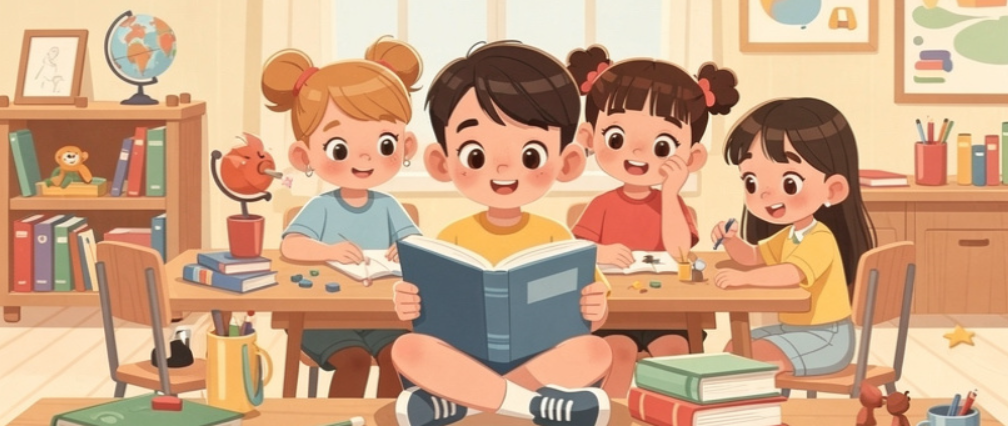
- Reading Together: Deep reading of a book requires sustained attention. It’s the antithesis of the “scroll” culture.
2. Perspective Taking
Perspective taking is often confused with simple empathy, but it’s actually more cognitive. It’s the ability to understand that someone else might have different thoughts, feelings, and motivations than you do. It’s about stepping out of your own head and into someone else’s shoes.
Why It Matters
This is the heart of social intelligence. Children who can take perspective are less likely to get into unnecessary conflicts. They are better at negotiating, working in teams, and being kind because they “get” where the other person is coming from. In a globalized world, the ability to understand different viewpoints is non-negotiable.
How to Build It:
- Analyze Characters: When reading a book or watching a movie, ask: “Why do you think he did that?” or “How do you think she felt when that happened?”
- Model It: When you have a disagreement with another adult, explain your reasoning to your child: “I was frustrated because I thought X, but then I realized they were feeling Y.”
- Role-Playing: Have your child play the role of the “teacher” or the “sibling” in a pretend scenario to see things from that vantage point.
3. Communication
Communication is about more than just talking. It is the ability to listen actively, read non-verbal cues, and express your own thoughts clearly and respectfully. It is a two-way street that requires both output and input.
Why It Matters
A child might have the most brilliant idea in the world, but if they cannot communicate it, that idea stays trapped. Good communicators build stronger friendships and, eventually, stronger professional relationships. It is the skill that prevents misunderstandings from turning into blow-ups.
How to Build It:
- The 5-Second Rule: Teach your child to wait five seconds after someone stops talking before they respond. This ensures they are actually listening, not just waiting for their turn to speak.
- The “No Tech” Dinner: Use mealtime for actual conversation. Ask open-ended questions like, “What was the most surprising thing that happened today?”
- Practice Body Language: Play games where you have to guess an emotion based only on facial expressions or posture.
4. Making Connections
This is the core of creative thinking and problem solving. “Making connections” is the ability to see how one thing relates to another. It’s about seeing patterns and realizing that the math lesson about fractions actually applies to baking a cake in the kitchen.
Why It Matters
In the future, the most valuable people won’t be the ones who just know facts (Google knows facts). The most valuable people will be the ones who can connect those facts in new and interesting ways. This is how innovation happens. It’s also how children learn to apply “school knowledge” to “real life.”
How to Build It:
- Categorization Games: Ask your child to group items in the house. “How are a spoon, a pencil, and a stick similar?” (They are all long and thin).
- Cross-Subject Talk: When you’re at the park, talk about the science of the trees, the history of the statues, and the math of the playground’s geometry.
- Open-Ended Play: Toys like LEGOs or plain wooden blocks encourage making connections because there is no “right” way to use them.
5. Critical Thinking
Critical thinking is the search for valid and reliable knowledge. It’s the ability to ask “Why?”, “How do we know that’s true?”, and “What is the evidence?” In an era of “fake news” and endless information, being a critical thinker is a survival skill.
Why It Matters
Children who think critically are harder to manipulate. They make better decisions because they don’t just take things at face value. They look for the logic behind an argument and can spot inconsistencies. This skill is what allows a child to navigate peer pressure and marketing messages effectively.
How to Build It:
- Don’t Give the Answer: When your child asks “Why is the sky blue?”, don’t just tell them. Say, “That’s a great question. How could we find out the answer together?”
- Examine Advertisements: When you see a commercial, ask: “What are they trying to make us feel? Do you think that toy really does all those things?”
- Debate: Encourage healthy “arguments.” If they want a later bedtime, have them build a logical case for why it’s a good idea.
6. Taking on Challenges
This is often called “Grit” or “Resilience.” It is the willingness to try something hard, to fail, and to try again. It’s the ability to stay in the “stretch zone”—the place where you aren’t comfortable, but you’re learning.
Why It Matters
Life is full of setbacks. If a child quits the first time a math problem gets hard or they don’t make the team, they will struggle in adulthood. Resilience isn’t about never failing; it’s about having the tools to recover from failure. Children who take on challenges develop a “growth mindset”—the belief that their abilities can be developed through effort.
How to Build It:
- Praise the Process, Not the Result: Instead of “You’re so smart!”, say “I saw how hard you worked on that problem, even when it was tricky.”
- Share Your Failures: Talk to your kids about things you tried and failed at. Let them see that adults struggle too and that the world doesn’t end when things go wrong.
- Encourage Managed Risk: Let them climb the tree that’s a little bit too high or try the recipe that looks difficult. They need to know they can handle the “scary” stuff.
7. Self-Directed, Engaged Learning
This is the “capstone” skill. It is the internal drive to keep learning throughout life. A self-directed learner doesn’t just learn because they have to for a test; they learn because they are genuinely curious about the world.
Why It Matters
The world is changing so fast that much of what children learn in school today will be obsolete by the time they are 30. The only way to stay relevant is to be a life-long learner. This skill ensures that your child will always be able to adapt, pivot, and grow, regardless of what the future looks like.
How to Build It:
- Follow Their Lead: If your child becomes obsessed with dinosaurs, go to the library, watch documentaries, and find some fossils. Support their deep dives into their interests.
- Model Curiosity: Let your child see you learning something new—whether it’s a hobby, a language, or a work skill.
- Limit “Over-Scheduling”: Give them “boredom” time. Unstructured time is often when children discover what they are truly interested in.
Conclusion: The Long Game
Developing these 7 essential life skills isn’t something that happens overnight. It isn’t a “unit” you can finish in a week. It is a long game. There will be days where your child has zero self-control and days where they won’t want to take on any challenges. That’s okay.
As parents, our job isn’t to be perfect, but to be “gardeners.” We provide the right environment, the right “soil” (support and love), and the right “water” (practical opportunities to practice these skills). If we focus on these 7 foundations, we aren’t just preparing our kids for school; we are preparing them for life.
Their are no shortcuts to building a resilient, focused, and kind human being. But by focusing on these core life skills, you are giving your child the best possible head start in a world that needs their unique talents more than ever.
Summary Checklist:
- Focus and Self-Control: The ability to stay on task and manage impulses.
- Perspective Taking: Understanding others’ viewpoints and feelings.
- Communication: Active listening and clear expression of ideas.
- Making Connections: Seeing patterns and applying knowledge across contexts.
- Critical Thinking: Analyzing information and looking for evidence.
- Taking on Challenges: Resilience, grit, and a growth mindset.
- Self-Directed Learning: Maintaining curiosity and a drive to grow.