
Camping is one of the best ways to relax, reconnect with nature, and escape from the stress of daily life. Sleeping under the stars, sitting beside a campfire, hiking through forests, and waking up to fresh air can create unforgettable memories. However, for many campers, especially beginners, camping also comes with one frustrating problem: back pain.
A bad night outdoors can quickly turn an exciting adventure into an uncomfortable experience. Many people wake up from camping trips with sore backs, stiff muscles, aching shoulders, or lower back pain that lasts for days. Some campers even stop camping altogether because they believe sleeping outdoors is simply too uncomfortable.
The truth is that camping itself is not necessarily the cause of back pain. In most cases, the problem comes from poor preparation, improper sleeping systems, weak posture, bad lifting habits, or incorrect camping gear.
The good news is that back pain while camping is often preventable.
With the right setup, proper support, smart sleeping habits, and careful body positioning, camping can actually become extremely comfortable. Many experienced campers sleep outdoors regularly without any back problems at all.
In this detailed guide, we will explore everything you need to know about avoiding back pain while camping, including sleeping positions, sleeping pads, cots, tents, backpacks, posture, exercises, campsite selection, and practical tips for comfortable outdoor sleep.
Why Camping Causes Back Pain
Before learning how to avoid back pain, it is important to understand why camping sometimes causes it.
Several factors contribute to camping-related back discomfort.
Common Causes of Camping Back Pain
- Sleeping on hard ground
- Poor sleeping posture
- Thin sleeping pads
- Weak back support
- Carrying heavy backpacks incorrectly
- Poor lifting techniques
- Cold weather stiffness
- Uneven campsites
- Inadequate stretching
- Lack of movement during long drives
- Weak core muscles
- Improper pillow height
Unlike sleeping at home on a supportive mattress, camping places the body in unfamiliar positions and conditions.
Even healthy people may experience discomfort if their camping setup is poor.
The Importance of Sleep During Camping
Good sleep is essential for enjoying outdoor adventures.
Poor sleep affects:
- Energy levels
- Mood
- Physical recovery
- Hiking performance
- Focus
- Safety
When back pain interferes with sleep, the entire camping experience becomes more difficult.
That is why building a proper sleep system is one of the most important parts of camping preparation.
Choosing the Right Sleeping Pad
One of the biggest causes of camping back pain is using the wrong sleeping pad.
Many beginners buy cheap thin pads that provide little support or cushioning.
A sleeping pad is not just for softness. It also:
- Supports spinal alignment
- Relieves pressure points
- Insulates against cold ground
- Reduces muscle stiffness
Choosing the right sleeping pad can dramatically improve sleep quality outdoors.
Foam Pads vs Inflatable Pads for Back Support
Both foam and inflatable sleeping pads can work well, but they offer different benefits.
Foam Sleeping Pads
Foam pads provide:
- Firm support
- Stable sleeping surface
- Reliable durability
Some campers with back pain prefer firm foam support because it keeps the spine aligned.
However, foam pads may feel too hard for side sleepers.
Inflatable Sleeping Pads
Inflatable pads provide:
- Better cushioning
- Adjustable firmness
- Improved pressure relief
Thicker inflatable pads often feel more comfortable for campers with joint pain or sensitive backs.
However, overly soft inflation may allow the spine to sag unnaturally.
Finding the Right Firmness
Sleeping pad firmness matters greatly.
Pads that are too soft may cause the hips to sink too deeply.
Pads that are too firm may create pressure points.
The goal is neutral spinal alignment.
Many campers with back pain find medium firmness most comfortable.
Experimenting with air pressure is important.
Sleeping Position Matters
Your sleeping position has a huge effect on spinal comfort.
Side Sleepers
Side sleeping is common during camping.
To reduce back pain:
- Use a thicker sleeping pad
- Keep knees slightly bent
- Place a pillow between knees if needed
Proper hip support is especially important for side sleepers.
Back Sleepers
Back sleeping often supports good spinal alignment.
To improve comfort:
- Place a small item under knees
- Use moderate pillow height
- Keep the spine neutral
Stomach Sleepers
Stomach sleeping may strain the lower back and neck.
Campers with back pain should avoid stomach sleeping when possible.
Why Ground Conditions Matter
Even the best sleeping pad cannot fully compensate for terrible ground selection.
Uneven campsites create pressure on the body.
Sleeping on:
- Rocks
- Roots
- Slopes
- Holes
can cause severe discomfort.
Before setting up camp, carefully inspect the ground.
Choose surfaces that are:
- Flat
- Smooth
- Dry
- Stable
Good campsite selection is one of the simplest ways to reduce back pain.
The Benefits of Camping Cots
Camping cots are becoming increasingly popular, especially among older campers and people with chronic back pain.
A cot lifts the body off the ground and provides:
- Better support
- Easier movement
- Improved comfort
- Reduced pressure points
Many campers find cots far more comfortable than ground sleeping.
Cot and Sleeping Pad Combination
Some campers combine:
- Camping cot
- Foam pad
- Inflatable sleeping pad
This combination creates excellent comfort and insulation.
Cots also make standing up easier, which helps campers with mobility or lower back issues.
Choosing the Right Pillow
Pillow height affects spinal alignment significantly.
Many campers use bundled clothing instead of real pillows, but improper neck support can create back and shoulder pain.
A good camping pillow should:
- Support natural neck alignment
- Match sleeping position
- Avoid excessive height
Side sleepers usually need thicker pillows than back sleepers.
Backpack Weight and Back Pain
Back pain during camping often begins before sleep.
Heavy backpacks place stress on the spine and muscles.
Poor backpack fit is one of the most common causes of hiking-related back pain.
How to Pack a Backpack Properly
Proper backpack organization reduces strain.
Important Tips
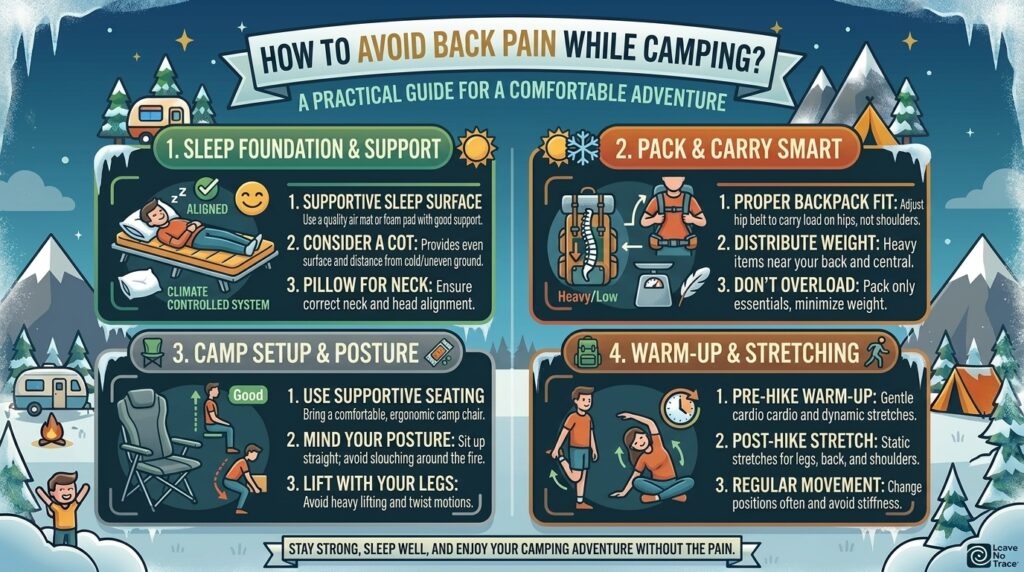
- Place heavy items near the center
- Keep weight close to the spine
- Distribute gear evenly
- Avoid overpacking
A poorly balanced backpack forces muscles to compensate unevenly.
Backpack Fit Matters
Backpacks should fit properly.
Important adjustments include:
- Hip belt positioning
- Shoulder strap tension
- Load lifter adjustment
- Chest strap balance
The hips should carry most of the weight, not the shoulders.
Avoid Carrying Too Much Weight
Overpacking is extremely common.
Many campers bring unnecessary gear.
Excess weight increases pressure on:
- Lower back
- Hips
- Knees
- Shoulders
Reducing pack weight can significantly reduce discomfort.
Stretching Before and After Hiking
Stretching helps reduce muscle stiffness and tension.
Camping often involves:
- Hiking
- Sitting
- Carrying gear
- Sleeping in unusual positions
Stretching improves flexibility and circulation.
Best Stretches for Campers
Useful stretches include:
- Hamstring stretches
- Hip flexor stretches
- Cat-cow stretch
- Child’s pose
- Lower back twists
- Shoulder stretches
Gentle stretching before bed may improve sleep comfort.
Strengthening Your Core Before Camping
Weak core muscles contribute heavily to back pain.
The core supports spinal stability during:
- Walking
- Hiking
- Sleeping
- Lifting
Strengthening exercises can improve camping comfort dramatically.
Helpful Core Exercises
Useful exercises include:
- Planks
- Bird-dog exercises
- Bridges
- Dead bugs
- Side planks
Even simple home workouts can improve outdoor comfort.
Why Cold Weather Increases Back Pain
Cold temperatures can tighten muscles and joints.
During cold-weather camping:
- Muscles become stiff
- Circulation decreases
- Flexibility reduces
Keeping warm helps reduce discomfort.
Staying Warm While Sleeping
Cold sleeping systems often worsen pain.
To stay warm:
- Use insulated sleeping pads
- Wear dry clothing
- Use proper sleeping bags
- Stay hydrated
Warm muscles remain more flexible and comfortable.
Tent Size and Comfort
Small cramped tents may force awkward sleeping positions.
A slightly larger tent allows:
- Easier movement
- Better posture
- More comfort
Tall campers especially benefit from spacious tents.
Getting In and Out of the Tent Carefully
Many camping injuries happen while entering or exiting tents awkwardly.
Low tents require bending and twisting.
Move slowly and carefully to avoid sudden strain.
Sitting Comfort Around Camp
Back pain is not only caused by sleeping.
Camp chairs matter too.
Poor seating posture around campfires may increase muscle tension.
Choosing a Good Camping Chair
Supportive camping chairs should provide:
- Lumbar support
- Stable seating
- Proper height
- Comfortable posture
Sitting hunched forward for hours can strain the back.
Avoid Sitting Too Long
Long periods of inactivity create stiffness.
During camping trips:
- Walk regularly
- Stretch occasionally
- Change positions often
Movement helps maintain circulation and flexibility.
Proper Lifting Techniques at Camp
Campers frequently lift:
- Coolers
- Firewood
- Water containers
- Tents
- Backpacks
Improper lifting can injure the back quickly.
Safe Lifting Tips
When lifting:
- Bend knees
- Keep the back straight
- Lift with legs
- Avoid twisting suddenly
Never jerk heavy objects upward.
Hydration and Muscle Health
Dehydration affects muscles and joints.
Poor hydration increases risk of:
- Muscle cramps
- Stiffness
- Fatigue
Drink enough water throughout the trip.
Nutrition and Recovery
Camping food affects physical performance.
Balanced meals help muscles recover.
Important nutrients include:
- Protein
- Magnesium
- Potassium
- Healthy fats
Poor nutrition may increase soreness.
Sleeping Bag Size Matters
Sleeping bags that are too small restrict movement.
Restricted movement may cause:
- Twisting
- Compression
- Awkward sleeping positions
Choose a sleeping bag with enough room to move comfortably.
Double Sleeping Pads for Couples
Couples sometimes experience discomfort from separated sleeping systems.
Double sleeping pads create:
- More space
- Better alignment
- Improved comfort
Shared sleeping systems may reduce movement gaps.
Air Mattress Problems
Household air mattresses are not always ideal for camping.
Cheap air mattresses may:
- Sag unevenly
- Lose air overnight
- Create poor spinal support
Camping-specific sleeping systems usually perform better outdoors.
Self-Inflating Pads and Back Pain
Self-inflating pads combine foam and air.
Advantages include:
- Better stability
- Improved support
- Good insulation
Many campers with mild back pain enjoy self-inflating pads because they balance comfort and firmness.
The Role of Sleeping Bag Insulation
Cold exposure increases muscle tightness.
A warm sleeping bag supports:
- Better circulation
- Muscle relaxation
- Improved sleep quality
Being cold all night often worsens pain.
Why Recovery Time Matters
Some campers push themselves too hard during trips.
Long hikes without recovery may strain muscles.
Balance activity with rest.
Morning Mobility Exercises
Morning stiffness is common after camping.
Simple morning exercises help reduce soreness.
Examples include:
- Gentle walking
- Hip rotations
- Back stretches
- Shoulder rolls
Movement restores circulation.
Choosing the Right Campsite Elevation
Steep campsites may force awkward sleeping positions.
Even slight downhill angles may affect spinal alignment.
Always test the sleeping area before setting up.
Sleeping Under the Knees
Some campers reduce lower back pain by placing soft items beneath the knees.
This helps maintain natural spinal curves.
Small clothing bags may work if extra pillows are unavailable.
Hammock Camping and Back Pain
Some campers switch to hammocks to reduce back discomfort.
Advantages include:
- No ground pressure
- Gentle support
- Reduced pressure points
However, hammocks require proper setup.
Poor hammock positioning may create neck or back strain.
Best Hammock Position
For better spinal alignment:
- Lie diagonally
- Avoid deep sagging
- Use underquilts in cold weather
Some people sleep extremely comfortably in hammocks.
Others prefer ground systems.
Footwear and Back Health
Improper footwear affects posture and spinal alignment during hiking.
Supportive hiking shoes reduce strain on:
- Knees
- Hips
- Lower back
Good footwear matters more than many beginners realize.
Trekking Poles and Back Relief
Trekking poles help distribute body weight during hiking.
Benefits include:
- Reduced spinal pressure
- Better posture
- Improved stability
Many hikers with back pain benefit from trekking poles.
The Importance of Rest Stops
Long hikes without breaks increase muscle fatigue.
Take regular rest periods.
Stretch occasionally during hikes.
Short breaks improve endurance and reduce strain.
Why Age Affects Camping Comfort
Older campers may experience:
- Reduced flexibility
- Joint stiffness
- Slower recovery
Comfort-focused camping setups become increasingly important with age.
Fortunately, modern camping gear greatly improves comfort.
Camping with Existing Back Problems
People with chronic back pain can still enjoy camping.
However, preparation matters greatly.
Consult healthcare professionals if needed before strenuous trips.
Focus on:
- Supportive sleep systems
- Lightweight gear
- Gentle activity
- Proper pacing
Minimalist Camping vs Comfort Camping
Minimalist camping prioritizes lightweight gear.
Comfort camping prioritizes sleep quality and convenience.
Campers with back pain often benefit from comfort-focused setups.
There is no shame in prioritizing comfort.
How Experienced Campers Sleep Comfortably
Experienced campers often refine their systems over years.
They learn:
- Which pads work best
- Ideal firmness levels
- Proper campsite selection
- Effective stretching habits
Comfort improves with experience and preparation.
Why Testing Gear Before Trips Matters
Never wait until a major camping trip to test equipment.
Practice sleeping setups at home or nearby.
Testing helps identify problems early.
Common Mistakes That Cause Camping Back Pain
Using Thin Cheap Pads
Poor cushioning creates pressure points.
Sleeping on Slopes
Uneven positions strain muscles.
Overpacking
Heavy loads increase spinal stress.
Ignoring Stretching
Tight muscles become painful quickly.
Poor Posture
Slouching while sitting strains the spine.
Using Improper Pillows
Neck misalignment affects the entire back.
Luxury Camping Options for Back Pain
Modern camping can be extremely comfortable.
Luxury setups may include:
- Thick sleeping mats
- Memory foam toppers
- Large cots
- Heated blankets
- Spacious tents
Comfort-focused camping is becoming increasingly popular.
Mental Relaxation and Pain
Stress can increase muscle tension.
Camping often improves mental relaxation.
Relaxed muscles generally experience less pain.
Nature itself may help reduce stress-related tension.
Why Movement Is Better Than Staying Still
Some campers become overly inactive due to soreness.
Gentle movement is usually healthier than total inactivity.
Walking and stretching improve circulation.
The Role of Good Sleep Hygiene
Camping sleep quality improves with healthy habits.
Helpful practices include:
- Avoid excessive alcohol
- Stay hydrated
- Maintain warmth
- Sleep at regular times
Good sleep supports muscle recovery.
Preparing Physically Before Camping Trips
Physical preparation improves outdoor comfort greatly.
Before longer trips:
- Walk regularly
- Strengthen the core
- Stretch consistently
- Improve endurance gradually
Conditioning reduces injury risk.
Camping Recovery After Returning Home
Post-trip recovery matters too.
After camping:
- Stretch gently
- Rehydrate
- Rest properly
- Avoid sudden heavy lifting
Recovery helps prevent lingering pain.
The Best Sleeping Setup for Back Pain
Although preferences vary, many campers with back pain enjoy:
- Thick insulated sleeping pads
- Medium firmness
- Proper pillow support
- Flat campsites
- Cot systems
Comfort and spinal alignment are key priorities.
Learning Your Personal Preferences
Every body is different.
Some campers prefer:
- Firm foam support
- Soft cushioning
- Hammocks
- Cots
- Inflatable systems
Experimentation helps identify what works best.
Final Thoughts
So, how do you avoid back pain while camping?
The answer involves preparation, support, posture, movement, and proper gear selection.
Back pain during camping is usually caused by poor sleeping systems, uneven campsites, bad posture, heavy backpacks, inadequate support, or lack of stretching. Fortunately, most of these problems can be prevented with thoughtful planning.
The most important strategies include:
- Choosing a supportive sleeping pad
- Maintaining proper spinal alignment
- Selecting flat campsites
- Packing lightweight gear
- Stretching regularly
- Using supportive pillows
- Avoiding overexertion
- Staying warm and hydrated
Camping should be relaxing and enjoyable, not painful.
Modern camping gear offers far more comfort than older outdoor equipment, and today campers can build sleep systems that feel surprisingly supportive and comfortable.
Whether you prefer backpacking in the mountains, family camping at campgrounds, beach camping, or winter adventures, protecting your back will greatly improve your overall experience.
Good sleep leads to better energy, happier mornings, safer hiking, and more enjoyable outdoor memories.
With the right setup and habits, camping can become one of the most comfortable and rewarding experiences in your life instead of a source of back pain.