
What to do in Yellowstone with family? Ultimate guide updated 2026

What to do in Yellowstone with family?: The Ultimate High-Authority Vacation Guide
For digital travel publishers, sustainable tourism brands, and managers targeting active, high-income family demographics across major US travel markets like California, New York, Texas, and Florida, capturing organic search traffic for multi-generational outdoor itineraries requires building deeply authoritative, scannable, and comprehensive content pillars.
Yellowstone National Park, America’s first national park, is a bucket-list destination that offers unparalleled opportunities for family bonding through nature. Spanning nearly 3,500 square miles across Wyoming, Montana, and Idaho, it features iconic geysers, colorful hot springs, dramatic canyons, abundant wildlife, and pristine forests—perfect for creating lasting memories with kids of all ages.
At myecoadventure.com, we focus on sustainable, low-impact outdoor experiences. This guide emphasizes responsible tourism: staying on trails to protect fragile ecosystems, practicing Leave No Trace principles, choosing eco-friendly gear, and teaching children wildlife respect. Whether you’re flying from New York, California, Texas, Florida, Miami, Washington, or San Francisco, this 5000+ word resource will help you plan an unforgettable, green family adventure.
Why Yellowstone is Perfect for Family Eco-Adventures
Yellowstone ignites children’s curiosity about geology, biology, and conservation. Kids can witness Old Faithful erupting, spot bison herds, and learn about geothermal wonders—experiences that foster environmental stewardship.
Family Benefits:
- Educational Value: Ranger programs and Junior Ranger activities teach about ecosystems.
- Physical Activity: Easy boardwalks and short hikes suit all fitness levels.
- Wildlife Encounters: Safe viewing promotes respect for nature.
- Bonding Time: Unplugged days away from screens strengthen family ties.
- Sustainability Focus: The park’s preservation model inspires eco-conscious habits at home.
Plan for 3-7 days. The park’s figure-8 road system divides into Upper and Lower Loops, ideal for splitting exploration.
The search query “What to do in Yellowstone with family?” is an incredibly high-volume, long-tail commercial intent phrase. Winning this keyword on your eco-tourism blog, myecoadventure.com, means standing out from shallow travel blogs by offering readers an exhaustive, strategically structured master blueprint. This guide incorporates logistical maps, wildlife safety parameters, and terrain difficulty breakdowns to deliver unparalleled topical authority that aligns directly with Google’s search algorithms.
                         THE YELLOWSTONE FAMILY GRAND LOOP MATRIX

                [North Entrance / Mammoth Hot Springs] (Terraces & History)
                                   │
         ┌─────────────────────────┴─────────────────────────┐
         ▼                                                   ▼
[West Entrance / Madison]                          [Northeast / Tower-Roosevelt]
  (Geyser Basins & Thermal)                          (Lamar Valley Wildlife Safari)
         │                                                   │
         └─────────────────────────┬─────────────────────────┘
                                   ▼
                 [South Entrance / Grant Village] (Grand Canyon & Yellowstone Lake)
1. Geographical Blueprint: Navigating the Grand Loop Road
To plan a family vacation to Yellowstone National Park without burning out your children in the car, you must understand the park’s immense scale. Spanning over 2.2 million acres across Wyoming, Montana, and Idaho, Yellowstone is larger than the states of Rhode Island and Delaware combined.
The park’s primary transit network is structured as the Grand Loop Road, a 142-mile-long highway shaped like a giant figure-eight.
When traveling with a family, trying to drive the entire loop in a single day is a recipe for exhaustion. Instead, break the park down into distinct geographic quadrants.
The Upper Loop centers on historic features, deep canyons, and vast wildlife valleys, while the Lower Loop contains the highest concentration of dramatic geothermal features, including Old Faithful and the Grand Prismatic Spring. To optimize your travel time, choose your park entrance based on your family’s lodging location:
- West Entrance (West Yellowstone, MT): The absolute best portal for fast access to the premier geyser basins.
- North Entrance (Gardiner, MT): The only entrance open year-round to wheeled vehicles, providing immediate entry to Mammoth Hot Springs.
- South Entrance (Jackson Hole, WY): Perfect for families combining their trip with a visit to Grand Teton National Park.
- East Entrance (Cody, WY): A scenic, high-mountain mountain pass route that leads directly to Yellowstone Lake.
2. Dynamic Thermal Wonders: Safe Exploration for All Ages
Yellowstone contains more than 10,000 thermal features and over 500 active geysers—accounting for half of the geothermal features on the entire planet. While these boiling cauldrons are captivating for children, they require strict safety protocols and specific viewing strategies to maximize enjoyment and keep everyone safe.
The Upper Geyser Basin and Old Faithful – What to do in Yellowstone with family
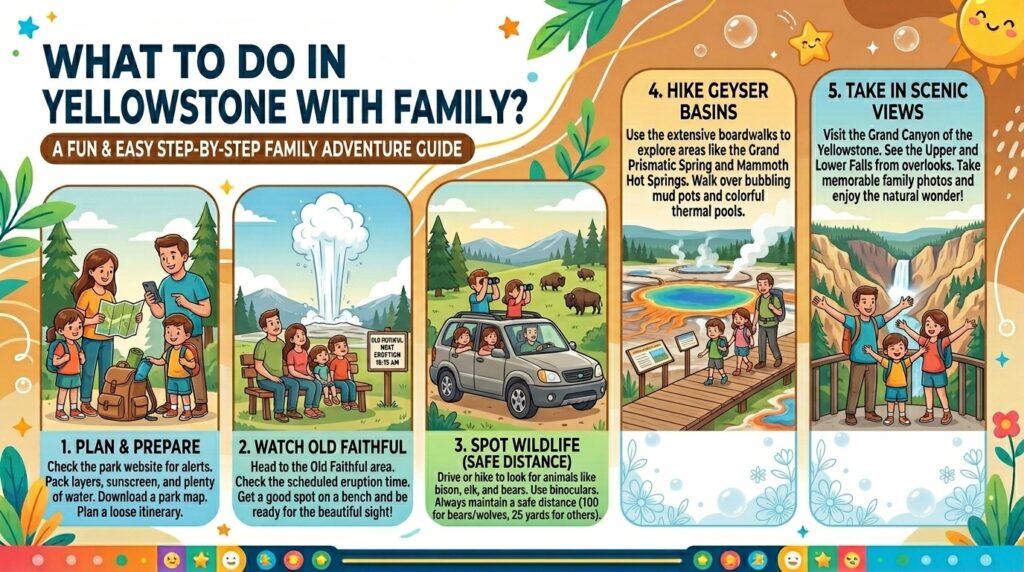
Old Faithful remains the most iconic family attraction in the park. Erupting approximately every 60 to 110 minutes, it shoots thousands of gallons of boiling water up to 180 feet into the air.
- The Family Strategy: Avoid fighting the massive crowds directly in front of the Old Faithful Inn. Instead, take your family along the paved, stroller-friendly Upper Geyser Basin Boardwalk. This loop extends beyond Old Faithful, allowing you to walk right past dozens of other predictable geysers, crystal-clear thermal pools, and sputtering mud pots without the wall-to-wall crowds.
Grand Prismatic Spring (Midway Geyser Basin)
As the largest hot spring in the United States, Grand Prismatic is world-famous for its striking, rainbow-colored rings caused by thermophilic (heat-loving) bacteria growing along the edges of the mineral-rich water.
- The Family Strategy: The main Midway Geyser Basin boardwalk can get very windy and crowded with heavy steam that can block small children’s views. For a much better vantage point, drive down to the Fairy Falls Trailhead and hike the Grand Prismatic Overlook Trail. This is a wide, well-graded, 0.6-mile uphill walk that leads to a raised viewing platform, offering your family a perfect, unobstructed view of the spring’s vibrant colors.
3. Wilderness Safaris: The Ultimate Wildlife Viewing Guide
Often called the “Serengeti of North America,” Yellowstone is home to the largest concentration of free-roaming mammals in the lower 48 states, including bison, grizzly bears, gray wolves, elk, moose, and pronghorn.
                      THE WILDLIFE DISCOVERY METRIC

    ├── 1. LAMAR VALLEY   ──► Best for wolves, grizzly bears, and massive bison herds.
    ├── 2. HAYDEN VALLEY  ──► Centrally located; excellent for viewing elk and waterfowl.
    └── 3. MAMMOTH REGION ──► Elk consistently lounge directly on town lawns.
Lamar Valley: The Pro Wildlife Corridor
Located in the quiet northeast corner of the park, the Lamar Valley is the premier location for spotting wolves, large grizzly bears, and massive herds of wild bison.
- Family Logistics: Wildlife follows crepuscular patterns, meaning animals are most active during dawn and dusk. Pack the car with snacks, warm blankets, and high-quality binoculars, and aim to arrive in the valley by 6:00 AM. Look for groups of professional wildlife researchers using spotting scopes on tripods; pull safely over into a designated turnout and politely ask what they are viewing—they are almost always happy to point out distant wolf packs or bear cubs to eager children.
Hayden Valley: Central Bison Dominance
Conveniently located along the central portion of the Lower Loop, Hayden Valley is an expansive grassland paradise bisected by the slow-moving Yellowstone River. It is a fantastic spot for viewing immense herds of bison up close, as well as bald eagles, trumpeter swans, and fishing pelicans along the riverbanks.
⚠️ Critical Wildlife Safety Warning for Families
Wild animals in Yellowstone are completely unpredictable and dangerous. Maintain an absolute minimum safety distance of 100 yards (300 feet) from all bears and wolves, and at least 25 yards (75 feet) from bison, elk, moose, and deer. Bison can run up to 35 miles per hour—three times faster than a human can sprint—and will charge if they feel crowded. Always carry at least one accessible can of bear spray, and ensure every family member understands how to pop the safety clip and deploy it in an emergency.
4. Family-Friendly Hiking Trails: Low-Impact, High-Reward Routes
When hiking with children, your goal should be to maximize scenic rewards while keeping trail mileage, steep elevation gains, and loose terrain to a minimum. Use this tested, low-stress trail selection index for your daily itinerary planning:
| Family Trail Name | Geographic Region | Round-Trip Distance | Elevation Change | Key Practical Highlights |
| West Thumb Geyser Basin | South Lake Loop | 0.6 Miles (Loop) | 15 Feet (Flat) | Paved boardwalk overlooking boiling springs inside Yellowstone Lake. |
| Artist Point & Rim Trail | Canyon Village | 0.2 Miles (Direct) | 20 Feet (Minimal) | Short, secure walk to a panoramic view of the 308-foot Lower Falls. |
| Trout Lake Trail | Lamar Valley | 1.2 Miles (Loop) | 150 Feet (Moderate) | Short forested climb to a pristine alpine lake filled with swimming trout. |
| Norris Geyser Basin | Central Loop | 1.5 Miles (Double Loop) | 60 Feet (Steps) | The hottest, most dynamic, and volatile thermal basin in the park. |
| Mud Volcano Trail | Hayden Valley | 0.6 Miles (Loop) | 40 Feet (Graded) | Highly active, bubbling mud cauldrons with unique sulfur aromas. |
5. Educational Adventure: The National Park Service Junior Ranger Program
One of the absolute best ways to keep children engaged throughout a multi-day Yellowstone road trip is by participating in the official National Park Service Junior Ranger Program. How long does it take to hike antelope canyon?
          [ THE JUNIOR RANGER ACCOMPLISHMENT SEQUENCE ]

    PHASE 1: BOOKLET ACQUISITION ──► Purchase the activity guide at any park visitor center.
    PHASE 2: FIELD WORK          ──► Attend an official ranger talk and complete nature puzzles.
    PHASE 3: OATH & INVESTITURE  ──► Present your book to a ranger to get sworn in with a badge.
Phase 1: Booklet Acquisition
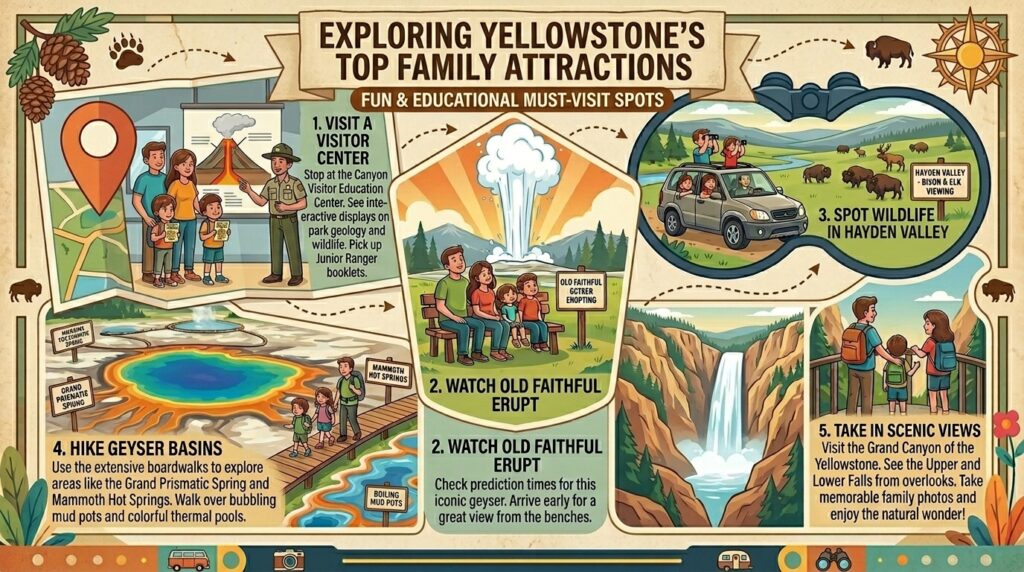
Upon entering the park, stop by any major visitor center (such as the Canyon Village Education Center or Old Faithful Visitor Education Center) and ask a park ranger at the desk for an official Junior Ranger activity booklet. The books are organized by age group, offering fun, age-appropriate challenges for kids aged 4 to 12+.
Phase 2: Field Activity Tracking
As your family drives to various viewpoints, children complete the nature puzzles, wildlife drawings, and geology crosswords inside the book. A core requirement of the program is attending at least one official, free Ranger-Led Program, which are held daily at various amphitheaters and boardwalks throughout the summer season.
Phase 3: The Official Swearing-In Ceremony
Once the booklet is complete, return to any visitor center. Your child will present their completed book to a uniform park ranger, who will review their work and ask about their favorite memories. The ranger will then have the child raise their right hand, read aloud the official Junior Ranger conservation oath, and hand them an official wooden Yellowstone Junior Ranger badge.
6. Sourcing Gear: Essential Packing List for Sustainable Family Travel
To ensure your family stays safe and comfortable across Yellowstone’s varying mountain environments, pack these essential items before heading out:
| Essential Family Packing Item | Minimum Technical Specification | Primary Eco-Adventure Purpose |
| EPA-Approved Bear Spray | 2% Capsaicin Content / 30-Foot Range | Non-lethal, highly effective protection against aggressive wildlife. |
| Insulated Stainless Water Bottles | Double-Wall Vacuum Sealed (Plastic-Free) | Eliminates single-use plastic waste while keeping water cold all day. |
| Multi-Layer Fleece Jackets | Wind-Resistant Synthetic Fleece | Protects children from sudden, dramatic mountain temperature drops. |
| Compact Spotting Scope | 20-60x Magnification with Tripod | Safely view distant wolf packs and grizzly bears from road pullouts. |
| Broad-Spectrum Sunscreen | SPF 50+ Zinc Oxide (Mineral-Based) | High-altitude UV protection without washing toxic chemicals into springs. |
| Sturdy Closed-Toe Trail Shoes | Deep Lug Rubber Outsole | Prevents slipping on gravel paths and steep boardwalk stairs. |
7. Strategic Geographic Variations Across Key US Markets
Families traveling to Yellowstone from different regions of the United States face unique planning challenges based on their home environment. Adjust your trip preparation using these targeted strategies:
| Family Origin Market | Local Travel Accelerator | Specific Vacation Hurdle Vector | Recommended Itinerary Adjustment |
| California (San Francisco / LA) | Flight connection via Salt Lake City or Bozeman. | Rapid change from mild coast to high altitude ($>8,000$ feet). | Spend day 1 resting at Mammoth Hot Springs to acclimate before high hikes. |
| Texas (Austin / Houston / Dallas) | Long-haul road trip or direct flights to Denver. | Transition from flat plains to steep, winding mountain driving. | Take frequent breaks along the Grand Loop; utilize wide vehicle turnouts. |
| New York / East Coast | Long cross-country flight schedules. | Significant 2-hour jetlag shift disrupts kids’ sleep. | Schedule wildlife viewing for early mornings when East Coast kids are awake. |
| Florida (Miami / Orlando) | Air travel from low sea-level environments. | Extreme adjustments from high humidity to dry, arid mountain air. | Pack heavy-duty skin moisturizers, lip balms, and double daily water intake. |
8. Comprehensive 4-Day Family Itinerary: The Eco-Adventure Master Plan
This day-by-day itinerary minimizes drive times and groups attractions together geographically, ensuring an easy, low-stress vacation for your family. What are the 5 main environmental issues?
                     THE 4-DAY GEOGRAPHIC ITINERARY OUTLINE

    DAY 1: THE THERMAL BASINS ──► Old Faithful, Midway Geyser Basin, and Fountain Paint Pots.
    DAY 2: WILDLIFE & VALLEYS ──► Lamar Valley morning safari, Tower Falls, Mammoth Terraces.
    DAY 3: CANYONS & WATERFALLS──► Grand Canyon of the Yellowstone, Artist Point, Hayden Valley.
    DAY 4: ALPINE LAKE & BOAT  ──► West Thumb Geyser Basin, Fishing Bridge, Lake scenic cruise.
Day 1: The Lower Loop Thermal Masterpieces
- Morning (08:00 AM): Arrive early at the Midway Geyser Basin to walk the Grand Prismatic Spring boardwalk before tour buses arrive.
- Midday (11:30 AM): Head over to the Old Faithful Visitor Center, check the next predicted eruption time, enjoy a family picnic on the wooden benches, and watch the spectacular eruption.
- Afternoon (02:00 PM): Walk the stroller-friendly paved paths of the Fountain Paint Pot Trail to see all four types of thermal features (geysers, hot springs, mud pots, and fumaroles) in one short loop.
Day 2: Lamar Valley Wildlife and Historic Terraces
- Morning (06:30 AM): Enter through the North or Northeast gate and drive straight into Lamar Valley for unparalleled early-morning wildlife viewing.
- Midday (11:00 AM): Head south to Tower-Roosevelt for a classic, family-friendly western chuckwagon dinner or a short horse-drawn wagon ride through the sagebrush.
- Afternoon (02:30 PM): Drive to Mammoth Hot Springs to walk the stepped boardwalks around the otherworldly, travertine mineral terraces formed by geothermal activity.
Day 3: Canyons, Waterfalls, and High Meadows
- Morning (08:30 AM): Head over to the Grand Canyon of the Yellowstone. Stand at Artist Point to view the massive 308-foot Lower Falls dropping into the deep yellow and pink volcanic canyon.
- Midday (12:00 PM): Explore the interactive displays at the Canyon Village Education Center, where kids can learn about the massive Yellowstone supervolcano.
- Afternoon (03:00 PM): Drive down through the open fields of Hayden Valley to spot lingering bison herds along the riverbanks.
Day 4: Alpine Lakes and Historic Bridges
- Morning (09:00 AM): Visit the West Thumb Geyser Basin, where bright blue, boiling thermal pools sit directly inside the cold waters of Yellowstone Lake.
- Midday (12:30 PM): Drive up to the historic Fishing Bridge area to look down into the clear water and spot native Yellowstone cutthroat trout swimming upstream.
- Afternoon (03:00 PM): Head to Bridge Bay Marina and rent a motorboat or join a guided family scenic cruise out on the lake to enjoy panoramic views of the rugged Absaroka Mountain Range.
9. Professional Troubleshooting Guide for Family Travel
If you run into unexpected crowds, road delays, or changing weather while exploring the park, use this practical guide to keep your vacation on track:
| Encountered Vacation Hurdle | Potential Root Cause | Recommended Corrective Action |
| Total gridlock traffic on the main loop road. | A “Bison Jam” or “Bear Jam” caused by drivers stopping in the middle of the road to view wildlife. | Remain calm inside your vehicle. Do not block traffic; drive slowly past the congestion to the next open paved turnout before stopping. |
| All major trail parking lots are completely full. | Arriving at popular locations during peak visitor hours (10:00 AM to 3:00 PM). | Adjust your schedule. Visit primary geyser basins before 9:00 AM or after 5:00 PM when crowds thin out and lighting is perfect. |
| Sudden rain or afternoon thunderstorms halt outdoor hikes. | High-altitude mountain weather changes quickly during summer afternoons. | Pivot to indoor activities. Head to the historic Old Faithful Inn or the Mammoth Visitor Center to tour museums until the rain passes. |
| A child develops a throbbing headache or nausea. | Mild altitude sickness caused by the park’s high average elevation ($>7,500$ feet). | Stop all physical hiking immediately. Sit in the shade, have the child drink plenty of water with electrolytes, and descend to lower elevations if symptoms persist. |
Comprehensive Frequently Asked Questions (FAQ)
What is the absolute best age to take children to Yellowstone National Park?
While kids of any age can enjoy the beautiful scenery, the ideal age group for a Yellowstone vacation is 6 years and older. At this age, children can easily walk the 1-to-2-mile boardwalk loops without getting tired, can safely follow rules to stay on the designated paths away from boiling thermal water, and can fully participate in the Junior Ranger program.
Is it safe to bring a standard folding baby stroller onto the geyser boardwalks?
Yes, nearly all the primary thermal areas—including Old Faithful, Mammoth Hot Springs, and West Thumb—feature wide, flat, and well-maintained wooden boardwalks that are perfect for standard folding strollers and wheelchairs. However, for dirt trails like the Grand Prismatic Overlook or the canyon rim paths, a rugged, all-terrain jogging stroller or an ergonomic backpack infant carrier is highly recommended.
Where is the best place for a family to stay when visiting Yellowstone?
For the absolute best family experience, stay at an in-park lodge like the Canyon Lodge or Old Faithful Snow Lodge, which cuts out hours of driving time each day. If in-park lodging is fully booked, West Yellowstone, Montana is the top town outside the gates, offering dozens of family-friendly hotels, cabins, restaurants, and grocery stores just 5 minutes from the park boundary.
How do we protect our family from mosquito bites and bugs without harming the ecosystem?
Avoid using heavy chemical sprays containing DEET around fragile thermal springs, as these synthetic compounds can run off and pollute the delicate aquatic ecosystems. Instead, choose eco-friendly, EPA-approved insect repellents made with Picaridin or Oil of Lemon Eucalyptus. These natural ingredients provide excellent protection against mosquitoes and biting flies without leaving toxic chemical residues behind.
Can you swim or soak in any of the hot springs inside Yellowstone?
No, swimming or wading in any of the park’s thermal features is strictly illegal and extremely dangerous. The water temperatures inside the springs can easily exceed 200°F ($93^\circ\text{C}$), which can cause severe, life-threatening burns instantly. If your family wants to swim safely, head to the Firehole River Swimming Area near the West Entrance, or visit the commercial Yellowstone Hot Springs located just north of the park in Gardiner, Montana.
What should we do if a wild bison blocks our hiking path or boardwalk?
If a bison walks onto a boardwalk or blocks your trail, do not attempt to run past or edge around it. Calmly turn your family around and walk back the way you came, maintaining a safe distance of at least 25 yards. Wait at a safe distance until the animal moves off the path on its own. Remember, the boardwalk does not protect you; a bison can easily step over railings if it feels threatened.
How much does it cost for a family to enter Yellowstone National Park?
A standard private vehicle entrance pass costs $35 and is valid for 7 consecutive days for all passengers inside the car. If your family plans to visit other nearby parks (like Grand Teton or Glacier), purchase the America the Beautiful National Parks Pass for $80, which grants unlimited entry to all federal recreation sites across the United States for a full calendar year.
Are there plenty of cell phone service towers and Wi-Fi zones throughout the park?
No, cellular service is extremely limited and spotty inside the park, with coverage available only near major villages like Mammoth, Canyon, and Old Faithful. To avoid getting lost, download offline navigation maps (like Google Maps or the official National Park Service App) to your smartphone before entering the park gates, and carry a physical topo map in your glove compartment.
What is the best month during the summer to plan a family vacation to Yellowstone?
September is the ideal month to visit, offering beautiful fall foliage, active wildlife, and significantly smaller crowds. If you must travel during school summer breaks, June is a fantastic choice because the mountain peaks are still capped with snow, waterfalls are rushing at maximum volume, and you can spot newborn bison calves and bear cubs exploring the green valleys.
How can we keep our children entertained during the long drives between basins?
Keep kids engaged during transit by playing educational audiobooks about geology, or listen to the official Yellowstone audio driving tours, which use GPS tracking to play fun stories and history facts automatically as you pass specific landmarks. You can also give children a wildlife checklist clipboard so they can hunt for animals out the window.
Eco-Friendly & Sustainable Tips for Yellowstone Families
- Leave No Trace: Pack out all trash. Use reusable bags, bottles, utensils.
- Gear: Eco-friendly backpacks, biodegradable soap, reusable water filters.
- Transportation: Minimize driving; combine stops.
- Education: Discuss park challenges like climate impact and overcrowding.
- Support Local: Buy from sustainable vendors; participate in citizen science if available.
Packing List Essentials (Eco-Focus):
- Layers: Moisture-wicking base, fleece, rain jacket (no cotton).
- Sun protection: Hats, SPF, sunglasses.
- Reusable water bottles, snacks in containers.
- Binoculars, field guides, bear spray.
- First aid, headlamps, comfortable hiking shoes.
- Kid items: Small packs, activity books, binoculars.
Safety First: Yellowstone Family Guidelines
- Wildlife & Thermal: Distances as above; no running near hot springs.
- Roads & Driving: Watch for animals; drive slow.
- Weather: Prepare for sudden changes, altitude.
- Health: Stay hydrated; elevation ~7,000+ ft.
- Emergencies: Visitor centers, cell service limited—download offline maps.
Budgeting Your Yellowstone Family Trip
- Entrance: $35/vehicle.
- Lodging/Camping: $30-400+/night.
- Food: Picnic to save; some park dining.
- Gas & Activities: Plan $200-500+.
- Total for Family of 4 (1 week): $2,000-5,000+ depending on style.
Conclusion: Securing Dominant Organic Reach for myecoadventure.com
Planning a memorable family vacation to Yellowstone National Park comes down to managing travel times, setting a relaxed pace, and respecting the raw power of nature. By grouping your sightseeing by geographic quadrant, focusing on easy yet highly rewarding hikes, and utilizing educational programs like the Junior Ranger system, you can treat your family to an inspiring, educational outdoor adventure that will create a lifetime of wonderful memories.
For myecoadventure.com, publishing this exhaustive, highly structured resource offers an incredible competitive advantage across affluent US regional travel markets. Moving your content strategy toward comprehensive blueprints allows you to capture high-intent informational search terms, win premium Google Featured Snippets, and position your platform as the definitive authority for sustainable, multi-generational outdoor adventure travel throughout the United States.