
Stepping out onto your back patio or walking through your garden and suddenly hearing the distinct, dry rattle of a rattlesnake—or spotting the distinct hourglass pattern of a copperhead—is a heart-stopping moment. Whether you manage a sprawling residential property in rural Texas, maintain a suburban home in New York, hike the chaparral-lined hills of California, navigate the damp woodlands of Washington, or manage an urban-wildlife interface in the San Francisco Bay Area, encountering venomous wildlife is an intense reality.
When a venomous snake takes up residence near your living space, panic is your worst enemy. Knowing the exact protocols, understanding snake behavior, and having a safe action plan can protect your family, your pets, and yourself. This comprehensive guide details everything you need to know about handling venomous snake encounters safely and legally.
The Reality of Living with Venomous Snakes Across the U.S.
Venomous snakes are native to almost every region of the United States, though the specific species vary drastically depending on your local ecosystem. Understanding which species inhabit your region helps you assess risk and respond appropriately.
1. Texas
- Key Species: Western Diamondback Rattlesnake, Copperhead, Cottonmouth (Water Moccasin), Texas Coral Snake.
- Environment: Ranging from the arid west to the humid piney woods of east Texas, properties frequently border open brush, mesquite flats, or creek beds.
- Risk Factor: High seasonal activity from spring through late autumn, particularly during hot dry spells when snakes seek water and shade near residential foundations.
2. New York
- Key Species: Timber Rattlesnake, Eastern Massasauga (State-Endangered).
- Environment: Rocky hillsides, deciduous forests, stone walls, and suburban developments encroaching on historic woodland habitats.
- Risk Factor: Timber rattlesnakes are protected under New York state law. While reclusive, they occasionally sun themselves on stone foundations or patios adjacent to wooded zones.
3. California & San Francisco
- Key Species: Northern Pacific Rattlesnake, Red Diamond Rattlesnake, Mojave Rattlesnake (southern regions).
- Environment: Dry chaparral, oak woodlands, tall grass hillsides, and suburban canyons stretching into the San Francisco Bay Area foothills.
- Risk Factor: Urban sprawl often pushes development into prime rattlesnake territory. Encounters spike during dry summer months when wildlife searches for suburban irrigation runoff.
4. Washington
- Key Species: Western Rattlesnake (Crotalus oreganus).
- Environment: Eastern Washington dry shrub-steppe, rock outcroppings, and river canyons. (Venomous snakes are extremely rare in the damp forests of Western Washington/Seattle, though occasional sightings occur in rocky eastern counties).
- Risk Factor: Concentrated near basalt cliffs, dry riverbeds, and rural cabins.
Immediate Action Plan: What to Do in the First 60 Seconds
When you lock eyes with a venomous snake on your property, your immediate actions dictate the safety of the entire situation. Follow these critical steps:
- Freeze and Assess: Stop moving instantly. Snakes react aggressively to rapid motion because they perceive fast movements as a predatory threat. Determine how close you are to the snake.
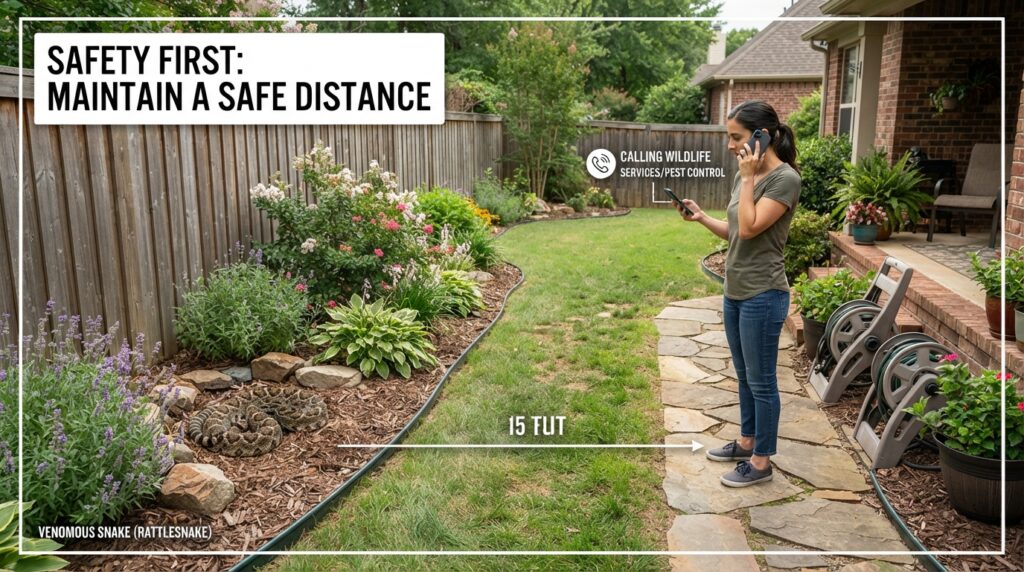
- Back Away Slowly: Take slow, deliberate steps backward. Maintain a minimum safety distance of at least 6 feet (or twice the snake’s estimated body length, as some vipers can strike a distance equal to half their length).
- Secure Children and Pets: Instantly call children inside and bring domestic pets indoors or pull them onto a leash. Pets are naturally curious and are bitten far more frequently than humans.
- Keep Your Eyes on the Snake: Do not turn your back or lose track of the snake’s location until you have moved to a safe indoor zone. If it slithers into brush or under a deck, note the exact landmark so professionals can locate it later.
- Never Attack or Corner It: The vast majority of snakebite victims are people who attempted to kill, capture, or move a venomous snake themselves. Give the animal an open path to escape.
Product Reviews: Essential Emergency & Safety Gear for Property Owners
If you live in a region populated by venomous snakes, having the right protective gear and property tools on hand is essential for preparedness.
1. 40-Inch Heavy-Duty Snake Tongs (Alloy Reptile Grabber)
- Design & Materials: Aircraft-grade aluminum shaft with a wide, jaw-safe rubber-coated clamp designed to securely hold a snake without injuring it.
- Best For: Safe relocation by trained landowners or pest control professionals.
- Review: If you live in rural Texas or California and need to move a non-venomous snake (or manage distance), professional-grade tongs keep you safely out of strike range. (Note: Handling venomous snakes with tongs requires specialized training; amateurs should call professionals).
- Pros: Lightweight, durable, wide jaw distributes pressure safely.
- Cons: Requires a steady hand and proper technique.
- Rating: 4.7 / 5
2. Snake Guardz Gaiters (Lower Leg Protection)
- Design & Materials: Polycarbonate inserts encased in 1000-denier Cordura fabric, tested to ASTM standards against snake fangs.
- Best For: Gardening, clearing brush, or walking through tall grass in New York or Texas.
- Review: These lightweight gaiters wrap securely around your lower legs and ankles, stopping venomous fangs from penetrating your skin. They are adjustable, comfortable, and essential for property maintenance in high-risk zones.
- Pros: Complete lower-leg protection, highly durable, easy to slip on over jeans.
- Cons: Can feel warm during peak summer heat waves.
- Rating: 4.8 / 5
3. Orion Safety Snake Bite Emergency Kit (Compact Holster)
- Design & Materials: Includes a tourniquet, antiseptic wipes, sterile bandages, and a digital emergency whistle. (Note: Modern medical guidelines advise against cutting or suction devices; modern kits focus on proper immobilization and compression).
- Best For: Emergency preparedness during hiking or remote property work.
- Review: A reliable, FDA-compliant first aid bundle designed for rapid stabilization while waiting for emergency medical services (EMS).
- Pros: Compact, lightweight, contains necessary immobilization wraps.
- Cons: Does not replace immediate professional medical intervention.
- Rating: 4.3 / 5
Comparison Table: Snake Safety & Emergency Equipment
| Product Type | Primary Function | Safety Level | Best User Group | Key Feature |
| Snake Gaiters (Snake Guardz) | Leg & ankle puncture defense | Maximum | Gardeners & Landowners | Polycarbonate puncture shield |
| 40-Inch Reptile Tongs | Distance handling & relocation | Moderate-High | Rural Property Owners | Rubber-coated wide jaws |
| Emergency First Aid Kit | Bite stabilization & wound care | Essential | Hikers & Remote Homeowners | Compression wraps & antiseptics |
| Motion-Activated LED Floodlights | Nighttime hazard visibility | High | Suburban Walkways & Patios | Bright solar deterrence |
What NOT to Do: Dangerous Snake Myths
Folk wisdom surrounding snake encounters is often dangerously wrong. Avoid these common mistakes:
- DO NOT Try to Kill It: Attempting to chop a snake with a shovel or shoot it puts you directly in strike range. Furthermore, decapitated venomous snakes can still bite via reflex muscle action for up to an hour after death.
- DO NOT Use Old-School Snake Bite Kits (Cut and Suck): Medical science has definitively proven that cutting into a snakebite wound or using mouth/mechanical suction causes severe tissue damage, infection, and accelerates venom absorption.
- DO NOT Apply a Tourniquet (Unless Directed by EMS): Tying off a limb tightly stops blood circulation, frequently resulting in permanent tissue necrosis and the potential loss of the limb.
- DO NOT Assume Dead-Looking Snakes Are Safe: Many snakes (like hognose snakes) play dead, or venomous snakes can exhibit post-mortem twitching. Never touch a snake with bare hands, even if it appears lifeless.
Step-by-Step Guide: What to Do If Someone is Bitten
If a family member or pet suffers a venomous snakebite on your property, every minute counts. Follow these medical protocols immediately:
- Move Away from the Snake: Ensure the victim is completely out of strike range to prevent a secondary bite.
- Call 911 Immediately: Transporting the victim to the nearest hospital with anti-venom capability is the absolute priority. Do not wait for symptoms to worsen.
- Keep the Victim Calm and Still: Panic increases heart rate, which causes venom to circulate through the bloodstream much faster. Have the victim sit or lie down.
- Position the Bite Correctly: Keep the bitten limb at or slightly below heart level.
- Remove Constricting Items: Promptly remove rings, watches, bracelets, or tight shoes near the bite area, as swelling will occur rapidly.
- Mark the Edge of Swelling: If possible, use a pen to draw a line around the outer edge of the swelling and note the time. This helps emergency medical staff track the progression of the venom.
- What NOT to Do to the Wound: Do not cut the wound, apply ice, suck out venom, or administer alcohol or caffeine.
State-by-State Legal and Environmental Considerations
Wildlife laws across the United States vary significantly. Understanding your state’s regulations prevents legal complications when dealing with nuisance wildlife.
- Texas: Texas Parks and Wildlife allows landowners to control nuisance venomous snakes on their private property if human safety is immediately threatened. However, non-venomous and certain rare species are protected.
- New York: The Timber Rattlesnake is protected under New York conservation law. Killing or harming one can result in heavy fines. If you encounter one near your home in New York, contact DEC (Department of Environmental Conservation) wildlife officers or a licensed wildlife control agent.
- California & San Francisco: California Fish and Game code protects many native reptiles. While you may protect your immediate person and property from an imminent threat, relocating a rattlesnake across public land or killing native species without cause can violate state environmental laws. Utilize professional local animal control services.
- Washington: Western rattlesnakes are protected in specific management zones. Rural landowners should contact Washington Department of Fish and Wildlife (WDFW) for safe removal options.
10 Expert Tips for Preventing Future Venomous Snake Encounters
- Clear Tall Vegetation and Brush: Cut back overgrown grass, ivy, blackberry brambles, and brush piles within 20 feet of your house or patio.
- Eliminate Rodent Habitats: Mice and rats are a snake’s primary food source. Keep grain bins sealed, clean up fallen bird seed, and use rodent traps.
- Seal Foundation Gaps: Inspect your foundation, crawlspace vents, and cellar doors. Use silicone caulk and heavy-gauge wire mesh to seal any opening larger than a quarter-inch.
- Elevate Woodpiles: Store firewood, lumber, and construction materials at least 12 inches off the ground and away from exterior walls.
- Manage Water Features: Fix leaky outdoor faucets, empty stagnant garden pools, and eliminate damp mulch beds that attract frogs and insects.
- Install Solid Barriers: Consider installing solid sheet metal or fine mesh snake fencing around children’s play areas or chicken coops.
- Use Outdoor Lighting: Install motion-activated security lights around walkways and entry doors so you can spot wildlife during evening hours.
- Wear Proper Footwear: Always wear sturdy leather boots and long pants when gardening or walking through tall brush in California, Texas, or New York.
- Inspect Cool, Dark Spaces: Check under overturned flower pots, patio furniture cushions, and storage bins before picking them up.
- Hire Professional Wildlife Relocators: If you spot snakes frequently on your property, contract a professional snake-removal service to survey your land and safely relocate problem animals.
Frequently Asked Questions (FAQs)
1. How can I tell if a snake on my property is venomous?
In North America, venomous vipers (rattlesnakes, copperheads, cottonmouths) generally feature triangular-shaped heads, vertical slit pupils, and heat-sensing facial pits between their eyes and nostrils. Coral snakes feature distinct colored bands (red touches yellow, kill a fellow). However, because non-venomous snakes can mimic venomous behaviors (like vibrating their tails), it is always safest to treat any unknown snake as potentially venomous.
2. Should I call animal control or pest control if I see a venomous snake?
Yes. If the snake remains on your property, poses a danger to your family, or takes shelter under your porch or vehicle, call your local animal control office, police non-emergency line, or a licensed private reptile removal specialist immediately.
3. Can venomous snakes climb trees or fences?
Certain venomous species—such as copperheads and cottonmouths—can climb low branches, stone walls, and dense shrubs, though they spend most of their time on the ground. Rattlesnakes are primarily ground-dwellers, though they can navigate rocky ledges and low-slung branches.
4. Do DIY repellents work against venomous snakes?
Natural essential-oil sprays (cinnamon, clove, and garlic) and commercial granular repellents provide mild sensory deterrence, but they do not create an impenetrable barrier against a motivated venomous snake. Environmental clearing and physical fencing remain far more effective.
5. What should I do if my dog or cat is bitten by a venomous snake?
Keep your pet as calm as possible, carry them to your vehicle (do not let them walk), and rush them immediately to a 24-hour veterinary emergency hospital that stocks anti-venom. Do not attempt tourniquets or cuts on your pet.
6. Are baby venomous snakes more dangerous than adults?
This is a widespread medical myth. While baby venomous snakes can control the amount of venom they inject just like adults, their venom potency is generally comparable. However, because babies are smaller and harder to spot, they are often stepped on closer to residential homes.
7. Why am I suddenly seeing venomous snakes in my yard?
Snakes usually appear on properties searching for three things: food (mice, voles), water (summer irrigation, leaking hoses), or shelter (shade during intense heat waves or warmth during cool seasonal shifts).
8. Is it legal to kill a venomous snake on my property?
Legality varies drastically by state. While some states like Texas allow landowners to dispatch nuisance venomous snakes for immediate safety, states like New York and California protect specific native snake species under strict conservation laws. Check local ordinances.
9. How far can a rattlesnake strike?
As a general rule of thumb, a rattlesnake can strike a distance equal to roughly one-third to one-half of its body length. For a 4-foot rattlesnake, that means maintaining a safety buffer of at least 6 feet is critical.
10. How can I snake-proof my backyard permanently?
Complete snake-proofing involves a multi-step approach: clear all dense brush and woodpiles, eliminate rodent populations, seal all foundation gaps, fix outdoor water leaks, and install fine-mesh snake barrier fencing around your property perimeter.
Conclusion
Encountering a venomous snake on your property is undoubtedly stressful, but maintaining a calm, calculated response ensures everyone stays safe. By recognizing local venomous species across Texas, New York, California, Washington, and San Francisco, keeping your distance, securing pets, and avoiding dangerous old-school myths, you can handle unexpected reptilian visitors safely. Combine emergency preparedness with long-term habitat modification to keep your outdoor living spaces secure and peaceful.