
Adventure TipsBackpackingCampingFamily AdventuresOutdoorSleeping Bags & PadsSurvival & BushcraftTravel Guides
How do I clean a double sleeping pad after a dirty trip?

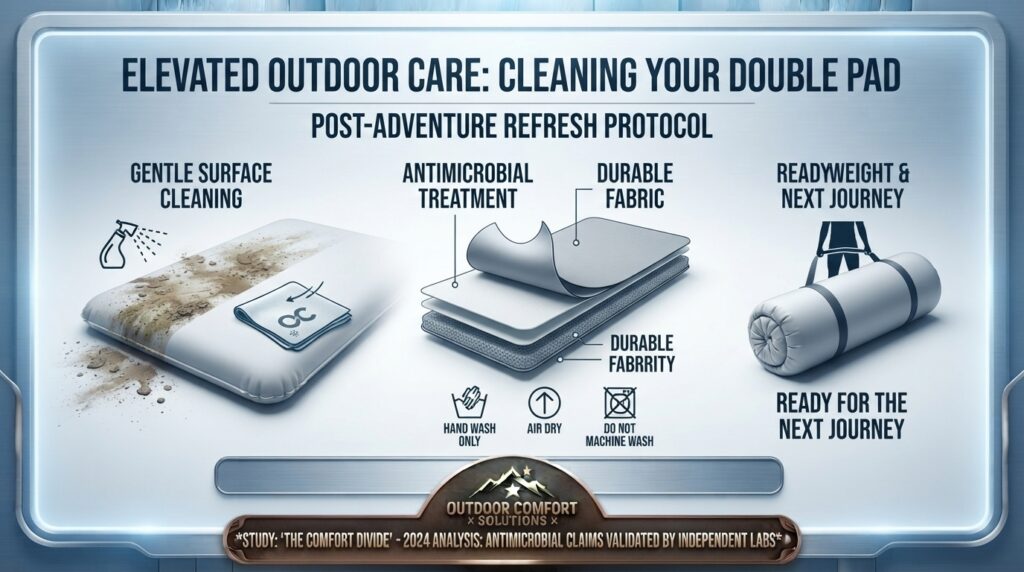
Cleaning a double sleeping pad after a rugged trip is essential for preserving its thermal efficiency, comfort, and structural integrity. Because double pads are a significant investment, following the correct maintenance routine is key to ensuring they last for years of adventures.
The Golden Rules of Cleaning
- NEVER machine wash or tumble dry: The agitator in a top-loading machine can rip the baffles, and the heat from a dryer will melt the waterproof coatings or warp the material [1.1.2, 1.2.4].
- Keep valves closed: Before cleaning, ensure all valves are firmly sealed to prevent water from entering the internal chambers [1.1.1, 1.3.1]. Water trapped inside can lead to mold or mildew, which is difficult to remove and degrades internal insulation [1.2.2, 1.3.2].
- Avoid harsh chemicals: Bleach, strong detergents, and solvents can degrade the specialized fabrics and seam tapes [1.1.3, 1.2.3]. Stick to mild, non-detergent soaps (like a gentle dish soap) or dedicated outdoor gear washes [1.1.1, 1.1.3].
Step-by-Step Cleaning Guide
1. Preparation
- Deflate & Inspect: Fully deflate the pad and check for any major debris [1.2.3].
- Remove Dry Debris: If the pad is covered in dried mud, sand, or grit, gently brush it off with a soft-bristled brush [1.3.2]. Do not scrub while wet, as this can grind grit into the fabric [1.1.3].
2. Surface Cleaning
- Soap Solution: Mix warm water with a small amount of mild dish soap [1.1.3, 1.2.3].
- Gentle Scrubbing: With the valve closed, wipe the surface down using a soft sponge or cloth [1.1.2, 1.2.4]. For stubborn spots, use gentle circular motions [1.2.2].
- Valve Care: Use a cotton swab or soft toothbrush to clean the area around the valve [1.1.3, 1.2.3]. Grit in the valve seal is a leading cause of slow air leaks [1.1.3, 1.3.2].
3. Rinsing
- Wipe away all soapy residue with a clean, damp cloth [1.2.3]. If the pad is very dirty, you can carefully hose it down outdoors [1.2.4]. Ensure no water enters the valve [1.1.2, 1.3.1].
4. The Drying Phase (Most Critical Step)
- Air Dry: Hang the pad to dry in a shaded, well-ventilated spot [1.2.3].
- Avoid Direct Sun: Keep it away from prolonged direct sunlight, as UV rays can make the fabric brittle and degrade its coatings [1.1.2, 1.3.2].
- Ensure Bone-Dry: Before storing, make sure the pad is 100% dry [1.1.1, 1.2.2]. If it feels even slightly damp, leave it unrolled overnight [1.1.2].
Tips for Specific Messes
- Tree Sap or Sticky Residue: Dab the spot with a little mineral oil, cooking oil, or rubbing alcohol on a cloth, let it sit for a few minutes, then wipe clean with soapy water [1.1.1, 1.1.3].
- Odor/Body Oils: If the pad smells, use a dedicated enzyme-based cleaner (like ReviveX Odor Eliminator) which breaks down organic matter without damaging the gear [1.2.4].
- Mold/Mildew: If you spot mold on the exterior, a vinegar-and-water solution (50/50 mix) works well [1.1.3]. Spray it on, let it sit for 30 minutes, scrub gently, rinse, and dry thoroughly [1.1.3].
Frequently Asked Questions (FAQ)
- Can I submerge my sleeping pad in a bathtub? Yes, but only if it is an air-filled pad and the valve is closed tightly [1.1.2]. Never submerge a self-inflating pad with foam inside, as the foam will soak up water like a sponge and become nearly impossible to dry [1.1.3].
- How often should I clean my pad? Clean it whenever it becomes visibly grimy or after a particularly dusty/muddy trip [1.1.2]. Regularly wiping it down between major trips helps extend the life of the materials [1.2.1].
- What if I get water inside the valve? If water enters the valve, immediately stand the pad upright with the valve open to drain as much as possible. Inflate it with a pump sack (never your mouth) and let it air out in a breezy area until completely dry [1.3.2, 1.3.3].
- How should I store my pad long-term? Store it in a cool, dry place. For insulated or self-inflating pads, it is best to store them unrolled with the valve open [1.1.2, 1.2.2]. For simple air mats, they can usually be stored loosely rolled [1.2.2].
- Is it okay to use a power washer? No! The pressure from a power washer is far too high and can shred the seams or puncture the fabric [1.1.3].
- Does sunscreen or bug spray damage the fabric? Yes, especially products containing DEET. They can melt or degrade the fabric coatings [1.2.2]. Keep these away from your pad.
- How do I clean the stuff sack? Stuff sacks are usually made of more durable fabric and can often be hand-washed with mild soap and air-dried.
- Will cleaning affect the R-value (insulation)? Proper cleaning does not affect R-value, but mold inside the pad can degrade internal insulation [1.2.1]. The best protection is keeping the interior dry [1.3.2].
- Should I use a cover or sheet? Yes, if you’re worried about keeping it clean, a fitted sheet or pad cover is a great way to prevent body oils and dirt from getting on the pad in the first place [1.3.2].
- How do I know if the pad is fully dry? It should feel completely dry to the touch, and there should be no “sloshing” sounds or moisture visible when looking into the valve opening [1.1.1].
Conclusion
Taking a few minutes to clean your double sleeping pad after a trip is the simplest way to protect your investment. By avoiding machine washing, keeping the valves sealed, and ensuring the pad is entirely dry before storage, you’ll keep your gear in prime condition for every “eco-adventure” to come.