
What can you do with a nine year old child when it is raining?

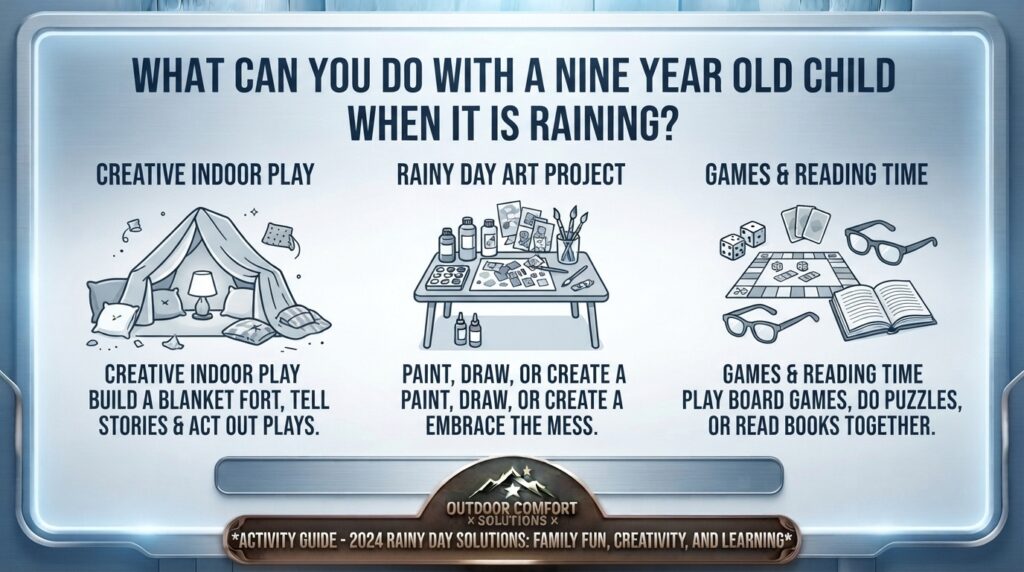
When the rain starts pouring and the playground is off-limits, it’s easy for cabin fever to set in. But for a nine-year-old—an age where children are becoming more independent, creative, and capable of complex problem-solving—a rainy day doesn’t have to be boring. It’s actually the perfect opportunity to dive into projects, skills, and games that they might not have time for on busy school days.
Whether you’re in a sprawling house or a cozy apartment, here is your ultimate guide to turning a dreary day into an unforgettable indoor adventure.
1. Get Creative & Artistic
At nine, children love projects that have a tangible result. Channel their energy into something they can display or use.
- Upcycled Art Gallery: Gather cardboard boxes, jar lids, old magazines, and toilet paper rolls [1.1.2, 1.4.3]. Challenge them to create a 3D sculpture, a collage, or even a “recycled city” [1.1.2].
- Origami Masterclass: Search YouTube for beginner origami tutorials. From jumping frogs to complex cranes, it builds fine motor skills and provides a quiet, absorbing challenge [1.1.1, 1.4.1].
- Wearable Art: Design personalized bracelets, watches, or necklaces using beads, string, or even painted pasta [1.4.2, 1.4.3].
- Learn to Draw: Use free video tutorials like Art for Kids Hub to master drawing favorite characters or animals [1.3.2].
- Rock Painting: Paint patterns or positive messages on rocks to hide around the neighborhood once the rain clears [1.3.2].
2. Active Indoor Play
Rainy days are notorious for bottled-up energy. These activities help burn it off without destroying the furniture.
- The Ultimate Obstacle Course: Use cushions, chairs, blankets, and even pool noodles to design a course. Time each other to see who can complete it fastest [1.1.1, 1.4.1].
- Living Room Dance Party: Clear the floor, let them curate a playlist, and turn up the volume. Throw in some costumes for extra flair [1.1.1, 1.4.3].
- Flashlight Tag: Perfect for darker, rainy days. Choose a “seeker” with a flashlight; they must shine the light on someone to “tag” them [1.3.3].
- Balloon Volleyball: Keep a balloon in the air using only hands—a great way to get moving without breaking anything [1.3.3].
3. Educational & Brain-Boosting Fun
Keep their minds sharp with activities that feel more like play than schoolwork.
- Host a Family Talent Show: Transform the living room into a stage. Whether it’s magic tricks, a dramatic reading, or a short dance, it’s a great way to build confidence [1.1.2].
- At-Home Science Lab: Experiments like baking soda and vinegar volcanoes, growing crystals, or creating homemade slime are thrilling and educational [1.1.1, 1.4.1].
- Write and Direct a Movie: Use a tablet or phone to film a short movie, music video, or “documentary.” They can work on the plot, acting, and simple editing [1.1.1].
- Virtual Field Trips: Take a free virtual tour of a famous museum or join a virtual field trip to see polar bears or go into outer space via platforms like Discovery Education [1.3.2].
- Codebreaker Detectives: Create a secret code using symbols for letters and challenge a family member to crack the mystery message [1.3.3].
4. Cozy & Relaxing Escapes
Sometimes, the best rainy day activity is slowing down.
- The Epic Den: Use blankets, couch cushions, and fairy lights to build an ultimate fort. It’s the perfect hideaway for reading, puzzles, or just relaxing with a flashlight [1.3.2, 1.4.1].
- Kitchen Fun: Baking is both a skill and a treat. Let them measure, mix, and decorate cookies or cupcakes [1.1.1, 1.3.2].
- Movie Marathon: Pick a theme or a film series (like Harry Potter or How to Train Your Dragon), build a nest of pillows on the floor, and settle in properly [1.1.1].
- Family Journaling: Spend 15 minutes a day writing or doodling about their day. It’s a wonderful way to express feelings and practice writing [1.3.2].
10 Frequently Asked Questions (FAQ)
- What if my 9-year-old is bored with everything? Try a “Mystery Box Challenge.” Fill a box with random household items and have them guess what they are by touch alone. Sometimes, changing the format to a timed game adds the necessary excitement [1.4.1].
- Are these activities screen-free? Most are, but screen time can be educational! Try a podcast for kids, a virtual museum tour, or a drawing tutorial if they need a calm, focused activity [1.1.1, 1.3.2].
- How do I keep the house from getting messy? Turn cleaning into a game. The “Clean the House” challenge—who can collect the most toys in two minutes—is surprisingly effective [1.1.1].
- Are these activities safe for small apartments? Absolutely. Activities like origami, board games, and drawing require minimal space and keep the activity contained.
- What is a good way to handle “competition” between siblings? Focus on team-based challenges, like building the tallest tower or the sturdiest bridge together, rather than individual racing [1.4.2].
- Can these keep them busy while I work? Yes. Activities like journaling, learning to draw with tutorials, or building an “ultimate” paper airplane are great for independent play [1.3.2].
- What materials do I need to keep on hand? A “Rainy Day Box” containing glue, scissors, paper, tape, markers, and some simple craft supplies is a lifesaver [1.4.1].
- How do I encourage them to read more? Try audiobooks or podcasts if they struggle to sit still, or let them read to you while you take a break [1.1.1, 1.3.1].
- Are science experiments safe? Most household experiments (baking soda/vinegar) are very safe, but adult supervision is always recommended to avoid large messes [1.1.1, 1.4.1].
- How long should these activities last? At age nine, children can focus for longer periods. Projects like building a fort or filming a movie can easily take 1–2 hours.
Conclusion
A rainy day doesn’t have to be a challenge; it’s a rare opportunity to pause the daily hustle and reconnect. Whether you’re building a blanket fort in the living room or conducting a messy science experiment in the kitchen, the goal is simple: have fun, be creative, and enjoy the cozy atmosphere. Next time the clouds roll in, you’ll be ready to turn it into an EcoAdventure right in your own home.