
How do I balance nature time with a busy work and school schedule?

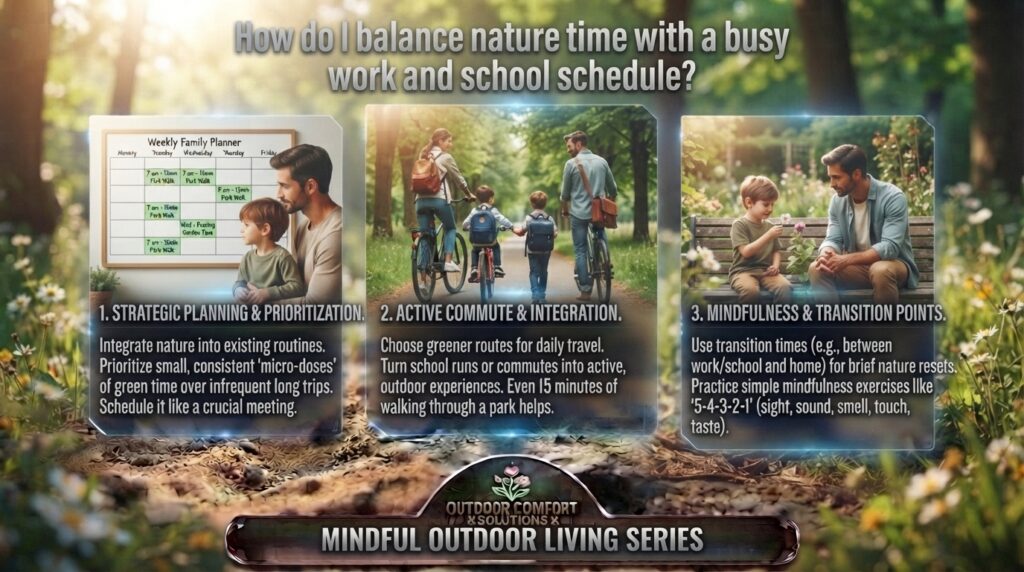
In the high-pressure hubs of New York City and San Francisco, the ambitious corridors of Washington, and the sprawling landscapes of Texas and California, time has become the rarest commodity. For the modern parent, the day is a tight sequence of school drop-offs, professional deadlines, extracurriculars, and the “second shift” of home management.
It is easy to view “nature time” as a luxury reserved for long weekends or summer vacations. However, at myecoadventure.com, we argue the opposite: nature isn’t a destination—it’s a vital daily reset that actually makes your schedule more manageable.
This guide provides a blueprint for integrating the restorative power of the outdoors into even the busiest calendars.
The “Micro-Adventure” Strategy: Quality Over Quantity
When you cannot spend four hours on a trail, you can spend twenty minutes in a park. The cognitive and emotional benefits of nature—reduced stress, improved focus, and restored self-control—don’t require a weekend-long commitment.
1. The “Transit-Nature” Habit
If you live in a city like NYC or San Francisco, you likely spend time commuting.
- The Tip: Change your route. Instead of the most direct street, walk the extra three minutes through a city square or a park.
- The Goal: Even brief exposure to sunlight and greenery during a commute helps regulate a child’s (and parent’s) nervous system, lowering cortisol before they even sit down at a desk.
2. The “After-School Decompression” Zone
Transitioning from the structured intensity of school to the structured intensity of home is often where meltdowns happen.
- The Tip: Don’t go straight home. Stop at a local park, a trailhead, or even just a nearby garden. Let the child move their body for 15 minutes.
- The Benefit: Natural movement helps “burn off” the energy that builds up during hours of sitting at a desk, making for a much calmer evening routine.
3. The Backyard “Focus Hour”
For those with a yard or outdoor space, use it as a tool for independent work.
- The Tip: When the weather permits, move homework, reading, or creative projects outside.
- The Result: Natural light and fresh air are proven to enhance focus. A child who struggles to sit at a kitchen table for 30 minutes may find it easier to concentrate on a porch or under a tree.
4. Stack Your Habits
Incorporate nature into things you are already doing.
- The Tip: Do you need to run errands? Choose a destination near a park. Do you need to catch up with your partner or a friend? Do it while walking on a nature path rather than sitting in a coffee shop.
- The Logic: You aren’t “finding time” for nature; you are changing the context of the time you are already spending.
Overcoming the “Schedule Trap”
The greatest barrier to outdoor time isn’t a lack of time; it’s the expectation of the perfect adventure. Many parents think if they can’t do a full-day hike, it isn’t worth doing.
- Ditch the “Big Trip” Mentality: A 10-minute walk observing local birds in Texas is a success. It fulfills the same developmental needs as a summit hike in Washington.
- Use “Nature Pockets”: Map out the small, accessible green spaces near your school and office. Knowing that a 5-minute oasis exists removes the stress of planning.
- Leverage “Weather-Grit”: Busy parents often skip nature time due to rain or cold. Investing in quality rain gear means your schedule doesn’t have to be weather-dependent. A rainy walk is a memorable experience that builds resilience.
10 Frequently Asked Questions (FAQ)
1. Is 15 minutes of nature really enough to make a difference? Yes. Research consistently shows that even short bursts of “green time” lower heart rates and improve mood significantly.
2. How do I get my kids to stop complaining about “boredom” during short walks? Give them a purpose. Ask them to find three types of leaves, count five different colors, or look for one specific type of bug. Purpose-driven movement is rarely “boring.”
3. What if my neighborhood doesn’t have a park? Even urban areas have nature. Observe the weeds pushing through sidewalk cracks, the trees lining the street, or the birds on your windowsill. Nature is everywhere if you look for it.
4. How do I handle homework if we are always “outside”? Integrate it. Science projects can be done in the yard, reading can be done on a park bench, and math can be practiced by counting trees or measuring shadows.
5. Is it okay to use technology during our “nature time”? Use it as a tool, not a distraction. Use an app to identify a plant or record a bird song, but put the phone away once the task is complete.
6. My child has sports and extracurriculars every night. What now? “Nature-stacking.” If they have practice, spend the 10 minutes before the session starts exploring the trees around the sports field instead of sitting in the car.
7. Does nature time have to be “family time”? No. If you have an outdoor activity you love, let your children see you enjoying it. Your example is the most powerful teaching tool.
8. How do I keep the outdoor time “low-pressure”? Make it non-negotiable but simple. Don’t build it up as a “big event.” Treat it as a normal part of the day, like brushing teeth or eating lunch.
9. What about the “mess” of outdoor clothes? Keep a “go-bag” by the door with rain boots, light jackets, and mud-resistant clothes. Removing the friction of “getting ready” makes it easier to say yes to a spontaneous walk.
10. How can I stay consistent when work gets busy? Treat nature time like an appointment. Block out 20 minutes on the family calendar. If it’s in the schedule, it’s much harder to skip.
Conclusion
Balancing nature with the demands of modern life isn’t about clearing your calendar—it’s about reclaiming the small pockets of time that already exist. Whether you are navigating the concrete canyons of NYC or the expansive skies of Texas, nature is waiting just outside your door.
At myecoadventure.com, our mission is to help you find that balance. Start small, be consistent, and don’t worry about the “perfect” day. Every minute your child spends connecting with the natural world is a minute invested in their long-term health, focus, and happiness.
Disclaimer: This guide is for informational purposes. Always prioritize your safety and local guidelines when exploring outdoor spaces.