
How do I keep my toddler engaged on a hike when they complain about being tired after ten minutes?

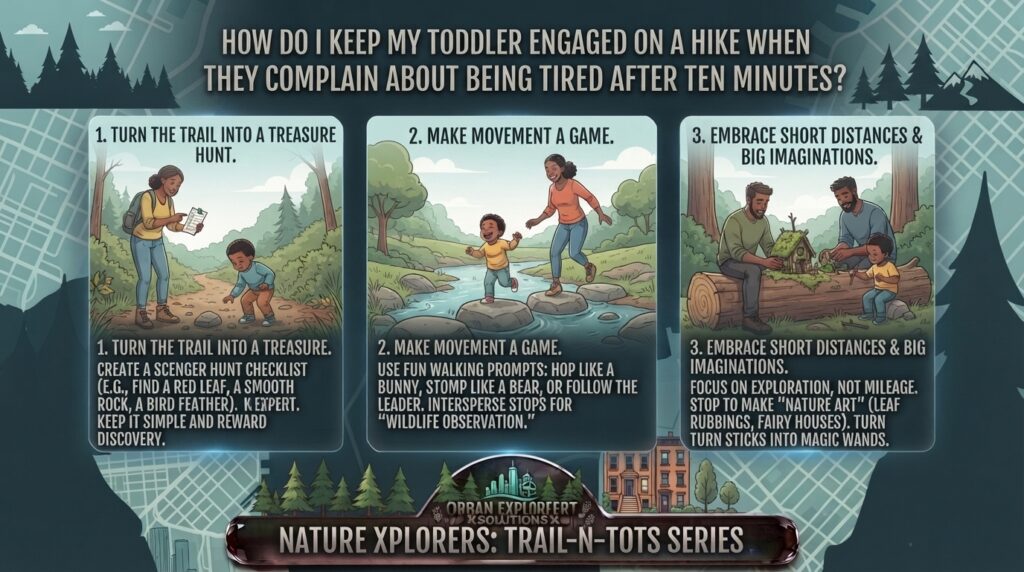
It is completely normal for a toddler to feel “tired” after just ten minutes of walking—their legs are short, their stamina is still developing, and the world is full of distractions that compete with the effort of hiking. If your toddler is whining, slowing down, or asking to be carried, don’t worry: you aren’t failing, and the hike doesn’t have to end.
The secret to hiking with a toddler is shifting your perspective from “reaching a destination” to “experiencing the journey.” Here is how to keep them moving, motivated, and happy on the trail.
1. Reframe the Activity
The word “hike” can sound like “work” to a toddler. Instead of announcing, “We’re going on a hike,” try phrases like “Let’s go explore the forest,” “We’re going to find a waterfall,” or “Let’s climb some boulders!” By setting the tone as an adventure, you immediately invite curiosity rather than compliance.
2. Gamify Every Step
When a toddler feels the physical strain, they need a distraction to “power up” their brain. Keep a toolkit of trail games ready:
- “Power Up” Points: Touch every trail marker or big rock to get “energy” (like a video game).
- Nature Scavenger Hunt: Give them a list or just call out items: “Can you find a pinecone? Something fuzzy? A red leaf?”
- Follow the Leader: Take turns leading. The leader gets to decide if everyone should skip, hop, or stomp.
- Red Light, Green Light: Use the classic game on the trail. It keeps them focused and moving forward in short, manageable bursts.
- The “Jedi Master” Trick: When they complain, whisper, “Did you hear that? I think it was a [bird/animal]! We have to be super quiet and move carefully to see it.” This often stops whining instantly as they switch to “investigation mode.”
3. Manage Their “Vitals” (The Essentials)
Often, a toddler’s “tiredness” is actually hunger, thirst, or discomfort.
- Snack Strategy: Bring more snacks than you think you need. Use them as rewards for reaching mini-goals (e.g., “Once we reach that big tree, we’ll have a snack break”).
- Comfort Check: Are their boots too stiff? Is their jacket too hot? Check their ears and hands to see if they are chilly or overheating.
- Frequent Energy Stops: Take “micro-breaks” before they get cranky. Sit on a log, have a drink, and enjoy the scenery.
4. Let Them “Work”
Toddlers love having a job. It gives them a sense of control and purpose.
- The Leader Role: Let them pick the path (within reason) or be the one to shout “Trail!” when they see a marker.
- Carry a Small Pack: Even a tiny backpack with one or two “special items” (like their favorite stuffed animal or a small magnifying glass) makes them feel like a serious hiker.
- Finding Sticks: A good walking stick is a toy, a tool, and a constant companion. It keeps their hands busy and their legs moving.
5. Be Flexible with the Goal
If they simply need a break, don’t force the issue.
- Shorten the Goal: If the destination is two miles away, shorten it to the next big rock or bridge.
- Change the Pace: If they are truly exhausted, it’s okay to let them rest, have a longer snack break, or call it a day. The goal is to build a positive relationship with nature, not to conquer a specific distance.
6. What to Avoid (The “Do Not Say” List)
It’s easy to get frustrated, but avoid phrases that can cause resentment toward the outdoors:
- “You’re so slow!” (Discouraging)
- “If you don’t stop whining, we’re going home.” (A threat that ruins the experience)
- “Can’t you just walk a little further?” (Dismissive of their physical limits)
- Instead, try: “You are doing such a great job,” “Let’s stick together like a team,” or “I see you’re tired, let’s take a quick rest break.”
Quick Reference: The “Toddler Hike” Checklist
| Problem | Strategy |
| Whining/Complaining | Use “Jedi” distraction (whisper to listen for animals). |
| “I’m too tired!” | Offer a snack, take a 5-minute break, or shorten the goal. |
| Boredom | Start a scavenger hunt or “I Spy” game. |
| Resistance | Give them a “job” (trail leader, stick finder). |
| Slow Pace | Embrace it. 1 km can take an hour—that is a success, not a failure! |