How to prevent snakes from entering a tent: The Ultimate Guide for Campers 2026

Whether you are camping in the vast deserts of Texas, the lush forests of Washington, or the coastal trails of California and New York, the presence of wildlife is part of the experience. While most snakes are harmless and avoid humans at all costs, the fear of finding a slithering visitor in your tent is a common anxiety for many outdoor enthusiasts.
The good news? Snakes do not want to be in your tent. They prefer dark, cool, and secluded spaces—not high-traffic areas inhabited by large, noisy humans. By following these proven strategies, you can significantly reduce the likelihood of an uninvited guest, allowing you to enjoy the great outdoors with peace of mind.
Understanding Snake Behavior
To prevent snakes from entering your tent, you must first think like a snake. They are cold-blooded, meaning they seek out environments where they can regulate their body temperature. They are also shy and sensory-driven, relying on vibrations and heat to navigate.
- Heat Sources: Snakes are attracted to warm spots.
- Vibrations: Snakes feel vibrations through the ground. Heavy footsteps usually send them retreating before you even arrive.
- Food Sources: Snakes go where their food goes. If your campsite is crawling with mice or insects, you are creating a “snake buffet.”
10 Proactive Tips to Snake-Proof Your Campsite
1. Choose Your Tent Site Wisely
Avoid setting up your tent near known snake habitats. This includes tall, dense grass, rocky crevices, or deep, cluttered brush. Snakes use these areas for cover. A cleared, flat, and open area is much less appealing to a snake that feels vulnerable in the open.
2. Keep Your Tent Zipped (Always)
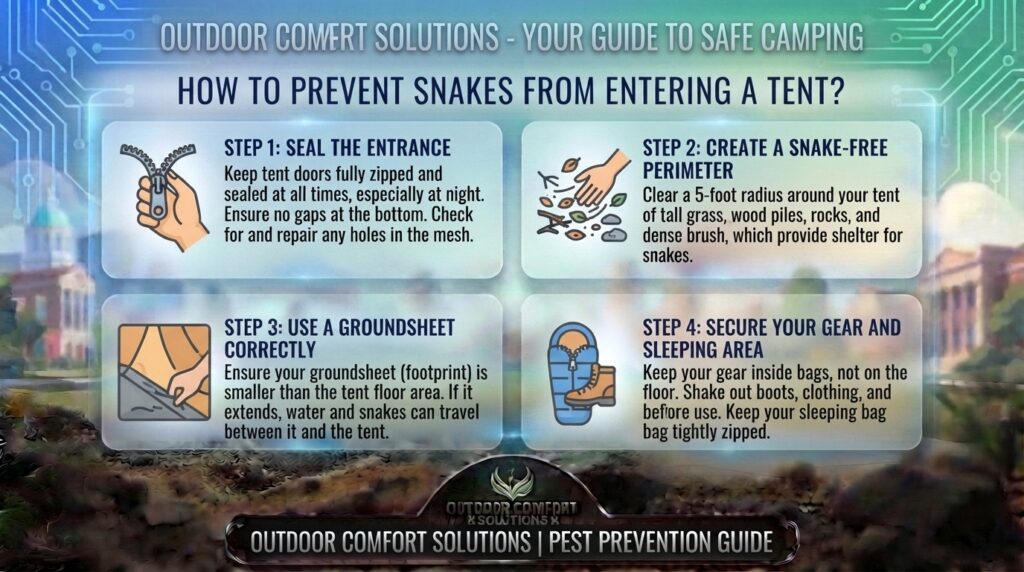
This is the single most important rule. Keep your tent doors and screens zipped shut at all times. Even a two-inch gap at the bottom of a door is a doorway for a curious snake. If you are entering or exiting, do it quickly and pull the zipper closed immediately.
3. Use a Tightly Sealed Tent Floor
Modern tents are designed to be “bug-proof,” and this feature acts as an excellent snake deterrent as well. Ensure your tent floor is intact with no holes or tears. If you have a footprint (a ground cloth), ensure it is tucked under the tent. If it sticks out past the edges, it can collect rainwater, creating a cool, damp habitat that attracts insects—and consequently, snakes.
4. Practice “Leave No Trace” Strictly
Food crumbs and spills are magnets for rodents (mice, chipmunks, and squirrels). Snakes follow rodents. Keep your food in sealed, airtight containers and store them away from your sleeping area. In bear country, use bear-resistant canisters, which also serve as excellent mouse-proof storage.
5. Clear the Perimeter
Before pitching your tent, clear the ground of debris. Rake away sticks, rocks, and tall grass in a five-foot radius around your tent. This removes potential hiding spots and ensures that if a snake is nearby, it won’t feel comfortable approaching your structure.
6. Avoid “Snake Habitats” During Setup
Snakes are often found near water sources, log piles, and large rock formations. While these are beautiful spots to camp near, they are prime real estate for reptiles. Try to camp at least 50–100 feet away from these high-activity zones.
7. Manage Your Gear
Do not leave boots, backpacks, or jackets lying on the ground overnight. A dark, warm boot is a perfect “hidey-hole” for a snake. Always bring your gear inside the tent, or shake it out thoroughly before putting it on in the morning.
8. Use Natural Deterrents (With Caution)
Many myths exist about using sulfur, mothballs, or essential oils to repel snakes. Most of these are ineffective and can be harmful to the environment. Instead, focus on mechanical barriers like a clean, well-sealed campsite.
9. Use Light Carefully
Snakes are generally more active at dawn, dusk, and night. While you are inside your tent, keep your interior lights off if you are near a screen window to avoid attracting insects, which attract predators.
10. Stay Aware of Your Surroundings
In states like Texas or parts of California, where venomous species (like rattlesnakes) are present, situational awareness is your best defense. If you see a snake, give it space. Do not try to move it or provoke it. Most bites occur when people try to handle or kill a snake.
Frequently Asked Questions (FAQ)
1. Do snakes really like to enter tents?
No. Snakes avoid humans. An entry into a tent is almost always accidental, usually because the snake is looking for warmth or shelter.
2. Are my tent’s mesh screens snake-proof?
Yes. Most standard tent mesh is strong enough to deter snakes. Snakes are not strong enough to tear through high-quality tent mesh.
3. Should I kill a snake if I see it near my tent?
No. Killing a snake—especially a venomous one—puts you at a much higher risk of being bitten. Back away slowly and let the snake move on.
4. Does salt or sulfur work to keep snakes away?
There is no scientific evidence that salt, sulfur, or mothballs effectively deter snakes. They are toxic to the environment and can be harmful to your pets.
5. What if I find a snake in my tent?
Stay calm. Do not touch it. Zip the door open fully and use a long stick or a broom to gently guide the snake toward the exit. If it is a venomous species, exit the tent and call local park rangers.
6. Do snakes come out more in the rain?
Some species do become more active during or after rain, while others seek shelter. Always be extra cautious around the campsite after a storm.
7. Does the time of year matter?
Yes. Snakes are more active in warmer months. As temperatures drop, they become less active and eventually hibernate.
8. Are there specific states where I need to be more worried?
Texas and California have higher populations of venomous snakes like rattlesnakes compared to other regions. Always research the specific species in the area where you are camping.
9. Should I keep my tent off the ground?
No. Standard tents are designed to sit on the ground. Trying to elevate your tent can make it unstable and won’t stop a snake from crawling underneath.
10. Is there a “snake-proof” tent?
While no tent is 100% “snake-proof,” tents with a “bathtub floor” (where the floor material wraps up the sides) and high-quality zippers are the most secure options on the market.
Conclusion
Camping is one of the most rewarding ways to connect with nature, and the risk of a snake entering your tent is statistically very low. By maintaining a clean camp, keeping your tent securely zipped, and respecting the wildlife, you can ensure your trip is defined by adventure rather than anxiety.
Remember, you are the visitor in their home. Keep your gear packed, your tent sealed, and your eyes open, and you will have a safe, snake-free experience under the stars.
Disclaimer: This information is for educational purposes only. Always check local wildlife regulations and safety guidelines for the specific region where you plan to camp. If you encounter a venomous snake, prioritize your safety by keeping a safe distance and contacting park authorities.