Best portable camping stove for backpacking: Ultimate guide September 2026

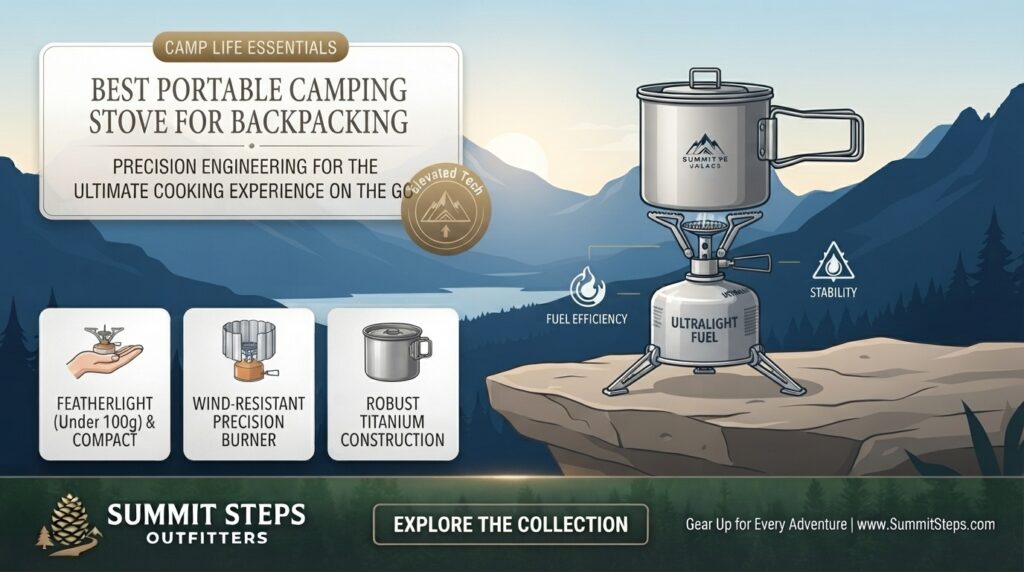
When you are deep in the backcountry after logging 12 miles with a heavy pack, few things matter more than a fast, hot meal. Best portable camping stove for backpacking. Whether you are boiling water for a freeze-dried meal, brewing trail coffee at dawn, or simmering fresh-caught trout on a granite ledge, your stove is the heart of your trail kitchen.
A reliable portable camping stove needs to balance five critical attributes: packability, thermal efficiency, wind resistance, simmer control, and weight. A stove that works on a sunny, windless afternoon in the woods can easily stall out when facing cold ridge gusts or high-altitude mountain air.
Based on real-world field testing and verified customer feedback from thousands of Amazon reviews, this guide breaks down the best portable backpacking stoves on the market. From ultralight micro-burners to high-efficiency integrated boil systems, we compare top performers, break down technical buyer criteria, and offer regional terrain strategies for hikers across the country.
Quick Comparison: Top Portable Backpacking Stoves
| Model | Packed Weight | Fuel Type | Boil Time (1 Liter) | Pressure Regulator? | Best For | Amazon Sentiment |
| Soto WindMaster (4Flex) | 3.0 oz | Isobutane Canister | ~4 min 00 sec | Yes | Best Overall / Wind Performance | 4.8 / 5 |
| MSR PocketRocket Deluxe | 2.9 oz | Isobutane Canister | ~3 min 20 sec | Yes | Fast Boil & Lightweight Simmering | 4.7 / 5 |
| Jetboil Flash 1.0L System | 13.1 oz | Isobutane Canister | ~2 min 30 sec | No | Rapid Water Boiling & Dehydrated Meals | 4.8 / 5 |
| MSR PocketRocket 2 | 2.6 oz | Isobutane Canister | ~3 min 30 sec | No | Best Value / Reliable Beginner Pick | 4.8 / 5 |
| BRS-3000T Titanium | 0.9 oz | Isobutane Canister | ~4 min 45 sec | No | Ultralight Gram-Counting & Emergency | 4.3 / 5 |
| MSR WhisperLite Universal | 13.7 oz | Multi-Fuel (Liquid/Gas) | ~3 min 30 sec | N/A | Winter Expeditions & International Travel | 4.6 / 5 |
In-Depth Reviews of the Best Portable Backpacking Stoves
1. Soto WindMaster Stove with 4Flex — Best Overall Backpacking Stove
                          SOTO WINDMASTER (4FLEX)
 ┌──────────────────────────────────────────────────────────────────┐
 │ [X] Concave burner rim creates natural wind protection           │
 │ [X] Micro-regulator maintains steady pressure in sub-freezing temp│
 │ [X] Removable 4Flex pot stand holds large cookware effortlessly   │
 └──────────────────────────────────────────────────────────────────┘
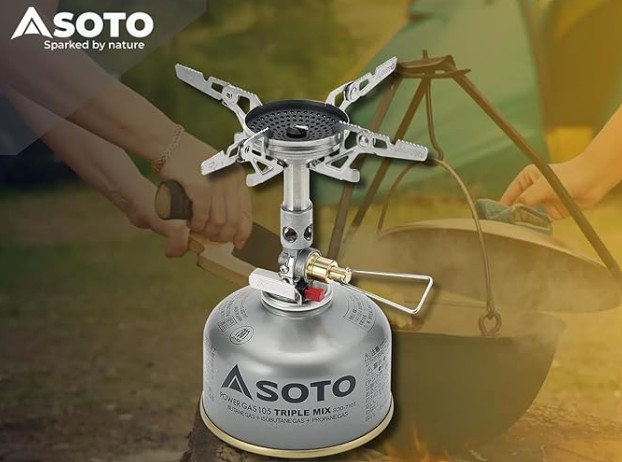
The Soto WindMaster is widely regarded by thru-hikers and mountain guides as the premier canister stove available. Its design directly addresses the two greatest weaknesses of ultralight stoves: high winds and cold weather pressure drops.
- Wind Defense Architecture: The burner head features a distinct concave lip that sits below a raised protective rim. This design creates a natural barrier against crosswinds, allowing the flame to stay locked on the base of your pot without burning through extra fuel.
- Micro-Regulator Technology: Unlike standard canister valves that lose power as fuel depletes or ambient temperatures drop toward freezing, Soto’s internal regulator maintains a consistent output right down to the final drop of gas.
- Pot Support: The included 4Flex pot support clips securely around the burner head, giving it a much wider, grippier stance than traditional three-prong micro-stoves. It easily handles large 2-liter to 3-liter pots without wobbling.
- Amazon Reviewer Verdict: Reviewers praise how quickly it boils water on exposed ridges where other stoves sputter out. The piezo igniter is recessed inside the burner post, shielding it from impacts and moisture failures.
- Pros: Unbeatable wind resistance, superb simmer control, micro-regulated cold-weather efficiency.
- Cons: Slightly higher price point; pot stand must be detached to pack into the tiny storage pouch.
2. MSR PocketRocket Deluxe — Best Lightweight Stove for Precision Cooking
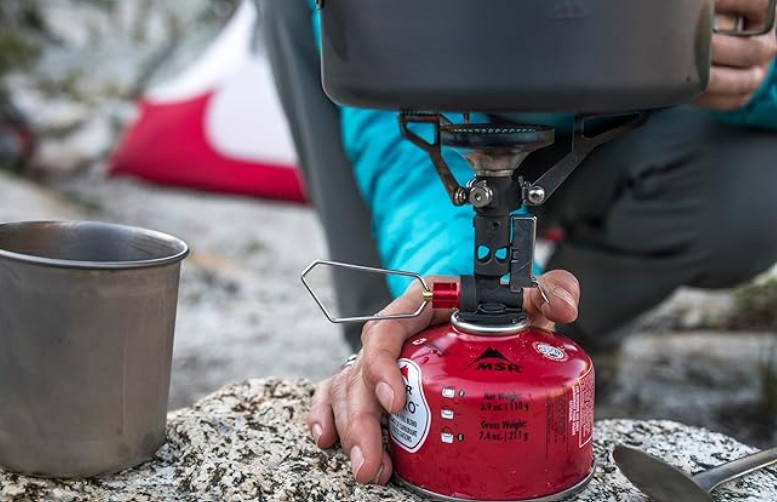
The MSR PocketRocket Deluxe takes everything backpackers love about the classic PocketRocket line and elevates it with premium upgrades, including a broader burner head, an integrated pressure regulator, and a push-button piezo igniter.
- Broad Heat Distribution: While smaller micro-stoves blast heat into a narrow central spot, the PocketRocket Deluxe uses a wider, cupped burner head that spreads heat evenly over the bottom of your cookware. This prevents scorched spots when sautéing or cooking real food like oats and rice.
- Push-Button Piezo Igniter: MSR engineered the igniter wire to sit protected inside the metal burner column, eliminating the fragile exposed wires seen on older stove models.
- Ultralight Build: Weighing under 3 ounces, it packs flat thanks to clever spring-loaded folding pot supports.
- Amazon Reviewer Verdict: Amazon buyers frequently highlight how well this stove simmers compared to cheaper “blowtorch” style burners. Hikers note that while the Soto WindMaster is slightly better in extreme wind, the PocketRocket Deluxe boils water faster in calm-to-moderate conditions.
- Pros: Rapid boil times, excellent flame modulation for simmering, durable push-button igniter.
- Cons: Pot legs can feel slightly stiff to fold down when brand new out of the box.
3. Jetboil Flash 1.0L Fast Boil System — Best Integrated System for Quick Meals
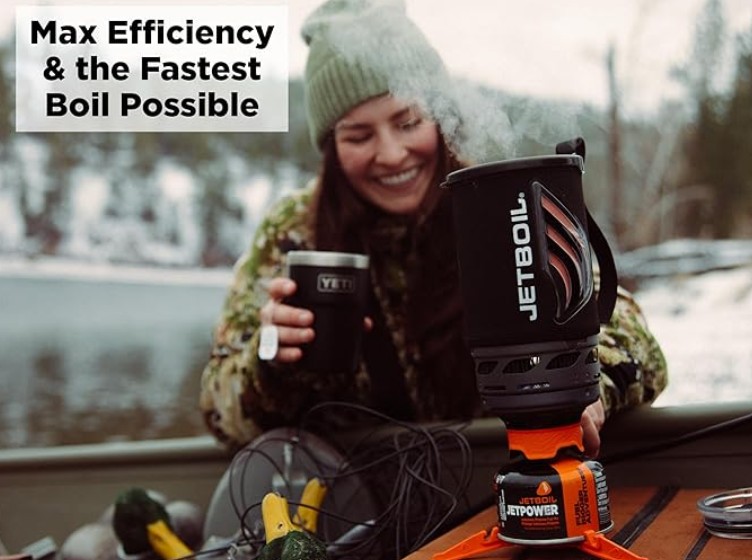
If your backpacking menu consists primarily of freeze-dried meals, instant oatmeal, ramen, and hot coffee, the Jetboil Flash is designed for maximum speed and convenience.
- FluxRing Heat Exchanger: The core of Jetboil’s speed is its proprietary metal coil system welded to the base of the included 1-liter cooking cup. This design traps heat that would otherwise escape into the surrounding air, boiling a half-liter of water in roughly 100 seconds.
- All-in-One Nesting System: The stove burner, fuel stabilizer tripod, and a 100g gas canister fit neatly inside the insulated cooking cup, creating a clean, protective package in your backpack.
- Color-Changing Thermochromatic Sleeve: The neoprene cozy on the pot features an indicator that turns from black to bright orange as the water reaches a boil, letting you monitor temperature at a glance.
- Amazon Reviewer Verdict: Verified purchasers love the sheer convenience of the Jetboil Flash for quick trail breaks. However, reviewers emphasize that it is strictly a boiling machine—it lacks flame adjustment and will easily burn thick foods like pasta or sauce.
- Pros: Blazing-fast boil times, incredible fuel efficiency per boil, clean self-contained packing.
- Cons: Heavy at 13.1 oz; strictly for boiling water (cannot simmer without burning food).
4. MSR PocketRocket 2 — Best Value & Dependable Beginner Choice
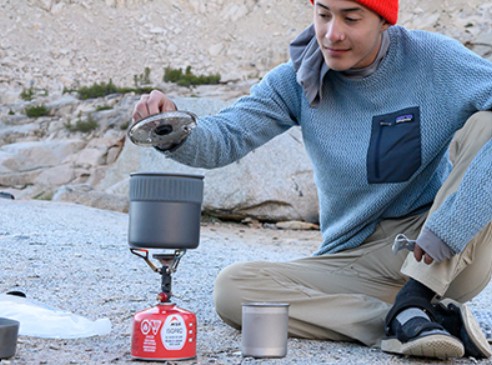
For hikers seeking a simple, durable stove from a trusted brand without spending over $50, the MSR PocketRocket 2 remains the industry standard entry point.
- Minimalist Engineering: Free of complex moving parts or internal regulators, the PocketRocket 2 relies on a heavy-duty brass valve stem and sturdy folding pot legs.
- Compact Hard Case: It includes a rugged palm-sized plastic case that protects the stove from being crushed inside a tightly packed backpack.
- Flame Control: Despite its simple design, the wire control valve offers precise micro-adjustments from a full boil down to a steady simmer.
- Amazon Reviewer Verdict: With thousands of 5-star reviews, buyers note that this stove is virtually indestructible. Long-term users report using the same unit for years without issue, though many advise carrying a lightweight foil windscreen for breezy days.
- Pros: Affordable price tag, robust build quality, includes a crush-proof hard case.
- Cons: Lacks a pressure regulator (loses power in sub-freezing temps); vulnerable to direct wind gusts.
5. BRS-3000T Titanium Stove — Best Ultralight Option for Gram-Counters
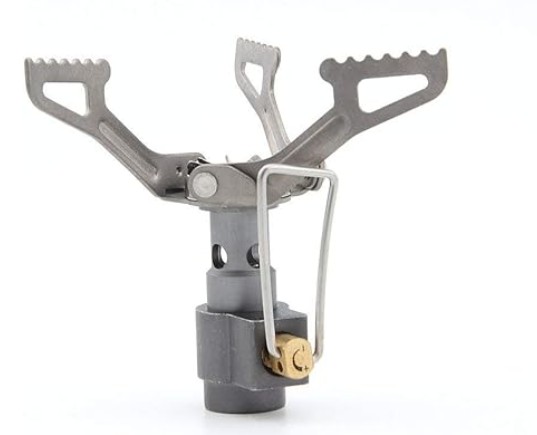
At an incredible 0.9 ounces (25 grams), the BRS-3000T is the lightest production gas stove in the world. It is a staple choice for ultralight thru-hikers and emergency kit builders.
- Titanium Construction: Built with high-strength titanium alloy arms, this stove folds down to the size of a thumb and fits inside almost any titanium mug alongside a fuel canister.
- Direct Flame Path: The tiny burner head produces a concentrated flame column that rapidly heats small solo pots.
- Amazon Reviewer Verdict: Amazon buyers love its tiny footprint and low cost (often under $20). However, reviewers warn that the small titanium pot arms can become malleable if subjected to maximum flame for extended periods under heavy cookware. It is best used for boiling 400–600ml of water in small solo mugs.
- Pros: Unbeatable price and weight (under 1 oz), fits inside tiny mugs.
- Cons: Poor wind resistance, narrow pot stability, not suitable for pots larger than 1 liter.
6. MSR WhisperLite Universal — Best Multi-Fuel Stove for Cold Weather & Expeditions
When winter camping, snow melting, or traveling internationally where isobutane canisters aren’t sold, a liquid fuel stove like the MSR WhisperLite Universal is essential.
- Dual-Fuel Versatility: Includes interchangeable fuel jets and couplers that allow you to burn standard canister fuel, white gas, kerosene, or unleaded auto gasoline.
- Inverted Canister Liquid Mode: In sub-freezing conditions where gas canisters lose pressure, you can invert the canister on its included stand to feed liquid fuel directly to the burner cup.
- Field-Maintainable: Built with MSR’s Shaker Jet technology, allowing you to clean the fuel line on the trail simply by shaking the unit.
- Amazon Reviewer Verdict: Expeditions and winter campers praise this stove for its ability to melt snow quickly in sub-zero conditions. Reviewers note it requires priming and regular maintenance, but its long-term reliability is unmatched.
- Pros: Operates in extreme sub-zero cold, burns multiple fuel types globally, field-repairable.
- Cons: Heavier frame, requires manual priming with liquid fuel, larger packed footprint.
Technical Buyer’s Guide: How to Choose the Right Stove
┌──────────────────────────────────────────────────────────────────────────────────┐
│                          KEY TECHNICAL EVALUATION CRITERIA                       │
├──────────────────────┬───────────────────────────────┬───────────────────────────┤
│ Feature              │ Why It Matters                │ Best Technical Specs      │
├──────────────────────┼───────────────────────────────┼───────────────────────────┤
│ Pressure Regulator   │ Maintains steady flame as     │ Internal diaphragm valve  │
│                      │ canister cools or empties     │ (Soto, MSR Deluxe)        │
├──────────────────────┼───────────────────────────────┼───────────────────────────┤
│ Burner Shape         │ Determines heat distribution  │ Concave or broad-head     │
│                      │ and wind resistance           │ recessed rim              │
├──────────────────────┼───────────────────────────────┼───────────────────────────┤
│ BTU Output vs. Efficiency│ High BTUs boil fast but    │ 8,000 – 11,000 BTU/hr    │
│                      │ drain canisters quickly       │ with targeted heat capture│
├──────────────────────┼───────────────────────────────┼───────────────────────────┤
│ Pot Support Span     │ Prevents hot food from        │ 4-prong wide folding base │
│                      │ tipping over on uneven ground │ (12–15 cm span)           │
└──────────────────────┴───────────────────────────────┴───────────────────────────┘
1. Canister vs. Liquid Fuel Stoves
- Isobutane Canister Stoves: The standard for spring, summer, and fall backpacking. They use sealed threaded canisters containing an 80/20 mix of isobutane and propane. They are clean, lightweight, instant-lighting, and offer fine flame control.
- Liquid Fuel Stoves: Essential for extreme cold, snow melting, and remote international travel. They run on white gas, kerosene, or auto fuel stored in refillable aluminum bottles. They require priming before ignition but offer dependable heat regardless of altitude or freezing temperatures.
2. The Importance of Pressure Regulators
When you burn an isobutane canister, the liquid inside evaporates into gas. This process cools the canister (Boyle’s Law). On standard non-regulated stoves, a cold canister results in a weak, sputtering flame. A pressure regulator acts as a micro-governor, delivering steady gas flow to the burner even when the canister drops to near-freezing temperatures or low fuel levels.
3. BTU Ratings vs. Real-World Fuel Economy
Manufacturers list output in British Thermal Units (BTUs). While an 11,000 BTU stove sounds impressive, high BTU output without wind protection simply blows wasted heat around the sides of your pot. True fuel efficiency comes from heat retention—achieved through concave burner heads or integrated heat-exchanger fins like Jetboil’s FluxRing.
Regional Outdoor Considerations
Different environments demand specific stove features to ensure reliable meals:
1. California & San Francisco Bay Area (High Sierra Altitude & Coastal Winds)
- Terrain Challenges: High elevations above 10,000 feet in the Sierra Nevada, paired with damp coastal winds along the Pacific Coast Trail.
- Recommended Setup: High-altitude air causes standard canisters to cool rapidly. Choose a regulated, wind-resistant stove like the Soto WindMaster or MSR PocketRocket Deluxe.
2. Washington & The Pacific Northwest (Cascades Rain & Damp Forest)
- Terrain Challenges: Frequent rain, high humidity, and damp firewood across Olympic National Park and Mount Rainier.
- Recommended Setup: Piezo igniters can short out in heavy moisture. A regulated stove paired with backup stormproof matches or a ferro rod is ideal.
3. Texas & Southwestern Deserts (Blowing Sand, Heat, & Dry Conditions)
- Terrain Challenges: Fine sand, high daytime heat, and fire restrictions in arid terrain like Big Bend.
- Recommended Setup: Fine sand can clog unsealed valves. Choose a stove with a protective storage pouch, and ensure your stove has an instant shut-off valve to comply with local desert burn bans.
4. New York & Northeast Woodlands (Adirondack Mud & Rapid Weather Shifts)
- Terrain Challenges: Rapidly shifting mountain weather, damp campsite soil, and cold shoulder-season nights in the Catskills.
- Recommended Setup: A wide 4-prong pot support provides much-needed stability on soft forest loam or damp wooden tent platforms.
Safety, Leveling, and Maintenance Tips
- Never Use a Solid Windscreen Around Top-Mounted Canisters: Wrapping a solid metal windscreen entirely around a top-mounted canister stove traps heat around the fuel can, creating a serious explosion risk. Use stoves with built-in wind protection or use partial windscreens placed at a safe distance.
- Clear Loose Debris Before Lighting: Dry pine needles and leaves can easily ignite from stray sparks or heat radiation. Clear a 2-foot circle down to dirt before setting up your stove.
- Use a Canister Stabilizer Tripod: The 4-ounce weight of a folding plastic stabilizer tripod is well worth carrying. It clamps onto the base of your gas canister, preventing top-heavy pots from tipping over on uneven ground.
- Check the Rubber O-Ring: Before threading your stove onto a canister, inspect the small rubber O-ring inside the stove’s threaded coupling. If it is cracked, dry, or missing, gas will leak upon attachment.
- Pack a Backup Lighter: Piezo igniters are convenient, but altitude, cold, and dampness can cause them to fail. Always carry a small BIC lighter wrapped with duct tape in your emergency kit.
Frequently Asked Questions (FAQ)
1. How long does a 100g gas canister last on a backpacking trip?
A standard 100g (4 oz) isobutane canister provides roughly 60 to 75 minutes of burn time at medium flame. For most solo backpackers boiling water twice a day for dehydrated meals and coffee, a single 100g canister easily lasts 3 to 5 days.
2. Can I bring isobutane fuel canisters on an airplane?
No. TSA regulations strictly prohibit compressed gas canisters in both carry-on and checked luggage. You must purchase your fuel canisters at your destination outdoor shop before heading onto the trail.
3. Why does my canister get cold and covered in frost during use?
As liquid fuel vaporizes inside the canister to feed the stove, it absorbs thermal energy from its surroundings (endothermic reaction). This causes the canister temperature to drop quickly, sometimes forming frost on the outside even in warm weather.
4. What is the difference between Isobutane and Propane?
Propane has a lower boiling point and performs better in sub-zero conditions, but it requires heavy, thick steel tanks. Isobutane can be safely stored in thin, lightweight aluminum canisters, making it the preferred choice for backpacking.
5. Can I use a regular kitchen pan on a backpacking stove?
While technically possible, heavy cast-iron or thick stainless-steel kitchen pans are not recommended. Micro backpacking stoves are engineered for lightweight aluminum or titanium trail pots; heavy cookware can tip the stove or bend the pot support arms.
6. Are integrated stove systems better than standalone stoves?
Integrated systems (like the Jetboil Flash) excel at boiling water quickly with maximum fuel efficiency. Standalone stoves (like the Soto WindMaster) are lighter, more compact, and allow you to use a wider variety of pots, pans, and cooksets.
7. How do I dispose of empty isobutane canisters safely?
Ensure the canister is completely empty by burning off remaining gas. Once empty, use a canister recycling tool (like the Jetboil Crunchit) to puncture holes in the can, rendering it safe for standard metal recycling bins.
8. Will a backpacking stove work at high altitudes?
Yes, but boil times will increase. As elevation rises, atmospheric pressure decreases, causing water to boil at a lower temperature (e.g., ~$198^\circ\text{F}$ at 7,000 feet vs. $212^\circ\text{F}$ at sea level). Regulated stoves help maintain consistent fuel delivery at high elevations.
9. Why won’t my piezo igniter spark anymore?
Piezo igniters generate a small electrical spark across a tiny gap. Over time, the metal igniter wire can get bent away from the burner head, widening the gap. Gently bending the wire back so it sits roughly 1/8 inch (3mm) from the metal burner will often restore the spark.
10. Can I use a backpacking stove inside my tent?
Never operate a fuel stove inside an enclosed tent. Burning fuel produces deadly carbon monoxide gas and creates a high risk of melting tent fabric or starting a wildfire. Always cook in a well-ventilated vestibule or open outdoors.
Selecting the right backpacking stove comes down to how you cook on the trail. If you want the ultimate balance of wind resistance, micro-regulated reliability, and all-weather performance, the Soto WindMaster is the top choice for any backcountry environment. For speed and simplicity when boiling water, integrated systems like the Jetboil Flash remain unmatched, while the MSR PocketRocket 2 offers incredible value for casual weekend trips.