How long is it safe for kids to play outside in the snow?

For families in regions like New York, Washington, or parts of California and Texas where winter weather can vary from crisp to bone-chilling, snow days are often a highlight of the season. However, the excitement of sledding and building snowmen can easily distract from the risks of cold-weather exposure. As a parent, you might find yourself wondering: How long is actually safe?
Understanding the balance between winter fun and cold-weather safety is essential for ensuring your child’s health. This guide provides actionable advice to help you manage outdoor play time safely, keeping the focus on fun rather than frozen toes.
Understanding the “Play Zones” for Winter Safety
Experts generally categorize outdoor safety by temperature “zones.” Monitoring these zones helps you make quick, informed decisions about how long your kids should be out in the elements.
| Temperature Zone | Safety Level | Guidelines |
| Green Zone (30°F+) | Generally Safe | Safe for play with appropriate layers and supervision. |
| Yellow Zone (20°F–30°F) | Proceed with Caution | Monitor closely; body heat is lost more quickly. Take frequent warm-up breaks. |
| Red Zone (Below 20°F) | Stay Indoors | High risk of frostbite and hypothermia. Best to opt for indoor activities. |
Note: Always factor in the wind chill. Even if the thermometer reads 30°F, high winds can make the “feels-like” temperature significantly colder, pushing conditions into the Red Zone.
Recommended Play Durations by Age
Younger children are at higher risk because they have less body mass to retain heat and may not effectively communicate when they are becoming cold.
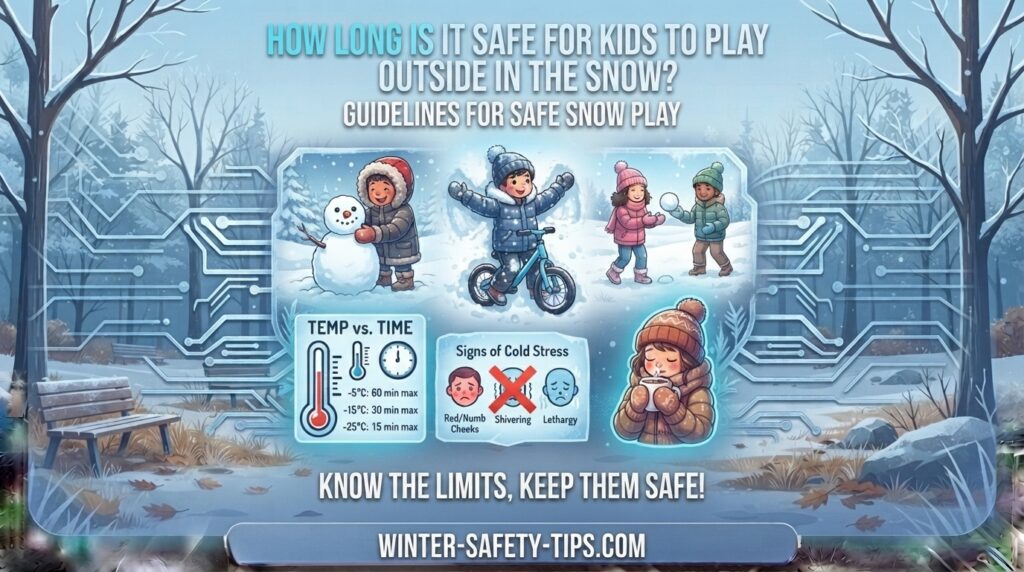
- Children Under 5: Keep outdoor sessions brief—roughly 20 to 30 minutes in freezing temperatures—before heading inside for a warm-up.
- School-Age Children: These children can generally handle 45 to 60 minutes of play, provided they are properly dressed and taking regular breaks.
- Teenagers: While more independent, they are not immune to cold-related injuries. Encourage them to stick to similar break intervals and monitor their own physical state.
Expert Tips to Extend Playtime Safely
1. The Power of Layering
Layering is the gold standard for staying warm. Think of it in three parts:
- Base Layer: Moisture-wicking fabrics (thermals) to keep skin dry.
- Middle Layer: Fleece or wool to trap body heat.
- Outer Layer: Waterproof, windproof snow pants and jackets.
2. Protect the “Cold Zones”
Frostbite most commonly attacks extremities: fingers, toes, ears, nose, and cheeks. Ensure these areas are fully covered. Use mittens rather than gloves to keep fingers together for better heat retention, and ensure boots are insulated and waterproof.
3. Keep Clothing Dry
Wet clothing is the fastest path to hypothermia. Check your child’s mittens and socks frequently. If they get soaked during a snowball fight or from playing in deep snow, bring them inside to change into dry clothes immediately.
4. Hydration and Nutrition
Playing in the snow is physically demanding. Fuel your child with a healthy snack before they go out, and offer warm fluids like hot cocoa or herbal tea afterward to help regulate their core body temperature.
Warning Signs: When to Come Indoors
Even if the time limit hasn’t been reached, bring your child in immediately if you notice:
- Shivering: An early sign of hypothermia.
- Numbness or Tingling: Could indicate the onset of frostnip or frostbite.
- Clumsiness or Confusion: A red flag that their core temperature is dropping.
- Pale or Waxy Skin: Especially on the cheeks, nose, or ears.
10 Frequently Asked Questions (FAQ)
- Does cold weather cause the flu? No, cold weather doesn’t cause illness directly, but viruses spread more easily when everyone is huddled indoors.
- How do I check if my baby is too cold? Feel their hands and feet regularly. If they feel icy, it’s time to head inside.
- Should I apply sunscreen in the winter? Yes! Snow reflects UV rays, and children can still get sunburned on bright winter days.
- Are “one-piece” snowsuits better? They provide great protection but can be harder for bathroom breaks. A bib-and-jacket combo is often more versatile.
- Can I use a space heater to warm up the mudroom? Yes, but keep all heaters at least three feet away from clothing and other flammable items.
- What should I do if my child gets frostbite? Get them out of the cold immediately, remove wet clothing, and use warm (not hot) blankets to warm them up. Seek medical attention if skin does not return to its normal color or becomes blistered.
- Is it safe to sled anywhere? Only choose hills with a flat runout at the bottom, away from roads, trees, and traffic.
- Can my child wear a coat in the car seat? No. Bulky winter coats can make car seat harnesses loose and unsafe in a crash. Lay the coat over them once they are buckled.
- Should I force them to come in for breaks? Yes. Kids often get so distracted by fun that they won’t realize they are cold until it’s too late.
- Does my child need a hat if it’s not “freezing”? Yes, keeping the head covered is vital for heat retention, even in mild winter weather.
Conclusion
Winter offers a fantastic opportunity for children to be active and explore nature, even when the thermometer dips. By respecting the temperature zones, layering correctly, and staying vigilant for warning signs, you can ensure that your family’s time at myecoadventure.com remains a safe and joyful experience. Remember, the best winter memories are made when everyone stays warm, dry, and safe!