
When it comes to winter sports—whether it’s sledding down a local hill, ice skating on a pond, or heading to the mountains for a family skiing trip—safety is the primary concern for every parent. One question that often sparks debate, yet holds a definitive answer from experts, is: Should children wear helmets for winter sports?
The short answer is yes. Whether you are in the snowy peaks of Washington, the local parks of New York, or the recreational skating rinks of San Francisco, a helmet is as essential for winter sports as it is for riding a bicycle.
At myecoadventure.com, we are committed to helping families enjoy the outdoors safely. In this guide, we break down why helmets are non-negotiable for winter activities, how to choose the right one, and how to make sure your kids actually want to wear them.
Why Helmets Are Essential in Winter
Many parents associate helmets with cycling, but winter environments present unique hazards that make head protection critical.
1. The Physics of Slippery Surfaces
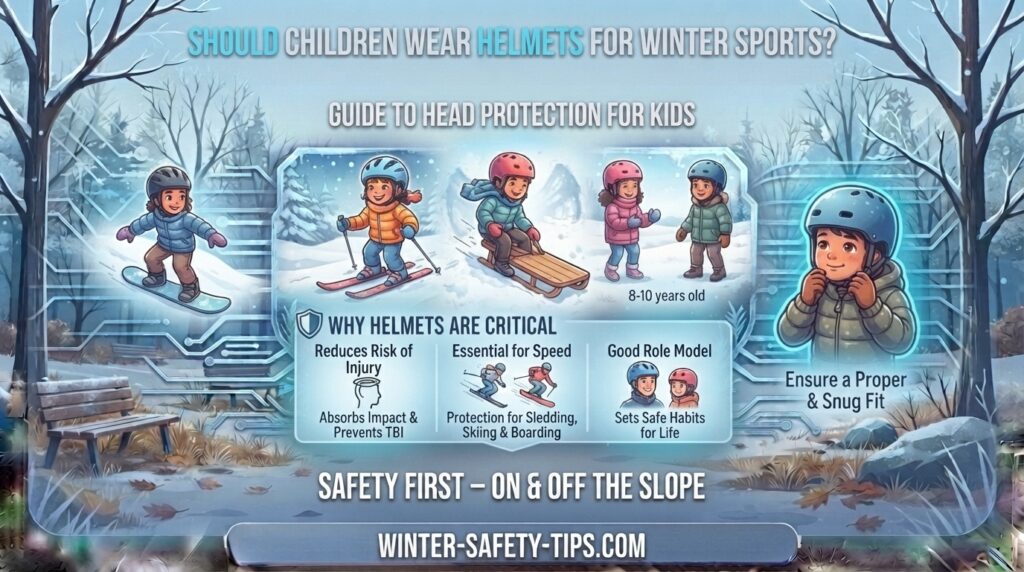
Winter sports involve ice, packed snow, and high-speed movement. Unlike a fall on grass or dirt, a fall on ice or hard-packed snow is equivalent to hitting concrete. A helmet provides a critical buffer that absorbs impact energy, significantly reducing the risk of traumatic brain injuries (TBIs).
2. Unpredictable Environments
Even on a “safe” sledding hill, there are hidden dangers. Trees, rocks, buried fence posts, and other children moving at high speeds create an unpredictable environment. A helmet protects your child not just from their own falls, but from potential collisions with others.
3. The “Cold-Proof” Factor
Modern winter sports helmets are designed specifically for the climate. They offer not only impact protection but also insulation. They are warmer and more comfortable than a simple hat, making them an upgrade, not a burden, to your child’s winter gear.
Which Helmet for Which Sport?
Not all helmets are created equal. It is vital to use the right equipment for the specific activity.
- Skiing and Snowboarding: You must use a helmet specifically certified for snow sports (ASTM F2040 or CE EN1077 standards). These are designed to withstand high-velocity impacts and provide insulation.
- Ice Skating: While some parents skip helmets here, the risk of a backward fall on hard ice is extreme. A multi-sport or hockey-specific helmet is ideal.
- Sledding and Tubing: A snow sports helmet is perfect here. Because sledding often happens on informal, unregulated hills, the risk of hitting a hidden object is actually higher than on a managed ski slope.
Tips for Ensuring Your Child Wears Their Helmet
The best helmet is the one your child actually wears. Here is how to make it part of the routine:
1. Start Early
If your child starts wearing a helmet for winter play when they are a toddler, it becomes a normal part of the “getting dressed” ritual—just like putting on boots or a coat.
2. Involve Them in the Selection
Let your child pick out their own helmet. When they like the color, the design, or the style, they are much more likely to take ownership of it and wear it willingly.
3. Lead by Example
Children mimic their parents. If you are hitting the slopes or the skating rink, you should be wearing a helmet too. When they see you prioritizing your own safety, they will naturally follow suit.
4. Ensure a Proper Fit
A helmet that is loose or uncomfortable will never be worn happily. Ensure it fits snugly, sits level on the head (not tilted back), and that the chin strap is secure. It should not slide around when they shake their head.
10 Frequently Asked Questions (FAQ)
- Can I use a bicycle helmet for winter sports? No. Bicycle helmets are designed for a single, low-speed impact on pavement and do not offer the necessary cold-weather insulation or the multi-directional impact protection required for snow sports.
- How long do helmets last? Most manufacturers recommend replacing a helmet every 3 to 5 years, or immediately after any significant impact.
- Should I buy a used helmet? It is highly discouraged. You cannot see the internal structural damage a helmet may have sustained from a previous crash. Always buy new.
- Do helmets come in different sizes for kids? Yes. Always measure your child’s head according to the manufacturer’s instructions before purchasing.
- Is a helmet too heavy for a toddler? Modern snow helmets are incredibly lightweight. Look for models specifically marketed for youth/toddlers that focus on weight reduction.
- Can they wear a hat under the helmet? Most modern helmets are designed with their own liners. Wearing a thick hat underneath can interfere with the fit and safety of the helmet. If extra warmth is needed, use a thin, technical balaclava or neck gaiter.
- What about goggles? A good snow helmet will have a clip on the back to keep goggles in place, which is a great way to encourage kids to wear both.
- Will a helmet make them sweat? Good snow helmets have adjustable vents. You can open them when the child is active and close them during chairlift rides or breaks.
- Are helmets required at ski resorts? Most major ski resorts now strongly encourage or require helmets for children in ski schools and youth programs.
- How do I know if the helmet is “certified”? Look for the safety stickers on the inside or back of the helmet (e.g., ASTM or CE). If there is no sticker, it hasn’t been tested to standard safety regulations.
Conclusion
Protecting your child’s brain is the most important part of any winter adventure. While the temptation to focus on warm coats and dry boots is natural, the helmet is the one piece of gear that has the power to prevent a life-altering injury.
By choosing the right equipment, ensuring a proper fit, and making helmet use a non-negotiable part of your family’s winter traditions, you can ensure that your time in the snow remains focused on what truly matters: having fun. Visit myecoadventure.com for more guides on outfitting your family for safe, year-round exploration. Stay safe, wear your gear, and enjoy the winter season!