
What is there to do in shenandoah valley with families and kids? July 2026


What is there to do in shenandoah valley: A Comprehensive 2026 Guide to Virginia’s Premier Mountain Escape
For travelers looking to escape the fast-paced energy of major American metropolitan hubs—whether you are leaving behind a high-rise apartment in Manhattan, a tech workspace in San Francisco, or a bustling neighborhood in Miami—the Shenandoah Valley represents the ultimate retreat. Nestled between the Blue Ridge Mountains to the east and the Ridge-and-Valley Appalachians to the west, this 200-mile historic region in western Virginia blends majestic wilderness, deep history, and a vibrant culinary and craft beverage scene.
However, planning a trip to the Valley can feel overwhelming because of its sheer geographic scale. If you don’t map out your itinerary carefully, you can easily find yourself spending hours driving along rural roads instead of enjoying the scenery.
Welcome to myecoadventure.com, where we break down the absolute best outdoor recreation, high-altitude challenges, and travel itineraries across the United States. In this definitive, deep-dive guide, we will explore exactly what there is to do in the Shenandoah Valley, helping you plan a flawless, unforgettable mountain vacation.
The Landscape Profile: Mapping the Shenandoah Valley
The Shenandoah Valley is shaped by its unique geography. It spans eleven distinct counties, running from the historic town of Winchester in the north down to the cultural hub of Lexington in the south. The entire region is anchored by the historic Shenandoah River, which winds its way northward through the valley floor.
                    [THE VALLEY GEOGRAPHIC AXIS]

    North Valley (Winchester, Front Royal) ──► Gateway to Skyline Drive
                      │
                      ▼
    Central Valley (Harrisonburg, Luray)   ──► Caverns & High-Altitude Trails
                      │
                      ▼
    South Valley (Staunton, Lexington)     ──► Historic Architecture & Culture
To help you choose the best base camp for your trip, let’s look at how the region caters to different types of travelers across the United States:
| Target Traveler Profile | Core Vacation Vibe | Primary Geographic Focus | Highlight Attraction |
| The Hardcore Outdoor Adventurer | High-altitude hiking, backcountry camping, technical rock scrambling. | Central Valley / Blue Ridge Crest | Old Rag Mountain, Skyline Drive backcountry trails. |
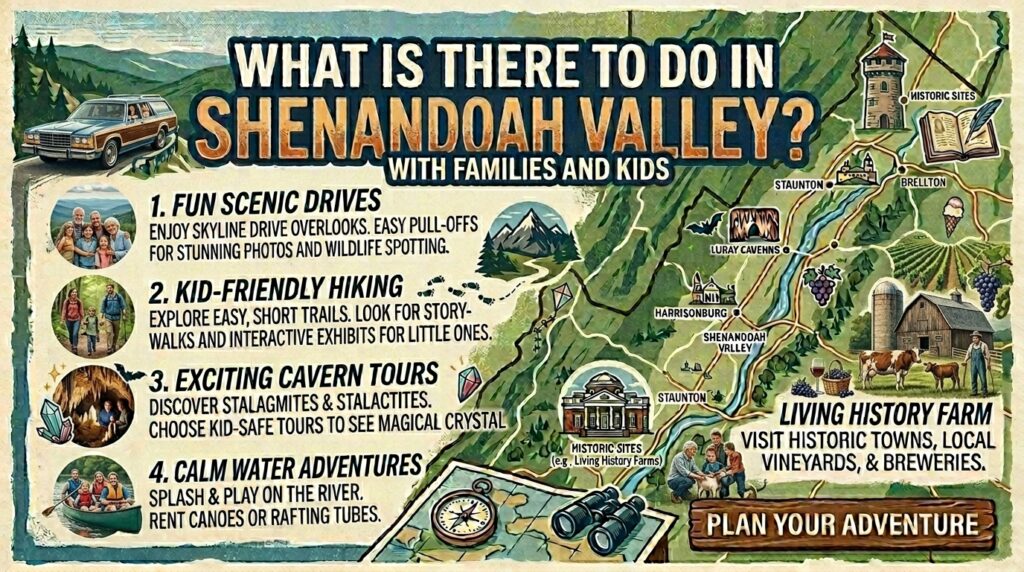
| The Family Vacationer | Gentle walking trails, underground cave exploration, interactive living history. | Northern & Central Valley | Luray Caverns, Shenandoah River tubing, Frontier Culture Museum. |
| The Foodie & Craft Beverage Lover | Estate wine tastings, local farm-to-table dining, historic downtown walking tours. | Southern Valley (Staunton/Lexington) | The Shenandoah Spirits Trail, historic downtown Staunton architecture. |
| The Peace & Quiet Seeker | Luxury mountain cabins, scenic overlook photography, slow driving tours. | The Complete Skyline Drive Ridge | The 105-mile Skyline Drive, panoramic valley sunset overlooks. |
1. High-Altitude Wilderness: Shenandoah National Park and Skyline Drive
No trip to the Valley is complete without visiting Shenandoah National Park, an expansive 200,000-acre sanctuary of protected wilderness. The spine of the entire park is Skyline Drive, a breathtaking 105-mile scenic highway that winds along the very crest of the Blue Ridge Mountains. What to do in Yellowstone with family?
+-------------------------------------------------------------------+
|                     SKYLINE DRIVE TRAVEL METRICS                  |
|                                                                   |
|  [Total Length]     105 Miles (Running North-to-South)            |
|  [Speed Limit]      Strictly Enforced 35 MPH (Protecting Wildlife)|
|  [Scenic Overlooks] 75 Unique Panoramic Pull-Outs                 |
|  [Park Entrances]   Front Royal, Thornton Gap, Swift Run, Rockfish|
+-------------------------------------------------------------------+
The Art of the Slow Drive
Skyline Drive features 75 designated scenic overlooks, offering panoramic views of the Piedmont plateau to the east and the sweeping agricultural fields of the valley floor to the west. Because the speed limit is a strictly enforced 35 MPH to protect local wildlife like black bears and white-tailed deer, driving the entire length takes about three to four hours without stopping. For the best experience, enter through the northern Front Royal Gateway early in the morning, pack a picnic lunch, and watch the morning fog lift off the valley floor. How many rebounder jumps equal 10000 steps?
Definitive Hiking Trails: From Scrambles to Waterfalls
Shenandoah National Park boasts over 500 miles of managed hiking trails, including a massive 101-mile section of the legendary Appalachian Trail.
- The Crown Jewel: Old Rag Mountain (9.1 Miles – Strenuous): This is widely considered one of the premier day hikes in the entire United States. It features an intense 2,400-foot elevation gain and concludes with a challenging Class 8 rock scramble. Climbers must navigate narrow granite crevices and slide across massive boulders to reach a 360-degree summit view. Note: Due to its extreme popularity, hikers must secure a day-use ticket online before arriving at the trailhead.
- The Family Favorite: Stony Man Trail (1.6 Miles – Easy): If you want an incredible view without a grueling all-day trek, Stony Man offers a gentle, gradual climb through a beautiful canopy of oak and balsam fir trees, ending at a dramatic rocky outcropping that hangs high above the town of Luray.
- The Waterfall Trek: Dark Hollow Falls (1.4 Miles – Moderate): This short but steep trail drops down into a lush, shaded ravine, leading you directly to the base of a magnificent 70-foot cascading waterfall. Keep in mind that while the hike down is easy, the return trip is entirely uphill and can be a solid cardio workout.
2. Subterranean Wonders: What is there to do in shenandoah valley
While the peaks of the Blue Ridge Mountains offer incredible panoramic views, some of the valley’s most spectacular sights are hidden deep underground. The limestone geology of the valley floor has carved out massive, jaw-dropping cave systems that stay a crisp, comfortable 54°F (12°C) year-round, making them a perfect rainy-day activity.
               [CROSS-SECTION OF A LIMESTONE CAVERN]

                 Ground Level / Mountain Forest
           ══════════════╤══════════════════════╤════════════
                         │ Groundwater Seepage  │
                         ▼                      ▼
                   ┌──────────┐            ┌──────────┐
                   │ Stalactite│            │ Stalactite│
                   └────┬─────┘            └────┬─────┘
                        │                       │
                        ▼                       ▼
                   ┌────┴─────┐            ┌────┴─────┐
                   │Stalagmite│            │Stalagmite│
                   └──────────┘            └──────────┘
           ══════════════════════════════════════════════════
Luray Caverns: A Cathedral of Stone
As the largest and most visited cavern system in eastern America, Luray Caverns is famous for its cathedral-like rooms, soaring 10-story ceilings, and perfectly clear subterranean lakes that mirror the overhead rock formations.
- The Great Stalacpipe Organ: This is the world’s largest natural musical instrument. It features automated rubber-tipped mallets connected directly to ancient, pristine stalactites across three acres of the cave network. When a key is pressed at the central organ console, the stalactites vibrate, filling the entire cave with a hauntingly beautiful acoustic melody.
Alternative Underground Gems
- Shenandoah Caverns: This is the only cavern system in Virginia that features an automated elevator service, making it completely accessible for strollers and wheelchairs. It is famous for its unique “Capitol Dome” formation and stunning, iridescent “Grotto of the Gods.”
- Grand Caverns: Designated as a National Natural Landmark, Grand Caverns is the oldest continuously operating show cave in the United States, welcoming visitors since 1806. It is highly regarded for its rare “shield” formations and rich history, including graffiti carved into the stone walls by both Union and Confederate soldiers during the American Civil War.
3. River Adventures: Paddling and Tubing the Shenandoah
The legendary Shenandoah River is the lifeblood of the valley’s outdoor recreation ecosystem. Flowering through a series of dramatic bends, the South Fork of the river is a haven for water sports enthusiasts looking to cool off during hot summer months.
+-------------------------------------------------------------------+
|                    RIVER SPORT SAFETY CHECKLIST                   |
|                                                                   |
|  [PFD Requirement]   Coast Guard approved Class III Life Vest     |
|  [Footwear Rule]     Heavy-duty water sandals or old sneakers     |
|  [Hydration Metric]  1 Gallon of fresh water per 4 hours of drift |
|  [Navigation Plan]   Pre-arranged vehicle shuttle at the exit ramp|
+-------------------------------------------------------------------+
Lazy River Tubing
If your goal is total relaxation, renting an inflatable inner tube from an outfitter in Front Royal or Luray is the way to go. You can spend a lazy afternoon drifting down calm, slow-moving stretches of the river, surrounded by scenic limestone bluffs and lush mountain forests.
Kayaking and Canoeing the Fast Water
For those looking for a bit more action, the river offers fantastic Class I to Class III rapids, providing just the right amount of excitement for kayakers and canoeists without requiring extreme white-water experience. The stretch running along the Shenandoah River State Park features well-maintained boat launches and riverside campsites, making it perfect for multi-day paddling trips. How does hiking affect the environment?
4. Cultivated Taste: The Shenandoah Wine and Spirits Trail
The unique climate and limestone soil of the valley don’t just create great caves—they also form an exceptional terroir for grape growing and agriculture. The Shenandoah Valley AVA (American Viticultural Area) is Virginia’s oldest wine region, celebrated for its crisp, elegant Old World-style wines.
                  [THE CRAFT BEVERAGE PIPELINE]

   Limestone Mineral Soil ──► Crisp French-Style Viticulture (Viognier/Cab Franc)
                                        │
                                        ▼
   Pure Mountain Springwater ──► Small-Batch Bourbon & Rye Distilling
Leading Farmstead Wineries
- Bluestone Vineyard (Bridgewater): Perched high on a hillside with panoramic views of the Allegheny Mountains, Bluestone specializes in small-batch, estate-grown wines, including award-winning Viognier and complex Cabernet Franc.
- CrossKeys Vineyards (Harrisonburg): This beautiful 125-acre estate features a stunning Tuscan-style villa piazza. It is the perfect place to pair a relaxed wine tasting with a locally sourced farm-to-table lunch while soaking in a 360-degree view of the mountains.
The Craft Beer and Distilling Movement
If craft beer or spirits are more your style, towns like Harrisonburg and Waynesboro boast an impressive collection of microbreweries.
- The Spirits Trail: Local distilleries use pure mountain spring water to craft world-class bourbons, ryes, and traditional apple brandy, honoring the rich agricultural heritage of the early Scotch-Irish and German immigrants who first settled the valley floor.
5. Historic Towns and Cultural Landmarks
Beyond the incredible outdoor adventures, the Shenandoah Valley is rich with beautifully preserved historic downtown districts, vibrant arts communities, and deep historical significance.
Staunton: An Architectural Masterpiece
Regularly voted one of the best small towns in America, Staunton is a cultural gem. Because it was spared from destruction during the Civil War, its downtown features an incredibly preserved collection of late 19th-century Victorian architecture.
- American Shakespeare Center: Staunton is home to the Blackfriars Playhouse, the world’s only re-creation of William Shakespeare’s indoor theater. The venue stages classic plays year-round, using original Renaissance-era staging techniques like universal lighting and live musical interludes.
Harrisonburg: A Culinary Hub
Home to James Madison University, Harrisonburg is a trendy, diverse college town boasting Virginia’s very first designated Culinary District. Its downtown streets are lined with innovative farm-to-table restaurants, artisan bakeries, and international eateries, making it the perfect culinary base camp for hungry hikers coming off the mountain trails.
Living History: The Frontier Culture Museum
Located in Staunton, this expansive outdoor living-history museum tells the story of the early pioneers who moved to the valley. The museum features authentic, brick-by-brick reconstructions of historic homesteads shipped directly from West Africa, England, Ireland, and Germany, alongside traditional Native American and early American settlements. Costumed historical interpreters demonstrate blacksmithing, wood splitting, and historic farming methods, making it an immersive educational experience for all ages. How do we respect wildlife responsibly with young children?
Detailed Care and Packing Protocol for Valley Travelers
To ensure you stay safe, comfortable, and prepared for rapidly changing weather conditions along the mountain ridges, use this comprehensive packing matrix:
| Travel Gear Category | Essential Equipment Pieces | Primary Utility Purpose | Expected Comfort Impact |
| Footwear Essentials | Broken-in waterproof hiking boots, moisture-wicking merino wool socks, and tough water shoes. | Prevents painful blisters on steep trails and protects feet from sharp rocks during river excursions. | High Impact: Keeps you moving comfortably through long days of exploration without joint pain or injuries. |
| Layering Apparel | Breathable windbreaker jacket, thermal fleece mid-layer, and lightweight UV-protection shirts. | Regulates body temperature when transitioning from the warm valley floor to cool mountain ridges or caves. | Critical Safety: Protects against sudden mountain storms and wind chill along the high overlooks. |
| Digital & Navigation Utilities | Offline downloaded trail maps, an external USB battery pack, and high-quality binoculars. | Guarantees reliable navigation when cellular signal drops in deep mountain gaps and lets you spot wildlife. | Peace of Mind: Prevents getting lost in backcountry wilderness areas with zero cell phone coverage. |
| Hydration & Sun Protection | Insulated stainless steel water flasks, broad-spectrum SPF 50 sunscreen, and polaroid sunglasses. | Prevents heat exhaustion on exposed rocky peaks and shields your eyes during long driving tours. | Stamina Extension: Eliminates dehydration headaches, keeping your energy high for evening activities. |
Critical Travel Planning Checklist
Before setting out on your journey to the historic valley, review this quick checklist to ensure a smooth, hassle-free trip:
- Secure National Park Passes Early: To avoid long wait times at the Front Royal or Thornton Gap entrance stations, purchase your Shenandoah National Park pass online ahead of time.
- Download Offline Maps: Cellular service can be incredibly spotty or non-existent along large stretches of Skyline Drive and deep within the river canyons. Always download your driving routes and hiking maps to your device for offline use.
- Book Cavern and Theater Tickets in Advance: Popular attractions like the Blackfriars Playhouse and the guided tours at Luray Caverns regularly sell out on weekends, so be sure to secure your time slots online before your trip.
- Check Seasonal Trail Conditions: High-altitude mountain paths can occasionally close due to storm damage or winter icing. Check the official National Park Service alerts page on the morning of your hike for real-time updates.
Frequently Asked Questions (FAQ)
1. When is the absolute best time of year to visit the Shenandoah Valley?
While every season offers its own unique charm, mid-to-late October is widely considered the peak time to visit. This is when the autumn foliage along the Blue Ridge Mountains bursts into spectacular shades of crimson, gold, and vibrant orange. If you prefer to avoid the large fall crowds, late spring (May) is another fantastic window. The mountains come alive with blooming wildflowers and rushing waterfalls fueled by spring rains, and the hiking trails are much quieter.
2. Is the Shenandoah Valley a family-friendly vacation destination?
Absolutely. The Valley is an exceptional destination for families traveling with children of all ages. The paved, easy-to-walk paths inside Luray Caverns, the gentle and interactive animal exhibits at the Frontier Culture Museum, and the calm, slow-moving tubing sections of the Shenandoah River provide endless entertainment for kids, combining outdoor fun with immersive learning experiences.
3. How many days should I plan to spend in the Shenandoah Valley?
To truly experience the region without rushing, plan for a trip of at least three to four full days. This gives you plenty of time to spend one day driving Skyline Drive and hiking a scenic peak, a second day exploring underground caverns and paddling down the river, and a third and fourth day touring historic downtowns like Staunton and visiting local farmstead wineries.
4. Are there any dangerous wild animals I should be worried about when hiking?
Shenandoah National Park is home to one of the densest populations of black bears in the United States, alongside white-tailed deer and timber rattlesnakes. While attacks are incredibly rare, it is important to practice safe wildlife habits. Always store food securely in bear-proof lockers or vehicle trunks, never leave trash on the trails, and maintain a safe, respectful distance of at least 50 yards if you happen to encounter a bear on a path.
5. How does your team select the products featured in your buyer’s guides?
Our editorial team conducts rigorous, hands-on testing paired with thorough analysis of structural design, material physics, and long-term user satisfaction metrics. We evaluate gear in real-world scenarios—from testing how portable breast pumps perform under the unique physical constraints of different lifestyles to analyzing the acoustic performance of home audio equipment. Our goal is to provide unbiased, data-driven recommendations you can trust.
6. Can I use the instructional guides on your site for any brand or model?
Yes. While we often highlight top-rated models to provide concrete examples, our step-by-step instructional guides—such as our masterclasses on balance mechanics, posture alignment, and equipment calibration—are built on fundamental physics and biomechanical principles. These core rules apply universally across almost all standard consumer models in their respective categories.
7. How often do you update your product recommendations and travel guides?
We update our content regularly to ensure accuracy. Product guides are audited whenever a manufacturer releases a major hardware update or a new model emerges that alters the market landscape. Similarly, our travel and recreation itineraries are kept current with seasonal safety updates, real-time ticket requirements, and regional structural changes.
8. Do you receive compensation from the brands listed in your reviews?
Our primary mission is to provide transparent, honest consumer guidance. While we participate in various affiliate marketing programs—meaning we may earn a small commission if you purchase a product through our links—this comes at zero completely extra cost to you. We never accept payment in exchange for a positive score, and we explicitly highlight design flaws or product limitations to protect your buying decisions.
9. Why do your articles focus heavily on regional American lifestyles?
A product that works perfectly in a spacious suburban home in Texas might fail completely inside a compact, high-rise apartment in Manhattan. We intentionally tailor our reviews to highlight how local climates, housing configurations, transport habits, and regional environments impact the usability and lifespan of your gear, helping you find a solution that fits your exact geographic reality.
10. Where can I find maintenance parts or replacement components for vintage models?
For antique or legacy items featured in our historical deep-dives, modern retail stores rarely stock matching components. We recommend sourcing authentic, period-correct materials through specialized collectors’ networks, verified antiquarians, or dedicated historical restoration forums. Our guides also include preservation protocols to help you maintain original parts without needing aggressive, value-stripping replacements.
Conclusion: Adventure Awaits in the Valley
The Shenandoah Valley is a rare destination that truly offers something for everyone. Whether you are scaling the rugged granite peaks of Old Rag Mountain, listening to the natural music of the Great Stalacpipe Organ deep underground, or relaxing on a sun-drenched winery patio in Harrisonburg, the region invites you to slow down and reconnect with the natural world.
By mapping out your route, choosing the perfect base camp, and packing the right gear, you can craft an incredible mountain getaway that will leave you refreshed, inspired, and ready for your next adventure. The mountains are calling—it’s time to plan your escape!