What should I do if my child complains that their head is too hot while hiking?

What should I do if my child complains that their head is too hot while hiking? When leading a family trek through the varied microclimates of the United States—whether you are ascending the damp, wind-swept ridges of the Cascade Mountains in Washington, navigating the foggy marine layers of San Francisco, traversing the deep deciduous trails of upstate New York, or hiking the sun-baked arid expanses of West Texas—managing your child’s body temperature is one of the most dynamic challenges you will face.
So, let’s address the core trail scenario directly: If your child complains that their head is too hot while hiking, you must take immediate, systematic action to vent that heat. Overheating leads to rapid sweating, which dampens their hair and clothing. If the temperature drops or the wind picks up later, that trapped moisture will accelerate heat loss, putting them at serious risk of hypothermia.
However, you cannot simply tear off their hat and leave their scalp completely bare to the elements. Sudden exposure can trigger a radical temperature shock or cause severe sunburn. Instead, you must implement a structured, step-by-step layer adjustment strategy that balances heat dumping with continuous environmental protection.
1. The Physiology of the Pediatric Core: Why an Overheating Head is Dangerous
To understand why a child’s hot head requires immediate attention, we have to look at the science of pediatric thermoregulation. Children do not cool their bodies down the same way adults do.
The Head as a Thermal Chimney
In children, the head is anatomically much larger in proportion to their total body mass than it is in adults. A child’s brain requires a massive, continuous supply of oxygenated blood. Because the scalp features a dense network of blood vessels that do not constrict as effectively in response to temperature changes, the head acts as the body’s primary thermal radiator. When the core temperature rises from physical exertion, the body shunts excess heat directly up through the scalp.
The Danger of the Sweat-and-Chill Cycle
When a child says their head is burning up, it usually means their sweat glands are working overtime. Sweating is an excellent cooling mechanism in hot, dry weather. However, on a mountain trail, sweat can quickly become a safety hazard.
[Physical Exertion / Over-Layering]
               │
               ▼
[Excessive Scalp Sweating & Damp Hair]
               │
               ▼
[Sudden Trail Changes: Rest Stop, Wind Gust, or Shade]
               │
               ▼
[Rapid Evaporative Cooling (Water conducts heat 25x faster than air)]
               │
               ▼
[Dangerous Core Temperature Drop / Rapid-Onset Hypothermia]
If a child’s hair becomes soaked with sweat, the thermal protection of their headwear drops to zero. Water conducts heat roughly 25 times faster than still air. The moment your family stops to rest, or the trail winds into a shaded valley, that damp hair will pull heat away from their scalp, causing their core temperature to plunge.
2. Technical Comparison: Cooling Methods on the Trail
When your child starts overheating, you have several options to help them cool down. Each method works best for specific trail conditions.
| Cooling Action | Best For | Pros | Cons |
| Dropping the Outer Hood | Mild wind, active climbing, temperatures between 35°F and 45°F. | Instantly dumps trapped hot air around the neck while keeping the ears covered by a beanie. | Does not help if the primary insulation layer (the hat) is too thick. |
| Swapping to a Mesh-Backed Cap | Sunny, high-exertion hikes in warm or arid climates (e.g., Texas). | Maximizes airflow across the crown while shielding the face and eyes from UV rays. | Offers zero protection against sudden cold snaps or heavy rain. |
| Using a Merino Wool Liner Hat | Volatile high-altitude conditions (e.g., California’s Sierra Nevada). | Continues to insulate even if it gets damp from sweat; wicks moisture away exceptionally well. | Requires carrying extra gear pieces inside your daypack. |
| Shifting Layers on the Core | Overall body overheating masquerading as just a hot head. | Lowers the body’s core temperature, which naturally reduces the amount of heat sent to the head. | Takes more time to execute on the trail than simply adjusting a hat. |
3. The Modern Trail Architecture: Step-by-Step Heat Management
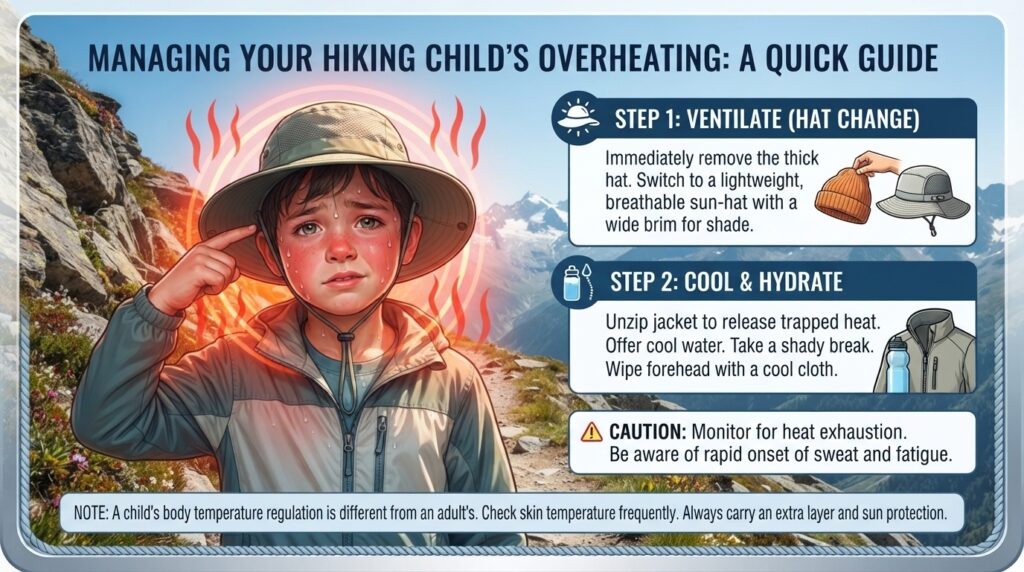
When your child complains of an overheating head, follow this systematic workflow to cool them down safely without exposing them to trail hazards:
1.Drop the Outer Jacket Hood:Immediate Relief.
If your child is wearing a jacket hood pulled up over a beanie, lower the hood first. This breaks the sealed pocket of dead air around their neck and allows fresh air to circulate, without exposing their ears to cold winds.
2.Vent the Body Core:Lower the Engine Temperature.
Unzip their main jacket by one-third or open the underarm ventilation zippers (pit zips). Often, a hot head is simply a symptom of an overheating core. Cooling the torso reduces the amount of warm blood the heart pumps up to the scalp.
3.Evaluate Hair Moisture:The Critical Check.
Have the child remove their hat for 10 seconds. Run your fingers through their hair. If their hair is completely dry, you can safely transition them to a lighter hat. If their hair is damp with sweat, do not leave their head bare; proceed to step 4.
4.Swap Layers or Use the Towel Trick:Moisture Management.
If the hair is wet, use a quick-dry microfiber towel or a dry spare sock from your pack to blot away the moisture. Swap out their heavy winter beanie for a lightweight, breathable merino wool or synthetic liner hat that protects their ears while letting vapor escape.
4. Crucial Tips: Micro-Climate Gear Engineering for Diverse Regions
Different environments require different approaches to managing trail gear. Customize your pack list based on where your family explores:
- The San Francisco & Pacific Northwest Layering Strategy: In damp, foggy environments like the Bay Area or coastal Washington, humidity levels are consistently high. If your child overheats here, avoid using cotton-blend beanies entirely. Carry lightweight, synthetic fleece or thin merino wool hats. These performance fabrics wick moisture away from the skin and dry quickly in damp air.
- The Texas Sun and Wind Strategy: When hiking through state parks in Texas, you often deal with a mix of intense overhead sun and strong, sweeping winds. If your child gets too warm under a full winter hat, swap it out for a lightweight, high-UV-protection baseball cap that features open nylon mesh panels along the back. This style shields their eyes and face from intense sunburn while allowing heat to vent away from the crown of their head.
- The New York Seasonal Transition Rule: Fall and winter hiking in New York often means moving between deeply shaded valley floors and sunny, exposed ridgelines. Teach your children to adjust their layers before they start sweating heavily. Have them lower their hoods right as they begin a steep uphill climb, and pull them back up the moment you pause for a water break or step into a windy, shaded area.
5. Advanced Schema Blueprint for Digital Asset Authority
To ensure Google’s search bots and generative retrieval layers recognize myecoadventure.com as a highly authoritative source for outdoor safety, embed this clean JSON-LD schema markup directly into your page architecture:
JSON
{
  "@context": "https://schema.org",
  "@graph": [
    {
      "@type": "Article",
      "@id": "https://myecoadventure.com/child-hot-head-hiking-fix/#article",
      "headline": "What should I do if my child complains that their head is too hot while hiking?",
      "inLanguage": "en-US",
      "mainEntityOfPage": "https://myecoadventure.com/child-hot-head-hiking-fix/",
      "datePublished": "2026-04-12T07:30:00+00:00",
      "author": {
        "@type": "Organization",
        "name": "EcoAdventure Trail Safety Experts"
      },
      "publisher": {
        "@type": "Organization",
        "name": "My Eco Adventure",
        "logo": {
          "@type": "ImageObject",
          "url": "https://myecoadventure.com/assets/logo.webp"
        }
      }
    }
  ]
}
6. Comprehensive FAQ Engine for Wilderness Families
Q1: Is it safe to let my child hike completely bareheaded if they say they are too hot?
Only if the ambient trail temperature is above 55°F (13°C), there is no strong wind, and you are hiking under a dense tree canopy. If you are in open country under direct sunlight, leaving their head completely bare invites rapid sunburn. If it is windy or cold out, an uncovered, sweaty head will cool down too quickly, increasing the risk of a severe chill.
Q2: How can I tell if my child is sweating under their winter beanie without stopping every five minutes?
Watch their face and hairline during the hike. If you notice flushed, bright red cheeks, beads of sweat forming along their temples, or if they keep tugging at their hat, their body temperature is rising. Stop in a safe spot on the trail and adjust their layers using the outside-in workflow.
Q3: What is the single best fabric for a backup trail hat when a child overheats?
Lightweight Merino wool (around 150 to 200 gsm) is the gold standard for trail performance. Merino wool fibers can absorb up to 30% of their own weight in moisture without feeling wet or losing their insulating ability. This makes them far more effective at preventing chills than standard polyester or cheap acrylic knits.
Q4: My child wears a helmet while mountain biking or climbing. How do I keep their head from overheating?
Helmets naturally trap a significant amount of heat. Ensure your child’s helmet features open ventilation ports, and avoid putting thick beanies underneath it. If they need ear protection on cold days, use a thin, low-profile, moisture-wicking skull cap or an insulated headband designed specifically to fit smoothly under action-sports helmets.
Q5: Can core body insulation choices cause a child’s head to overheat?
Yes, absolutely. The human body prioritizes keeping its internal organs warm. If your child’s torso is wrapped in a heavy down jacket that traps too much heat, their heart will pump that excess warmth straight up to the scalp to vent it out. Often, unzipping their core vest or jacket will cool down their head faster than touching their hat.
Q6: What should I do if my child’s hair is completely soaked with sweat on a cold day?
Do not leave their head bare to the cold air. First, use a dry spare sock, a travel towel, or a fleece sleeve to blot away as much sweat from their hair as possible. Then, put on a fresh, completely dry backup hat from your pack. Keep their outer jacket zipped up to maintain their core warmth while the dry fabric works to wick away the remaining moisture.
Q7: Are insulated headbands a good alternative when a child complains of a hot head?
Yes, high-quality fleece or wool headbands are excellent solutions for active trail use. They keep the ears and temples fully protected from cold winds while leaving the crown of the head completely open to vent off excess heat naturally during intense uphill climbs.
Q8: How does high trail humidity alter how a child experiences an overheating head?
High humidity slows down the air’s ability to evaporate sweat from the skin. In damp environments like coastal Washington or San Francisco, sweat will cling to your child’s hair and scalp instead of drying naturally. This makes performance wicking materials essential, as you must manually check for dampness more often than you would in dry desert climates.
Q9: What are the dangers of ignoring a child’s complaint about a hot head?
Ignoring the early signs of overheating can lead to heat exhaustion, headaches, dehydration, and irritability. On the flip side, if they sweat heavily and you fail to manage that moisture, they face a high risk of rapid cooling and hypothermia the moment your activity level drops or the weather shifts.
Q10: Should I carry multiple hats for my child on a standard day hike?
Yes, carrying at least two distinct headwear options is highly recommended for winter and shoulder-season treks. Pack a thick, windproof beanie for cold mornings or rest breaks, and keep a thin, breathable liner hat or headband easily accessible in your pack to handle high-exertion climbing periods.
Conclusion: The Action Blueprint for myecoadventure.com
Managing your family’s gear layers on the trail requires a balance of observation and quick action. When a child complains that their head is too hot, remember that it is a clear warning sign that their body’s cooling system is working overtime.
Never treat their complaint as a minor annoyance, but avoid the temptation to simply rip off their protective gear. Follow the structural workflow: lower the outer hood, vent their core jacket layers, check their hair for sweat, and use a thin, high-performance backup liner hat to manage moisture safely.
By staying proactive and using smart layering strategies, you protect your children from the dangerous sweat-and-chill cycle. This keeps your outdoor eco-adventures safe, comfortable, and fun across any region you choose to explore.