What temperature is too cold for toddlers to play outside at night

For parents, the evening hours can sometimes be the most challenging part of the day. Whether you’re dealing with the early sunsets of a New York winter, the crisp evenings in Washington, or the cool night air in San Francisco or Texas, the question often arises: Can we go outside, and how cold is too cold for a toddler?
While outdoor play is essential for a toddler’s development, night play introduces unique variables. At myecoadventure.com, we believe in equipping parents with the data they need to make safe, confident decisions. Here is your guide to navigating nighttime temperatures with your toddler.
The “Toddler Threshold”: Understanding the Nighttime Difference
Toddlers are not just “little adults.” Their bodies are still learning how to thermoregulate, and they have a higher surface-area-to-mass ratio, meaning they lose body heat significantly faster than you do.
When you add the lack of sunlight—which removes the natural warming effect of solar radiation—the environment changes entirely.
The Safety Zones for Nighttime Play
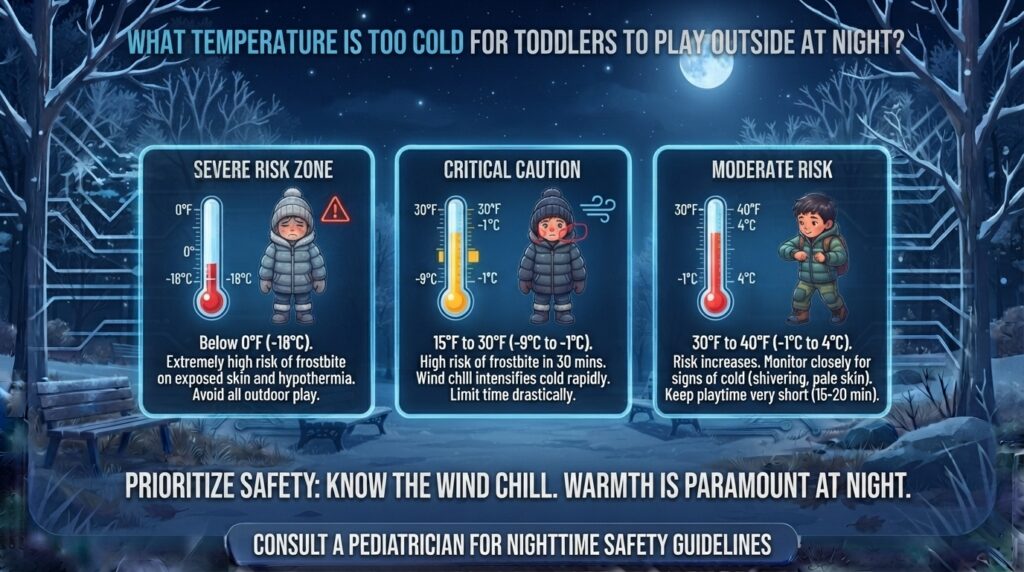
We categorize nighttime outdoor safety by temperature, keeping the toddler’s vulnerability in mind:
- The Comfortable Zone (Above 45°F / 7°C): Generally safe for typical outdoor play. Ensure they are dressed in wind-resistant layers, as night air is often stiller and holds dampness.
- The Caution Zone (35°F – 45°F / 2°C – 7°C): Proceed with caution. Toddlers should be kept active to maintain metabolic heat. If they are sitting in a stroller or being carried, they will get cold much faster than you.
- The “Stay Inside” Zone (Below 35°F / 2°C): For toddlers, nighttime temperatures below 35°F are generally too cold for active play. The risk of rapid core temperature drops is simply too high.
Why Nighttime Play Requires Extra Vigilance
1. Lack of Solar Heat
During the day, even in the shade, the ground and air retain some heat from the sun. At night, this heat dissipates rapidly. Your child is no longer being “warmed” by the environment, meaning their body has to work harder to maintain its internal temperature.
2. The Humidity Factor
In coastal areas like San Francisco or parts of Washington, nighttime often brings higher humidity or “evening damp.” Damp air is a master at drawing heat away from the body. Even if the thermometer says 40°F, a damp, foggy evening will feel significantly colder to a toddler.
3. Reduced Visibility and “Stillness”
At night, toddlers are less likely to run as vigorously as they would in the daylight, often due to lower visibility. Less movement means less metabolic heat production. If you are going out, you must plan for them to be warmer than you are.
Tips for Safe Nighttime Outings
1. The “Plus Ten” Rule
A good rule of thumb for parents: If you are comfortable in a jacket, your toddler needs one more layer than you do. If they are going to be sitting or riding in a stroller, they need two more layers.
2. Focus on Extremities
Toddlers often suffer from “cold extremity syndrome” because the body restricts blood flow to the fingers, toes, and ears to protect the internal organs. Always prioritize:
- A warm, wool-lined hat: Heat loss through the head is massive.
- Mittens over gloves: Fingers stay warmer when they are touching each other inside a mitten.
- Wool socks: Cotton becomes cold and damp; wool remains warm even if it gets slightly moist from sweat.
3. Check the “Wind Chill” at Night
Even if it’s not “freezing,” a brisk evening wind can turn a pleasant walk into a dangerous drop in temperature for a toddler. If the wind is blowing, the “feels-like” temperature is what matters for safety.
10 Frequently Asked Questions (FAQ)
- Is nighttime air “thinner” or “colder”? It is just colder due to the lack of sun, but it often carries more moisture (dew), which can make it feel more piercing.
- How can I tell if my toddler is too cold at night? Check their neck and chest. If their skin feels cool to the touch, they are losing too much heat.
- Should I use a space heater for outdoor night play? No. Space heaters are for indoor use and present significant fire and safety hazards in an outdoor setting.
- Are strollers safe for cold nights? Yes, but a toddler in a stroller is not generating body heat. Use a “footmuff” or a heavy, safe blanket to keep them insulated.
- Does humidity affect how cold a toddler feels? Absolutely. High humidity at night makes the cold feel much “sharper” on the skin.
- Is it safe to go out if it’s foggy? Fog usually indicates high humidity, which can make clothes damp. If you go out, ensure their outer shell is truly waterproof.
- What if they start shivering? This is an immediate red flag. Bring them inside and offer a warm (not hot) drink immediately.
- Can they play in the snow at night? We generally advise against night snow play for toddlers; the combination of darkness, cold, and wet snow makes it difficult to monitor their safety.
- Should I use battery-heated gear? Stick to high-quality natural materials (wool, fleece) first. If you use battery gear, ensure it is set to a “low” setting to avoid overheating.
- Is there any benefit to night walks? Yes! It’s a great way to experience nature, see the stars, and practice “quiet time” walking. Just keep it short and keep them warm.
Conclusion
Nighttime adventures offer a wonderful way to experience the world, but they require a different level of preparation than daytime play. By monitoring the thermometer, respecting the “feels-like” temperature, and ensuring your toddler is layered correctly, you can make these outings both safe and memorable.
At myecoadventure.com, we encourage you to keep exploring, but always prioritize the safety and comfort of your little ones. Whether you are strolling through a park in New York or enjoying a clear night in Texas, stay warm, stay alert, and keep making those magical memories!
Do you have a favorite nighttime adventure with your toddler? Let us know your tips for staying cozy at myecoadventure.com!