

Camping has evolved dramatically over the last few decades. What was once considered a rugged outdoor activity reserved for survivalists and hardcore adventurers has become a comfortable and enjoyable experience for families, couples, solo travelers, and weekend explorers. Modern camping gear now focuses not only on survival but also on comfort, convenience, and better sleep quality. One of the most important parts of a comfortable camping setup is the sleeping system, and among the many options available today, double sleeping pads have become increasingly popular.
Double sleeping pads are designed for two people and offer a shared sleeping surface that is wider and often thicker than traditional single sleeping pads. These pads are especially attractive for couples who want to sleep close together while enjoying better insulation and cushioning from the ground. However, while they offer several advantages, they also come with some disadvantages that campers should carefully consider before purchasing.
This detailed guide explores everything about double sleeping pads for camping, including their advantages, disadvantages, types, materials, performance, comfort, portability, durability, cost, maintenance, and suitability for different camping situations.
What Is a Double Sleeping Pad?
A double sleeping pad is a camping mattress designed to comfortably accommodate two people. Unlike two separate single sleeping pads placed side by side, a double sleeping pad creates one large sleeping surface. These pads are usually available in foam, self-inflating, or fully inflatable designs.
Double sleeping pads are commonly used in:
- Car camping
- Family camping trips
- Overlanding adventures
- Glamping experiences
- Tent camping for couples
- Camper van travel
- Basecamp setups
Most double sleeping pads are compatible with larger tents and can easily fit inside 2-person, 3-person, or family-sized tents.
The growing popularity of camping among couples and families has made double sleeping pads a major category in the outdoor gear market.
Why Sleep Quality Matters During Camping
Before discussing the pros and cons of double sleeping pads, it is important to understand why sleep quality matters while camping.
Poor sleep during outdoor trips can affect:
- Energy levels
- Mood
- Physical recovery
- Hiking performance
- Safety during outdoor activities
- Overall camping enjoyment
Sleeping directly on the ground without proper insulation can lead to body aches, cold exposure, and interrupted sleep. Uneven terrain, rocks, roots, and moisture can make sleeping difficult. A good sleeping pad acts as a barrier between your body and the ground while providing cushioning and thermal insulation.
Double sleeping pads are specifically designed to improve comfort and warmth for two people sharing the same sleeping area.
Types of Double Sleeping Pads
There are several different types of double sleeping pads available for campers.
Inflatable Double Sleeping Pads
These pads use air chambers for cushioning and support. They are lightweight and pack down relatively small.
Features
- Compact storage
- Adjustable firmness
- Thick cushioning
- Lightweight materials
Best For
- Car camping
- Backpacking couples
- Lightweight travel
Self-Inflating Double Sleeping Pads
These pads contain open-cell foam combined with air chambers. When the valve is opened, the foam expands and partially inflates the pad automatically.
Features
- More durable
- Better insulation
- Easier setup
- Comfortable support
Best For
- Cold-weather camping
- Long camping trips
- Family camping
Foam Double Sleeping Pads
These are less common because foam pads are bulky when made for two people.
Features
- Extremely durable
- No risk of puncture
- Reliable in harsh conditions
- Low maintenance
Best For
- Budget camping
- Emergency camping setups
- Harsh outdoor environments
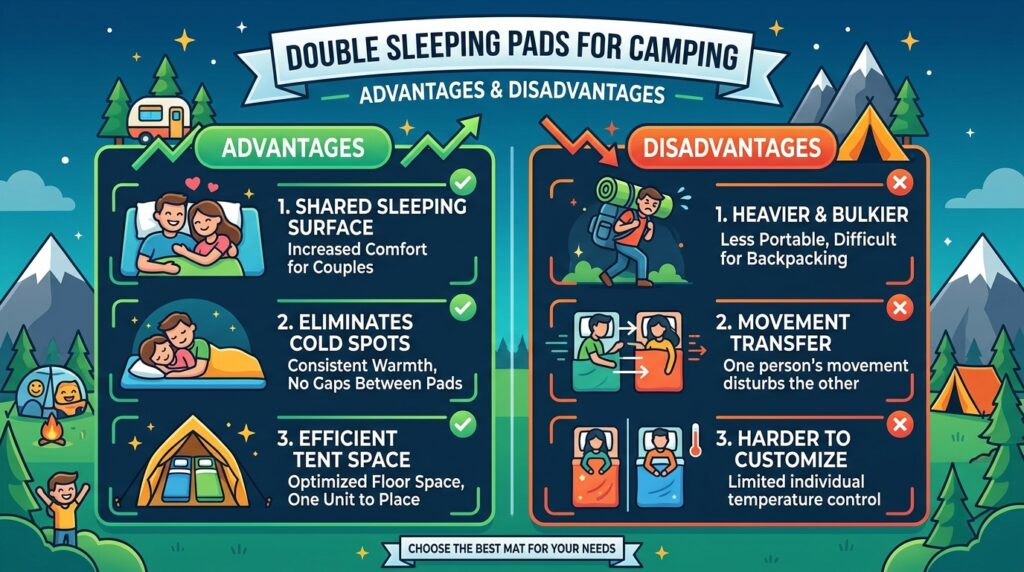
Advantages of Double Sleeping Pads for Camping
Double sleeping pads provide many benefits that make them attractive for outdoor enthusiasts.
1. Better Comfort for Couples
One of the biggest reasons people buy double sleeping pads is comfort. Couples often dislike sleeping on separate single pads because the gap between them can create discomfort during the night.
A double sleeping pad eliminates this gap and creates a continuous sleeping surface.
Benefits include:
- Easier cuddling
- Shared warmth
- Better emotional comfort
- More natural sleeping position
- Reduced movement between separate pads
For couples who camp frequently, this can significantly improve the camping experience.
2. Shared Body Heat Improves Warmth
Camping in cold weather can be challenging. One important advantage of double sleeping pads is the ability to share body heat.
When two people sleep close together, body warmth becomes trapped under sleeping bags and blankets more effectively.
This creates:
- Better thermal efficiency
- Warmer sleeping conditions
- Less heat loss
- Reduced need for extra blankets
This advantage is especially important during:
- Winter camping
- Mountain camping
- High-altitude trips
- Cold-weather overlanding
Some double sleeping pads also have higher R-values, meaning they provide stronger insulation from cold ground temperatures.
3. Eliminates the Gap Between Two Pads
When two single sleeping pads are placed side by side, they often separate during the night.
This can create:
- Cold air gaps
- Uneven sleeping surfaces
- Discomfort while moving
- Interrupted sleep
A double sleeping pad completely removes this issue.
Couples who move frequently while sleeping often appreciate this feature because it provides a more stable sleeping area.
4. More Spacious Sleeping Surface
Double sleeping pads usually provide more space than combining two narrow single pads.
Many double pads are designed with extra width and thickness.
Benefits include:
- More room to move
- Better support for side sleepers
- Improved comfort for taller campers
- Less feeling of confinement
People who dislike tight sleeping spaces often find double sleeping pads much more relaxing.
5. Convenient Tent Setup
Using a single double sleeping pad can simplify tent organization.
Instead of arranging:
- Two separate pads
- Multiple inflation valves
- Separate sleeping positions
You only manage one sleeping system.
This can:
- Save setup time
- Reduce clutter inside the tent
- Improve organization
- Simplify packing
For campers who want a quick and simple setup, this is a major benefit.
6. Ideal for Car Camping
Double sleeping pads are particularly popular among car campers.
Since car camping does not require carrying gear long distances, campers can prioritize comfort over weight.
Large double sleeping pads provide:
- Near-home mattress comfort
- Thick cushioning
- Luxury sleeping experiences
- Excellent support
Many modern double pads are over 4 inches thick, creating a sleeping experience similar to a real bed.
7. Excellent for Glamping
Glamping combines outdoor adventure with luxury and comfort.
Double sleeping pads fit perfectly into this style of camping.
They pair well with:
- Large tents
- Cozy blankets
- Elevated bedding systems
- Decorative camping setups
People who want a comfortable outdoor lifestyle without sacrificing sleep quality often choose premium double sleeping pads.
8. Good Support for Side Sleepers
Side sleepers often struggle with thin camping mats.
Hips and shoulders can press into the ground, causing discomfort and pain.
Many double sleeping pads are designed with:
- Thick air chambers
- Zoned support
- High cushioning levels
- Pressure distribution systems
This provides much better support for side sleepers compared to basic foam pads.
9. Better Sleep Quality
Comfortable sleep is one of the biggest advantages of a quality sleeping pad.
Good sleep during camping improves:
- Hiking energy
- Mood
- Physical recovery
- Enjoyment of activities
- Overall trip satisfaction
Many campers who switch from basic sleeping mats to double sleeping pads notice a huge improvement in rest quality.
10. Reduced Noise Compared to Some Single Pads
Certain single sleeping pads produce loud crinkling sounds when users move during sleep.
Some premium double sleeping pads use softer materials and quieter fabrics.
This can:
- Reduce nighttime disturbances
- Improve sleep for light sleepers
- Create a calmer tent environment
Quiet sleeping systems are especially important for family camping.
11. Better Stability During Sleep
Single pads can slide apart or shift during the night.
A larger double sleeping pad tends to remain more stable.
This helps prevent:
- Rolling off the pad
- Uneven sleeping positions
- Ground contact during movement
Stable sleeping surfaces are especially helpful on uneven campsites.
12. Can Replace an Air Mattress
Many campers prefer double sleeping pads over traditional air mattresses.
Compared to household-style air mattresses, camping double sleeping pads often provide:
- Better insulation
- Lower weight
- Faster inflation
- Improved durability
- Better outdoor performance
Some premium models are specifically engineered for rugged outdoor conditions.
13. Suitable for Families with Small Children
Parents camping with small children sometimes use double sleeping pads to share sleeping space.
This can:
- Keep children warm
- Reduce nighttime fear
- Simplify bedtime routines
- Improve safety inside the tent
For family camping, larger sleeping surfaces can be very practical.
14. Modern Designs Offer High Durability
Today’s high-end double sleeping pads use advanced materials.
These may include:
- Ripstop nylon
- TPU laminates
- Welded seams
- Reinforced fabrics
As a result, many modern pads are highly durable and resistant to punctures.
15. Adjustable Firmness
Inflatable double sleeping pads allow users to customize firmness levels.
This helps different sleepers achieve:
- Softer support
- Firmer support
- Balanced comfort
Some models even include dual air chambers so each person can control their own side.
16. Great for Basecamp Adventures
Basecamp camping involves staying in one location for several days.
Comfort becomes especially important during long stays.
Double sleeping pads provide:
- Better long-term comfort
- Improved recovery after hiking
- Better relaxation during downtime
This makes them ideal for:
- Fishing trips
- Hunting camps
- Multi-day outdoor adventures
- Festival camping
Disadvantages of Double Sleeping Pads for Camping
Despite their many benefits, double sleeping pads are not perfect.
There are several important disadvantages that campers should consider.
1. Heavier Than Single Pads
One of the biggest drawbacks is weight.
Double sleeping pads are significantly heavier than single sleeping pads.
This can become problematic for:
- Backpacking
- Long-distance hiking
- Ultralight camping
- Remote wilderness trips
Some large double pads weigh over 5 kilograms.
Car campers may not care about this issue, but backpackers often avoid double pads because of the added weight.
2. Larger Packed Size
Double sleeping pads take up more storage space.
Even lightweight inflatable models are bulkier than single pads.
This affects:
- Backpack storage
- Vehicle organization
- Travel convenience
Campers with limited storage space may find large pads inconvenient.
3. Difficult for Backpacking Couples
Although some ultralight double pads exist, many are still too bulky for serious backpacking.
Backpacking couples often prefer:
- Two ultralight single pads
- Modular sleeping systems
- Compact gear arrangements
Double sleeping pads may not fit inside smaller backpacks efficiently.
4. Movement Transfer Can Disturb Sleep
A major disadvantage of shared sleeping surfaces is movement transfer.
When one person moves, changes position, or gets up during the night, the other person may feel the motion.
This can disturb sleep.
People who are light sleepers may struggle with:
- Tossing and turning
- Uneven pressure shifts
- Bouncing sensations
Some premium pads reduce movement transfer using separate air chambers, but cheaper models often have this problem.
5. Harder to Adjust for Different Sleeping Preferences
Different people often prefer different firmness levels.
With basic double sleeping pads, both people must share the same air pressure.
This can create disagreements between:
- Soft mattress lovers
- Firm mattress lovers
Advanced models with dual-chamber systems solve this issue, but they are usually more expensive.
6. More Expensive Than Single Pads
High-quality double sleeping pads can be expensive.
Premium models may cost significantly more than two budget single pads.
Additional costs may include:
- Inflation pumps
- Repair kits
- Specialized bedding
- Larger tents
Budget-conscious campers may find double sleeping systems costly.
7. Requires Larger Tent Space
Double sleeping pads require more floor space.
Small tents may not fit them comfortably.
This can lead to:
- Tight interior space
- Limited gear storage
- Difficult movement inside the tent
Campers may need to upgrade to a larger tent.
This increases:
- Overall gear cost
- Tent weight
- Setup complexity
8. Inflation Takes Longer
Large double sleeping pads require more air.
Manual inflation can be tiring.
Depending on the design, inflation may involve:
- Several minutes of pumping
- Large amounts of breath inflation
- Electric pump usage
This can become inconvenient after a long hiking day.
Some campers solve this issue with battery-powered pumps.
9. Deflation and Packing Can Be Frustrating
Packing large inflatable pads can sometimes be difficult.
Problems may include:
- Trapped air
- Bulky rolling process
- Tight storage sacks
- Time-consuming packing
This is especially frustrating during rainy weather or early-morning departures.
10. Risk of Punctures
Inflatable double sleeping pads are vulnerable to punctures.
Sharp objects like:
- Rocks
- Thorns
- Tent debris
- Pet claws
Can damage the pad.
A puncture may cause:
- Air leaks
- Reduced support
- Interrupted sleep
Since two people share the same pad, one puncture affects both sleepers.
11. Difficult Repairs in Remote Areas
Repairing large inflatable pads during remote camping trips can be challenging.
Leaks are sometimes difficult to locate.
Wet or cold weather may make repairs harder.
Without proper repair materials, campers may lose their primary sleeping system.
This is one reason some wilderness backpackers prefer foam sleeping pads.
12. Condensation and Moisture Issues
Some double sleeping pads can trap moisture underneath.
This may occur due to:
- Humidity
- Condensation
- Ground moisture
- Poor ventilation
Moisture buildup can create:
- Damp sleeping conditions
- Mold risk
- Unpleasant odors
Proper tent ventilation is important.
13. Not Ideal for Solo Campers
Double sleeping pads are inefficient for solo camping.
A single camper may find them:
- Too large
- Too heavy
- Difficult to transport
- Unnecessary
Solo campers usually prefer compact single pads.
14. Higher Heat Retention in Warm Weather
While shared warmth is useful during winter camping, it can become uncomfortable during hot weather.
Two people sharing body heat may experience:
- Excessive warmth
- Sweating
- Poor airflow
- Interrupted sleep
This is especially noticeable in humid climates.
15. Limited Versatility
Two separate single sleeping pads offer greater flexibility.
Couples can:
- Separate sleeping arrangements
- Use pads individually
- Adapt to different tent sizes
- Camp separately when needed
A double sleeping pad lacks this flexibility.
16. May Create Uneven Weight Distribution
If one camper is significantly heavier than the other, the sleeping surface may become uneven.
Some inflatable designs experience:
- Air shifting
- Tilting
- Uneven pressure
Premium pads reduce this problem through internal baffles and advanced chamber systems.
Comparing Double Sleeping Pads vs Two Single Pads
Many campers struggle with the decision between a double sleeping pad and two separate single pads.
Both options have strengths and weaknesses.
Double Sleeping Pads
Pros
- Better shared comfort
- No center gap
- Shared warmth
- Simpler setup
- Better for couples
Cons
- Heavier
- More expensive
- Less flexible
- More movement transfer
Two Single Pads
Pros
- Lightweight options available
- Flexible usage
- Individual firmness control
- Easier transport
- Better for backpacking
Cons
- Gap between pads
- Less shared warmth
- More setup complexity
- Potential sliding issues
The best option depends on the type of camping and personal preferences.
Best Situations for Double Sleeping Pads
Double sleeping pads perform exceptionally well in certain camping scenarios.
Car Camping
Comfort matters more than weight.
Glamping
Luxury camping setups benefit from larger sleeping surfaces.
Cold Weather Camping
Shared body heat improves warmth.
Family Camping
Parents and children can sleep together comfortably.
Overlanding
Vehicle-based travel supports heavier gear.
Festival Camping
Comfort improves multi-day experiences.
Worst Situations for Double Sleeping Pads
Some camping styles are not ideal for large sleeping pads.
Ultralight Backpacking
Weight becomes a serious issue.
Solo Hiking Trips
Large pads are unnecessary.
Remote Mountain Expeditions
Durability and portability matter more.
Minimalist Camping
Bulky gear reduces efficiency.
Important Features to Consider Before Buying
Choosing the right double sleeping pad requires careful evaluation.
Size and Dimensions
Check:
- Length
- Width
- Thickness
- Tent compatibility
Tall campers should choose longer models.
R-Value and Insulation
R-value measures insulation performance.
Higher R-values provide better cold-weather protection.
Typical R-Value Guide
- 1–2: Summer camping
- 2–4: Three-season camping
- 4–6: Cold weather camping
- 6+: Winter camping
Campers in colder climates should prioritize higher insulation ratings.
Weight
Weight matters greatly for portability.
Car campers can choose heavier luxury models.
Backpackers should focus on lightweight materials.
Thickness
Thicker pads provide:
- Better cushioning
- Improved side-sleeper comfort
- More protection from uneven ground
However, thicker pads may weigh more.
Material Quality
Look for durable fabrics such as:
- Ripstop nylon
- Polyester laminates
- TPU-coated materials
Higher denier fabrics usually improve durability.
Inflation Method
Options include:
- Manual inflation
- Self-inflation
- Pump sacks
- Electric pumps
Choose a system that matches your camping style.
Noise Level
Some pads produce loud crinkling sounds.
Quiet materials improve sleep quality.
This is especially important for:
- Light sleepers
- Couples
- Family tents
Ease of Cleaning
Outdoor gear gets dirty quickly.
Choose materials that are easy to wipe and dry.
Water-resistant surfaces simplify maintenance.
How to Maintain a Double Sleeping Pad
Proper maintenance increases lifespan.
Keep the Pad Clean
Remove dirt before storage.
Use mild soap and water.
Avoid harsh chemicals.
Dry Completely Before Storage
Moisture can cause:
- Mold
- Mildew
- Material damage
Always dry the pad fully.
Store Loosely
Avoid storing inflatable pads tightly compressed for long periods.
Loose storage helps preserve foam and fabric quality.
Protect from Sharp Objects
Use a tent footprint or groundsheet.
Inspect campsites carefully.
Carry a Repair Kit
Most inflatable pads include repair patches.
Always bring repair supplies during camping trips.
Environmental Considerations
Outdoor gear manufacturing impacts the environment.
Some brands now focus on:
- Recycled materials
- Sustainable manufacturing
- Eco-friendly fabrics
- Reduced packaging waste
Campers interested in sustainability should research environmentally responsible products.
Durable gear also reduces waste by lasting longer.
Are Double Sleeping Pads Worth It?
The answer depends on the camper’s priorities.
They Are Worth It If You:
- Camp as a couple
- Prioritize comfort
- Mostly car camp
- Enjoy glamping
- Need better sleep quality
- Camp in cold weather
They May Not Be Worth It If You:
- Frequently backpack long distances
- Camp solo
- Need ultralight gear
- Have limited storage space
- Prefer separate sleeping setups
For many couples, the comfort advantages outweigh the disadvantages.
Double Sleeping Pads for Different Seasons
Different camping seasons create different sleeping requirements.
Summer Camping
Look for:
- Breathable fabrics
- Moderate insulation
- Lightweight designs
Too much insulation may trap heat.
Spring and Fall Camping
Three-season pads are usually ideal.
Moderate R-values provide balanced warmth.
Winter Camping
Winter camping requires:
- High R-values
- Thick insulation
- Durable materials
- Moisture resistance
Cold ground temperatures can rapidly drain body heat.
Common Mistakes When Buying a Double Sleeping Pad
Many campers make mistakes during the buying process.
Ignoring Tent Size
Always measure tent floor dimensions.
A pad that barely fits can create major frustration.
Choosing Price Over Quality
Cheap pads may develop leaks quickly.
Investing in durable materials usually provides better long-term value.
Ignoring R-Value
Warm-weather pads may fail during cold camping conditions.
Always match insulation to expected temperatures.
Buying a Pad That Is Too Thin
Thin pads often cause discomfort for side sleepers.
Extra thickness greatly improves comfort.
Not Testing the Pad Before Camping
Always test inflatable pads at home.
This helps identify:
- Air leaks
- Comfort issues
- Inflation problems
How Technology Has Improved Double Sleeping Pads
Modern camping gear has improved dramatically.
Recent innovations include:
- Lightweight fabrics
- Better insulation materials
- Quiet fabric technology
- Welded seam construction
- Advanced air chamber systems
- Faster inflation valves
- Dual-zone firmness control
These advancements have made double sleeping pads far more comfortable and reliable than older camping mattresses.
Psychological Comfort and Camping Relationships
Camping is not only about physical comfort.
Sharing a sleeping surface can improve:
- Emotional connection
- Sense of security
- Relationship bonding
- Relaxation during outdoor adventures
For many couples, sleeping close together enhances the camping experience.
However, some people sleep better independently.
Personal sleeping habits should always be considered.
Safety Considerations
Although sleeping pads are generally safe, campers should follow basic precautions.
Avoid Open Flames
Inflatable pads can melt or catch fire.
Keep pads away from:
- Campfires
- Stoves
- Heaters
- Hot cookware
Monitor Sharp Tent Floors
Always remove:
- Stones
- Branches
- Sharp debris
This reduces puncture risk.
Avoid Overinflation
Overinflating can stress seams and materials.
Temperature changes may also increase internal air pressure.
Double Sleeping Pads vs Camping Cots
Some campers compare double sleeping pads with camping cots.
Double Sleeping Pads
Advantages
- Softer cushioning
- Better insulation
- Lower cost
- Easier storage
Disadvantages
- Ground contact
- Puncture risk
- Moisture exposure
Camping Cots
Advantages
- Elevated sleeping surface
- Better airflow
- No puncture issues
Disadvantages
- Heavier
- Bulkier
- Less insulation
- More expensive
Some campers combine cots with sleeping pads for maximum comfort.
Budget vs Premium Double Sleeping Pads
Price differences can be significant.
Budget Pads
Advantages
- Affordable
- Basic comfort
- Suitable for occasional camping
Disadvantages
- Lower durability
- Reduced insulation
- Less comfort
- More noise
Premium Pads
Advantages
- Superior comfort
- Better materials
- Improved durability
- Advanced features
Disadvantages
- Expensive
- Sometimes heavier
Frequent campers often benefit from investing in higher-quality gear.
Realistic Expectations
Even the best double sleeping pad will not perfectly replicate a home mattress.
Camping always involves some compromises.
However, modern sleeping pads can dramatically improve outdoor sleep quality.
Campers who set realistic expectations are more likely to enjoy their experience.
Tips for Better Sleep on a Double Sleeping Pad
Choose Flat Campsites
Uneven ground reduces comfort.
Use Proper Sleeping Bags
Sleeping bags should match weather conditions.
Bring Pillows
Proper neck support improves sleep quality.
Control Tent Ventilation
Ventilation reduces condensation.
Wear Appropriate Sleep Clothing
Dry, clean clothing improves warmth and comfort.
Avoid Overeating Before Sleep
Heavy meals may reduce sleep quality.
Limit Caffeine at Night
Caffeine can disrupt sleep patterns.
Future Trends in Camping Sleeping Systems
The camping industry continues evolving.
Future double sleeping pad innovations may include:
- Smart temperature regulation
- Built-in pumps
- Solar-powered inflation
- Eco-friendly materials
- Improved ultralight designs
- Better movement isolation
- Integrated heating systems
As outdoor recreation grows globally, companies continue investing in sleep technology.
Final Thoughts
Double sleeping pads for camping have become one of the most popular sleeping solutions for couples, families, and comfort-focused campers. They offer numerous advantages including better comfort, shared warmth, improved sleep quality, reduced gaps between sleepers, and luxurious camping experiences.
For car camping, glamping, and cold-weather adventures, double sleeping pads can transform an ordinary camping trip into a highly enjoyable outdoor experience.
However, they also come with disadvantages such as increased weight, larger packed size, higher cost, movement transfer, and reduced portability for backpacking.
Choosing the right sleeping system depends entirely on your camping style, budget, comfort preferences, and travel needs.
Campers who prioritize comfort and shared sleeping experiences will likely find double sleeping pads extremely valuable. On the other hand, minimalist backpackers and solo adventurers may prefer lightweight single-pad systems.
Ultimately, the best camping gear is the gear that helps you enjoy nature comfortably, safely, and confidently. A well-chosen double sleeping pad can provide restful sleep under the stars and make outdoor adventures far more memorable.
Whether you are planning weekend car camping trips, romantic outdoor getaways, overlanding journeys, or family camping adventures, understanding the advantages and disadvantages of double sleeping pads will help you make a smarter and more informed decision.
Comfortable sleep is not a luxury during camping. It is one of the foundations of a successful outdoor experience.