
Will a double backpacking pad fit inside a standard 2-person tent?

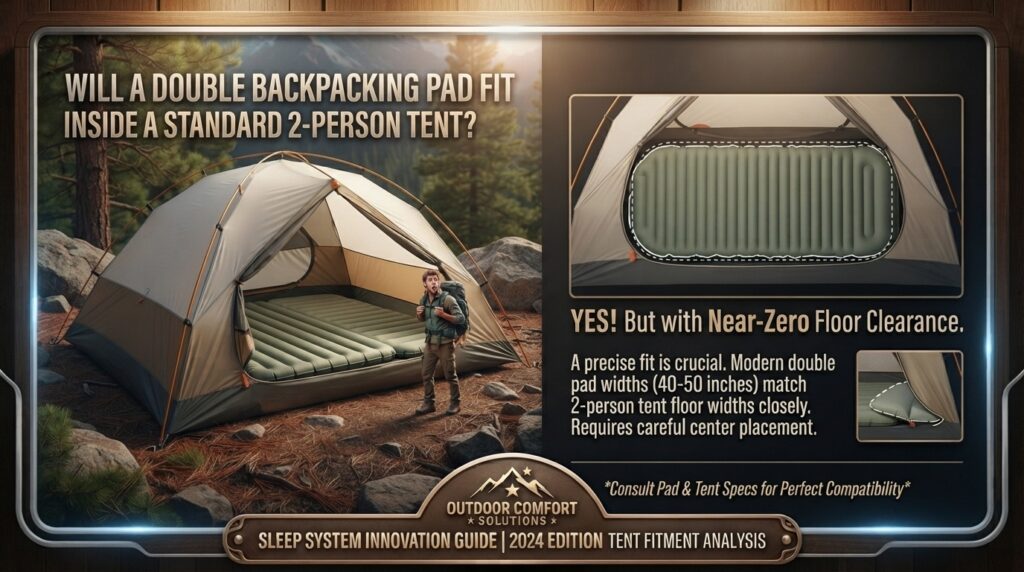
The transition from single sleeping mats to an integrated two-person backpacking sleep system is one of the most exciting upgrades a camping duo can make. A double pad eliminates the midnight chasm, allows you to share body heat, and transforms a thin shelter into a continuous luxury bed surface.
However, before you hit the checkout button on that premium new double pad, a critical logistical roadblock stands in the way: geometrical compatibility.
Will a double backpacking pad actually fit inside a standard 2-person tent, or will it warp your tent floor, strain the zippers, and push the inner mesh against the rainfly?
The short answer is yes, most standard double backpacking pads are engineered to fit inside standard 2-person tents—but the margin for error is razor-thin. In this deep-dive guide, we will break down the dimensional mathematics of modern gear, analyze structural taper designs, assess how regional climates alter interior tent space, and give you the step-by-step tools to guarantee a perfect fit on your next eco-adventure.
1. The Dimensional Math: Tent Floor Dimensions vs. Pad Footprints
To understand compatibility, we must analyze the real dimensions used by tent designers and outdoor gear manufacturers. Do not rely on the simple label “2-Person” or “Double”—you need to check the actual numbers in inches and centimeters.
The Anatomy of a Standard 2-Person Backpacking Tent
Backpacking tents are optimized to keep weight as low as possible. Because every ounce matters on long backcountry treks, manufacturers design interior floor spaces around standard individual sleeping pad sizes. A standard regular single pad measures 20 inches wide by 72 inches long.
Consequently, a standard 2-person backpacking tent is built to fit exactly two regular mats side-by-side. This results in the following typical tent floor shapes and specs:
- Rectangle Tents: These feature uniform width from the head to the feet. A standard width ranges from 50 inches to 54 inches, with a length of 84 inches to 88 inches.
- Tapered Tents: To cut weight, many modern ultralight 2-person tents feature a trapezoidal floor plan. They are wider at the head (e.g., 52 inches) and taper sharply down at the feet (e.g., 42 inches).
The Dimensions of Modern Double Backpacking Pads
Double backpacking pads are engineered with these specific tent footprints in mind. Manufacturers keep them narrower than residential mattresses to ensure compatibility.
- Standard Double Backpacking Pads: Typically measure 40 inches to 44 inches wide (equivalent to two 20- or 22-inch single mats side-by-side) with a standard length of 72 inches. Examples include the Big Agnes Rapide SL Insulated Double (40″ wide).
- Wide/Luxury Double Pads: Can expand from 50 inches up to 52 inches wide, stretching right to the absolute limit of standard tent walls.
2. The Danger Zones: Why Spatial Compatibility Fails
If a pad measures 42 inches wide and a tent measures 50 inches wide, it should fit perfectly on paper. However, in the real world, three secondary design elements can quickly ruin your setup.
1. The Vertical Loft Wall Collision
Many premium double camping mats boast incredible thicknesses ranging from 3.5 inches to 4.5 inches of loft to protect side sleepers from bottoming out. However, backpacking tent walls do not go straight up at a perfect 90-degree angle; they slope inward sharply to maximize wind resistance and shed water.
When you place a 4-inch-thick double pad inside a sloped tent, the upper edges of the pad can collide with the low mesh walls of the tent before the pad even settles flat on the ground. This pushes the mesh outward, forcing it into direct contact with the outer waterproof rainfly.
The Condensation Vulnerability: When the inner tent mesh touches the outer rainfly, moisture from your breath bypasses the ventilation gap. Capillary action draws external condensation straight through the mesh, leaving the corners of your sleeping bags soaking wet by sunrise.
2. The Trapezoidal Taper Trap
If you own an ultralight, weight-optimized tent (like the Nemo Hornet OSMO 2P or Big Agnes Tiger Wall UL2), the foot box of your tent narrows dramatically to save weight.
- If your tent tapers down to 42 inches at the foot end, and you attempt to slide a rectangular 44-inch or 50-inch double pad into it, the pad will physically jam before it reaches the bottom of the tent.
- This causes the pad to buckle, bend, or ride up the walls of the tent, dramatically reducing your usable vertical headroom at the top.
3. Pole Architecture and Spatial Distortion
Tents that rely on a single hubbed pole system or a simple two-pole crossover design tend to pull the floor corners inward when staked out on uneven terrain. This warping reduces the actual, real-world interior floor width by 2 to 3 inches compared to the static dimensions listed on the manufacturer’s box.
3. Regional Field Context: Terrain, Ventilation, and Climate Challenges
Because myecoadventure.com helps you navigate diverse wilderness ecosystems across the United States, your double pad and tent configuration must adapt to the environmental variables of your specific region.
Texas: Heat Management, Condensation, and Wide Footprints
Backpacking through the desert trails of Big Bend or the open expanses of West Texas presents unique interior tent space dynamics.
- The Environmental Variable: High ambient temperatures and low wind flow overnight can cause intense radiant heat buildup inside a tent.
- The Compatibility Impact: In Texas, you want a loose fit. If your double pad covers the tent floor wall-to-wall, it blocks the low mesh vents near the ground, completely cutting off cross-ventilation. Look for a narrower double pad (40 inches wide) inside a wider, free-standing 2-person tent (52 to 54 inches wide) to keep a buffer zone of open floor space for airflow.
New York: Damp Forest Floors and High R-Value Loft
Backpacking in the Adirondack High Peaks or along the Appalachian Trail in the Catskills means dealing with dense, moisture-laden soils.
- The Environmental Variable: Constant ground dampness and cold air sinks in forested valleys.
- The Compatibility Impact: You will need a thick, highly insulated double pad with a verified R-value above 4.0. Because insulated pads are thicker and less flexible, they are highly prone to pushing the sloped walls of your tent outward. Ensure your tent has a deep, bathtub-style waterproof floor that rises higher than the top edge of your inflated double mat.
California: High Sierra Slopes and Tight Site Selection
Whether you are pitching a tent along the John Muir Trail or in the alpine zones of the High Sierra, flat, uniform ground is hard to find.
- The Environmental Variable: Rocky, uneven granite shelves and highly restricted, pre-cleared wilderness campsites.
- The Compatibility Impact: When your tent is pitched on a slight alpine incline or over uneven rocks, a rigid, fully inflated double pad will slide and bunch up against the downhill side of the tent floor. This puts immense structural strain on the tent’s lightweight corner stakes and zippers. A dual-chamber double pad is preferred here, as you can slightly under-inflate the uphill side to accommodate ground irregularities.
Washington State: The Pacific Northwest Rainfly Defense
Backpacking the wet, humid corridors of the Olympic Peninsula or the stormy passes of the North Cascades requires absolute protection from precipitation.
- The Environmental Variable: Non-stop coastal drizzle, heavy rain, and near-100% relative humidity.
- The Compatibility Impact: This is the most dangerous zone for a pad-to-tent misfit. If your double pad is too wide and pushes the inner tent body against the rainfly, the relentless PNW rain will seep directly into your sleep system. Washington backpackers should size up to a 3-person tent if they plan to run a luxury-width double sleeping pad.
San Francisco Bay Area: Microclimates and Walk-In Site Layouts
For outdoor enthusiasts taking short backpacking trips to Point Reyes, Mount Tamalpais, or the Santa Cruz Mountains, sites are often structured around wooden platforms or designated packed-dirt pads.
- The Environmental Variable: Heavy, damp coastal fog rolling in off the Pacific, paired with highly defined, compact campsite footprints.
- The Compatibility Impact: Because many Bay Area backpacking spots utilize wooden tent platforms, you cannot always pull your tent stakes extra wide to stretch out the floor. Your tent floor will remain exactly at its natural rest position. You must ensure your double pad fits easily inside the unstretched tent body without relying on aggressive staking to hold the floor taut.
4. Technical Comparison: Popular Tent and Double Pad Fitments
To simplify your gear selection, the matrix below details real-world compatibility combinations between leading backpacking tents and popular two-person sleeping mats.
| Backpacking Tent (2-Person) | Floor Width (Head / Foot) | Compatible Double Pads | Fitment Analysis |
| Big Agnes Copper Spur HV UL2 | 52 in / 42 in (Tapered) | Big Agnes Rapide SL Double, Therm-a-Rest NeoAir Duo | Excellent Fit (Tapered Mats): The tapered floor requires a pad that mirrors the drop. A rectangular 52-inch pad will bunch up badly at the foot box. |
| NEMO Dragonfly OSMO 2P | 50 in / 45 in (Tapered) | NEMO Quasar 3D Double, Sea to Summit Comfort Plus Double | Snug Fit: Highly compatible with 40-44 inch double mats. A 50-inch rectangular mat will stress the lower mesh walls. |
| REI Co-op Half Dome SL 2+ | 56 in / 56 in (Rectangular) | All Double Backpacking Pads (Exped MegaMat Lite, etc.) | Perfect Fit / Luxury Choice: The generous “Plus” sizing provides a uniform 56-inch width, allowing even the widest luxury double mats to fit with room to spare for gear storage. |
| MSR Hubba Hubba NX 2 | 50 in / 50 in (Rectangular) | Klymit Insulated Double V, Big Agnes Rapide SL Double | Good Fit: The non-tapered floor makes it easy to slide standard rectangular mats in, but keep the thickness under 3.5 inches to prevent wall touch. |
5. Pro-Tips for Maximizing Interior Tent Space
If you are dealing with a tight fit between your double pad and your 2-person tent, follow these trail-tested deployment strategies to prevent gear failure.
1. The Partial-Inflation Insertion Rule
Never fully inflate your double pad outside the tent and then attempt to ram it through the small D-shaped tent door. You risk tearing the delicate insect mesh or puncturing the pad fabric against a sharp zipper tooth. Instead, lay the completely deflated mat flat inside the tent body, align the corners perfectly with the tent floor seams, and then connect your pump sack to inflate it directly in place.
2. Utilize External Guy-Out Points
Most modern backpacking tents feature small fabric loops attached to the exterior of the tent body or rainfly, right at hip and foot level. Always attach reflective guyline cord to these loops and stake them out securely to trees or rocks.
Why it matters: Pulling these guy-out lines taut actively stretches the sloped walls outward away from the center, creating precious extra inches of clearance that prevent your thick double pad from making contact with the tent fabric.
3. Account for Gear Storage Alterations
When two single pads are inside a tent, there is often a tiny wedge of bare floor space between them or at the sides to stash headlamps, water bottles, and extra clothing layers. A double sleeping pad takes up that space entirely. Make sure you utilize your tent’s overhead mesh gear lofts and wide vestibules beneath the rainfly to keep your hardware off your pristine sleeping mattress.
6. Frequently Asked Questions (FAQ)
1. Can I use a regular rectangular double pad in a tapered backpacking tent?
It is not recommended. If your tent tapers from 52 inches down to 42 inches at the feet, a rectangular 50-inch pad will physically override the tent walls at the bottom end. This causes the pad to bend, distorting the entire shape of the tent floor and pushing the mesh into the rainfly. Always pair tapered tents with tapered double pads, or stick to a rectangular tent floor plan.
2. Will a Queen-sized air mattress fit inside a standard 2-person backpacking tent?
No. A standard residential or car-camping Queen air mattress measures 60 inches wide by 80 inches long. A standard 2-person backpacking tent maxes out at 50 to 54 inches wide. A Queen mattress will not fit inside a standard 2-person backpacking tent; you would need a large 3-person or 4-person camping tent to accommodate it.
3. How do I prevent my double pad from squeaking against the tent floor?
Ultralight tent floors (silnylon or polyurethane-coated fabrics) rubbing against the polyester or nylon underside of an air pad can create a loud, disruptive squeaking sound every time someone shifts weight. To silence this on the trail, lay down a few lightweight items of clothing, a pack towel, or a thin polycro sheet between the tent floor and the bottom of the pad to break the friction.
4. Do double sleeping pads damage tent floor seams over time?
If the double pad is oversized and forces the tent floor material to stretch beyond its structural limits, it places constant tension on the corner stitching and seam tape. Over time, this stress can cause the waterproof seam tape to delaminate or pull apart, leading to water leaks during heavy rain. Always ensure a buffer of at least one inch between your fully inflated pad and the tent seams.
5. Should I size up to a 3-person tent if I want to use a double pad?
If you prioritize pure comfort, livability, and gear storage inside the tent, sizing up to a 3-person tent is highly recommended. A 3-person tent typically offers a floor width of 65 to 75 inches, allowing your double pad to sit flat with plenty of extra interior space alongside the edges to store your backpacks, muddy boots, and clothing.
6. Are there double backpacking pads designed specifically for ultralight tents?
Yes. Brands like Big Agnes and Exped design specific double models that feature built-in tapers (e.g., narrowing from 44 inches at the head down to 40 inches at the feet). These models match modern ultralight tent geometry perfectly, maximizing space while minimizing unnecessary fabric weight.
7. What happens if the pad is longer than the interior length of the tent?
Most backpacking tents offer an interior length of 84 to 88 inches, while standard double pads measure 72 inches long. Length is rarely an issue. However, if you purchase an “Extra Long” (XL) pad measuring 78 inches, make sure you account for the slope of the tent walls at the head and foot ends, as the extra length can push into the tent ends.
8. Can I couple two single pads together instead of buying a double pad?
Yes. You can use specialized straps, elastic bands, or fitted coupling sheets (like the Sea to Summit Mat Coupler) to hold two single pads together. While this prevents the pads from drifting completely apart, it does not completely eliminate the central cold spot or the structural seam between the two mats.
9. Does a double pad take longer to deflate inside a small tent?
Deflating a double pad inside a cramped 2-person tent requires a bit of technique. Because space is tight, you must open the high-volume dump valves, fold the pad in half or thirds inside the tent body, and slowly roll it toward the door to push the air out. It takes slightly more effort than deflating a single mat outside on the grass.
10. How does pad thickness affect the actual headroom inside a tent?
Backpacking tents measure their peak height from the bare floor to the highest point of the ceiling mesh. If a tent has a peak height of 40 inches, and you place a 4.5-inch thick luxury double pad inside it, your actual, usable sitting headroom drops down to 35.5 inches. Keep this in mind if you are a taller backpacker who likes to sit up completely straight to change clothes.
Conclusion: Measuring Twice to Sleep Warm and Dry
Investing in a double backpacking pad is a spectacular way to elevate your backcountry comfort, provided you respect the law of geometry.
Never buy a double pad based on the word “2-Person” alone. Always pull up the spec sheets, compare the width at the head and foot boxes, and ensure your tent’s wall angle can comfortably accommodate the loft thickness of your mat.
By selecting a pad that matches your tent floor profile—and utilizing smart pitching techniques like external guy-outs and low-pressure positioning—you will keep your tent stable, prevent wet condensation transfer, and enjoy a luxurious night of deep, restorative sleep beneath the stars.