Does salt or sulfur work to keep snakes away from tent?

When you are camping in the diverse landscapes of the United States—from the arid heat of Texas to the lush, temperate forests of Washington, or the coastal trails of California and New York—the fear of a snake entering your tent is a persistent concern. In an effort to secure their perimeter, many campers turn to “old wives’ tales,” such as sprinkling salt, sulfur, or even mothballs around their tent.
If you have heard that these substances are effective snake repellents, it is time to set the record straight: Salt, sulfur, and mothballs are not effective at keeping snakes away. Relying on them can not only give you a false sense of security but can also cause unnecessary harm to the environment.
Why Salt and Sulfur Fail as Repellents
The Science of Snake Senses
Snakes “smell” using a combination of their nostrils and their vomeronasal organ (Jacobson’s organ), which they access by flicking their tongues to collect scent particles. While they have a keen sense of smell, there is no scientific evidence to suggest that snakes have an aversion to sulfur, salt, or strong-smelling chemicals like mothballs.
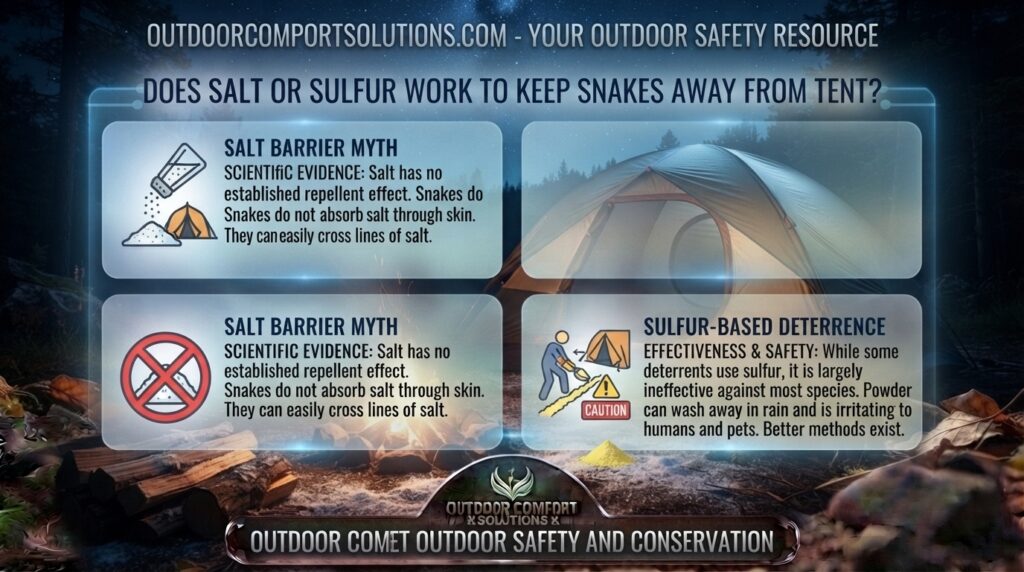
- Salt: Salt does not affect a snake’s skin or sense of smell. In fact, some snakes may even crawl directly over salt without hesitation.
- Sulfur: Often sold in “snake repellent” powders, sulfur is largely ineffective. Because it is a powder, it washes away easily with morning dew or light rain, leaving your campsite unprotected within hours. Furthermore, breathing in sulfur dust can be irritating to humans and pets.
- Mothballs: This is the most dangerous myth. Mothballs (naphthalene or paradichlorobenzene) are toxic pesticides. Using them in the open air is a violation of EPA regulations, and they are harmful to the local soil, water, and wildlife, including your own pets.
The Reality of Snake Deterrence
Instead of relying on ineffective chemical barriers, focus on mechanical and environmental management. Snakes are motivated by two things: temperature regulation and food.
1. The “Rodent Magnet” Factor
Snakes follow the food chain. If your campsite attracts mice, chipmunks, or insects, you are unintentionally inviting snakes.
- Action: Always store your food in airtight, hard-sided containers.
- Action: Never leave pet food or human snacks inside or outside your tent.
2. The “Cover and Concealment” Rule
Snakes prefer to move through tall grass, rock piles, or dense brush where they are hidden from predators.
- Action: Clear a 5-foot perimeter around your tent. Raking away leaves and sticks removes the “highway” snakes use to approach your site.
- Action: Choose a campsite that is relatively open and flat.
3. The “Bathtub Floor” Advantage
Most modern tents feature a “bathtub floor”—a design where the waterproof floor material extends several inches up the sides of the tent.
- Action: Ensure your tent floor has no rips or tears. A well-maintained tent with a fully zipped door is an impenetrable barrier to a snake.
What Actually Works: The “Snake-Proof” Mindset
If you are camping in regions known for high snake activity—such as parts of Texas or the foothills of San Francisco—the best defense is situational awareness.
- Shake Out Your Gear: Snakes love the dark, cramped interiors of hiking boots or sleeping bags. Before you put them on, shake them out vigorously.
- Stay on the Trail: While hiking to your campsite, stay in the center of the path where you can see the ground clearly.
- Avoid Woodpiles: Never reach into woodpiles, rock crevices, or thick bushes. These are natural homes for snakes.
10 Frequently Asked Questions (FAQ)
1. Are there any commercial products that work?
No. There is no EPA-registered or scientifically proven chemical repellent that effectively keeps snakes away from a campsite.
2. Can I use essential oils like peppermint or clove?
While some claim these scents deter snakes, they have not been proven effective in outdoor, open-air environments. They can also attract other insects.
3. Does vinegar keep snakes away?
No. Vinegar has no proven repellent effect on snakes.
4. What about “snake fencing”?
For long-term base camps, fine-mesh, buried fencing can work, but for a standard weekend camping trip, it is impractical and unnecessary.
5. Why do people still sell sulfur as a repellent?
It is a common “snake oil” product. Unfortunately, the market for fear-based products is large, even if the science does not support the effectiveness.
6. Are my pets at risk from these “repellents”?
Yes. If you use mothballs or sulfur, your pet may ingest or inhale toxic particles, leading to serious health issues.
7. What if I find a snake in my tent despite these tips?
Stay calm. Zip the door open fully and use a long tool to encourage it to leave. Do not try to kill it, as this is the most common cause of human snakebites.
8. Does the type of ground cloth I use matter?
Keep your ground cloth (footprint) tucked strictly under the tent. If it sticks out, it traps moisture, which attracts bugs, which attracts snakes.
9. Should I be worried about snakes in cold weather?
In northern states like Washington or New York, snake activity drops significantly as temperatures fall. In warmer regions like Texas, they can remain active for much of the year.
10. What is the #1 way to stay safe?
Maintain a clean, organized campsite, keep your tent zipped, and stay observant.
Conclusion
The idea that a simple ring of salt or sulfur can protect you is a dangerous myth that overlooks the natural behavior of snakes. Snakes do not want to be near you any more than you want them in your tent. By focusing on site selection, food storage, and keeping your gear packed away, you can effectively prevent unwanted visitors without resorting to useless chemicals.
Stay informed, stay observant, and enjoy your time in the wilderness with the confidence that comes from sound safety practices.
Disclaimer: This article is for informational purposes only and does not constitute safety or legal advice. Always follow the guidelines provided by local park authorities and wildlife management agencies in the region where you are camping.