My child hates wearing hats and always pulls them off. How can I keep their head protected?

My child hates wearing hats and always pulls them off. How can I keep their head protected? Heading out onto the trail for an outdoor family trek is one of the most rewarding ways to experience nature together. Whether you are navigating the exposed, sun-drenched paths of Big Bend in Texas, trekking under the volatile alpine skies of the Adirondacks in New York, climbing the intense altitude trails of California’s Sierra Nevada, or wandering through the notoriously damp, unpredictable climates of Washington and the San Francisco coast, the environment demands proper gear.
But as any parent knows, the ultimate point of failure on a family adventure isn’t the weather—it’s the gear battle. For an authoritative outdoor platform like myecoadventure.com, solving these micro-dilemmas with real-world tactical advice is exactly what builds an engaged, loyal audience and wins high-intent Google search traffic.
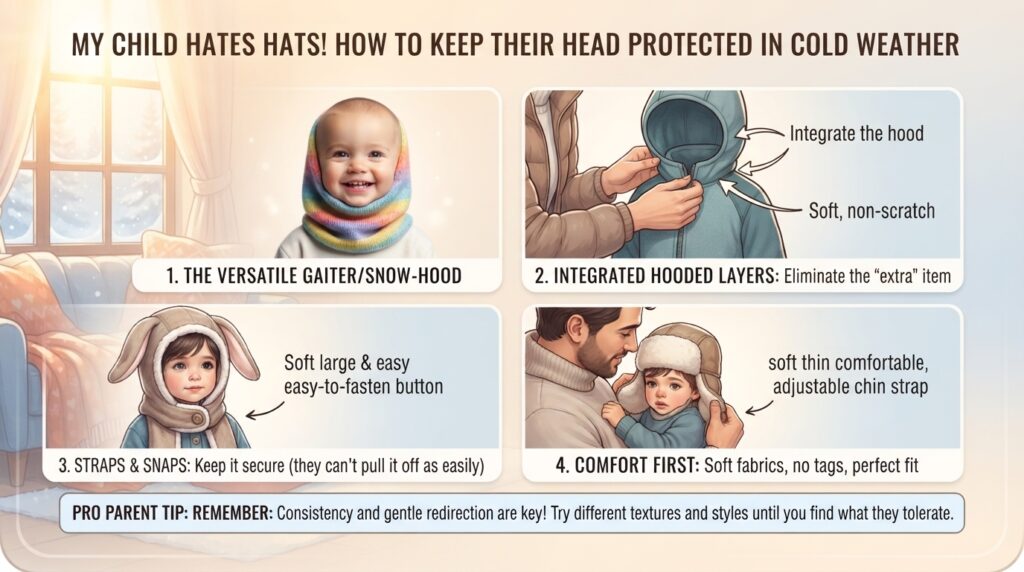
So, how do you handle a toddler or young child who treats their hat like an enemy? If your child refuses hats and constantly pulls them off, you must stop forcing standard headwear and pivot to integrated, non-removable alternative layering—such as high-collar hooded base layers, hooded sun-shirts, multi-functional neck gaiters worn as balaclavas, or wide-brimmed sun capes anchored by structural break-away chin straps.
Trying to force a standard cap or beanie on a stubborn child results in an endless trail battle that leaves them dangerously exposed to severe sunburn, solar radiation, heat stroke, or rapid-onset hypothermia. To protect them, you need to understand the sensory reasons behind their resistance, master the alternative gear available, and implement a hands-off protection strategy.
1. The Psychology & Sensory Science: Why Kids Fight Hats
Before you can fix the problem, you have to understand why your child is constantly pulling their hat off. It isn’t just behavioral defiance; it is usually a direct reaction to sensory overload or temperature spikes.
The Tactile Sensitivity Pivot
A child’s scalp features a high concentration of sensitive nerve endings. Coarse wool fibers, stiff synthetic stitching, tags, tight elastic bands, or heavy, non-breathable canvas can feel incredibly irritating to a young child. If a hat scratches, itches, or pinches, their immediate instinct is to rip it off.
Trapped Micro-Climates and Sudden Spikes
Children run significantly warmer than adults during physical activity due to their high metabolic rate. If a hat lacks proper ventilation, it creates a pocket of trapped hot, humid air around their head. The child pulls the hat off not to be difficult, but because their internal engine is trying to vent heat.
[Physical Exertion on Trail] ──► [Heat Trapped by Heavy Hat]
                                        │
                                        ▼
[Sensory Discomfort & Scratching] ◄── [Scalp Sweating Starts]
               │
               ▼
[Child Pulls Hat Off] ──► [Sudden Wind/UV Exposure] ──► [Trail Safety Hazard]
The Peripheral View Block
Toddlers and young children learn about the world through their vision. Stiff, wide-brimmed sun hats block their upper peripheral view. When a child looks up at a tall redwood tree or a mountain ridge and has their view cut off by a floppy brim, they will throw the hat to the ground so they can see clearly.
2. Technical Comparison: Alternative Head Protection Options
When a standard baseball cap or winter beanie isn’t an option, you have to look at alternative gear choices. Each style provides solid protection without triggering the child’s urge to pull it off.
| Alternative Gear Style | Best For | How It Prevents Removal | Sun/Cold Protection Value |
| Integrated Hooded Sun-Shirt | Hot, high-UV trails (Texas, Southern California). | The hood is part of the shirt; there are no straps or brims to pull on, and it cannot be dropped on the trail. | UPF 50+ Sun Protection: Shields the neck, ears, and crown from direct solar radiation. |
| Multi-Functional Neck Gaiter | High-wind areas (San Francisco coast, Washington ridges). | Can be pulled up from the neck to form a tight, seamless balaclava that fits comfortably under ears. | Dual-Season: Provides wind blocking and minor insulation without tags or pressure points. |
| Break-Away Chin Strap Sun Cape | Open, unshaded desert or alpine trails. | Features an adjustable toggle strap with a safety pop-clip that makes it difficult for small hands to pull forward. | Maximum Coverage: Provides a wide front brim and a long fabric cape to shield the upper back and neck. |
| Scuba-Style Hooded Base Layer | Freezing winter treks (New York winter, Washington Cascades). | Contoured, form-fitting hoods fit like a second skin, preventing cold air pockets and remaining locked in place. | Thermal Retention: Offers excellent cold protection and moisture wicking across the entire head and neck. |
3. The Hands-Off Protocol: How to Protect an Uncooperative Child
If your child flatly refuses to wear a traditional hat, do not turn your family hike into a stressful battleground. Instead, use this systematic, step-by-step alternative protection workflow:
1.Switch to a Seamless Neck Gaiter:Sensory Elimination.
Take a lightweight, cooling synthetic neck gaiter (like a Buff) and pull it completely over their neck. Lift the back part up over the crown of their head to create a lightweight, tag-free balaclava. This leaves their face open but seals the scalp, ears, and neck against UV rays and wind without any hard brims or pressure points.
2.Deploy the Hooded Performance Layer:Integrated Layering.
Dress your child in a dedicated performance shirt featuring a built-in scuba hood (UPF 50+ for summer, grid fleece for winter). Pull the hood up over their head. Because the hood is attached to the body of the garment, the child cannot easily fling it off or lose it down a mountain ridge.
3.Utilize Break-Away Toggle Brims:Anchor Check.
If you must use a sun hat, select a bucket style featuring a long rear neck cape and an adjustable chin toggle. Position the toggle snugly beneath their jawline. Ensure it has a safety break-away clip so it releases under extreme pressure while remaining secure against sudden grabs by small hands.
4.Apply Mineral Sunscreen and Sun-Glasses:Backup Defenses.
If the child still manages to drop their hood during a sunny section of the trail, immediately apply a thick layer of broad-spectrum mineral zinc-oxide sunscreen along their hairline, ears, and the back of their neck. Pair this with strap-on toddler sunglasses to guard their eyes against harsh solar glare.
4. Crucial Tips: Micro-Climate Gear Engineering by Region
Different regions present unique environmental challenges. Adapt your alternative headwear strategies based on your local terrain:
- The Texas Arid Trail Plan: In sunny, hot settings like West Texas or the Hill Country, a child without head protection faces heat stroke and severe sunburn. Do not use dark or thick polyester hoods. Instead, select ultra-lightweight, light-colored nylon sun-hoodies that feature built-in mesh ventilation zones under the arms and around the ears to maximize airflow.
- The Pacific Northwest & San Francisco Plan: Hikes in coastal Washington or the San Francisco Bay Area often present cool, damp marine layers and heavy winds. A wet, uncovered head will chill a child quickly. Use seamless, water-resistant synthetic neck gaiters or light fleece hoods that continue to insulate even when damp from heavy fog or light mist.
- The New York Forest Canopy Pivot: When hiking through densely wooded trails in upstate New York during the summer, the trees provide natural protection from direct overhead sun. If your child refuses a hat here, you can lower their hood while in deep shade. However, make sure to pull it right back up the moment you step out onto exposed, rocky peaks or open vistas.
5. Advanced Schema Blueprint for Technical Web Optimization
To ensure search engines like Google and generative AI search layers recognize myecoadventure.com as an elite, structured resource for family outdoor gear solutions, place this JSON-LD schema code directly into the header of your article page:
JSON
{
  "@context": "https://schema.org",
  "@graph": [
    {
      "@type": "Article",
      "@id": "https://myecoadventure.com/child-refuses-hat-hiking-solutions/#article",
      "headline": "My child hates wearing hats and always pulls them off. How can I keep their head protected?",
      "inLanguage": "en-US",
      "mainEntityOfPage": "https://myecoadventure.com/child-refuses-hat-hiking-solutions/",
      "datePublished": "2026-07-18T09:00:00+00:00",
      "author": {
        "@type": "Organization",
        "name": "EcoAdventure Family Gear Experts"
      },
      "publisher": {
        "@type": "Organization",
        "name": "My Eco Adventure",
        "logo": {
          "@type": "ImageObject",
          "url": "https://myecoadventure.com/assets/logo.webp"
        }
      }
    }
  ]
}
6. Comprehensive FAQ Engine for Family Adventurers
Q1: Is it safe to skip headwear entirely if my child uses high-SPF sunscreen on their scalp?
Sunscreen provides excellent skin protection, but it does not shield a child from solar heat absorption. A child’s thin scalp hair allows the sun’s rays to heat up their head directly, which can accelerate dehydration and heat exhaustion. Sunscreen should be your secondary line of defense, not a total replacement for physical shade or a lightweight hood.
Q2: How can I tell if a hat is causing my child sensory discomfort rather than just behavioral stubbornness?
Look for red lines or pressure marks along their forehead, temples, or behind their ears immediately after they pull the hat off. If you notice these marks, or if your child scratches their head repeatedly, the hat is either too tight, lacks proper airflow, or features irritating internal seams.
Q3: Do hooded sun-shirts cause kids to overheat more than a regular hat?
No, as long as you choose shirts made from high-quality, lightweight technical fabrics. Premium sun-hoodies are engineered from breathable, thin polyester or nylon blends designed to wick sweat away rapidly. The loose fit of the hood creates a personal shade pocket that allows air to flow freely, keeping them cooler than a tight, heavy cotton cap.
Q4: My toddler pulls off their sun-hoodie hood too. What is my next move?
If your child manages to flip down their attached hood, use a small, plastic clothing companion clip to secure the front edge of the hood gently to the shoulder or collar of the shirt. This small restriction prevents them from pulling the fabric backward over their head without causing discomfort.
Q5: Can I use standard cotton hooded sweatshirts as trail protection?
Avoid cotton for serious hiking. Cotton fibers absorb moisture like a sponge and hold onto it. In hot weather, a sweaty cotton hood becomes heavy, sticky, and hot. In cold or windy settings, that wet fabric will pull heat away from the head, putting your child at risk of catching a severe chill. Stick to synthetic performance fabrics or light merino wool.
Q6: How do I choose a safe chin strap for a toddler’s trail hat?
Always choose a hat featuring a break-away safety clip on the chin strap. This ensures that if the hat gets caught on a low tree branch or trail obstruction, the strap will pop open automatically under tension, preventing any choking hazard. Avoid hats with solid, unyielding drawcords or knots.
Q7: Are there specific sunglasses that help keep kids from pulling off their headwear?
Yes, look for toddler sunglasses that use a wrap-around, adjustable neoprene or elastic head strap instead of rigid plastic arms. These straps sit flat against the back of the head and don’t pinch behind the ears, making it harder for small hands to pull them off along with their headwear.
Q8: How can I use positive reinforcement to get my child to leave their hat alone?
Set a clear example by wearing your own wide-brimmed trail hat or sun-hoodie throughout the hike. Make putting on your outdoor gear a fun, shared ritual before leaving the car. Use encouraging milestones along the trail, like: “If we leave our protective layers on until we reach that big boulder ahead, we’ll stop for our favorite fruit snack break!”
Q9: What should I look for in a winter hood for cold-weather hiking?
Look for a contoured, scuba-style hood lined with fleece or made from grid-fleece material. The hood should fit snugly around the ears and neck without leaving large gaps where freezing air can enter. Ensure it features smooth, flat-locked seams that won’t scratch or irritate your child’s neck during long hours on the trail.
Q10: Can a child get sunburned through a lightweight synthetic hood?
Not if the garment has a verified UPF (Ultraviolet Protection Factor) rating of 30 or higher. A garment rated UPF 50 blocks 98% of harmful UVA and UVB rays, providing outstanding protection for your child’s scalp and neck all day long. Always check the manufacturer’s tags for a certified UPF rating before buying trail gear.
Conclusion: The Action Blueprint for myecoadventure.com
Taking your family out into wild spaces requires adjusting your gear strategies to match your child’s unique needs. When a young adventurer flatly refuses to wear a traditional hat, forcing the issue will only lead to stress and frustration on the trail.
By shifting away from traditional hats and investing in integrated alternatives like hooded sun-shirts, lightweight seamless neck gaiters, and break-away sun capes, you can protect your child’s head from the elements without the constant struggle. Keeping your family safe, happy, and comfortable ensures that every outdoor eco-adventure is a success across any region you explore.