
How do I keep kids warm without bulky gear during hiking?

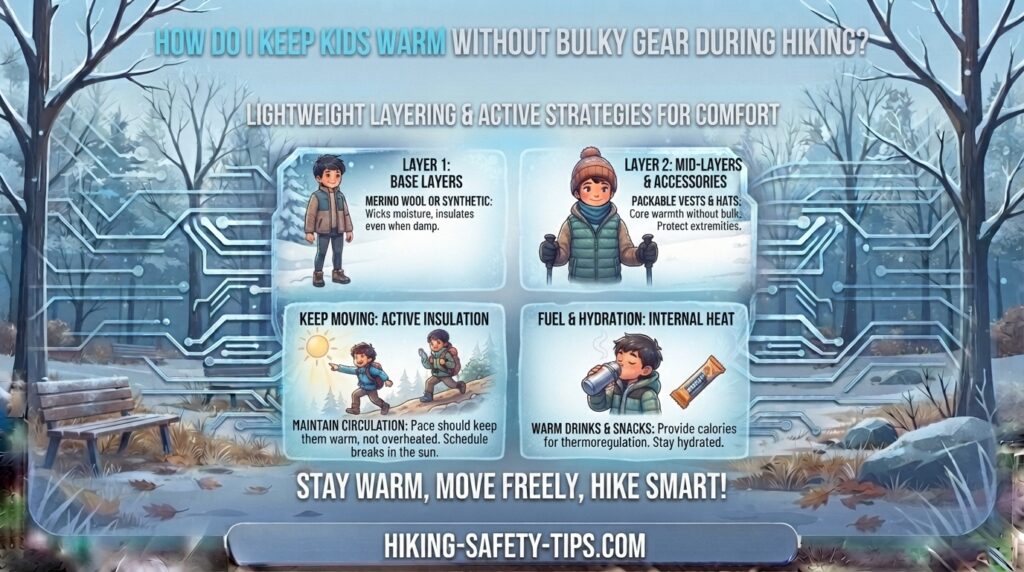
Many parents avoid winter hiking because the thought of dressing children in heavy, restrictive snow gear feels like preparing for an arctic expedition. It’s bulky, it’s expensive, and it often makes it impossible for children to move freely or enjoy the trail.
The good news? You don’t need to look like the “Michelin Man” to stay warm on the trail. In fact, high-performance, low-bulk gear is often superior to traditional, thick winter wear. At myecoadventure.com, we focus on efficient, smart layering techniques that keep kids agile, comfortable, and warm, whether you’re hiking in the misty forests of Washington, the coastal paths of San Francisco, or the vast landscapes of Texas and New York.
The Secret: Efficiency Over Bulk
The key to staying warm without bulk is managing the “Micro-Climate”—the layer of air trapped between the skin and the clothing. When you use the right materials, you can create an incredible amount of warmth with very thin layers.
1. The Power of Base Layers (The “Engine Room”)
Forget cotton. Cotton absorbs moisture, loses its insulating properties, and stays freezing cold. Instead, invest in high-quality, lightweight Merino wool or high-performance synthetic base layers.
- Why it works: Merino wool is naturally moisture-wicking and antibacterial. It keeps the skin dry even if the child starts to sweat from a steep ascent, which is the secret to avoiding the “cold shivers” that happen when they stop moving.
2. The Mid-Layer: Smart Insulation
Instead of one thick, heavy parka, focus on a high-loft mid-layer.
- Down or Synthetic Puffs: A thin, packable down or synthetic “puffy” jacket acts like a thermos for the body. Because it uses loft (trapped air) to insulate, it provides immense warmth while remaining compressible.
- Grid Fleece: Look for “grid fleece” materials. The grid pattern traps heat effectively while allowing breathability, meaning kids won’t overheat during the climb.
3. Protecting the Core and Extremities
If the core is warm, the body will naturally send more blood flow to the extremities.
- The Wind-Resistant Shell: A lightweight, windproof windbreaker is essential. In California or Washington, the wind is often what causes the “chill” feeling. A shell layer doesn’t need to be thick; it just needs to block the breeze.
- Neck Gaiters over Scarves: Scarves are bulky and can be dangerous on trails if they snag on branches. A slim, fleece-lined neck gaiter stays in place and seals the gap between the jacket and the chin.
Strategic Hiking Tips for Non-Bulky Warmth
1. The “Start Cold, End Warm” Rule
A common mistake is dressing children for the “standing still” temperature. If they start the hike feeling perfectly warm, they will be sweating within five minutes of walking.
- The Strategy: Dress them so they feel slightly cool at the trailhead. Once they start moving, their body heat will naturally bring them to the “comfort zone.”
2. The “Break-Time” Jacket
Since you aren’t using bulky gear while hiking, keep a dedicated, lightweight down jacket in your daypack.
- The Strategy: The moment you stop for lunch or to admire the view in New York or Texas, have the child put this “static” layer on. Because they aren’t generating heat, they need the extra insulation instantly to prevent the body from cooling down.
3. Keep the Feet Dry
Wet feet are the fastest way to ruin a hike. Even without snow, damp trails can lead to cold feet. Ensure hiking socks are wool-blend and boots are waterproof. A single pair of thick, quality wool socks is almost always better than two pairs of thin socks, which can compress the foot and restrict the circulation that keeps toes warm.
10 Frequently Asked Questions (FAQ)
- Can I use thermals as an everyday layer? Yes, high-quality merino base layers are perfect for school or lounging and are the best investment for outdoor-loving families.
- Is “puffy” jacket material fragile? Modern synthetic and down jackets are surprisingly durable. Look for “ripstop” nylon shells, which are designed to withstand trail wear.
- Does my child need a hat if their jacket has a hood? Yes. A hat keeps ears warm and prevents heat loss through the top of the head, which is significant even with a hood up.
- Are gloves necessary if it’s only 50°F? If there is wind, yes. Thin “liner” gloves are a great, non-bulky way to protect fingers without limiting dexterity.
- How do I know if the clothes fit correctly? Layers should be snug but not tight. Tight clothing restricts blood flow, which actually makes kids feel colder.
- Are there specific fabrics for “San Francisco” weather? Yes, because the coast is often damp and breezy, prioritize synthetic shells that dry quickly.
- Is wool itchy? Not modern Merino wool. It is incredibly soft and specifically designed for next-to-skin wear.
- How do I keep my child from taking off their hat? Gamify it! Call it a “trail explorer hat” and make sure it’s a style or color they love.
- Should I carry a backup change of socks? Always. A spare pair of dry socks in a plastic bag in your pack is the best insurance policy against cold feet.
- Does physical activity really generate enough heat? Yes. A brisk walk or a short climb increases metabolic heat significantly. If they are moving, they need less gear than you think.
Conclusion
Keeping kids warm on the trail doesn’t require compromising their ability to explore. By shifting away from heavy, bulky snow suits toward intelligent, moisture-wicking, and wind-resistant layers, you provide them with the freedom to climb, jump, and play.
Whether you’re traversing a mountain ridge or strolling through a local park, the right gear makes the difference between an exhausting trip and an epic adventure. Start building your family’s lightweight layering system today, and discover how much more enjoyable year-round hiking can be at myecoadventure.com. Get out there, stay light, stay warm, and keep exploring!