
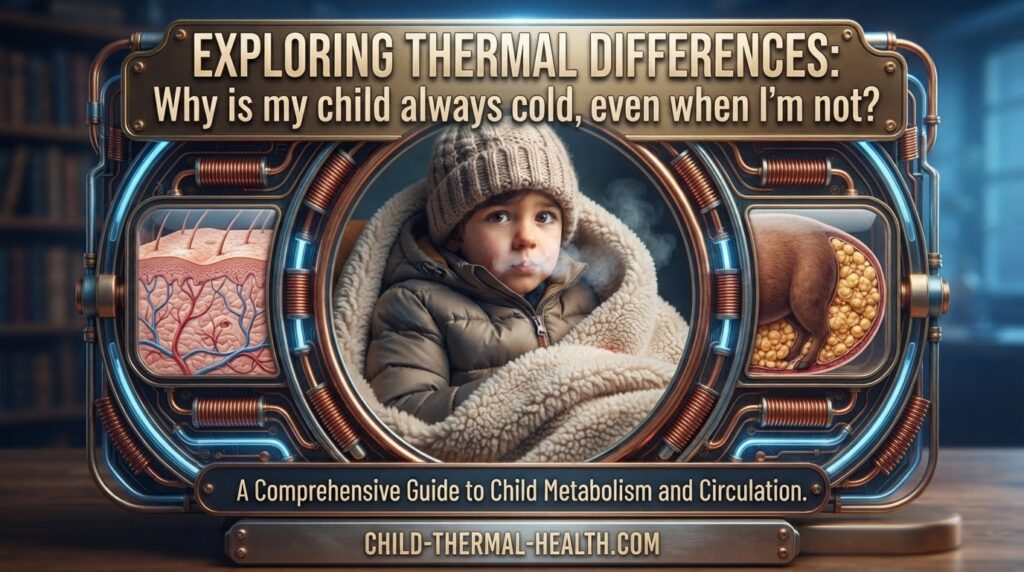
As a parent, you’ve likely experienced this scenario: you are bundled up in a winter coat, feeling perfectly cozy, while your child is shivering, complaining of cold fingers, or begging to go back inside. It can be frustrating and confusing. You might find yourself asking, “Is something wrong? Why does my child feel the cold so much more intensely than I do?”
At myecoadventure.com, we believe in empowering families to enjoy the outdoors regardless of the season. Understanding the physiological differences between children and adults is the first step toward better winter preparation. Let’s dive deep into why your little ones seem to have a different internal thermostat.
The Science Behind the Shiver: Why Kids Feel Cold Differently
It isn’t just your imagination—children genuinely experience temperature differently than adults. Several biological and physiological factors play a role in their cold sensitivity.
1. Higher Surface Area-to-Body Mass Ratio
This is the most significant factor. Children are smaller than adults, meaning they have a larger body surface area relative to their total body mass. Since body heat is lost through the skin, children lose heat to the environment much faster than adults do. Think of it like a small cup of hot coffee versus a large pot; the smaller volume of liquid loses its heat significantly quicker.
2. Less Body Fat
Adults often have a thicker layer of subcutaneous fat, which acts as a natural insulator. While this is a complex biological trait, children—who are generally leaner—lack that “built-in” thermal layer, making them more susceptible to the immediate effects of cold air and wind.
3. Lower Metabolic Heat Production
Physical activity is the body’s primary way of generating heat. Adults have more muscle mass and a higher capacity for sustained, vigorous movement, which generates more internal warmth. Children, while energetic, often have shorter “bursts” of activity followed by periods of relative stillness. When they stop moving to look at a bug or wait for you, their heat production drops instantly.
4. Immature Thermoregulation
A child’s autonomic nervous system, which controls blood flow to the extremities, is still developing. When it is cold, the body prioritizes keeping the internal organs warm by restricting blood flow to the hands and feet. Because their systems are still maturing, children may “shut down” circulation to their extremities more aggressively than adults, leading to those painful, cold fingers and toes.
How to Help Your Child Stay Warm: A Parent’s Strategy Guide
Knowing why they are cold is half the battle. Now, let’s look at how you can help them maintain their core temperature during your outdoor explorations in Texas, New York, California, Washington, or San Francisco.
The “Layering” Science
Don’t just add a thicker coat. The key to warmth is trapping air between layers.
- The Base Layer (The “Second Skin”): Use moisture-wicking fabrics like merino wool or synthetic thermals. Avoid cotton at all costs; if a child sweats in cotton, that moisture stays against their skin and turns freezing cold.
- The Mid-Layer (The “Insulator”): This is where the heat is trapped. Fleece, wool sweaters, or down vests are perfect.
- The Outer Layer (The “Shell”): Wind and water resistance is non-negotiable. Even in mild San Francisco winters, the coastal breeze can cut through layers if there is no shell.
Proactive Heat Management
- Move Before They Get Cold: Encourage active play. If you are hiking, keep the pace brisk. If you stop to rest, keep them moving—play a game of “Simon Says” or “freeze dance” to keep the metabolism firing.
- Hydration is Thermal Energy: Even when it isn’t hot outside, children need to drink water. Dehydration reduces blood volume and makes it harder for the body to circulate heat to the extremities.
- Feed the Furnace: High-energy snacks (like complex carbohydrates and healthy fats) provide the fuel necessary for the body to generate heat. A handful of nuts or a piece of fruit can make a difference in their comfort level.
The “Check-In” Routine
Because children are often so distracted by play, they may ignore their body’s signals until they are already miserable. Make it a habit to perform “Cold Checks” every 30 minutes:
- Check the Extremities: Feel their nose, ears, and fingers.
- Look for Color Changes: Pale or waxy skin in these areas is a warning sign.
- The “Shiver” Test: If they are shivering, they have already lost a significant amount of heat. It is time for a warm-up break.
10 Frequently Asked Questions (FAQ)
- Is it harmful for my child to feel “a little cold”? No, but it can be uncomfortable. If they are shivering, it’s a sign that they need a warm-up, not that they are in immediate danger.
- Does my child need a hat even if it’s not freezing? Yes. We lose a significant amount of heat through our heads. A warm hat is the easiest way to regulate overall body temperature.
- Are gloves or mittens better for cold hands? Mittens are almost always better. By keeping the fingers together, they share warmth and have less surface area exposed to the cold.
- Why do their feet always get cold first? Blood flow is prioritized to the brain and heart. The feet are the furthest from the heart, making them the first to suffer when blood flow is restricted.
- Should I use hand warmers? Hand warmers can be great, but ensure they are placed inside gloves or pockets and not directly against the skin to avoid irritation.
- Does the “no cotton” rule apply to socks? Absolutely. Cotton socks will stay damp and cold. Always use wool or wool-blend socks.
- Is it ever too cold to go outside? Yes. Follow the “Rule of 20″—if the wind chill is below 20°F, the risk of frostbite rises dramatically. Stay indoors.
- Can I keep my child warm by putting them in a thicker coat? Only if it fits well. If a coat is too bulky, it can actually restrict movement, which prevents the child from generating their own heat.
- Should I have them wear two pairs of socks? Only if the boots are loose enough. If two pairs of socks compress the foot and restrict blood flow, they will actually make the feet colder.
- How long does it take for a child to warm up once they are inside? Usually 15–20 minutes in a warm environment with dry clothes is sufficient to restore their core temperature.
Conclusion
Seeing your child cold when you feel perfectly fine is a common parental worry, but it is rarely a cause for alarm. It is simply a reminder that children are still developing. By choosing the right materials, encouraging active movement, and keeping a watchful eye, you can turn those “I’m cold!” complaints into a rewarding lesson about how to manage the environment.
Whether you’re exploring the snowy trails of New York or the breezy coastal parks of California, myecoadventure.com is here to ensure that your family stays comfortable, safe, and excited about the great outdoors. Winter is just another season—dress for it, prepare for it, and go out and enjoy it!
Do you have a favorite way to keep the kids warm during winter outings? Share your tips with our community on myecoadventure.com!